



The introduction of the "Co-Case Agent" comes at a critical juncture for the digital asset industry. As blockchain ecosystems become increasingly fragmented across hundreds of disparate networks, the task of tracking illicit fund flows has become exponentially more difficult. TRM Labs’ new AI tool is engineered to "translate natural language prompts into complex investigative actions," effectively acting as a bridge between a human investigator’s intent and the intricate cryptographic data residing on-chain. By enabling users to request information about the flow of funds without requiring deep technical proficiency in query languages or blockchain architecture, the tool significantly reduces the time required to identify and intercept criminal proceeds.
Addressing the Growing Scale of Crypto-Related Crime
The urgency behind this technological leap is underscored by the staggering volume of illicit activity currently permeating the digital asset space. According to data provided by TRM Labs, illicit cryptocurrency volume reached an estimated $158 billion in the previous year. This figure represents a diverse array of criminal activities, ranging from state-sponsored hacking and decentralized finance (DeFi) exploits to more traditional forms of fraud, such as Ponzi schemes and ransomware attacks.
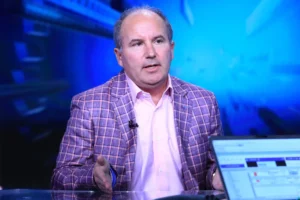
Ari Redbord, the head of legal and government affairs for TRM Labs and a former senior official at the U.S. Department of the Treasury, highlighted the logistical challenges facing modern investigators. "What we’re seeing every day is that the caseload is growing faster than the workforce, and investigators are being asked to operate across dozens of blockchains, jurisdictions, and typologies simultaneously," Redbord stated. This discrepancy between the volume of crime and the number of qualified personnel has created a bottleneck in the justice system, often allowing bad actors to move funds through mixers or cross-chain bridges before law enforcement can secure the necessary evidence to freeze assets.
The complexity of the current landscape is further exacerbated by the rise of "cross-chain" crime. Historically, investigators could focus their efforts on a single blockchain, such as Bitcoin or Ethereum. However, modern criminals frequently utilize "chain-hopping" techniques, moving assets rapidly across different protocols to obfuscate the paper trail. TRM’s AI agent is specifically designed to handle these multi-chain environments, allowing an investigator to ask a simple question—such as "Trace the origins of the funds currently sitting in this wallet across all known bridges"—and receive a comprehensive, actionable report in seconds.
The Counter-Offensive Against AI-Enabled Fraud
The deployment of AI on the side of the "good guys" is not merely a convenience; it is a necessary defensive measure against a new generation of AI-powered criminal tactics. TRM Labs has documented a "sharp acceleration in AI-enabled fraud and scams," noting a 500% increase in such incidents over the past year. This surge is attributed to the democratization of generative AI tools, which allow criminal syndicates to scale their operations with unprecedented speed and precision.
Criminal actors are now utilizing automation to launch thousands of phishing attacks simultaneously, employing deepfake technology to bypass "Know Your Customer" (KYC) protocols at exchanges, and using AI-driven code generation to identify vulnerabilities in smart contracts. "Criminal actors use automation, deepfakes, and AI-driven tools to scale operations with speed and precision that simply didn’t exist before," Redbord explained. By integrating AI into the forensic toolkit, TRM Labs aims to provide investigators with the same level of scalability and speed currently enjoyed by the perpetrators.
A Chronology of Blockchain Forensic Evolution
To understand the significance of TRM Labs’ latest offering, it is essential to view it within the broader history of blockchain analytics. The field has evolved through several distinct phases:

- The Manual Era (2009–2013): In the early days of Bitcoin, investigations were largely manual. Law enforcement officers often lacked specialized tools, relying on public block explorers to trace transactions associated with early darknet markets like the Silk Road.
- The Heuristic Era (2014–2018): Firms began developing proprietary algorithms to cluster addresses, identifying wallets that likely belonged to the same entity. This period saw the rise of the first generation of blockchain intelligence companies.
- The Multi-Chain and DeFi Era (2019–2023): As the ecosystem expanded to include smart contracts and decentralized exchanges, forensic tools had to adapt to track complex interactions beyond simple peer-to-peer transfers.
- The AI and Natural Language Era (2024–Present): The current phase, exemplified by TRM Labs’ new agent, focuses on usability and speed. The goal is to move from "data visualization" to "automated intelligence," where the software not only shows where the money went but also suggests the next steps for the investigator.
Supporting Data and Economic Impact
The economic stakes of these technological advancements are immense. Beyond the $158 billion in direct illicit volume, the "hidden costs" of crypto crime include lost investor confidence, increased regulatory compliance burdens for legitimate businesses, and the funding of global instability. TRM Labs’ data suggests that ransomware remains a primary concern, with payments often flowing to sanctioned entities or international criminal organizations.
Furthermore, the 500% increase in AI-enabled fraud indicates that the barrier to entry for cybercrime is lowering. Low-level scammers can now use AI to draft convincing fraudulent communications in multiple languages, while more sophisticated actors use AI to "stress test" blockchain protocols for weaknesses. In this environment, the time-to-detection is the most critical metric. For financial institutions, the ability to flag a suspicious transaction in real-time using AI-driven insights can mean the difference between successfully stopping a hack and losing millions in unrecoverable assets.
Reactions and Broader Industry Implications
The announcement has garnered significant attention from both the public and private sectors. Law enforcement agencies, which have long struggled with a shortage of specialized blockchain talent, view the AI agent as a force multiplier. By lowering the technical threshold for conducting investigations, agencies can involve more of their general detective workforce in digital asset cases, rather than relying solely on a small team of "crypto experts."
However, the move also sparks a broader conversation about the role of AI in surveillance and the legal system. Privacy advocates have expressed concerns that automated forensic tools could lead to "guilt by association" if the AI misinterprets complex transaction patterns. TRM Labs has countered these concerns by emphasizing that the AI agent is an "assistant" intended to provide leads and data summaries, while the final investigative decisions and legal filings remain the responsibility of human officers.
The timing of this launch also coincides with increased legislative scrutiny of the digital asset industry. On the same day as the TRM announcement, U.S. lawmakers held a hearing to discuss the tokenization of securities. The House Financial Services Committee, led by Chairman French Hill, explored how blockchain technology could modernize traditional finance. During these discussions, there was broad consensus that for tokenization to succeed, the underlying infrastructure must be secure and transparent. Tools like those provided by TRM Labs are seen as essential components of that security infrastructure, providing the oversight necessary to satisfy regulatory requirements.
The Future of Digital Forensics
As TRM Labs rolls out its AI agent to its global client base, the focus will likely shift to how these tools perform in high-pressure, real-world scenarios. The ability to "talk" to a blockchain represents a fundamental shift in the user interface of financial intelligence. If successful, this model could be adopted across other areas of financial crime fighting, including anti-money laundering (AML) and counter-terrorism financing (CTF) in the traditional banking sector.
In the long term, the battle between AI-driven crime and AI-driven forensics will likely define the maturity of the cryptocurrency market. As Ari Redbord noted, the growth of the caseload is currently outstripping the growth of the workforce. For the digital asset economy to continue its path toward mainstream institutional adoption, it must prove that it is not a "Wild West" where criminals operate with impunity. The deployment of AI agents by firms like TRM Labs is a pivotal step toward creating a more transparent and accountable digital financial system, ensuring that while the criminals may have new tools, the investigators are not left behind.