


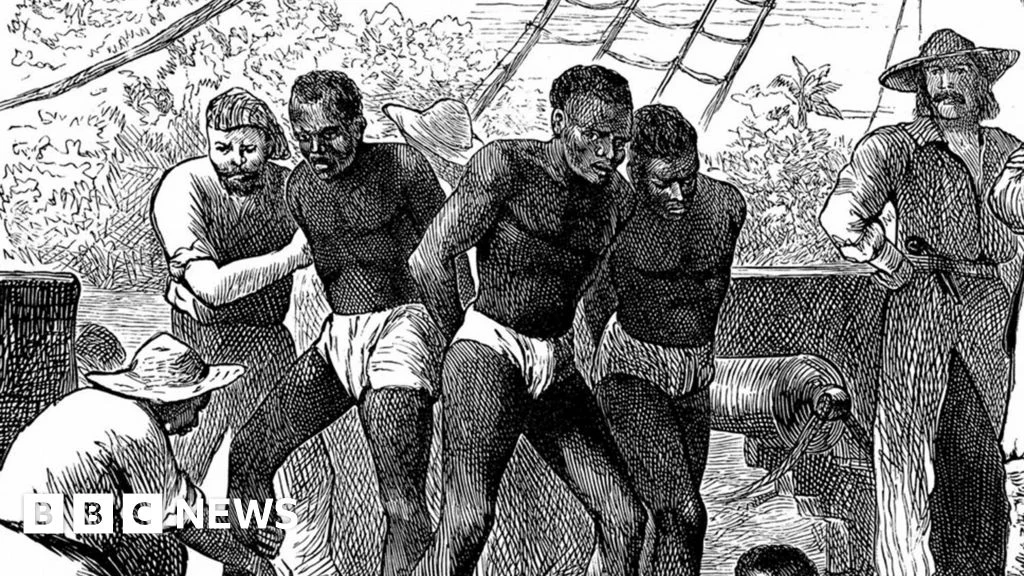
The United Nations General Assembly has passed a landmark resolution recognizing the transatlantic slave trade as "the gravest crime against humanity," a decision that advocates hope will pave the way for long-awaited healing, justice, and accountability. This historic vote, initiated by Ghana, represents a significant symbolic victory for nations and communities that have for centuries sought acknowledgement and redress for the profound injustices of slavery and its enduring legacies. The resolution goes further than mere recognition, urging UN member states to contemplate issuing formal apologies for their roles in the slave trade and to contribute to a reparations fund aimed at addressing the socio-economic disparities and developmental challenges stemming from this brutal historical period. While the resolution refrains from specifying a monetary amount for these reparations, its adoption marks a pivotal moment in the global conversation surrounding historical injustices and their contemporary repercussions.
The proposal garnered substantial support, passing with 123 votes in favour. However, the vote was not unanimous, with three nations—the United States, Israel, and Argentina—registering their opposition. A significant bloc of 52 countries, including the United Kingdom and numerous European Union member states, chose to abstain. This division underscores the ongoing international complexities and disagreements surrounding the concept of historical responsibility and the practical implementation of reparations for past wrongs. For many of the nations that abstained or voted against, concerns often revolve around the legal precedents such a designation might set, the immense financial implications, and the perceived difficulty of holding contemporary institutions responsible for actions committed centuries ago.
A Legacy of Atrocity: The Transatlantic Slave Trade
The transatlantic slave trade, which spanned from the early 16th to the mid-19th century, stands as one of the darkest chapters in human history. It forcibly uprooted an estimated 12 to 15 million Africans from their homelands, transporting them across the Atlantic Ocean under horrific conditions to the Americas and the Caribbean. These individuals were then subjected to brutal chattel slavery, forced to labour in nascent colonial economies, primarily in plantations producing sugar, tobacco, cotton, and other raw materials that fuelled the industrialization and wealth accumulation of European powers. The journey itself, known as the Middle Passage, was catastrophic; it is estimated that over two million people perished during the voyage due to disease, starvation, brutality, and suicide, their bodies cast into the ocean.
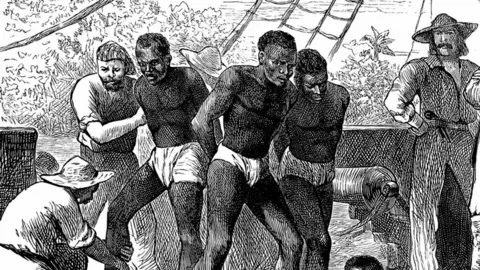
The economic engine of the slave trade was driven by the insatiable demand for free labour to exploit the vast resources of the New World. European powers like Portugal, Spain, Britain, France, and the Netherlands established intricate networks of trade, exchanging manufactured goods for enslaved Africans supplied by African intermediaries, often through coercion and violence. Forts and castles, such as those still standing along the coast of Ghana, served as grim holding pens where captured individuals endured unimaginable suffering before being packed onto slave ships. This systematic dehumanization and exploitation not only built immense wealth for colonial empires and their burgeoning industries but also fundamentally reshaped the demographics, economies, and social structures of four continents.
The Global Call for Reparations: A Historical Overview
The movement for reparations for slavery is not a new phenomenon; its roots can be traced back to the immediate aftermath of abolition, when formerly enslaved people sought compensation for their stolen labour, suffering, and lost generations. However, these early efforts were largely suppressed or ignored. In the late 20th and early 21st centuries, the call for reparations gained renewed momentum, propelled by civil rights movements, pan-African solidarity, and a growing understanding of the persistent socio-economic disadvantages faced by communities of African descent globally.
Key milestones in this modern movement include:
- 1993 Vienna Declaration and Programme of Action: While not specifically focused on slavery reparations, this UN document recognized that "all peoples have the right to self-determination," which implicitly supports the right of historically wronged groups to seek redress.
- 2001 World Conference Against Racism, Racial Discrimination, Xenophobia and Related Intolerance (Durban Conference): This conference was a critical juncture. The Durban Declaration and Programme of Action acknowledged slavery and the slave trade as "a crime against humanity" and called for states to take appropriate and effective measures to halt and reverse the lasting consequences. While it stopped short of endorsing financial reparations, it opened the door for further discussions.
- 2007 Bicentenary of the Abolition of the Slave Trade Act (UK): This occasion sparked renewed debates in the UK about its historical role and responsibility, with some leaders expressing regret but stopping short of formal apologies or reparations.
- 2013 CARICOM Ten-Point Plan for Reparatory Justice: The Caribbean Community (CARICOM) established a Reparations Commission and formulated a comprehensive ten-point plan outlining demands for formal apologies, debt cancellation, development investment, and cultural repatriation from former colonial powers. This plan has been instrumental in galvanizing regional and international support for reparations.
- Ongoing Advocacy by African Union: The African Union has consistently advocated for reparations, seeing it as crucial for addressing the continent’s underdevelopment and the persistent racial inequalities faced by its diaspora.
This recent UN General Assembly resolution builds directly upon these foundational efforts, elevating the discourse from regional advocacy to a global institutional declaration.
Ghana’s Leadership and the Resolution’s Core Demands
Ghana, a nation deeply scarred by the transatlantic slave trade and home to numerous slave forts like Elmina and Cape Coast Castle, has emerged as a leading voice in the global reparations movement. These historical sites serve as stark reminders of the immense human suffering endured within their walls, attracting visitors seeking to connect with their heritage and understand the depths of this historical atrocity.
Ghana’s Foreign Minister, Samuel Okudzeto Ablakwa, articulated the nation’s stance prior to the vote, emphasizing that the resolution was not about ranking pain but about acknowledging an undeniable historical fact and its ongoing repercussions. "We are demanding compensation," Ablakwa told the BBC, clarifying that African leaders are "not asking for money for themselves." Instead, the focus is on achieving "justice for the victims and causes to be supported, educational and endowment funds, skills training funds." This pragmatic approach seeks to channel potential reparations into initiatives that directly address the systemic disadvantages faced by communities impacted by slavery, such as improving educational opportunities, fostering economic empowerment, and investing in infrastructure in historically marginalized regions.
The resolution’s call for UN member states to consider apologising is also significant. A formal apology, while symbolic, carries immense moral weight. It represents an acknowledgement of wrongdoing, a recognition of the suffering inflicted, and a commitment to reconciliation. Such an apology could serve as a crucial first step in a broader process of restorative justice, fostering healing and building trust between former colonizers and colonized populations.
A Divided Assembly: Understanding the Vote
The outcome of the vote—123 in favour, three against, and 52 abstentions—highlights the complex political and historical dynamics at play. The overwhelming majority in favour signals a growing global consensus on the moral imperative to acknowledge the slave trade as a crime of unparalleled magnitude. This support primarily came from African, Caribbean, and Latin American nations, many of whom are direct descendants of the enslaved or were directly impacted by the trade.
The "No" votes from the United States, Israel, and Argentina are rooted in distinct, though sometimes overlapping, concerns.
- United States: The U.S. has historically resisted reparations claims, both domestically and internationally. Concerns often include the immense financial liability, the difficulty of identifying direct beneficiaries and perpetrators across generations, and a reluctance to establish legal precedents that could open the door to a multitude of historical claims. The Trump administration, as noted by Ghana’s President Mahama, has actively sought to downplay or erase aspects of Black history, reflecting a broader political current that resists reckoning with the full implications of slavery and its legacy. This stance has been consistent across various U.S. administrations, albeit with differing rhetoric.
- Israel: While not directly involved in the transatlantic slave trade, Israel’s opposition may stem from concerns about setting precedents for reparations claims related to historical injustices, particularly in the context of its own geopolitical situation and historical narratives.
- Argentina: Argentina’s specific reasons for voting against are less clear-cut but may involve similar concerns about financial implications, legal precedents, or its own internal historical narratives regarding immigration and national identity.
The abstentions from the United Kingdom and European Union member states are particularly notable given their historical roles in the transatlantic slave trade. Countries like the UK have long maintained that while they acknowledge the horrors of slavery, contemporary institutions cannot be held financially responsible for historical wrongs committed by past generations. Their arguments often centre on the idea that addressing contemporary inequalities through development aid and other mechanisms is a more pragmatic approach than direct financial reparations for historical injustices. This position, however, is increasingly challenged by advocates who argue that the wealth generated from slavery continues to benefit these nations, while the descendants of the enslaved continue to suffer from its systemic after-effects.
Defining "Crime Against Humanity": Legal and Moral Significance
The designation of the slave trade as a "gravest crime against humanity" is not merely rhetorical; it carries significant legal and moral weight in international law. A "crime against humanity" is typically defined as widespread or systematic attacks against any civilian population, including murder, extermination, enslavement, deportation, imprisonment, torture, rape, persecution, and other inhumane acts. While this designation, in this context, does not retroactively create a basis for prosecution under modern international criminal law (as the acts occurred before the relevant treaties), it establishes a crucial moral and historical precedent.
This designation officially places the slave trade on par with other heinous acts recognized by the international community as crimes against humanity, such as genocide and ethnic cleansing. It underscores the unparalleled brutality and systemic nature of the institution of slavery and validates the suffering of its victims and their descendants. Legally, it reinforces the principle that such atrocities must never be repeated and serves as a powerful reminder of the international community’s responsibility to prevent future crimes of this magnitude. Morally, it legitimizes the calls for justice and accountability, providing a robust framework for advocating for reparative measures.
Lasting Legacies: Racial Inequality and Underdevelopment
The resolution explicitly states that the consequences of slavery persist today, manifesting as "racial inequalities and underdevelopment ‘affecting Africans and people of African descent in all parts of the world’." This is a critical point, moving beyond abstract historical lamentations to concrete contemporary issues. The wealth extracted from enslaved labour laid the foundations for industrial economies in the West, while simultaneously disrupting and underdeveloping African societies.
Today, communities of African descent globally often face systemic discrimination in areas such as education, employment, housing, healthcare, and criminal justice. This disproportionate disadvantage is not random; it is a direct result of historical processes, including slavery, colonialism, and subsequent discriminatory practices. In Africa, the legacy of the slave trade contributed to political instability, economic stagnation, and the loss of human capital, hindering its development trajectory. Ghana’s Foreign Minister Ablakwa highlighted this, stating that "many generations continue to suffer the exclusion, the racism because of the transatlantic slave trade which has left millions separated from the continent and impoverished." Addressing these deep-seated inequalities, therefore, is not just a matter of social justice but a fundamental act of historical redress.
Cultural Repatriation: A Parallel Demand
Beyond financial reparations and apologies, the resolution also incorporates a crucial demand for the return of cultural artefacts stolen during the colonial era. This element underscores the multifaceted nature of the injustices committed. Colonial powers not only exploited human beings and natural resources but also looted priceless cultural heritage, which now resides in museums and private collections in the Global North. These artefacts, ranging from sacred sculptures to historical documents, represent the cultural, spiritual, and historical identity of African nations.
Samuel Okudzeto Ablakwa stressed the importance of this, stating, "We want a return of all those looted artefacts, which represent our heritage, our culture and our spiritual significance. All those artefacts looted for many centuries into the colonial era ought to be returned." The repatriation of these items is seen as an act of restoring dignity and cultural continuity, allowing communities to reclaim their narratives and heritage. This demand aligns with broader international movements advocating for the return of cultural property to its rightful owners, recognizing that these objects are not mere curiosities but vital components of national identity and collective memory.
Challenges and the Path Forward
Despite the symbolic victory of the UN resolution, the path to implementing meaningful reparations and achieving full historical justice remains fraught with challenges. The financial scale of potential reparations is immense, and the legal and practical mechanisms for their distribution are complex. Questions arise regarding who should pay, who should receive, and what form these reparations should take. The differing stances of powerful nations, particularly those who were major beneficiaries of the slave trade, suggest that concrete action will require sustained pressure and intricate diplomatic negotiations.
Ghana’s President John Dramani Mahama, in his address to the UN, emphasized the resolution’s role as "a safeguard against forgetting" and pointedly criticized attempts to "normalise the erasure of black history," referencing policies under the Trump administration in the United States. He noted that such policies, including the restoration of Confederate statues and attempts to dismantle slavery exhibits, risk becoming "a template for other governments as well as some private institutions." This highlights that the fight for historical truth and justice is not just about the past but also about present-day political narratives and the integrity of public memory.
The resolution, while non-binding in the sense that it does not compel states to act, exerts significant moral and political pressure. It provides a powerful framework for civil society organizations, advocacy groups, and affected nations to continue their campaigns for reparative justice. The momentum generated by this vote could lead to increased national-level dialogues, the establishment of truth and reconciliation commissions, and potentially, bilateral agreements for specific forms of redress.
A Symbolic Victory and Future Aspirations
The UN General Assembly’s declaration is a momentous symbolic victory. It officially acknowledges, on a global stage, the profound and lasting harm caused by the transatlantic slave trade, validating the historical experiences of millions and strengthening the moral case for reparative justice. It shifts the international discourse, moving it from a question of whether slavery was a crime to a discussion of how best to address its ongoing consequences.
For nations like Ghana, and for the African Union and CARICOM, this resolution represents a crucial step in a long and arduous journey towards restorative justice. While the immediate material impact remains to be seen, the moral clarity and international recognition provided by this vote are invaluable. It signals a growing global consciousness that historical injustices cannot simply be forgotten or swept under the rug, and that true justice demands an honest reckoning with the past to build a more equitable future. The conversation on reparations is far from over; indeed, with this resolution, it has only just begun its most significant chapter.