


The future of Alpine’s flagship sports car is taking a dual-pathway approach as the French performance brand prepares to transition into the electric era while maintaining the flexibility to retain internal combustion power. Alpine CEO Philippe Krief has confirmed that while the primary development focus for the next-generation A110 remains a high-performance electric vehicle (EV), the underlying architecture has been engineered to accommodate a traditional combustion engine should market demand or regulatory shifts necessitate it. This strategic flexibility marks a significant pivot for the Renault-owned marque, which had previously signaled a more rigid commitment to a fully electric "Dream Garage" by the end of the decade.
The upcoming model, scheduled for a global debut in 2025 as a 2026 model-year offering, will serve as the successor to the critically acclaimed mid-engine A110 coupe. It will be the first vehicle to utilize the Alpine Performance Platform (APP), a bespoke architecture designed specifically to maintain the brand’s core tenets of agility, lightness, and driver engagement. Despite the inherent weight penalties associated with battery-electric powertrains, Alpine engineers are leveraging advanced materials and innovative packaging to ensure the new A110 remains a benchmark in the lightweight sports car segment.
Engineering the Alpine Performance Platform (APP)
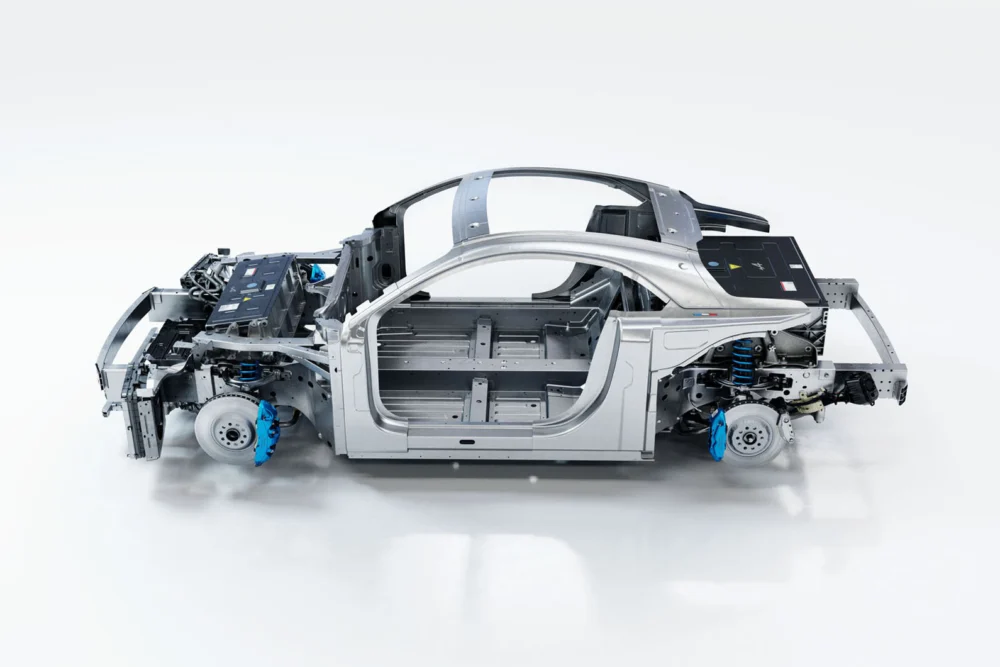
The Alpine Performance Platform represents a clean-sheet design intended to decouple Alpine from shared Renault Group architectures that might compromise the specific requirements of a low-slung sports car. A key feature of the APP is its 800V electrical architecture, a high-voltage system typically reserved for premium performance EVs such as the Porsche Taycan and Audi e-tron GT. The 800V system enables significantly faster DC charging speeds and allows for the use of thinner, lighter wiring, contributing to overall vehicle weight reduction.
To counteract the mass of the battery packs, the APP makes extensive use of aluminum in its structural components. This choice reflects Alpine’s historical preference for the material, which was a defining characteristic of the current A110’s chassis. By utilizing aluminum extrusions and castings, the brand aims to achieve high torsional rigidity while keeping the curb weight as low as possible.
The platform is also designed for versatility. Beyond the A110, the APP will underpin the production version of the Renault 5 Turbo E—a high-performance "mega-hatch" inspired by the legendary Group B rally cars. This shared development allows Alpine to scale the costs of a bespoke platform while ensuring that even its most compact performance models benefit from race-derived engineering.
The Dual-Battery Configuration and Weight Distribution
One of the most significant technical challenges in developing an electric sports car is the placement of the batteries. Traditional "skateboard" chassis designs, where the battery is located entirely under the floor, often result in a high seating position and a tall roofline—characteristics that are antithetical to the A110’s low-profile silhouette.
To solve this, Krief confirmed that the APP utilizes a split battery design. One battery pack is located in the front of the vehicle, while a second, larger pack is stacked behind the passenger compartment in a mid-rear configuration. This layout mimics the weight distribution of a mid-engine internal combustion car, achieving a 40:60 front-to-rear weight balance.
Krief acknowledged that this split design introduced "technical complications," particularly regarding thermal management and high-voltage cabling. However, he emphasized that the trade-off was necessary to maintain the car’s aerodynamic profile and low center of gravity. "Otherwise, the car would have been too high," Krief noted, highlighting the brand’s refusal to compromise on the classic sports car stance.
Performance Metrics and Nürburgring Validation
While specific horsepower figures remain under wraps, Alpine has set ambitious performance targets for the A110 EV. The vehicle is expected to offer a range of approximately 340 miles (550 km) on the WLTP cycle. However, for Alpine, range is not merely a figure for highway cruising; it is a metric of track endurance.
The 340-mile target was specifically calibrated to ensure the vehicle can complete at least three full laps of the Nürburgring Nordschleife at maximum attack without a significant drop in power or thermal throttling. This "track-ready" focus is central to the brand’s identity. To manage the power delivery, Alpine will employ sophisticated torque vectoring. By using dual rear motors—and potentially in-wheel motor technology in future iterations—the car can precisely distribute torque to each wheel, simulating the "lightweight" and "playful" handling characteristics of the current gasoline-powered A110.

The Strategic Pivot Toward Multi-Energy Compatibility
The most surprising revelation from Krief is the platform’s inherent compatibility with internal combustion engines (ICE). The front battery stack sits in a void that, with minor modifications, can serve as an engine bay or accommodate fuel storage and cooling systems.
Krief stated that the engineering team evaluated the impact of making the APP "multi-energy" early in the development phase. The directive was clear: the electric version must not be compromised by the inclusion of ICE compatibility. Once it was determined that the modifications required to fit a combustion engine—including a gearbox and fuel tank—would not negatively affect the EV’s performance, the decision was made to keep the door open.
This flexibility is primarily a response to global market volatility. While Europe continues to push toward a 2035 ban on new ICE sales, other regions, most notably the United States, have seen a softening of EV mandates and a resurgence in demand for hybrid and high-output internal combustion vehicles. By allowing the A110 to house an engine, Alpine can cater to "certain markets" where EV infrastructure or consumer preference lags behind the brand’s home market.
Market Dynamics and the North American Expansion
The decision to allow for an ICE-powered A110 is inextricably linked to Alpine’s ambitious plan to enter the North American market by 2027. The United States represents the world’s largest market for sports cars, but it is also a region where long-distance driving and varying regional regulations make a pure-EV strategy risky for a niche manufacturer.
Recent rollbacks in U.S. federal emissions targets have provided manufacturers with more breathing room to continue selling internal combustion vehicles alongside electric ones. For Alpine, a brand with limited name recognition in the U.S., offering a high-revving, lightweight combustion engine could serve as a powerful "halo" product to establish its credentials among American enthusiasts before transitioning them to electric power.
Historical Context: The Evolution of the Alpine A110
The Alpine A110 has a storied history that informs its current development path. Founded in 1955 by Jean Rédélé, Alpine rose to international prominence in the 1970s, culminating in a victory at the inaugural World Rally Championship in 1973 with the original A110. After a period of dormancy following its acquisition by Renault, the brand was revived in 2017 with a modern interpretation of the A110.
The current A110 has been praised for its 1.8-liter turbocharged engine and sub-1,100kg curb weight, making it a direct rival to the Porsche 718 Cayman. In 2021, Renault Group CEO Luca de Meo restructured the company, making Alpine the dedicated high-performance and motorsport division of the group, encompassing the Renault Sport team and the Alpine F1 Team. This "Renaulution" plan designated Alpine as a fully electric brand, but Krief’s recent comments suggest a more pragmatic approach to that transition.
Chronology of the Alpine A110 Successor Development
- January 2021: Renault Group announces the "Renaulution" strategy, confirming Alpine will become a 100% electric brand.
- May 2023: Alpine and Lotus officially end their joint venture to develop an electric sports car platform, leading Alpine to develop the APP in-house.
- June 2023: Alpine reveals its "Dream Garage" roadmap, including an electric A110, a hot hatch (A290), and a C-segment crossover (A390).
- Early 2024: Engineering prototypes of the APP begin testing, focusing on the split-battery layout.
- Late 2024: Philippe Krief confirms ICE compatibility for the APP, citing global market flexibility and U.S. expansion goals.
- 2025 (Expected): Official world premiere of the next-generation A110.
Analysis of Implications for the Performance Sector
Alpine’s decision to hedge its bets with ICE compatibility reflects a broader trend in the automotive industry. As the initial "gold rush" toward electrification faces headwinds—including high interest rates, charging infrastructure gaps, and fluctuating lithium prices—manufacturers are increasingly looking for modular solutions.
By developing a bespoke platform that can handle both 800V electric drivetrains and internal combustion setups, Alpine is insulating itself against a potential slowdown in EV adoption. If the next-generation A110 arrives with a high-output four-cylinder or even a V6 engine in specific markets, it will remain a unique proposition in a segment where competitors like the Porsche 718 are moving exclusively toward electric power.
Furthermore, the focus on Nürburgring performance suggests that Alpine is not willing to let the "EV weight" define its future. The use of torque vectoring and advanced battery packaging indicates that the brand is prioritizing the subjective "feel" of the car over raw 0-60 mph statistics. For the enthusiast market, this focus on dynamics rather than just straight-line speed will be the true test of whether an electric Alpine can carry the mantle of its storied predecessors.
As the 2025 reveal approaches, the automotive world will be watching to see if Alpine can successfully bridge the gap between its lightweight heritage and the heavy requirements of the electric future, all while keeping a combustion-powered "Plan B" in its back pocket.