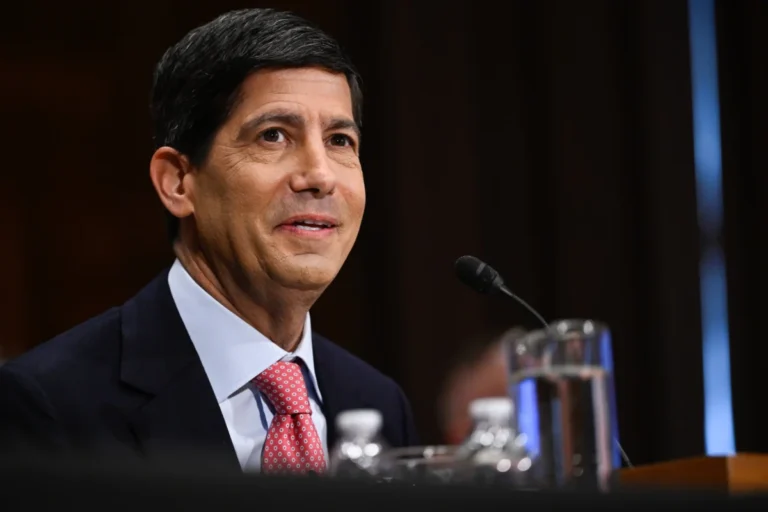




John Zito, the co-president of Apollo Global Management’s vast asset management division and its head of credit, delivered a stark and unequivocal assessment last month regarding the current valuation practices for software holdings within private equity firms. In remarks made to clients of investment bank UBS, later published by the Wall Street Journal and confirmed by CNBC, Zito asserted that these valuations are fundamentally flawed, particularly in the wake of significant declines in the shares of comparable publicly traded technology companies. "I literally think all the marks are wrong," Zito told the clients. "I think private equity marks are wrong." This candid admission from a high-ranking executive within one of the world’s largest alternative asset managers marks a pivotal moment, openly acknowledging a weakness in the private markets that has largely been discussed by external critics until now.
The Undercurrent of Disruption: AI and Public Market Turmoil
Zito’s pronouncement comes amidst a turbulent period for the technology sector, where investor sentiment has soured considerably, especially for software companies. For weeks, public market investors have aggressively punished the shares of these firms, driven by escalating fears that advanced artificial intelligence tools from innovators like Anthropic and OpenAI could render existing software solutions obsolete or severely diminish their competitive edge. The rapid advancements in generative AI are not merely incremental improvements; they represent a paradigm shift with the potential to automate complex tasks, redefine user interfaces, and fundamentally alter software consumption and development. This existential threat has translated into tangible market losses, with many software stocks experiencing significant corrections from their pandemic-era highs.
The ripple effect of this public market re-evaluation is now reaching the less transparent private markets. Concerns are mounting that private credit lenders, who have extended substantial financing to software companies acquired by private equity firms, are relying on outdated or overly optimistic valuations for their loan portfolios. This potential mismatch between perceived and actual value has ignited a wave of investor redemptions, as limited partners, from retail investors to institutional giants, seek to withdraw funds from private credit vehicles. According to an analysis by the Financial Times, retail investors alone pulled approximately $10 billion from private credit funds in the first quarter, signaling a growing unease among a segment of the market previously drawn to the asset class’s attractive yields and perceived stability.
Industry’s Defensive Stance Meets Institutional Action
In the face of these withdrawals and increasing market skepticism, an array of industry leaders have largely attempted to calm markets. Their message has often centered on the resilience of the underlying companies, asserting that many of these private software firms continue to exhibit strong operational performance and robust fundamentals, despite the broader macroeconomic headwinds and shifts in public market sentiment. This narrative, however, is beginning to crack under the weight of concrete actions taken by sophisticated institutional players.
Notably, JPMorgan Chase, one of the world’s largest financial institutions, has started to rein in its lending to private credit participants. More critically, the banking behemoth has initiated markdowns on the value of software loans within its own portfolios, signaling a pragmatic acknowledgment of the deteriorating credit quality and valuation concerns in this segment. Such actions by a major bank carry significant weight, providing an internal validation of the risks that figures like Zito are now vocally highlighting. It indicates a move from cautious observation to active risk management, potentially setting a precedent for other financial institutions with exposure to similar assets.
The Genesis of the Private Market Boom and its Vulnerabilities
To fully appreciate the gravity of Zito’s warning, it’s essential to understand the context of the private credit boom and the private equity landscape that shaped the 2018-2022 period he singled out. Over the past decade, private credit has exploded from a niche financing option to a multi-trillion-dollar global asset class, estimated to be well over $1.7 trillion and projected to reach $2.7 trillion by 2027. This rapid expansion was fueled by several factors: post-financial crisis regulatory changes that constrained traditional bank lending, an extended period of ultra-low interest rates that drove investors to seek higher yields in less liquid assets, and the flexibility private lenders could offer to borrowers compared to public markets.

During the 2018-2022 window, an environment characterized by abundant cheap capital and soaring technology valuations, private equity firms embarked on an aggressive spree of software company acquisitions. These deals often involved high leverage, with private credit funds providing the debt financing. Valuations were frequently based on optimistic projections and high revenue multiples, sometimes reaching 20-30x EBITDA or even higher for promising growth companies. The prevalent "growth at all costs" mentality often prioritized market share and expansion over immediate profitability, a strategy that thrived in a low-interest-rate environment where the cost of capital was minimal.
Zito’s critique directly targets this era, identifying companies acquired during this period as "particularly exposed." He warned that many of these software companies were "lower quality" compared to larger, more established public competitors. This "lower quality" often implies businesses with less differentiated products, narrower competitive moats, higher customer acquisition costs, or a greater reliance on legacy technologies that are now vulnerable to AI disruption. The combination of elevated purchase prices, substantial debt loads, and a shifting technological landscape creates a precarious situation for these highly leveraged portfolio companies.
Apollo’s Differentiated Stance and Zito’s "Bad Ending" Prophecy
While sounding the alarm on the broader market, Apollo Global Management has simultaneously sought to distinguish its own portfolio and strategy from the perceived vulnerabilities Zito highlighted. An Apollo spokesman declined to comment directly on Zito’s remarks, but the firm has publicly reiterated its conservative approach. Apollo emphasizes that the majority of its loans are extended to larger, more stable companies that are rated investment grade, suggesting a higher quality borrower base. Furthermore, the firm has stated that software constitutes less than 2% of its total assets under management, a relatively small exposure compared to some peers who have heavily concentrated in the sector. Crucially, Apollo claims to have zero direct exposure to private equity equity stakes in software firms, positioning itself as a less vulnerable player in the current market dynamics. This strategic messaging aims to reassure investors that while Apollo’s leadership recognizes systemic risks, its specific portfolio is insulated from the worst potential fallout.
Zito’s warning extended to the potential financial repercussions for private credit lenders and their investors. He painted a grim picture of potential recovery rates on loans to a generic small-to-medium sized software firm caught "in the wrong place" in the new AI-led regime. He suggested that lenders could recoup "somewhere between 20 and 40 cents" on the dollar in such scenarios, implying substantial losses. This projection underscores the risk of capital impairment in what has long been marketed as a relatively safe, yield-generating asset class.
Despite these dire predictions for specific segments, Zito expressed confidence that the broad private credit asset class will endure the current upheaval. His caveat, however, was sharp and direct: "If you do stupid things and you do concentrated things, and you do things that you’re not supposed to do in your vehicle," Zito said, "you probably will have a bad ending." This serves as a pointed reminder that while the asset class as a whole may be robust, individual funds and investors who made imprudent or overly concentrated bets, particularly in vulnerable sectors like software during an overheated market, face significant headwinds.
Broader Implications for Private Markets and Beyond
Zito’s candid assessment, coming from within the industry, adds considerable weight to the concerns previously flagged by prominent Wall Street figures like Jeffrey Gundlach and Mohamed El-Erian. These external observers have long cautioned about the opacity, illiquidity, and potential overvaluation within private markets, particularly private credit. Zito’s statements elevate these concerns from theoretical warnings to an internal acknowledgment of a tangible problem.
The implications of this re-evaluation are far-reaching:
- For Private Equity Firms: The pressure on private equity firms holding these overvalued software assets will intensify. They face potential write-downs, which will negatively impact their reported Internal Rates of Return (IRRs) and could make future fundraising more challenging. Exiting these investments at attractive multiples will become significantly harder, potentially leading to longer holding periods or even distressed sales. The era of easy money and quick flips may be over, necessitating a return to more fundamental value creation and rigorous operational improvements.
- For Private Credit Funds: The private credit industry faces increased scrutiny from investors and regulators. There will be greater demand for transparency in valuation methodologies, more frequent mark-to-market adjustments, and robust liquidity management frameworks. Funds heavily concentrated in the software sector, or those with significant exposure to highly leveraged, lower-quality borrowers from the 2018-2022 vintage, are likely to face the most severe challenges, including potential defaults and capital losses.
- For Investors: Investors in private credit, both retail and institutional, will need to re-evaluate their allocations and risk appetites. The promise of illiquidity premiums and high yields must now be weighed against the potential for significant capital impairment and reduced transparency compared to public markets. Diversification and thorough due diligence on fund strategies and underlying asset quality will become paramount.
- For the Software Sector: The ongoing re-rating will accelerate the bifurcation within the software industry. Companies genuinely leveraging AI to innovate, enhance efficiency, or create new market opportunities will likely thrive. Conversely, those with legacy products, undifferentiated offerings, or business models easily disrupted by AI could face existential threats. This could lead to a wave of consolidation, distressed asset sales, or even bankruptcies for less resilient players.
- Regulatory Scrutiny: Regulators globally are already paying closer attention to the burgeoning private markets. Zito’s comments could prompt further investigations into valuation practices, disclosure requirements, and the systemic risks posed by the interconnectedness of private equity and private credit.
The current backdrop is tough for alternative asset managers generally, with many seeing their shares battered this year. Zito’s remarks highlight a critical juncture for private markets, signaling a transition from an environment characterized by abundant, cheap capital and soaring valuations to one dominated by higher interest rates, disruptive technological innovation, and a newfound investor skepticism. The "bad ending" he warns of is not necessarily a collapse of the entire system, but rather a painful reckoning for those who failed to adapt to changing market realities and fundamental shifts in value. The industry now faces the challenging task of recalibrating valuations and strategies to navigate this complex and evolving landscape.