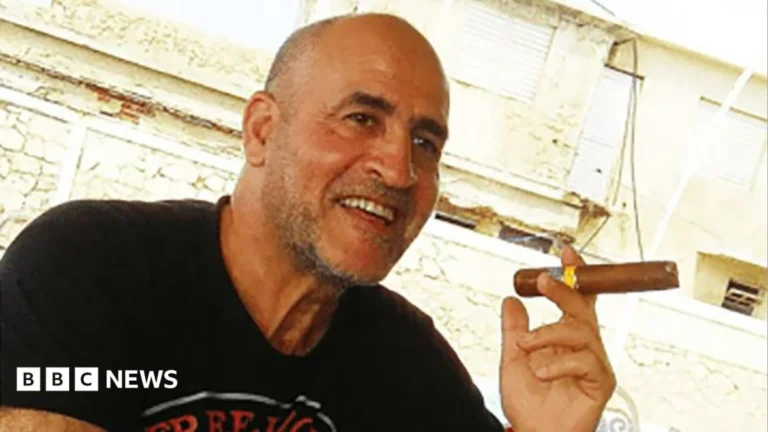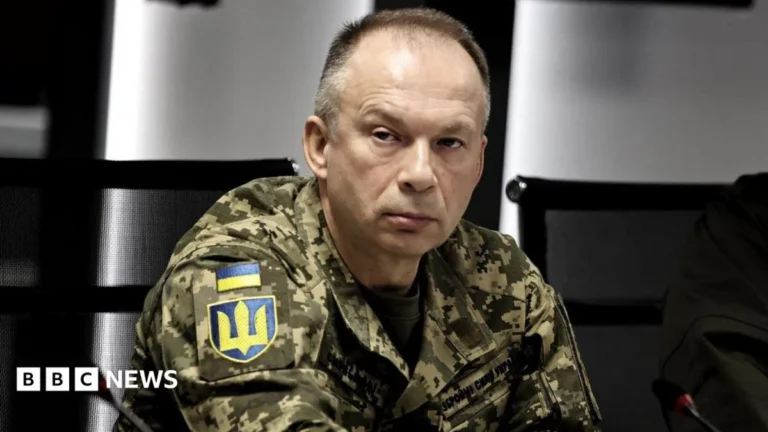


Three individuals have been detained in Belgium as part of an expansive investigation into potential crimes against humanity and war crimes allegedly committed in Cameroon, linked to the country’s protracted secessionist rebellion. Belgian federal prosecutors confirmed the arrests, identifying the suspects as alleged leaders of the Ambazonia Defence Forces (ADF), a prominent militia engaged in a violent struggle for the independence of Cameroon’s two English-speaking regions from the predominantly French-speaking nation. The arrests underscore a significant development in the internationalization of the conflict, highlighting the principle of universal jurisdiction in addressing severe human rights abuses.
According to statements from the federal prosecutor’s office, the detained individuals are suspected of orchestrating elements of the armed conflict from Belgian soil. "Money is reportedly being raised for the armed struggle and for the purchase of arms and ammunition, and instructions for attacks… are said to be given from Belgium," the prosecutor’s office detailed, indicating the crucial role of the diaspora in sustaining the insurgency. This revelation points to the complex web of support networks that operate internationally, far removed from the battlefields of West Africa. The United Nations reports that the conflict, now nearing its tenth year, has resulted in the deaths of over 6,500 people, a stark testament to the devastating human cost of the unresolved crisis.
The Genesis of a Deep-Seated Conflict: Cameroon’s Anglophone Crisis
The roots of Cameroon’s Anglophone crisis delve deep into its colonial past and post-independence political landscape. Following World War I, Germany’s protectorate of Kamerun was partitioned between France and Britain. The French-administered territory gained independence in 1960, while the British-administered Southern Cameroons faced a choice in 1961: join newly independent Nigeria or the newly independent Republic of Cameroon (formerly French Cameroun). Southern Cameroonians overwhelmingly voted to join French Cameroon, forming a federal republic. This union, however, was fraught with tension from its inception, as the Anglophone minority (comprising roughly 20% of the population) increasingly felt marginalized by the Francophone-dominated central government.
Over the decades, grievances simmered, fueled by perceptions of cultural assimilation, economic neglect, and political disenfranchisement. Anglophones complained about the imposition of French legal and educational systems, the appointment of Francophone officials to key positions in their regions, and a general erosion of their distinct identity. The federal structure, initially designed to protect Anglophone autonomy, was eventually dismantled in 1972, replaced by a unitary state, further intensifying feelings of betrayal and subjugation. This historical context is vital to understanding the depth of resentment that finally erupted into open conflict.
From Peaceful Protest to Armed Rebellion: A Chronology of Escalation
The current crisis ignited in late 2016 when lawyers and teachers in the North-West and South-West regions initiated peaceful strikes. Their demands were specific: Anglophone lawyers protested the deployment of Francophone judges who did not understand common law practices, while teachers opposed the appointment of Francophone educators unfamiliar with the Anglophone education system. These professional grievances quickly morphed into broader calls for greater autonomy, federalism, or even outright secession, as the government’s response was perceived as heavy-handed and dismissive.
- October 2016: Lawyers and teachers in the Anglophone regions begin strikes, demanding the preservation of their distinct common law and educational systems. Protests spread, met with police force.
- January 2017: Government shuts down internet in Anglophone regions for 93 days, further fueling anger and international condemnation.
- October 1, 2017: Separatist leaders symbolically declare the independence of "Ambazonia," encompassing the North-West and South-West regions. This declaration marks a critical turning point, leading to the formation and militarization of various armed groups.
- Late 2017 – Present: The conflict rapidly escalates into a full-blown insurgency. Militias like the Ambazonia Defence Forces (ADF), Cameroon Defence Forces (CDF), and others emerge, clashing with the Cameroonian military. Both sides are accused of grave human rights violations.
- 2019: President Paul Biya convenes a "Major National Dialogue" to address the crisis, but it is largely boycotted by key separatist leaders and critics, failing to achieve a lasting peace.
- Ongoing: The conflict continues, marked by cycles of violence, displacement, and a persistent humanitarian crisis, while international efforts to mediate a resolution have largely stalled.
The declaration of Ambazonian independence by activists, angered by what they viewed as systemic marginalization, served as the catalyst for the armed conflict, drawing groups like the ADF into a direct confrontation with the state.
The Ambazonia Defence Forces (ADF) and the Diaspora’s Role
The Ambazonia Defence Forces (ADF) is one of the most prominent armed groups fighting for the independence of Ambazonia. Emerging in the wake of the 2017 declaration, the ADF and similar militias operate with varying degrees of coordination, often engaging in guerrilla tactics against government forces. Their stated objective is the complete secession of the Anglophone regions from Cameroon, believing that only through independence can their cultural identity and political aspirations be secured.
The Belgian investigation highlights a critical aspect of this conflict: the significant role played by the diaspora. Many Anglophone Cameroonians living abroad, particularly in Europe and North America, are deeply invested in the cause. They organize, advocate, and, as alleged by prosecutors, actively fund and direct the armed struggle. This international network provides financial resources for arms, ammunition, and operational support, making it possible for the militias to sustain their fight despite being geographically distant from the conflict zone. The arrests in Belgium underscore the reach of these networks and the determination of international legal authorities to disrupt activities deemed to be supporting war crimes.
Universal Jurisdiction: Belgian Investigation and International Precedents
The detention of the three individuals in Belgium is a direct application of the principle of universal jurisdiction. This legal doctrine allows national courts to prosecute individuals for certain egregious international crimes – such as war crimes, crimes against humanity, genocide, and torture – regardless of where the crime was committed, the nationality of the perpetrator, or the nationality of the victim. It is a cornerstone of international criminal justice, ensuring that perpetrators of the most heinous crimes do not find safe haven anywhere in the world.
Belgian federal prosecutors initiated their investigation last summer, focusing on individuals residing in Belgium suspected of being part of the ADF leadership. The arrests on Sunday, following coordinated searches in Antwerp and Londerzeel, led to three suspects being remanded in custody. This action follows similar investigations and arrests in other countries, notably Norway and the United States, where individuals linked to the Ambazonian cause have faced legal scrutiny for their alleged involvement in the conflict. These international legal actions send a clear message that supporting or directing armed conflicts involving severe human rights violations, even from abroad, can lead to prosecution under international law. The complexity of proving direct command responsibility and the flow of funds for illicit activities across borders presents significant challenges for prosecutors, but the willingness of states to pursue such cases demonstrates a growing commitment to accountability.
Humanitarian Catastrophe and Displacement
Beyond the political and legal complexities, the Anglophone crisis has unleashed a profound humanitarian catastrophe. The United Nations estimates that the unrest has forced more than 490,000 people from their homes, transforming them into internally displaced persons (IDPs) within Cameroon, while tens of thousands more have fled across the border into neighboring Nigeria as refugees. These figures represent a significant portion of the Anglophone population, now living in precarious conditions, often without adequate shelter, food, water, or medical care.
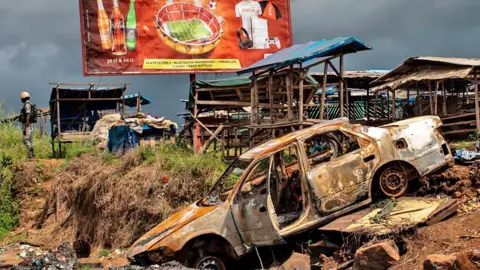
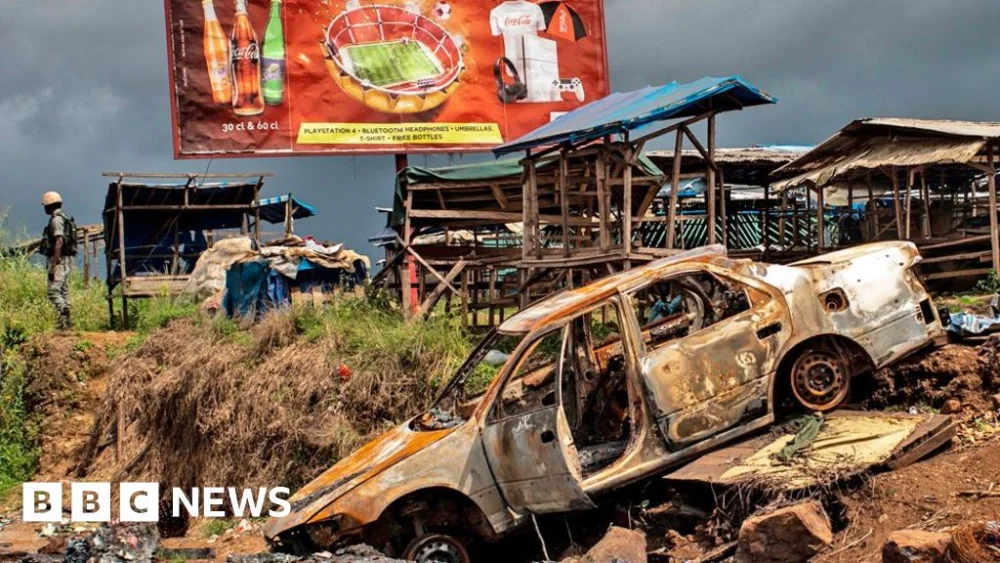
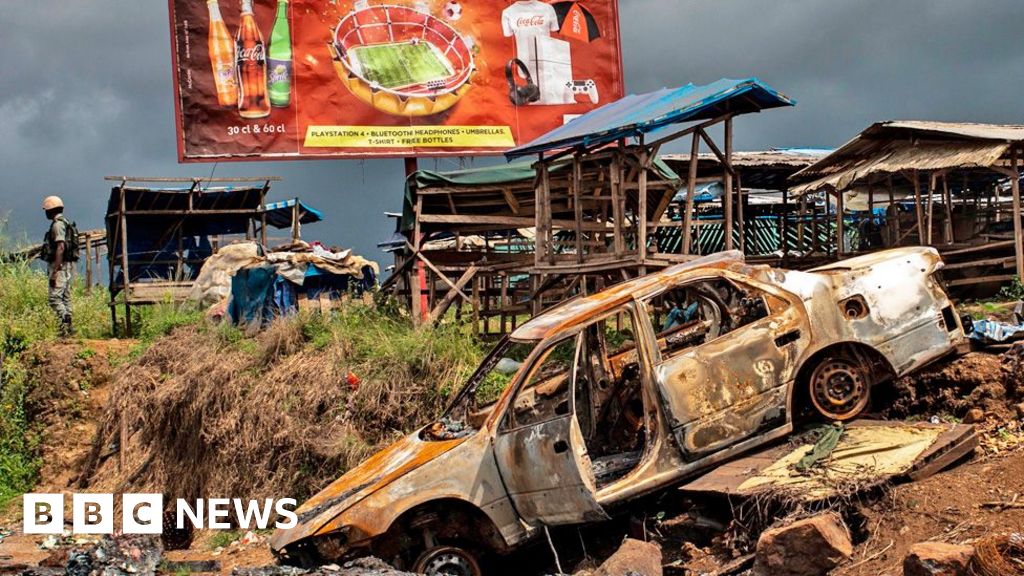
The impact on civilians has been devastating. Villages have been razed, schools and health centers destroyed or abandoned, and agricultural activities severely disrupted. The UN reports that over 1.5 million people are in urgent need of humanitarian assistance, facing food insecurity, lack of access to basic services, and heightened vulnerability to disease. Children have been particularly affected, with an entire generation losing access to education due to the conflict, as both state and non-state armed groups have targeted schools or used them for military purposes. Human rights groups have consistently accused both separatist fighters and state forces of committing widespread abuses, including arbitrary detentions, torture, extrajudicial killings, sexual violence, and the targeting of civilians. These reports underscore the desperate need for protection and assistance for those caught in the crossfire.
Cameroon’s Government Response and International Criticism
President Paul Biya, who has governed Cameroon for over four decades, maintains that his administration has made significant efforts to resolve the conflict. His government has primarily adopted a military approach to quell the rebellion, deploying thousands of troops to the Anglophone regions. Alongside military operations, Biya has also initiated peace overtures, most notably the "Major National Dialogue" in 2019, which aimed to bring together various stakeholders to find solutions. The dialogue proposed special status for the Anglophone regions, decentralization, and other measures. However, many separatist leaders and civil society groups largely boycotted the dialogue, arguing it was not genuinely inclusive and failed to address the fundamental grievances of the Anglophone population.
Despite the government’s claims of progress, it continues to face substantial criticism from international human rights organizations and foreign governments over its handling of the crisis. Critics point to the military’s alleged human rights abuses, restrictions on political freedoms, and the lack of transparent accountability for abuses committed by state forces. The perceived reluctance of the government to engage in genuine dialogue with key separatist figures, along with its consistent denial of the scale of the crisis, has been a major impediment to finding a peaceful resolution. The international community, including the African Union and various Western nations, has repeatedly called for a comprehensive and inclusive political solution, rather than a purely military one, emphasizing the need for respect for human rights and an end to the cycle of violence.
Broader Impact and Implications
The Belgian arrests and ongoing international investigations carry significant implications for the Cameroonian crisis and international law. Firstly, they highlight the transnational nature of modern conflicts, where support and direction can emanate from distant shores. This challenges traditional notions of sovereignty and necessitates international cooperation in law enforcement. Secondly, these actions serve as a deterrent, signaling to leaders and financiers of armed groups worldwide that they cannot operate with impunity, even from the safety of another country. The successful prosecution of such cases under universal jurisdiction would set powerful precedents for accountability.
However, these legal efforts alone are unlikely to resolve the underlying political issues driving the conflict in Cameroon. While crucial for justice, they must be complemented by concerted diplomatic efforts to foster dialogue between the Cameroonian government and legitimate representatives of the Anglophone population. The crisis has not only devastated the Anglophone regions but also strained Cameroon’s national unity, its economy, and its international standing. The long-term implications include potential regional instability, continued humanitarian suffering, and a generation scarred by violence and displacement. Achieving a sustainable peace will require a multifaceted approach that addresses historical grievances, ensures equitable governance, upholds human rights, and facilitates genuine reconciliation. The path forward remains fraught with challenges, but the international community’s increasing engagement, through legal means and diplomatic pressure, offers a glimmer of hope for accountability and, eventually, a resolution to one of Africa’s most overlooked humanitarian crises.