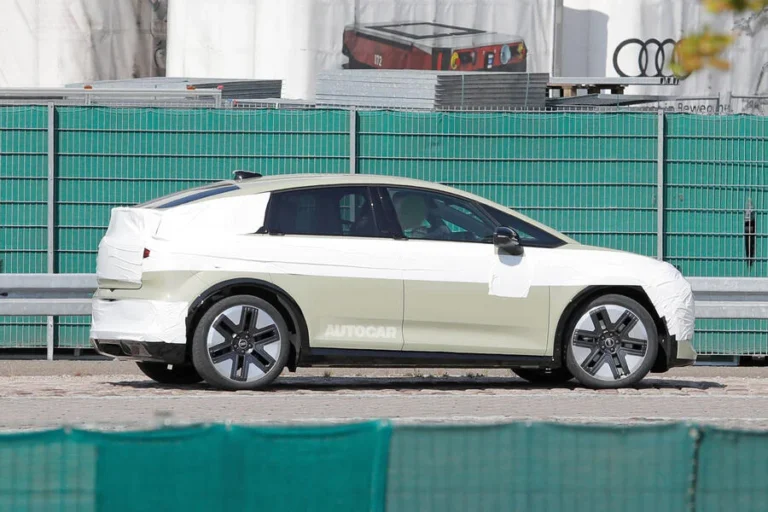



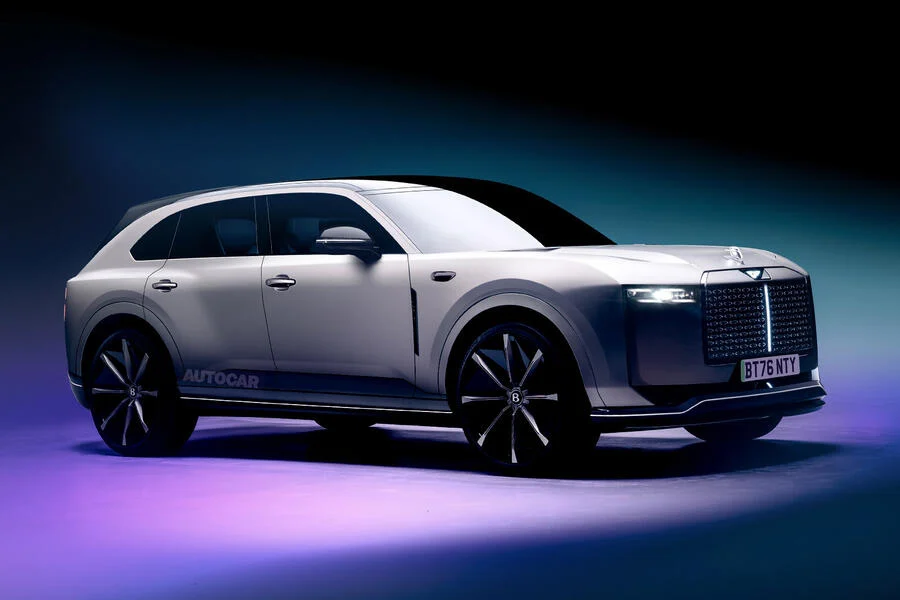
Bentley Motors has officially confirmed that its forthcoming debut electric vehicle (EV) will remain a dedicated battery-electric model, explicitly rejecting the path taken by competitors who have retrofitted internal combustion engines into their electric lineups. The decision, articulated by Bentley’s leadership, distinguishes the Crewe-based manufacturer from rivals like Lotus, which recently announced the integration of range-extender technology into its Eletre SUV to combat cooling demand in the high-end electric segment. Bentley’s first foray into the zero-emission market, internally referred to as the "Luxury Urban EV," is slated for a global reveal in the second half of 2025, marking a pivotal moment in the brand’s century-long history.
The luxury automotive landscape has faced significant volatility over the past eighteen months, with several Tier-1 manufacturers recalibrating their electrification timelines. While Lotus responded to a cooling premium EV market by introducing the Eletre X—a version featuring a small combustion engine acting as a generator—Bentley CEO Frank-Steffen Walliser has stated that such a pivot is not on the table for the British marque. Walliser emphasized that the upcoming model is engineered specifically for electric propulsion, and any attempt to re-engineer the vehicle to accommodate a hybrid or range-extender powertrain would be both strategically inconsistent and technically prohibitive.
The Technical and Strategic Framework of the Luxury Urban EV
The foundation of Bentley’s refusal to adopt a hybrid backup for its debut EV lies in the vehicle’s architecture. The model is built upon the Premium Platform Electric (PPE), a sophisticated 800-volt architecture co-developed by Porsche and Audi. According to Walliser, the PPE platform’s design is optimized for battery placement and electric drive units, making the installation of a combustion engine "technically not feasible" within the specific constraints of the upcoming Bentley model.
Strategically, Bentley views its current lineup as a sufficient bridge for customers not yet ready to transition to full electrification. The company has invested heavily in its plug-in hybrid (PHEV) technology, particularly within the Bentayga and the newly refreshed Continental GT and Flying Spur ranges. Walliser noted that the strategy is not to force a replacement of combustion engines with electric motors but to offer a diverse portfolio. By maintaining the Bentayga PHEV as a long-range, versatile alternative, Bentley allows the new EV to occupy a unique niche as a dedicated electric proposition aimed at attracting a new demographic of "luxury urban" buyers.
This "Luxury Urban EV" is expected to be more than just a zero-emission transport vessel; it is being designed to retain the traditional hallmarks of Bentley—effortless power and unparalleled refinement. Bentley’s Head of Research and Development, Matthias Rabe, has previously described the vehicle as a synthesis of the brand’s current strengths, claiming it will offer the "waftability" and comfort of a Flying Spur limousine combined with the dynamic agility of a Continental GT.
Chronology of Bentley’s Electrification Journey
The road to Bentley’s first EV has been marked by both ambitious targets and pragmatic adjustments. The journey began in earnest with the announcement of the "Beyond100" strategy in 2020, which initially aimed for the brand to be fully electric by 2030.
- 2020: Bentley announces the Beyond100 plan, committing to a carbon-neutral footprint and a transition to an all-electric lineup within a decade.
- 2022: The company confirms a £2.5 billion investment in its Crewe headquarters to transform the facility into a "Dream Factory" for EV production.
- 2023: Market conditions begin to shift, with high interest rates and infrastructure concerns slowing the adoption of premium EVs globally.
- Early 2024: Bentley announces a slight delay in its EV timeline. Originally penciled for a 2025 launch, the debut was moved to the latter half of the year, with deliveries expected in 2026.
- Mid-2024: Bentley retires its iconic W12 engine, replacing it with the "Ultra Performance Hybrid" V8 powertrain, signaling a transition phase where hybrids lead the charge.
- Late 2024: CEO Frank-Steffen Walliser confirms the "EV-only" status of the debut model, rejecting the range-extender trend adopted by Lotus and other manufacturers.
Supporting Data: The Luxury EV Market Context
Bentley’s commitment to a pure EV comes at a time when the luxury electric segment is under intense scrutiny. Data from global automotive analysts suggest that while the mass-market EV transition continues, the ultra-luxury segment (vehicles priced above $200,000) has seen a stabilization in demand rather than the exponential growth predicted three years ago.
In 2023, premium EV sales in Europe grew by approximately 15%, a significant slowdown from the 35% growth seen in 2022. In the United States, luxury buyers have shown a renewed interest in high-performance hybrids, with PHEV sales in the luxury segment outpacing pure battery-electric growth in several key metropolitan markets. This shift is what prompted Lotus to pivot; the Geely-owned brand saw an opportunity to capture "range-anxious" luxury buyers in China and North America by adding a combustion generator to its electric SUV.
However, Bentley’s internal data suggests that their target audience for the "Luxury Urban EV" has a different usage profile. The "Urban" designation implies a focus on shorter, city-based journeys where home and office charging are readily available. By leveraging the PPE platform’s capabilities—which are showcased in the upcoming Porsche Cayenne Electric—Bentley aims to provide technical specifications that mitigate range anxiety without the need for an onboard engine. The Porsche equivalent is expected to feature a 113kWh battery pack, delivering a range of nearly 400 miles (WLTP) and supporting DC fast charging that can replenish 10% to 80% of the battery in under 22 minutes.
Performance Expectations and Engineering Vision
While official performance figures for the Bentley EV remain under wraps, the sharing of components with the PPE-based Porsche Cayenne Electric provides a high-performance benchmark. The top-tier configurations of this platform are capable of producing upwards of 1,140 horsepower through a dual-motor, all-wheel-drive system.
Bentley’s engineering team is focused on ensuring that this power is delivered with the characteristic "Bentley torque" that customers expect. Matthias Rabe has highlighted that the EV will possess "very fast" acceleration times, specifically focusing on 0-100 mph and 0-200 mph intervals, metrics that are often more relevant to Bentley owners than simple 0-60 mph sprints. The goal is to create a vehicle that feels "the best Bentley on the road," utilizing the low center of gravity provided by the floor-mounted battery to enhance handling without sacrificing the plush ride quality for which the brand is famous.
Official Responses and Industry Implications
The stance taken by Frank-Steffen Walliser reflects a broader philosophy within the Volkswagen Group, Bentley’s parent company. While brands like Audi and Porsche have also slowed their EV rollouts to allow for more hybrid production, they have largely maintained the integrity of their dedicated EV platforms.
Industry analysts suggest that Bentley’s refusal to "hybridize" its EV is a gamble on brand purity. "Bentley is betting that its customers value the uncompromising nature of a dedicated platform," says automotive consultant Marcus Thorne. "By trying to make an EV do everything, including carrying a combustion engine, you often end up with packaging compromises—extra weight, less interior space, and complex thermal management. Bentley is choosing to keep the EV as a distinct, modern proposition while letting the Bentayga handle the heavy lifting for long-distance towing and touring."
This decision also has implications for the secondary market. Residual values for luxury EVs have been a point of concern for dealers. By sticking to a high-tech, dedicated EV platform like PPE, Bentley ensures that its first electric model remains at the cutting edge of battery technology and software-defined vehicle architecture, potentially protecting its long-term value better than a "stop-gap" hybrid retrofit might.
Broader Impact on the Ultra-Luxury Segment
Bentley’s steadfastness serves as a bellwether for the rest of the ultra-luxury industry. Rolls-Royce has already committed to a pure-EV path with the Spectre, famously stating they would never produce a hybrid. Aston Martin, conversely, has delayed its EV plans to focus on mid-engine hybrids.
The "Luxury Urban EV" will be the litmus test for whether the Bentley badge can successfully transcend the visceral appeal of the internal combustion engine. For decades, the brand was defined by the silence and smoothness of its 6.75-liter V8 and later the W12. In many ways, the silent, high-torque nature of electric motors is a natural evolution of the Bentley driving experience.
As the second half of 2025 approaches, the automotive world will be watching to see if Bentley’s "Urban Luxury" positioning resonates with the global elite. By refusing to compromise the engineering of its first electric car with a combustion engine, Bentley is signaling that it believes the future of luxury is not just electric-assisted, but entirely electric—at least for those who primarily navigate the world’s most sophisticated cityscapes. The success of this model will likely determine the pace at which the rest of the Crewe lineup transitions away from the fuel pump and toward the charging station.