

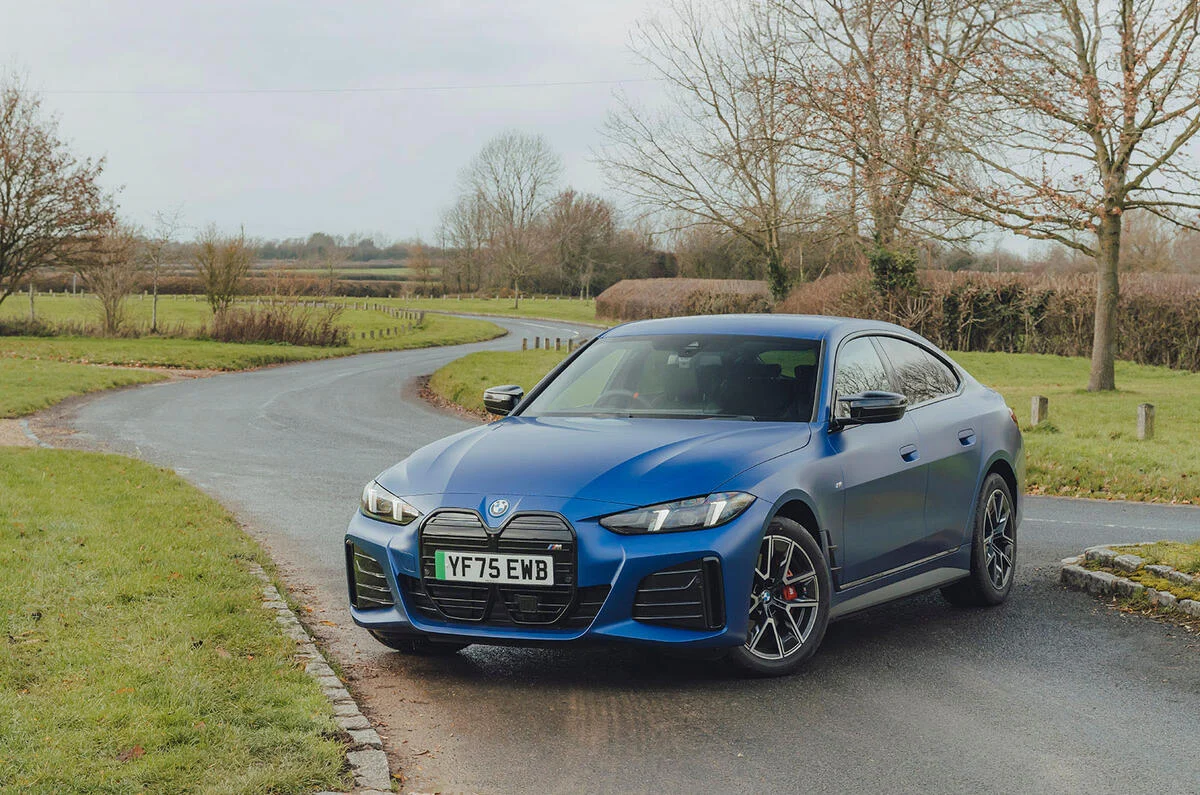
In a significant realignment of its electric vehicle strategy, BMW has confirmed that the i4 Gran Coupe will be discontinued next year, marking the end of one of the brand’s most successful early entries into the premium EV market. The decision, revealed during the official unveiling of the new BMW i3 in Munich, signals a shift toward the company’s "Neue Klasse" (New Class) architecture. The i4, which has been a staple of BMW’s electric portfolio since 2021, will see its position in the lineup absorbed by the newly launched i3, a vehicle that promises to redefine the brand’s core electric offerings with a range of up to 559 miles and cutting-edge battery technology.
The discontinuation of the i4 represents a pivotal moment in BMW’s electrification timeline. Since its launch, the i4 has served as a bridge between the traditional internal combustion engine (ICE) 4 Series and the brand’s future as a digital-first EV manufacturer. Built on the flexible CLAR (Cluster Architecture) platform, the i4 shared much of its DNA with the petrol-powered 4 Series Gran Coupe. However, with the arrival of the i3, which is built on a dedicated electric-first platform, BMW executives have determined that the overlap between the two models is no longer sustainable. The i3’s debut in Munich showcased a vehicle that is not only more technologically advanced but also strategically positioned to capture the high-volume executive sedan market that has long been the territory of the 3 Series.
The Evolution of the BMW Electric Portfolio
The BMW i4 was introduced in 2021 alongside the iX flagship SUV, representing the first wave of BMW’s volume-production electric vehicles. At the time, it was praised for its ability to deliver a traditional BMW driving experience—complete with rear-wheel-drive dynamics and premium interior finishes—within an electric package. The i4 M50 variant, in particular, became a global success, frequently topping sales charts as the best-selling model from the BMW M division.
Despite this success, the i4’s architecture was always a compromise. By utilizing a platform designed to accommodate petrol, diesel, and plug-in hybrid powertrains, the i4 had to navigate constraints in interior packaging and weight distribution. The new i3, revealed today, is a departure from this "one size fits all" approach. It utilizes the Neue Klasse platform, which features a sixth-generation lithium-ion battery design. These new cylindrical cells offer a 20% increase in energy density and a 30% improvement in range compared to the prismatic cells used in the current i4.
During the Munich event, BMW Group product boss Jochen Goller emphasized that the phasing out of the i4 was a calculated move rather than a reaction to market fluctuations. Goller explained that the automotive industry has always relied on the cyclical replacement of models to maintain competitiveness. He noted that the i4 has had a successful five-year run by the time it exits production, and that providing "breathing space" for the i3 is essential for the brand’s long-term growth.
Technical Superiority and the Neue Klasse Leap
The primary driver behind the i4’s retirement is the sheer technical leap represented by the new i3. While the i4 offered a respectable range of roughly 300 to 365 miles depending on the variant, the i3 pushes those boundaries significantly. With a maximum WLTP-certified range of 559 miles (approximately 900 kilometers), the i3 addresses one of the primary concerns of premium EV buyers: long-distance usability.
This range is made possible by the 800-volt charging architecture integrated into the Neue Klasse platform. This system allows for ultra-fast charging speeds, enabling the vehicle to add up to 186 miles of range in just 10 minutes under optimal conditions. In contrast, the i4 utilized a 400-volt system, which, while efficient for its time, is rapidly becoming outdated as competitors like Porsche, Hyundai, and Kia move toward higher voltage standards.
The i3 also introduces a new software-heavy approach to vehicle dynamics. BMW’s "Heart of Joy" driving dynamics controller integrates the powertrain and chassis management into a single high-performance computer, promising a level of precision in handling that the CLAR-based i4 could not match. By consolidating these functions, BMW aims to deliver the "Sheer Driving Pleasure" slogan in a way that is native to electric propulsion rather than adapted from ICE mechanics.
Production Shift at the Munich Plant
The transition from i4 to i3 will have a direct impact on BMW’s manufacturing footprint. The i4 is currently produced at BMW’s main plant in Munich, a facility that has undergone a massive €650 million ($700 million) transformation to prepare for the Neue Klasse era. BMW has confirmed that production of the i4 will conclude in 2025 to make room for the imminent ramp-up of the i3.
The Munich plant is central to BMW’s "iFACTORY" production strategy, which focuses on lean, green, and digital manufacturing. By 2027, the Munich facility is expected to produce exclusively electric vehicles, making it the first site in BMW’s global network to complete a full transition away from internal combustion engines. The discontinuation of the i4 allows the factory to focus its resources on the higher-volume i3 and the upcoming electric 3 Series variants, ensuring that the plant operates at maximum efficiency during this critical transition period.
The Future of the 4 Series Nameplate
While the current i4 is reaching the end of its life cycle, the 4 Series nameplate is not being abandoned entirely. BMW Development Boss Joachim Post has clarified that the 4 Series remains an "important car" for the brand’s identity. The 4 Series has historically served as the more style-focused, dynamic sibling to the 3 Series, and BMW intends to maintain this distinction in the future.
According to internal sources, BMW is currently developing a next-generation 4 Series that will align with the company’s "Power of Choice" philosophy. This means that while the i4 as we know it will disappear, a new 4 Series will eventually emerge, offering both highly efficient internal combustion engines and a fully electric powertrain. Crucially, these future models will share a unified design language, regardless of what lies under the hood.
Jochen Goller confirmed that the brand’s future strategy is to offer consistent styling across different powertrain options. This marks a shift from the early days of the "i" brand, where models like the i3 (the original hatchback) and i8 featured radical, standout designs. The upcoming 4 Series will likely mirror the aesthetic of the Neue Klasse concepts—characterized by clean lines, a reimagined kidney grille, and a focus on sustainable materials—while offering the performance characteristics expected of a BMW coupe or Gran Coupe.
Market Context and Competitive Landscape
The decision to streamline the lineup comes at a time of intense competition in the premium D-segment. The Tesla Model 3 has long dominated this space, and the recent "Highland" refresh has only strengthened its position. Meanwhile, traditional rivals like Mercedes-Benz and Audi are also readying their next-generation electric saloons, with the Mercedes CLA EV and the Audi A4 e-tron expected to arrive in the next 18 to 24 months.
By consolidating its efforts into the i3, BMW is betting that a single, highly advanced model will be more effective at capturing market share than two overlapping models. The i4 and the 3 Series have historically competed for the same pool of customers—professionals seeking a premium, German-engineered daily driver. By merging these interests into the i3, BMW can simplify its marketing, reduce manufacturing complexity, and present a clearer value proposition to consumers.
Furthermore, the i3’s 559-mile range gives BMW a significant marketing advantage over Tesla and other premium competitors, many of which struggle to break the 400-mile barrier in real-world conditions. This "range-first" strategy is seen as essential for convincing the remaining ICE loyalists to make the switch to electric power.
Financial and Strategic Implications
From a financial perspective, the move to discontinue the i4 is a masterclass in capital allocation. Maintaining two separate platforms (CLAR for the i4 and Neue Klasse for the i3) in the same segment is a costly endeavor. By moving exclusively to the Neue Klasse architecture for its core executive models, BMW can achieve significant economies of scale.
BMW Group’s financial reports from 2023 indicated that EV margins are beginning to converge with those of their ICE counterparts, but this parity is only achievable through the use of dedicated platforms and optimized supply chains. The Neue Klasse platform is expected to reduce battery costs by 50% per kilowatt-hour, a saving that is vital for BMW to maintain its premium margins while investing heavily in autonomous driving and digital services.
Industry analysts suggest that the retirement of the i4 is also a response to the changing regulatory environment in Europe and China. With Euro 7 emissions standards and increasingly stringent EV quotas, BMW needs to ensure that its electric fleet is as efficient as possible. The i3’s superior aerodynamics and powertrain efficiency will contribute more significantly to BMW’s fleet emission targets than the older i4 could.
Conclusion: A Planned Transition
The end of the BMW i4 is not a sign of failure, but rather a testament to the rapid pace of technological advancement in the automotive sector. As Jochen Goller noted, the industry is defined by the phasing out of the old to make way for the new. The i4 proved that BMW could build a compelling electric car that stayed true to its heritage; the new i3 aims to prove that BMW can lead the electric era.
As production of the i4 winds down in Munich throughout 2025, the automotive world will be watching closely to see if the i3 can live up to its ambitious range and performance claims. For enthusiasts of the 4 Series, the promise of a future model that blends Neue Klasse technology with the sleek proportions of a coupe offers a silver lining. For now, however, the spotlight belongs to the i3, the car that BMW believes will carry the "ultimate driving machine" legacy into a sustainable future.