


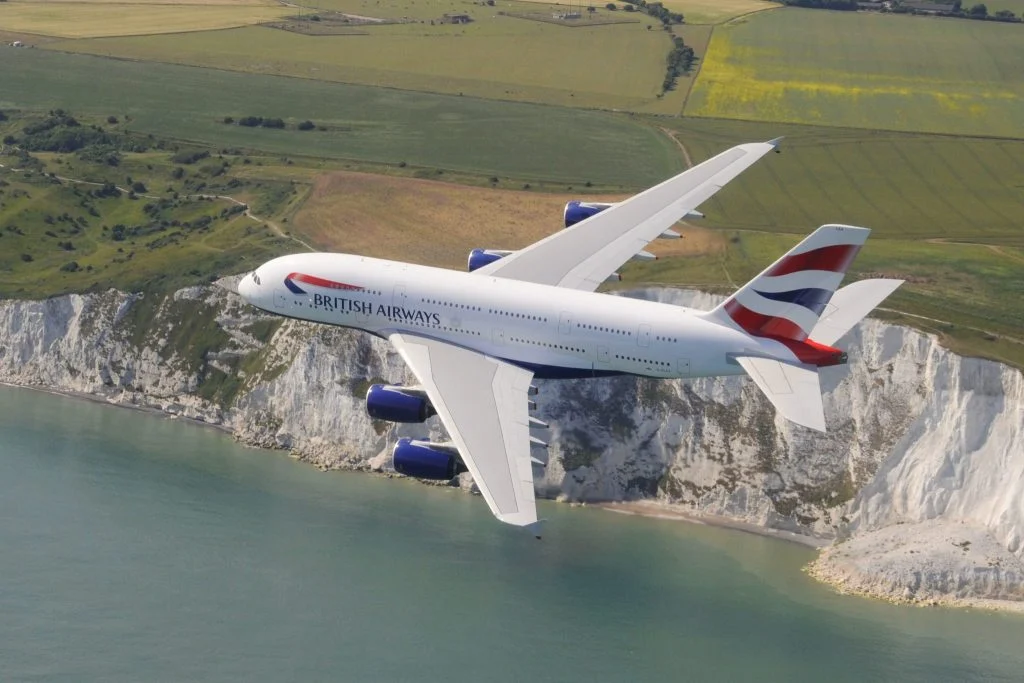
British Airways has officially announced a significant extension of its flight suspensions to several key destinations across the Middle East, signaling a period of prolonged operational disruption as geopolitical instability continues to grip the region. The United Kingdom’s flag carrier confirmed that scheduled services to Amman, Bahrain, Dubai, and Tel Aviv will remain grounded until at least May 31. This decision follows a comprehensive security review and reflects the heightened risks associated with the ongoing conflict involving Israel and Iran, which has created a volatile environment for commercial aviation across several major flight corridors.
The suspension timeline varies slightly across the airline’s regional network. While the core destinations mentioned above are halted through the end of May, services to Doha are currently suspended until April 30, with a severely restricted schedule expected to follow throughout the month of May. Furthermore, the airline’s seasonal service to Abu Dhabi, which was originally slated to continue through the spring, was terminated ahead of schedule; it is not expected to return to the flight roster until October 25. This series of cancellations represents one of the most substantial and longest-lasting service interruptions by a major Western carrier since the regional security situation deteriorated in late 2023.
Operational Context and Security Considerations
The decision by British Airways to maintain a prolonged hiatus in its Middle Eastern operations is rooted in the complex security dynamics that emerged following the direct military engagement between Iran and Israel in mid-April. On April 13 and 14, Iran launched a massive barrage of more than 300 drones and missiles toward Israeli territory, an unprecedented escalation that forced the immediate closure of airspaces in Jordan, Iraq, Lebanon, and Israel. While these airspaces were reopened within 24 to 48 hours, the underlying threat level remains elevated, prompting Western carriers to adopt a highly cautious approach.
For British Airways, the primary concern lies in the safety of its crew, passengers, and assets. Unlike regional carriers such as Emirates, Qatar Airways, or Etihad—which have largely maintained their flight schedules despite the unrest—Western airlines often operate under more stringent risk assessment protocols influenced by national intelligence agencies and insurance requirements. The potential for "misidentification" in a high-alert air defense environment, or the risk of being caught in a sudden closure of a vital transit corridor, has led British Airways to prioritize caution over route continuity.
Detailed Timeline of Disruptions and Resumption Dates
To provide clarity for travelers and industry stakeholders, the airline has outlined a specific, albeit tentative, timeline for its regional operations:
- Tel Aviv (Ben Gurion Airport): Flights are suspended up to and including May 31. This route has seen multiple disruptions since the October 7 attacks, with BA briefly resuming and then quickly canceling flights as the security situation fluctuated.
- Dubai (International): One of the airline’s most profitable and high-frequency routes is now halted until May 31. This is a significant blow to the carrier’s long-haul network, as Dubai serves as a major destination for both business and leisure travelers.
- Amman and Bahrain: Both destinations will see no British Airways service until the end of May. These routes are particularly sensitive to the regional spillover of the conflict, given Jordan’s proximity to the West Bank and Israel.
- Doha (Hamad International): Flights are suspended until April 30. A limited service is planned for May, though the airline has cautioned that this is subject to daily review based on the prevailing security climate.
- Abu Dhabi: The seasonal service has been ended early. The airline has confirmed that it will not return to the UAE capital until the start of the winter flight schedule on October 25.
Supporting Data: The Impact on Global Aviation Logistics
The suspension of these routes is not merely an inconvenience for passengers; it represents a significant logistical challenge for the global aviation industry. The Middle East serves as a critical "bridge" between Europe and Asia. When major airspaces become contested or risky, airlines are forced to reroute flights, often adding hours to journey times and significantly increasing fuel consumption.
Data from flight tracking services indicates that flights from London to Southeast Asia and Australia, which normally transit through the Persian Gulf or over Iraqi and Iranian airspace, are now being diverted either northward over Turkey and the Caucasus or southward over Egypt and Saudi Arabia. For a Boeing 777 or 787—the workhorses of BA’s long-haul fleet—a two-hour diversion can result in the consumption of an additional 15 to 20 tons of fuel. At current jet fuel prices, these diversions represent a massive overhead cost that erodes the profitability of long-haul sectors.
Furthermore, the "risk premium" associated with flying in the region has caused insurance premiums for hull and liability coverage to spike. For a carrier like British Airways, which is part of the International Airlines Group (IAG), these cumulative costs necessitate a pragmatic approach to route management, leading to the decision to suspend rather than operate at a loss or under unacceptable risk.
Official Statements and Passenger Rights
In a statement regarding the suspensions, a spokesperson for British Airways emphasized the airline’s commitment to safety: "The safety and security of our customers and crew are always our top priority. We are keeping the situation in the Middle East under constant review and will continue to adjust our flight schedules as necessary. We apologize to customers for the inconvenience caused and are offering full refunds or the option to rebook with partner airlines where possible."
The UK Foreign, Commonwealth & Development Office (FCDO) has also updated its travel advice, warning British citizens against all but essential travel to several parts of the region. The government’s stance plays a pivotal role in the airline’s decision-making process, as British Airways operates closely with national security advisors to determine the viability of its international routes.
Under UK air passenger rights regulations (UK261), passengers whose flights have been canceled are entitled to a full refund or rerouting to their final destination at the earliest opportunity. However, because these cancellations are often categorized as "extraordinary circumstances" beyond the airline’s control—specifically due to regional conflict and airspace closures—passengers may not be eligible for additional financial compensation for the delay itself. Nonetheless, the airline is required to provide "duty of care," including meals and hotel accommodation, if a passenger is stranded away from home due to a cancellation.
Broader Economic and Geopolitical Implications
The extended withdrawal of British Airways from major Middle Eastern hubs has broader implications for the region’s economy. Cities like Dubai and Amman rely heavily on international connectivity to support their tourism and business sectors. The absence of a major carrier like BA reduces the "premium" seat capacity available to corporate travelers, potentially slowing down international business dealings and diplomatic exchanges.
From a geopolitical perspective, the suspension highlights the growing divide in risk tolerance between Western carriers and their Middle Eastern counterparts. While Emirates and Qatar Airways continue to operate, citing their advanced localized knowledge and sophisticated risk management systems, the withdrawal of Western airlines serves as a barometer for the perceived stability of the region. Analysts suggest that if the tensions between Iran and Israel do not show clear signs of de-escalation, other European and North American carriers may follow BA’s lead, further isolating Middle Eastern hubs from Western markets.
The impact on air cargo is also noteworthy. A significant portion of global freight is carried in the "belly" of passenger aircraft. The suspension of daily flights to Dubai and Doha reduces the capacity for time-sensitive shipments, such as electronics, pharmaceuticals, and luxury goods, potentially leading to increased shipping costs and supply chain bottlenecks for UK-based businesses trading with the Gulf.
Conclusion and Future Outlook
As the May 31 deadline approaches, the aviation industry will be watching closely for signs of a return to normalcy. However, the restart of services remains contingent on a verifiable reduction in military activity and a stabilization of the diplomatic landscape. The fact that British Airways has pushed its Abu Dhabi resumption all the way to October suggests that the airline is bracing for a long period of regional uncertainty.
For now, the "wait and see" approach remains the dominant strategy for major international carriers. While the suspension represents a significant tactical retreat for British Airways in a historically lucrative market, the airline’s management appears resolute in its belief that operational safety must take precedence over commercial gains in an increasingly unpredictable global environment. For travelers, the message is clear: the map of global aviation is being redrawn by geopolitical necessity, and the era of seamless, high-frequency travel to the Middle East may face continued interruptions for the foreseeable future.