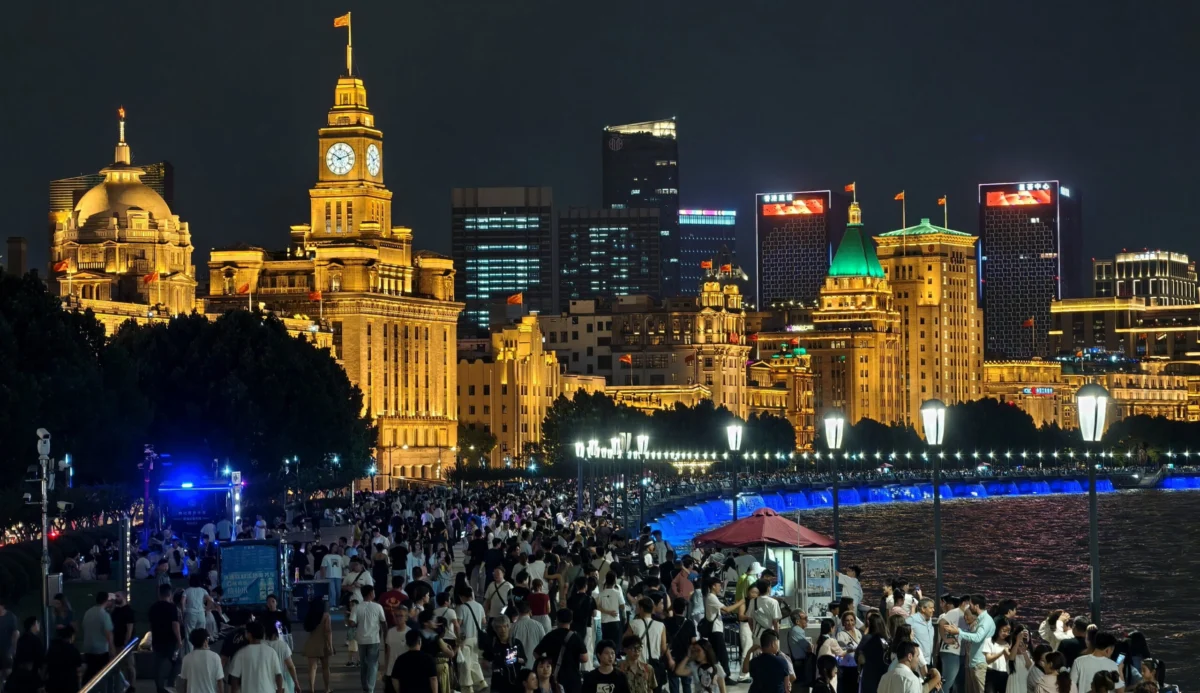
Shanghai, China – The vibrancy that once characterized China’s domestic tourism market, a crucial pillar of its post-pandemic economic recovery and a testament to its "dual circulation" strategy, is now exhibiting an unexpected and concerning deceleration. This downturn, observed across various segments of the travel industry, casts a significant shadow over one of the few previously robust sectors in the country’s otherwise sluggish consumer economy. While the broader market grapples with waning enthusiasm and heightened price sensitivity among local travelers, a distinct and growing segment of luxury inbound tourism is emerging as a potential, albeit modest, counter-narrative, driven by strategic visa policies and a discerning international clientele.
The initial promise of a robust domestic rebound following the lifting of stringent COVID-19 restrictions had fueled optimism, with a surge in travel and leisure activities throughout 2023 and early 2024. This period saw Chinese citizens, long confined by travel restrictions, unleash pent-up demand, flocking to scenic spots, historical sites, and urban getaways. However, this surge now appears to be losing momentum faster than anticipated, signaling deeper structural issues within the Chinese consumer landscape.
Mounting Evidence of a Domestic Downturn
Concrete indicators from major industry players underscore this troubling trend. Hilton China, a bellwether for the hospitality sector, recently revised its financial outlook, now projecting revenue per available room (RevPAR) to fall by low single digits this year. This revised forecast is notably worse than earlier expectations for a flat performance, indicating a significant shift in market dynamics. The hotel group’s performance trajectory vividly illustrates the abrupt change, with RevPAR swinging from a modest 1.3% growth in the first quarter of 2026 to a concerning 2.2% decline in the second quarter. Christopher Nassetta, President and CEO of Hilton, articulated the underlying cause during the group’s earnings call, stating, "The China economy is sputtering, and I mean it’s growing, but not consistent with what prior growth rates have been." His comments reflect a growing concern among international business leaders operating within the Chinese market.
Further corroborating Hilton’s observations, broader industry data paints a stark picture. According to Smith Travel Research data, as cited by Goldman Sachs, hotel RevPAR across China tumbled by a significant 6% year-on-year through late July 2026. This steep decline follows a 1% drop recorded in June, signaling an accelerating downward trend after a period of mild growth in the spring. The Goldman Sachs report meticulously detailed the contributing factors: a three-percentage-point drop in occupancy rates combined with a 1% decline in average daily rates (ADR) compared to the previous year. This dual pressure on both demand and pricing power highlights a weakening market where hotels are struggling to fill rooms and are compelled to offer discounts, thereby eroding profitability. Analysts at Goldman Sachs have since adjusted their sector outlook, citing "unexpected softness in consumer discretionary spending" as the primary driver for the hospitality sector’s underperformance.
Shifting Consumer Behavior and Economic Headwinds
The fading of China’s post-COVID tourism boom, which had sustained for nearly three years, is not an isolated phenomenon. It is intricately linked to a broader slowdown in the national economy and persistent weakness in retail sales. Economists are increasingly pointing to a fundamental shift in consumer behavior. Gary Ng, a senior economist at Natixis, has observed a "sharp decline of per-capita spending" on tourism since the third quarter of 2025. This suggests that even when Chinese citizens choose to travel, they are spending less per trip, opting for more budget-friendly options, shorter durations, or curtailing discretionary expenses like dining and entertainment while on holiday.
Ng further elaborates that while tourism still holds appeal, it "cannot escape this broad macro trend" of economic deceleration. He notes that consumers in China are increasingly seeking more unique or premium experiences, a trend that paradoxically coexists with slower wage growth and heightened price sensitivity. This implies a bifurcation in demand: a segment still desires high-quality experiences but is more selective and less willing to pay premium prices for standard offerings, while a larger segment is actively trading down to more affordable options.
Intensifying Price Competition Across Popular Destinations
The impact of this shift is particularly evident in the fierce price competition observed across China’s most popular domestic travel regions. Data from Trip.com, one of Asia’s largest online travel agencies, clearly indicates a race to the bottom in terms of pricing. Destinations like Shanghai, known for its cosmopolitan allure; Xinjiang, with its unique cultural and natural landscapes; and Yunnan, famous for its diverse ethnic cultures and scenic beauty, are all experiencing intense discounting.
A CNBC analysis of Trip.com listings reveals the vast disparity in pricing, with one-night stays in China ranging from as little as 40 yuan (approximately US$6) to an extravagant 18,000 yuan (approximately US$2,633) in August 2026. However, these extreme ends mask the prevailing trend of affordability. Median prices for a one-night stay in popular destinations were remarkably low: just 192 yuan (US$28) in Kashgar, Xinjiang; 373 yuan (US$55) in Dali, Yunnan; and 595 yuan (US$88) in Shanghai. While premium rooms costing thousands of yuan can inflate average prices, the typical traveler is clearly gravitating towards, and being catered to by, a plethora of inexpensive options widely available across all three destinations. For instance, a weekend night in August at a Hilton resort in Dali, a city popular with domestic tourists, might run at $173, but other highly-rated options on Trip.com are often less than half that price, with some available for around $50. This intense competition is forcing established brands to re-evaluate their pricing strategies and value propositions.
Broader Economic Context and Government Response
The struggles within the tourism sector are symptomatic of deeper economic challenges facing China. Retail sales have remained sluggish since the pandemic, with a notable dip in May 2026 compared to a year prior. Consumer prices have also remained subdued, with a slower-than-expected 1% rise in June 2026 year-on-year. This low inflation environment, bordering on deflationary pressures in some sectors, reflects weak consumer demand and a cautious spending sentiment. The travel sub-index, a component of the broader consumer price index, dropped by 0.6% in June from the prior month, according to China’s National Bureau of Statistics (NBS). Dong Liquan, chief statistician at the NBS, specifically highlighted sharp price drops in hotel rates and airfares in his accompanying commentary, underscoring the severity of the situation within the travel industry.
The Chinese government has been actively pursuing policies aimed at stimulating domestic consumption, recognizing its critical role in transitioning the economy away from an over-reliance on exports and investment. However, the recent data suggests these efforts are encountering significant headwinds. Factors such as a prolonged real estate downturn, high youth unemployment rates, and geopolitical uncertainties have collectively eroded consumer confidence, making households more prone to saving than spending. While there have been targeted fiscal measures and calls for more aggressive stimulus, their impact on reigniting broad-based consumer spending, particularly in discretionary areas like tourism, has been limited. Industry experts suggest that more direct and substantial income support or confidence-boosting measures may be necessary to reverse the current trend.
The Unexpected Boost from Inbound Luxury Travel
Amidst the gloom of the domestic market, inbound international travel is emerging as a surprising, albeit niche, source of hope for China’s tourism industry. This segment presents a stark contrast to the struggling domestic market, offering a brighter picture, particularly at the premium end. This resurgence is largely attributed to China’s proactive policy of allowing visa-free entry for travelers from an expanding list of countries, predominantly those with significantly higher per capita incomes than China. Countries like France, Germany, Italy, Spain, the Netherlands, and Malaysia have been beneficiaries of these relaxed visa requirements, enabling a smoother and more attractive travel experience for their citizens.
The impact of these policies is already being felt by luxury hotel operators. Hyatt, another upscale U.S. hotel operator, reported a significant surge in foreign visitors during its latest quarter. The company observed an 18% increase in U.S. visitors to China and an even more impressive 24% rise from European countries. This influx of high-spending international travelers is providing a much-needed boost to the luxury hospitality sector. Mark Hoplamazian, Hyatt’s president and CEO, enthused during the earnings call that "China luxury properties were up 11% this past quarter in China. Lot of it’s leisure. So China is on fire" in this specific segment. Hyatt’s Greater China RevPAR, buoyed by this trend, rose a healthy 7.2% year-on-year in the second quarter of 2026, with Hoplamazian specifically citing "leisure luxury" as a key driver.
These inbound travelers typically possess higher disposable incomes and often seek out unique, culturally immersive, and premium experiences, from bespoke tours to high-end dining and luxury retail. Their spending patterns tend to be less price-sensitive and contribute significantly more per capita to the local economy compared to the average domestic tourist. While inbound travelers currently account for a modest 12% to 13% of total tourism spending, according to Natixis estimates, their growing numbers and higher spending power offer a crucial lifeline and a potential growth avenue for China’s service economy. The government’s decision to expand visa-free access reflects a strategic pivot, recognizing the economic value of high-spending international tourists and seeking to counterbalance the domestic slowdown.
Implications and Future Outlook
The divergence between China’s domestic and inbound tourism markets presents a complex challenge for policymakers and industry stakeholders. The weakening domestic market underscores the broader economic anxieties facing Chinese consumers and highlights the need for more effective stimulus measures to boost household income and confidence. Without a fundamental improvement in the domestic economic outlook, the reliance on internal consumption for growth will remain fragile. Local governments, heavily dependent on tourism revenue, are likely to increase their efforts to promote local attractions with aggressive marketing campaigns and further discounts, potentially exacerbating price competition.
Conversely, the success of the luxury inbound segment offers a clear strategic direction. Continuing to expand visa-free policies, enhancing the quality of tourism infrastructure catering to international standards, and promoting China’s diverse cultural and natural heritage to a global audience could further unlock this segment’s potential. Investment in multilingual services, international payment system integration, and tailored luxury experiences will be critical for sustaining this growth.
However, the limited contribution of inbound tourism (12-13% of total spending) means it cannot fully offset the scale of the domestic slowdown. The long-term health of China’s tourism industry and its broader service economy will ultimately depend on a robust and confident domestic consumer base. Analysts suggest that the coming quarters will be crucial in determining whether the current weakness is a temporary adjustment or a more entrenched shift in consumer behavior, demanding a re-evaluation of economic growth strategies and a concerted effort to restore the vitality of the Chinese consumer. The eyes of global investors and economists will remain fixed on Beijing’s ability to navigate these multifaceted challenges and rekindle the once-bright spark of its domestic consumption engine.