


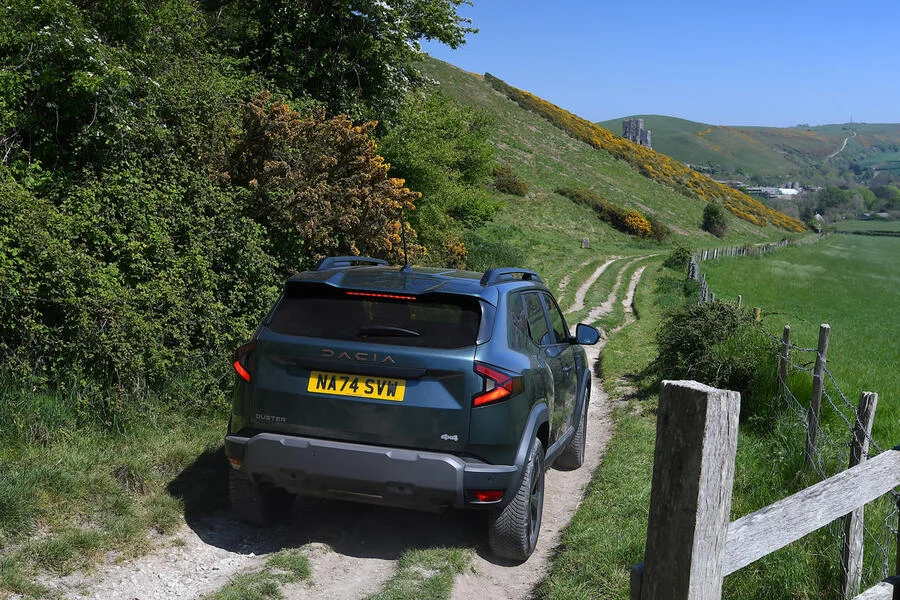
The Dacia Duster has long maintained a unique position within the European automotive landscape, serving as a bridge between budget-conscious passenger transport and genuine utilitarian capability. Since its introduction under the Renault Group’s stewardship, the Duster has defied the industry trend toward increasingly complex and expensive crossovers by adhering to a philosophy of "essentialism." In its 4×4 configuration, the vehicle promises a level of off-road proficiency that typically requires a significantly higher financial investment. To evaluate these claims, a comprehensive field test was conducted across the demanding terrain of the Dorset countryside, specifically targeting the undulating elevations surrounding the historic Corfe Castle. The objective was to determine if the Duster’s mechanical simplicity and lightweight construction could compensate for its lack of high-end luxury features when faced with technical ascents and deteriorating track conditions.
Strategic Market Context and Vehicle Background
The Dacia brand’s trajectory from a localized Romanian manufacturer to a dominant force in the European market is centered on the optimization of existing Renault-Nissan Alliance platforms. The Duster 4×4 utilizes a proven all-wheel-drive system derived from Nissan’s extensive experience with off-road vehicles. This system allows drivers to toggle between three modes: 2WD (front-wheel drive for fuel efficiency), Auto (automatic torque distribution based on slip), and Lock (a 50/50 torque split between the front and rear axles for low-traction environments).
As the automotive market sees the gradual disappearance of affordable, rugged 4x4s—exemplified by the upward price migration of the Land Rover Defender and the niche positioning of the Suzuki Jimny—the Duster remains one of the few options for rural professionals and enthusiasts who require go-anywhere capability without the premium price tag. The current model features a ground clearance of 210mm and a suite of off-road geometries that rival dedicated off-roaders. With an approach angle of 30 degrees, a departure angle of 33 degrees, and a breakover angle of 21 degrees (extending to 24 degrees in specific configurations), the Duster is mathematically equipped to handle significant topographic variances.
Chronological Assessment: The Dorset Ascent
The evaluation began on the outskirts of the Purbeck Hills, where the terrain transitioned from maintained tarmac to steep, unmanicured grassy inclines. Grass represents a deceptive challenge for many all-wheel-drive systems; while it appears benign, the low friction coefficient of damp or sun-scorched vegetation can easily induce wheelspin, leading to a loss of momentum on steep gradients. The Duster approached these inclines with a level of composure that exceeded initial expectations. By maintaining a steady throttle input, the vehicle dispatched the grassy slopes of Dorset with exceptional ease, reaching the summit without the need for aggressive electronic intervention.
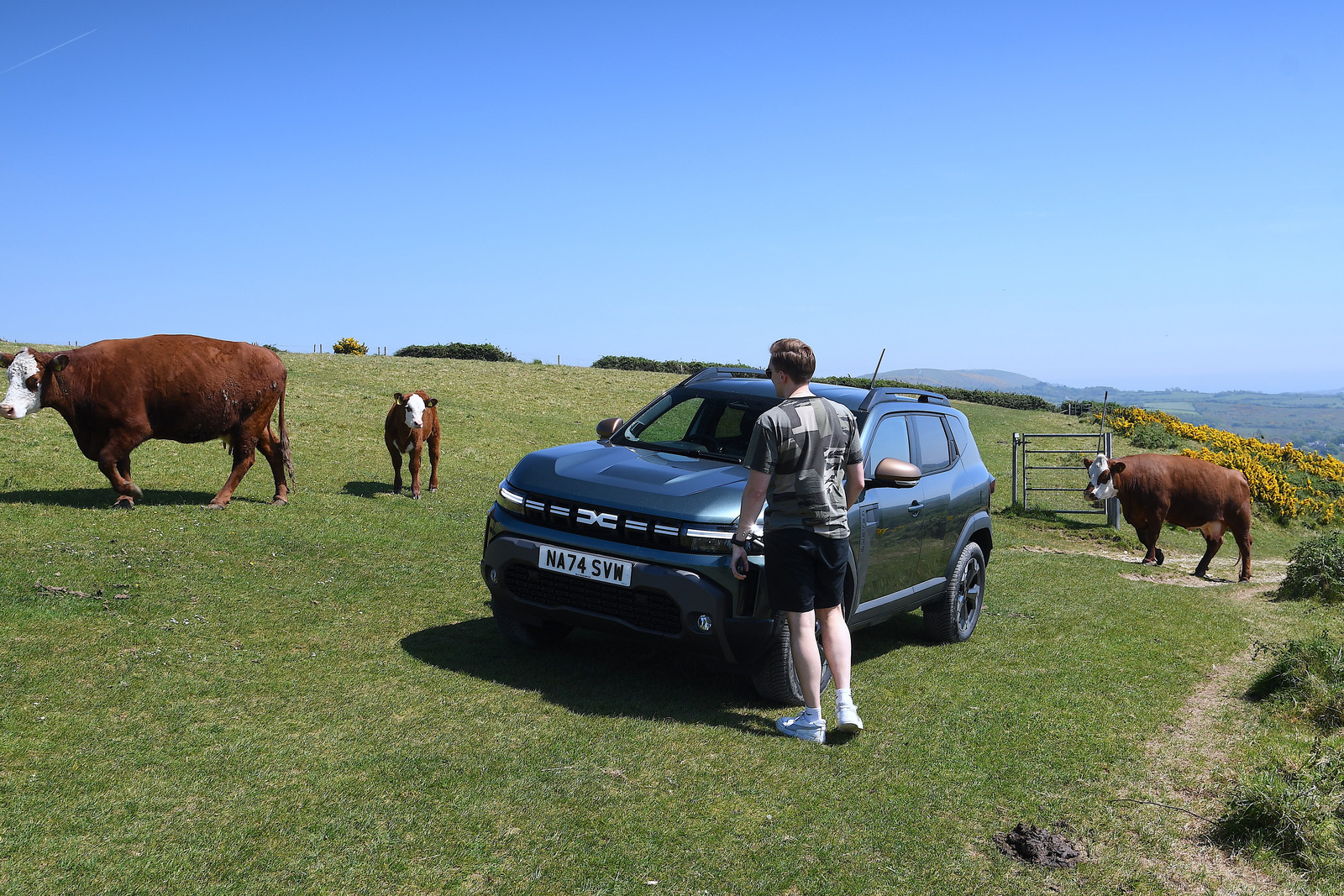
Upon reaching the plateau overlooking Corfe Castle, the vehicle’s utility as a viewing platform became evident. Despite the high ambient temperatures of the day, the Duster’s climate control system maintained a stable cabin environment, providing a stark contrast to the conditions faced by local hikers. This phase of the test highlighted the vehicle’s dual-purpose nature: providing enough comfort for daily use while retaining the mechanical grit required to reach remote locations.
The descent from the summit introduced the Duster’s Hill Descent Control (HDC). This system, which operates in first gear or reverse, uses the Anti-lock Braking System (ABS) to regulate the speed of the vehicle on steep declines, allowing the driver to focus entirely on steering. While the initial slope was manageable, the HDC provided an additional layer of security as the vehicle transitioned toward a more technical trail.
Technical Navigation and Geometric Performance
The trail ahead presented a significant shift in difficulty. The track narrowed to the width of the vehicle, characterized by deep, "crevasse-like" cavities and severely damaged surfaces. In these conditions, the Duster’s 24-degree breakover angle became its most critical asset. The breakover angle is the maximum supplementary angle that a vehicle can drive over a peak without the apex of that peak touching the underside of the vehicle. By exceeding the breakover angle of several variants of the Jeep Wrangler, the Duster was able to traverse deep ruts and jagged transitions without scuffing its undercarriage or damaging its exhaust system.
As the vehicle pushed through overgrown sections where foliage made contact with the wing mirrors, the suspension system was put to the test. The Duster’s MacPherson strut front suspension and multi-link rear setup (specific to the 4×4 model) managed the transition between deep potholes and loose gravel with surprising refinement. Although gravel underfoot inherently compromises grip, the vehicle’s weight distribution—lighter than many premium SUVs—allowed it to find traction where heavier vehicles might have dug into the substrate.
The Operational Challenge: Differential Management and Traction
A critical moment in the evaluation occurred at a gated junction on a steep gravel track. The track was bordered by a significant drop on the leeward side and occupied by local livestock, necessitating a cautious approach. Due to the narrowness of the path, exiting the vehicle to operate the gate was physically impossible. The arrival of a local cyclist allowed for the gate to be opened, but the subsequent attempt to resume the climb highlighted a nuance in the Duster’s drivetrain logic.
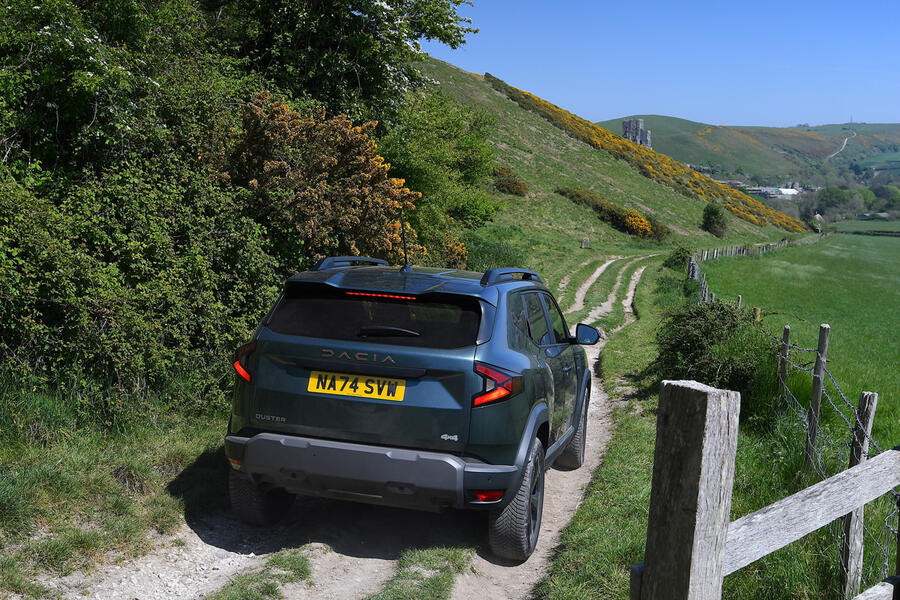
Upon attempting to pull away on the steep, loose surface, the vehicle experienced immediate wheelspin and the characteristic odor of a slipping clutch. An inspection of the instrument cluster revealed that the vehicle had defaulted back to its standard driving mode, unlocking the central differential. This typically occurs if the vehicle has been stationary for a period or if the system detects a change in parameters that suggests the "Lock" mode is no longer required.
Once the driver manually reset the system to "Lock," the Duster’s behavior transformed. The 50/50 torque split allowed the vehicle to "chug" up the incline with steady, predictable power. This incident underscored the importance of driver engagement with the vehicle’s mechanical settings; while the Duster is capable, it requires the operator to be cognizant of the selected drive mode to maximize performance in high-stakes environments.
Comparative Analysis and Industry Implications
As the Duster reached the final summit of the test, a comparison was inadvertently provided by the appearance of a 2010-era Volkswagen Touareg. The Touareg, a vehicle from a higher market segment with a more powerful engine and a more complex air suspension system, ascended the same trail with significant momentum. This encounter served as a reminder of the two different philosophies regarding off-road travel. The Touareg represents the "power and technology" approach, using brute force and sophisticated electronics to overcome obstacles. The Duster, conversely, represents the "lightweight and geometric" approach.
While the Touareg was able to "crash" its way up the trail with speed, the Duster’s ascent was more measured and calculated. For the budget-conscious consumer, the fact that a vehicle costing a fraction of a premium SUV can traverse the same terrain is a powerful testament to Dacia’s engineering priorities. Following a final descent through the bovine-occupied lower tracks, a post-drive inspection of the Duster revealed no structural damage, scratches, or mechanical fatigue, confirming the durability of its exterior plastics and underbody protection.
Conclusion and Future Outlook
The field test in Dorset confirms that the Dacia Duster 4×4 remains a formidable contender in the utility segment. Its performance on grassy inclines, technical ruts, and steep gravel tracks demonstrates that sophisticated, expensive systems are not always a prerequisite for off-road success. Instead, favorable approach and breakover angles, combined with a lightweight chassis and a reliable, switchable 4WD system, provide a high degree of "real-world" capability.
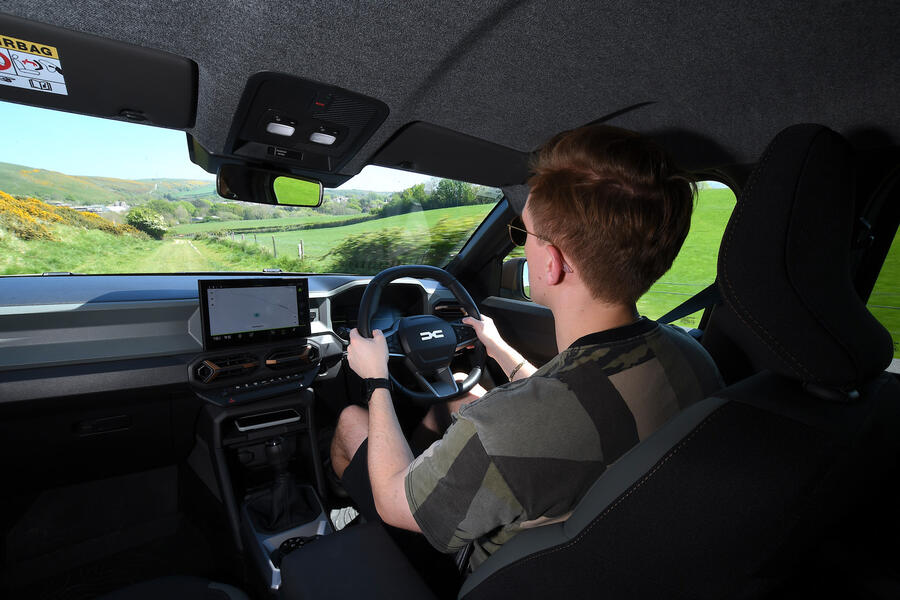
From a broader industry perspective, the Duster’s success highlights a persistent demand for "honest" vehicles. As the market shifts toward electrification and increased automation, the Duster 4×4 serves as a benchmark for how manufacturers can provide utility without unnecessary complexity. However, the brand faces upcoming challenges. New European safety regulations (GSR2) and tightening emissions standards are forcing Dacia to integrate more electronic architecture into their vehicles. The challenge for the next generation of the Duster will be to maintain this rugged, simple DNA while meeting the technological demands of the modern era.
For now, the Duster 4×4 stands as a unique proposition: a vehicle that is equally at home in a suburban supermarket car park as it is navigating the treacherous, cow-strewn ridges of the English countryside. It proves that in the world of off-roading, geometry and weight often matter more than horsepower and prestige.