


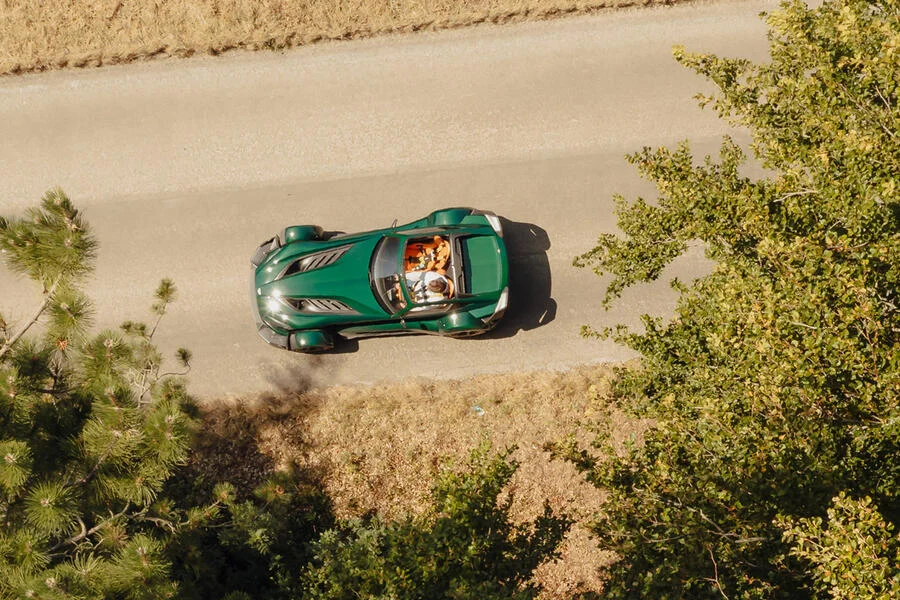
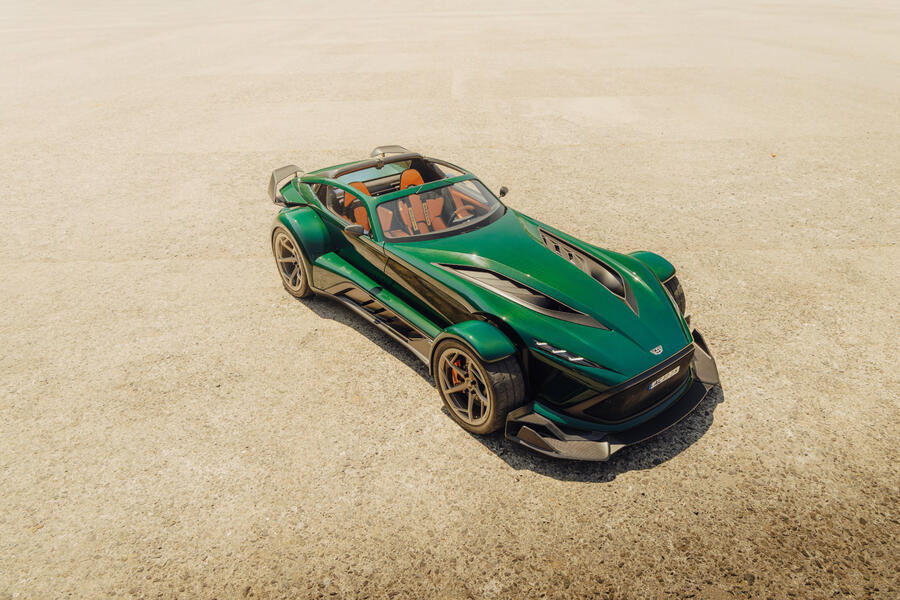
The arrival of the Donkervoort P24 RS on British soil marks a significant milestone for the boutique Dutch manufacturer, signaling its first official foray into the right-hand-drive market. For over half a century, Donkervoort has occupied a unique niche in the European automotive landscape, evolving from a modifier of Lotus Seven kits into a producer of some of the world’s most advanced and uncompromising lightweight supercars. With the P24 RS, the company is preparing to challenge the traditional dominance of British marques in the lightweight sector, bringing a vehicle that combines extreme power-to-weight ratios with a distinctly analog driving philosophy.
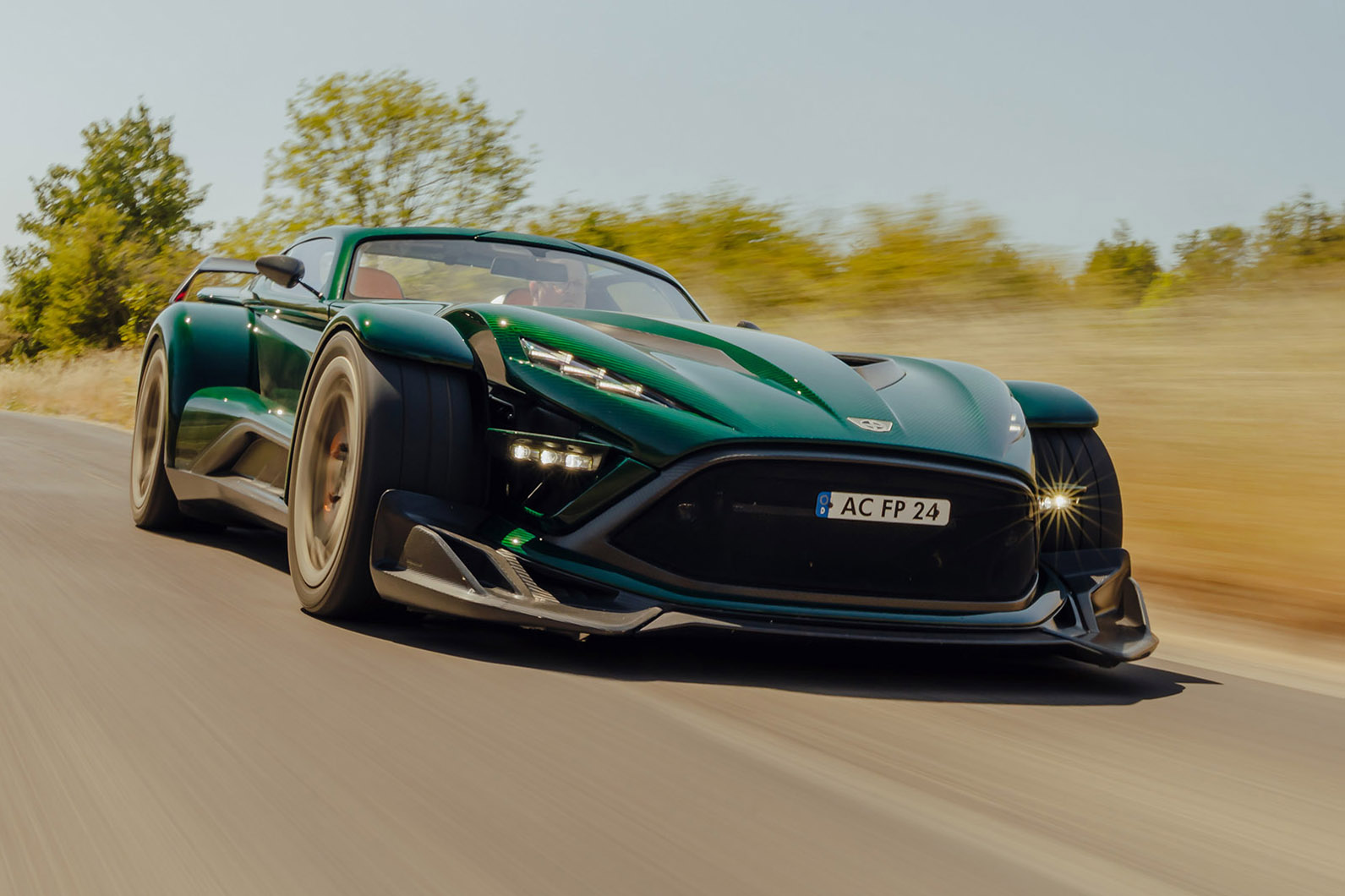
Historical Evolution: From Lotus Seven to the P24 RS
The history of Donkervoort Automobielen is rooted in the 1970s, when founder Joop Donkervoort sought to import Lotus Seven kit cars into the Netherlands. However, Dutch type-approval regulations necessitated extensive modifications to Colin Chapman’s original design to make the vehicles road-legal. Recognizing that the required changes were so fundamental that they essentially created a new vehicle, Joop Donkervoort secured permission from Lotus to market the cars under his own name.
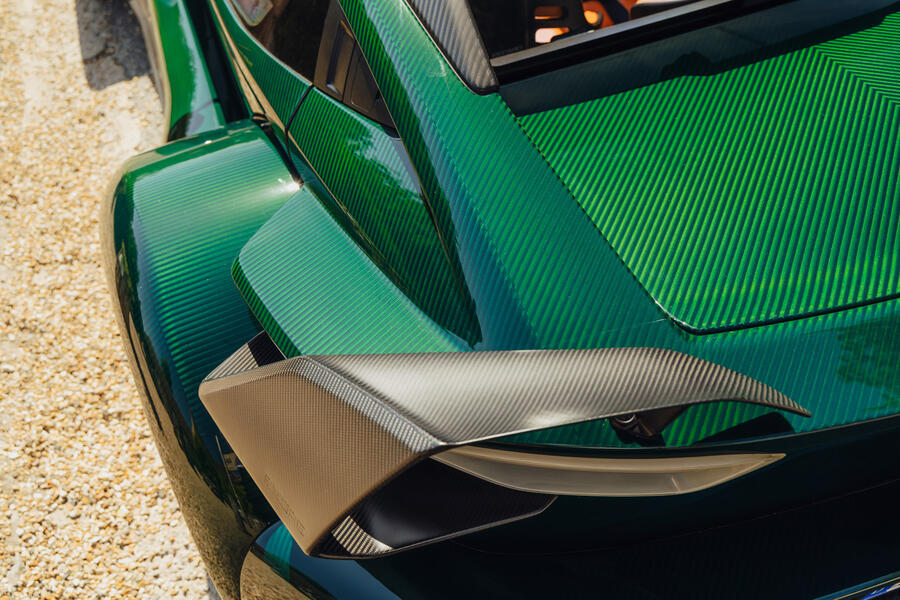
Since its inception in 1978, the brand has steadily moved away from its kit-car origins. The trajectory began with the S8 in 1983, followed by the D8 in 1993, which introduced Audi-sourced powerplants. Over the decades, Donkervoort has focused on increasing structural rigidity while maintaining a weight-saving ethos. The introduction of the F22 in 2022 debuted the company’s patented "Ex-Core" carbon-fiber technology, which utilizes a sandwich molding process to create components that are both lighter and stronger than traditional carbon-fiber composites. The P24 RS is the latest evolution of this lineage, representing the pinnacle of the firm’s engineering capabilities.

Technical Specifications and Powerplant Transition
The most significant technical shift in the P24 RS is the departure from the long-standing Audi-sourced 2.5-liter five-cylinder engine. In its place, Donkervoort has integrated a specialized version of the 3.5-liter V6 engine, famously utilized in the latest generation of the Ford GT. This engine has been further enhanced by Van der Lee, a Dutch supplier with extensive experience in Formula 1 turbocharging technology.
Equipped with parallel-twin, ball-bearing turbochargers, the V6 produces a formidable 592bhp at 5,500rpm and 590lb-ft of torque at 4,500rpm. When compared to the previous F22 model, which offered 493bhp, the P24 RS represents a 20% increase in power. Given the vehicle’s kerb weight of just 840kg, the resulting power-to-weight ratio exceeds 700bhp per tonne, placing it firmly in the territory of hypercars while maintaining the footprint of a compact roadster.
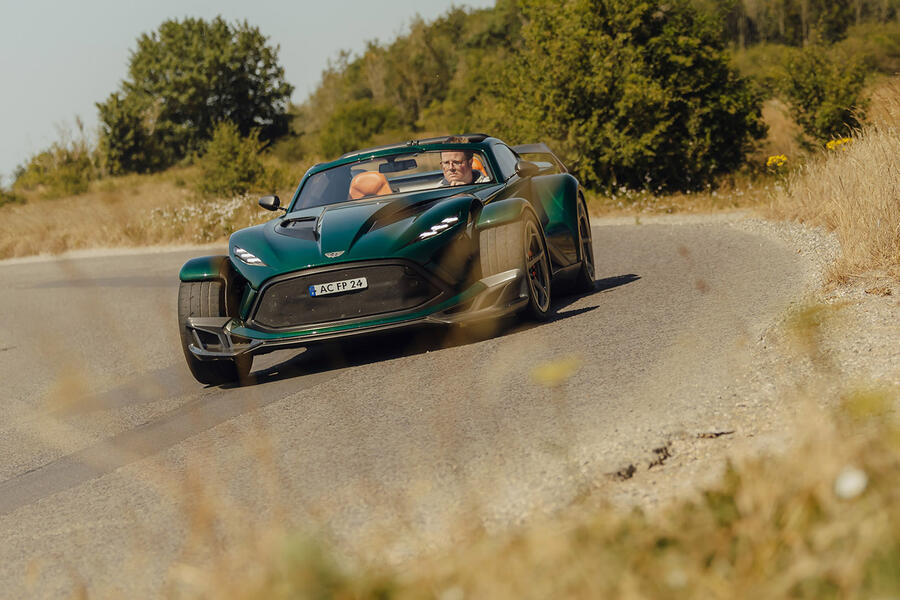
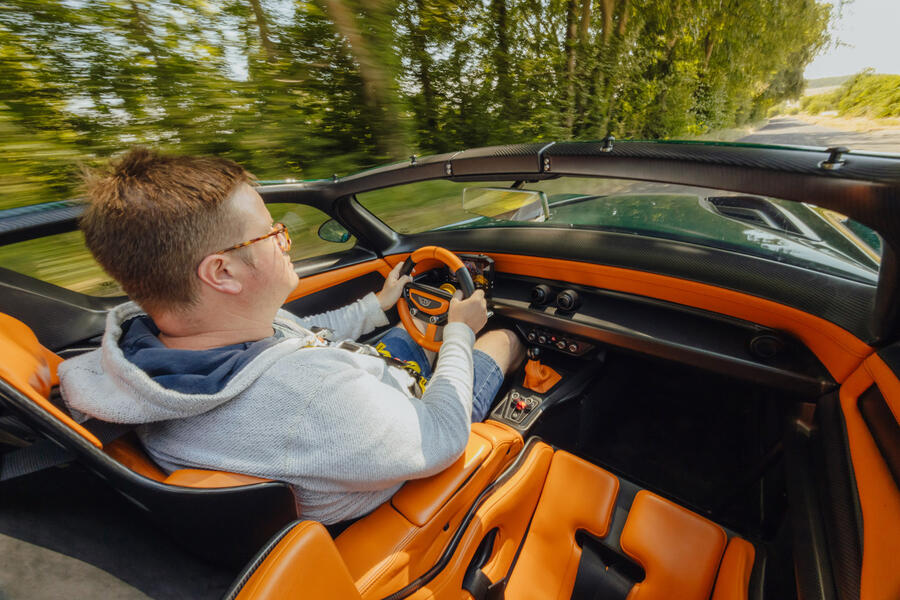
One of the primary reasons for the switch to the Ford V6 was the engine’s packaging. Unlike the Audi five-cylinder, which required an asymmetrical mounting that obstructed the path for a right-hand-drive steering column, the Ford V6 mounts entirely symmetrically along the car’s centerline. This engineering shift has finally allowed Donkervoort to offer right-hand-drive configurations, opening the door to the United Kingdom and other Commonwealth markets.
Chassis Engineering and Suspension Innovation
The P24 RS utilizes a hybrid chassis construction, combining high-strength steel tubing with "Ex-Core" carbon-fiber panels. This combination provides a torsional rigidity that is reportedly double that of the previous D8-generation cars. This stiffness is essential for managing the massive torque loads generated by the twin-turbocharged V6.
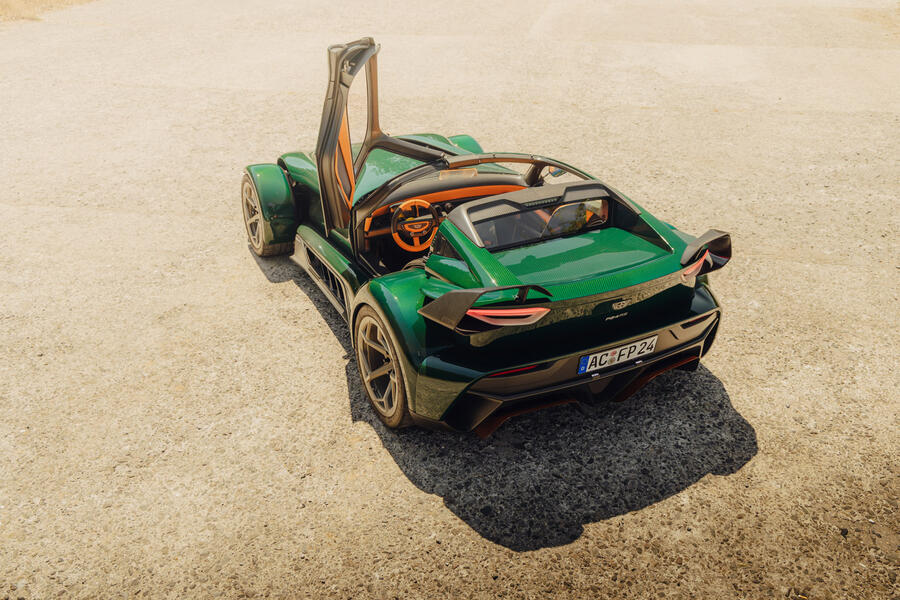
The suspension system is equally sophisticated, utilizing a semi-active hydraulic setup. The car features 35mm of hydraulic ride-height adjustment, allowing drivers to raise the vehicle for road use or lower it for track sessions. The adaptive dampers feature a six-stage adjustment range and include a roll-canceling functionality. By using hydraulic pressure to manage body roll, Donkervoort has been able to eliminate traditional mechanical anti-roll bars, reducing unsprung weight and improving the car’s ability to maintain tire contact on uneven surfaces.
The Analog Driving Philosophy
Despite its advanced materials and modern powerplant, the P24 RS remains a staunchly analog machine. Donkervoort has intentionally omitted many of the electronic driver aids common in modern supercars. There is no electronic stability control (ESC), and while traction control is provided to manage the 592bhp, it is adjustable to allow for significant driver involvement.
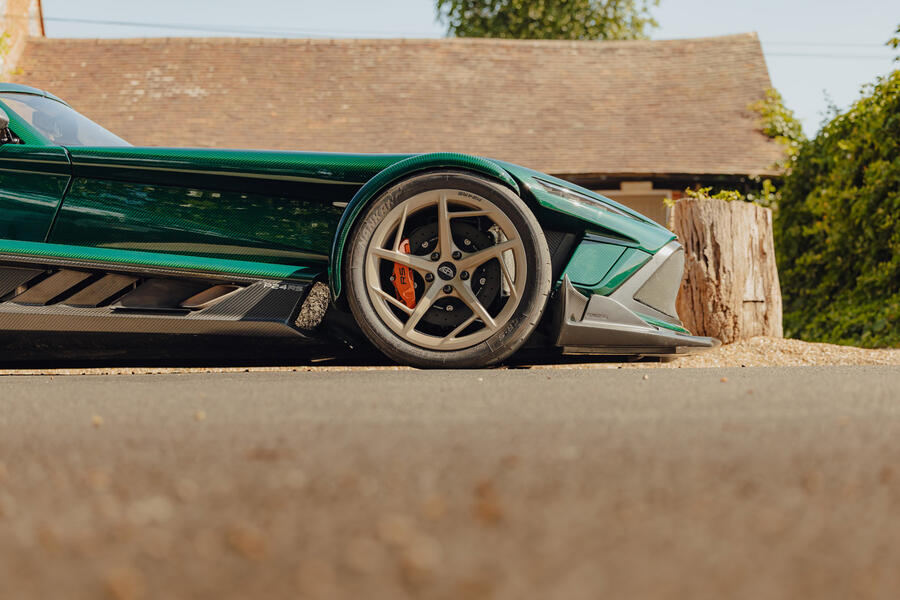
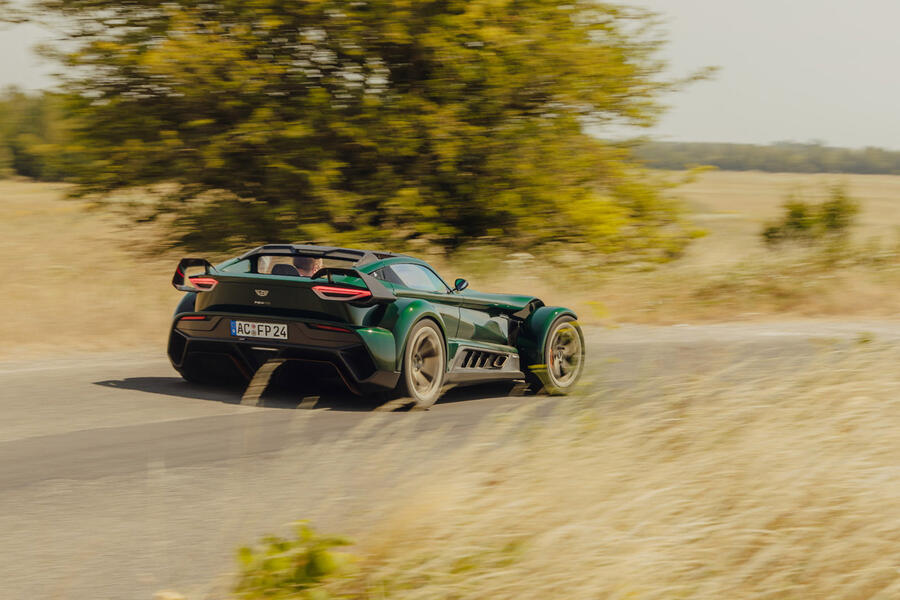
The transmission is a Tremec TKX five-speed manual gearbox, a choice that emphasizes mechanical connection over the rapid-fire shifts of a dual-clutch system. The gear ratios are notably long; the car is geared to reach its top speed of 186mph at 6,000rpm in fifth gear. This configuration requires the driver to be deliberate with gear selection and rev-matching, reinforcing the "raw" character of the vehicle.
Stopping power is provided by a high-performance braking system, though anti-lock brakes (ABS) remain an optional extra rather than a standard fitment. This further underscores the brand’s focus on the "purist" driving experience, where the responsibility for vehicle control rests primarily with the operator.
Market Entry and the UK Partnership
Donkervoort’s expansion into the UK market is being facilitated through a partnership with Premier GT, a high-end supercar dealership based in Washington, West Sussex. Premier GT has been appointed as the sole retail outlet for Donkervoort in the United Kingdom.
The timeline for the UK rollout is as follows:
- Late 2024 – 2025: Initial marketing and demonstration tours across the UK to gauge interest and finalize customer specifications.
- 2026: Commencement of production for the first batch of dedicated UK-market vehicles.
- Early 2027: Delivery of the first right-hand-drive P24 RS to a UK customer.
The P24 RS is priced at approximately £302,400. While this puts it at a higher price point than traditional lightweight competitors like Caterham, it aligns more closely with boutique supercars and track-focused machines such as the Ariel Atom 4RR and the Noble M500.
Broader Impact and Industry Implications
The entry of Donkervoort into the UK is a bold move, often described by the company using the idiom "carrying coal to Newcastle"—a reference to bringing a product to a place where it is already abundant. The UK has long been the global hub for lightweight sports car manufacturing, housing brands like Lotus, Caterham, Ariel, Radical, and BAC.
However, Donkervoort occupies a segment of the market that is currently underserved: the ultra-high-end, luxury lightweight. While a Caterham Seven focuses on minimalism and affordability, and an Ariel Atom focuses on track-day purity, the P24 RS offers a more substantial cabin, higher levels of finish, and a boot capacity of 298 liters, making it more viable for cross-continental touring.
From an industry perspective, Donkervoort’s success with "Ex-Core" technology demonstrates how small-volume manufacturers can lead in material science. The ability to produce carbon-fiber parts that meet structural requirements while being easier to manufacture in small batches is a model that other niche automakers may follow as they face increasing pressure to reduce vehicle weight in the face of tightening emissions regulations.
Conclusion and Future Outlook
The Donkervoort P24 RS represents a bridge between two eras of automotive design. It utilizes the latest in carbon-fiber technology and engine management to achieve performance figures that were unthinkable for a road-legal lightweight car a decade ago. Yet, it remains committed to a manual gearbox, a mechanical differential, and a lack of electronic interference.
As the automotive world moves toward electrification and increasing automation, the P24 RS serves as a counter-argument, celebrating the visceral sensations of internal combustion and manual control. Its arrival in the UK in 2027 will provide British enthusiasts with a unique alternative to the domestic lightweight establishment, offering a Dutch interpretation of a quintessentially British concept.
The success of the P24 RS in the UK will likely depend on how well its sophisticated suspension can handle the unique challenges of British B-roads and whether customers are willing to pay a premium for its blend of extreme performance and handcrafted exclusivity. For now, the P24 RS stands as a testament to the enduring appeal of the lightweight sports car, proving that there is still room for innovation and "Dutch courage" in one of the most competitive segments of the performance car market.