


In a move that signals one of its most aggressive market expansions in recent years, Etihad Airways has officially announced the addition of five new routes to mainland China, accompanied by a significant increase in flight frequency. The Abu Dhabi-based national carrier of the United Arab Emirates (UAE) is set to introduce 28 weekly flights to its roster, building substantially upon its existing daily service to Beijing. This strategic expansion involves the launch of direct flights from Zayed International Airport to several of China’s most critical economic and cultural centers, including Shanghai Pudong, Guangzhou, Chengdu, Hangzhou, and Shenzhen.
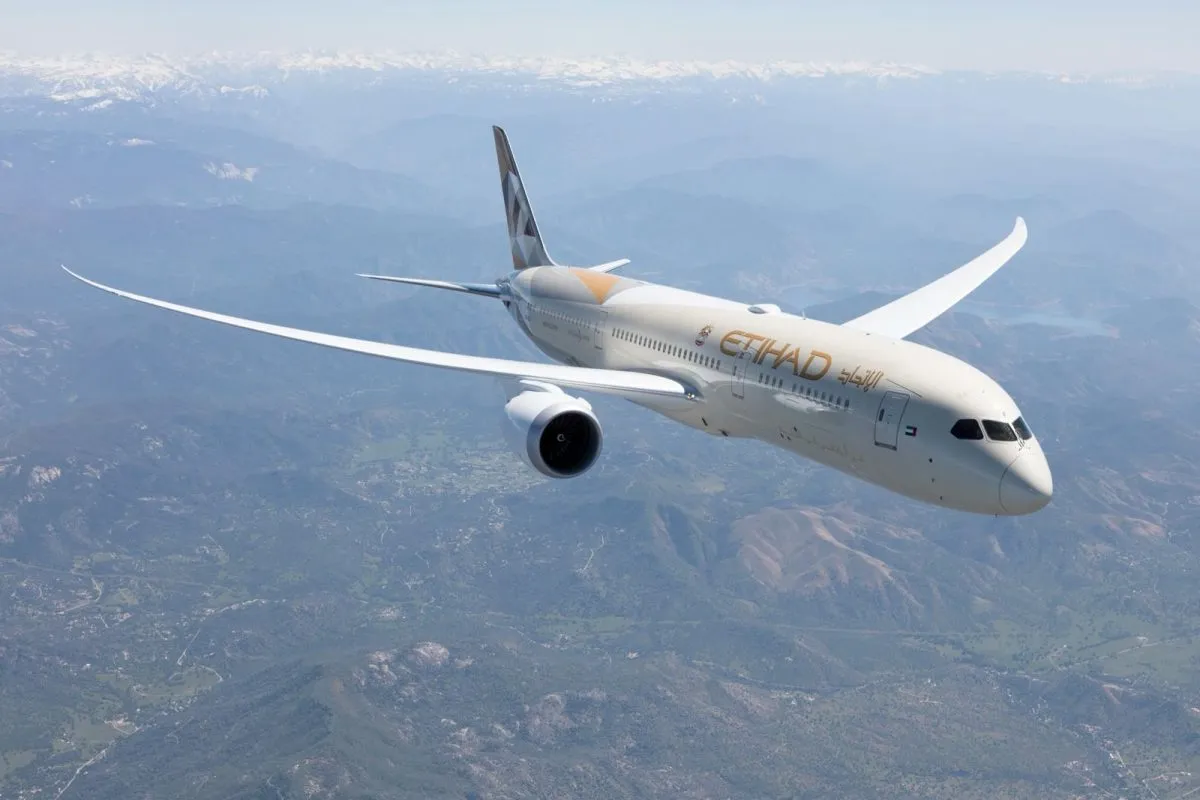
The announcement marks a pivotal moment for the airline as it seeks to capitalize on the post-pandemic recovery of the Chinese aviation market and solidify Abu Dhabi’s position as a premier global gateway. By connecting major Chinese metropolitan areas with the Middle East, Etihad aims to facilitate increased trade, tourism, and diplomatic exchange between the two regions. All new routes will be serviced by the Boeing 787-9 Dreamliner, a long-haul aircraft known for its fuel efficiency and advanced passenger amenities, ensuring that the airline can meet the demands of high-capacity international travel while maintaining operational sustainability.
A Strategic Partnership with China Eastern Airlines
Central to this expansion is Etihad’s deepening relationship with China Eastern Airlines. The two carriers have entered into a comprehensive joint venture (JV) agreement designed to optimize flight schedules and offer passengers more seamless connectivity. While Etihad is scaling up its operations into the five aforementioned cities, China Eastern is currently operating reciprocal services on routes connecting Shanghai, Kunming, and Xi’an to the UAE.
This collaborative approach allows both airlines to leverage each other’s domestic and international networks. For Etihad, the partnership provides deeper access into the Chinese interior, while for China Eastern, it offers a strategic foothold in the Middle East, Africa, and Europe via Abu Dhabi. Etihad CEO Antonoaldo Neves has described China as a "key pillar" of the airline’s network growth strategy. Neves emphasized that the expansion is not merely about increasing flight numbers but about positioning Abu Dhabi as the primary transit point for travelers moving between the Far East and markets across the West.
Detailed Breakdown of the New Chinese Destinations
The selection of the five new cities reflects a calculated approach to targeting China’s diverse economic landscape. Each city serves as a distinct hub for specific industries, ensuring a steady stream of both business and leisure traffic.
Shanghai Pudong (PVG)
As China’s financial capital, Shanghai remains the most critical destination for corporate travel. The increase in flights to Shanghai Pudong International Airport is expected to cater to the high demand from the financial, legal, and consulting sectors. Shanghai also serves as a major cargo hub, and Etihad’s increased presence will likely boost its belly-hold freight capacity, supporting the flow of goods between the UAE and East China.
Guangzhou (CAN)
Located in the heart of the Pearl River Delta, Guangzhou is a manufacturing powerhouse and a historic center for international trade. By increasing services to Guangzhou Baiyun International Airport, Etihad is tapping into one of the world’s busiest aviation markets. The city is a primary destination for traders from the Middle East and Africa who frequent the Canton Fair and the region’s vast wholesale markets.
Chengdu (TFU)
Chengdu, the capital of Sichuan province, represents Etihad’s push into Western China. Known for its burgeoning technology sector and as a gateway to the country’s interior, Chengdu has seen rapid infrastructure development in recent years. The operation of flights to Chengdu Tianfu International Airport allows Etihad to serve a massive population base that was previously underserved by direct Middle Eastern connections.
Hangzhou (HGH)
Hangzhou is widely recognized as China’s e-commerce capital, being the headquarters of Alibaba and numerous other tech giants. The city has experienced a surge in international prominence following its hosting of the Asian Games. For Etihad, Hangzhou provides a vital link to the digital economy and the affluent travelers of the Zhejiang province.
Shenzhen (SZX)
Often referred to as the "Silicon Valley of China," Shenzhen is a global leader in electronics, telecommunications, and innovation. Connecting Abu Dhabi to Shenzhen Bao’an International Airport positions Etihad as a preferred carrier for the global tech industry, facilitating travel for engineers, executives, and entrepreneurs moving between the UAE’s growing tech hubs and China’s high-tech manufacturing base.
Fleet Utilization and the Boeing 787-9 Dreamliner
The decision to utilize the Boeing 787-9 Dreamliner across all new mainland China routes is a strategic choice focused on efficiency and passenger comfort. The 787-9 is equipped with Etihad’s latest cabin interiors, featuring its signature Business Studios and Economy Smart seats. From a technical standpoint, the aircraft’s composite structure and advanced engines provide superior fuel economy, which is essential for maintaining profitability on long-haul sectors while reducing the airline’s carbon footprint.
Furthermore, the Dreamliner’s advanced pressurization and humidity control systems are designed to reduce the effects of jet lag, a significant selling point for business travelers moving across multiple time zones. The aircraft also offers substantial cargo capacity, which is a critical component of Etihad’s revenue model, particularly given the high volume of e-commerce and electronic exports originating from cities like Shenzhen and Hangzhou.
Chronology of Etihad’s Expansion in China
Etihad Airways has a long-standing history in the Chinese market, which has evolved through several phases of growth and consolidation.
- 2008: Etihad launched its first service to mainland China with flights to Beijing, coinciding with the 2008 Summer Olympics.
- 2011-2012: The airline expanded into Shanghai and Chengdu, establishing its initial "triangle" of Chinese destinations.
- 2020-2022: Like all international carriers, Etihad faced significant disruptions due to China’s "Zero-COVID" policy. Flights were frequently suspended or operated under strict capacity limitations.
- 2023: Following China’s reopening, Etihad was among the first to restore daily service to Beijing and Shanghai, testing the waters for a broader return.
- Early 2024: The signing of the joint venture with China Eastern Airlines set the stage for the current expansion.
- Late 2024: The implementation of the 28 weekly flights marks the largest single-market capacity increase for Etihad in over a decade.
Supporting Data and Economic Context
The expansion is supported by robust economic data highlighting the strengthening ties between the UAE and China. According to the UAE Ministry of Economy, non-oil trade between the two nations exceeded $95 billion in 2023, with projections suggesting continued growth. China remains the UAE’s largest trading partner globally, while the UAE is China’s largest non-oil trading partner in the Middle East and North Africa (MENA) region.
The aviation sector is a primary beneficiary of the "Belt and Road Initiative" (BRI), where the UAE serves as a logistics and transit hub for Chinese enterprises looking to expand into Africa and Europe. Additionally, the mutual visa-exemption agreement between the UAE and China has significantly lowered the barriers to entry for tourists and business travelers, leading to a 35% increase in Chinese visitors to Abu Dhabi in the first half of 2024 compared to the previous year.
Broader Implications for the Global Aviation Industry
Etihad’s move is part of a broader trend where Gulf carriers—including Emirates and Qatar Airways—are aggressively competing for a larger share of the Chinese market. However, Etihad’s specific focus on a joint venture with a major Chinese state-owned carrier gives it a competitive edge in terms of domestic feed and regulatory support within China.
The "Sixth Freedom" Traffic Strategy
By expanding its China network, Etihad is doubling down on "Sixth Freedom" traffic—the right to fly passengers from one country to another via a home hub. A traveler from Shenzhen can now fly to Abu Dhabi and connect seamlessly to London, Paris, or New York. This strategy is essential for Etihad as it competes with European and North American carriers, many of whom have struggled to restore their own direct China services due to geopolitical tensions and the closure of Russian airspace.
Impact on Zayed International Airport
The expansion also serves to bolster the status of the newly rebranded Zayed International Airport (formerly Abu Dhabi International Airport). With its state-of-the-art Terminal A, the airport has the capacity to handle up to 45 million passengers annually. Etihad’s 28 new weekly flights will significantly increase the airport’s utilization rates and support the Abu Dhabi government’s "Economic Vision 2030," which aims to diversify the economy away from oil and toward sectors like aviation, tourism, and logistics.
Official Responses and Industry Outlook
Industry analysts have reacted positively to the news, noting that Etihad is taking a calculated risk that aligns with global travel trends. "China’s outbound travel market is the world’s largest, and its full recovery is the ‘holy grail’ for international airlines," noted an aviation analyst based in Dubai. "By securing these slots and partnering with China Eastern, Etihad is ensuring it isn’t left behind as demand surges."
In official statements, Etihad leadership has reiterated their commitment to providing high-quality service and fostering international cooperation. The airline plans to continue monitoring market demand, with the possibility of further increasing frequencies or adding more narrow-body connections to secondary Chinese cities in the future.
As the global aviation landscape continues to shift, Etihad’s expansion into mainland China represents more than just a business decision; it is a geopolitical statement regarding the enduring importance of the East-West corridor. With the Boeing 787-9 Dreamliner as its workhorse and a strategic alliance with China Eastern as its foundation, Etihad Airways is positioned to play a defining role in the next era of international air travel.