


Goldman Sachs Group Inc. on Monday reported first-quarter results that significantly surpassed market expectations, driven by record-setting performance in equities trading and a notable rebound in investment banking revenue. This strong showing underscored the financial giant’s resilience in a period marked by considerable market volatility and escalating geopolitical uncertainties. Despite these tailwinds, the firm also navigated specific challenges within its fixed income operations and faced increased provisions for credit losses, painting a nuanced picture of its initial 2024 performance.
The venerable Wall Street institution declared a profit increase of 19% from the year-earlier quarter, reaching $5.63 billion, which translated to an impressive $17.55 per share. Total revenue for the quarter ascended by 14% to $17.23 billion, a figure that resonated positively across financial markets and exceeded most analyst projections. This robust revenue generation propelled the firm to its second-highest quarterly revenue on record, signaling a powerful start to the fiscal year. The stellar results were particularly noteworthy given the complex global economic landscape that characterized the first three months of 2024.
The Engines of Growth: Equities and Investment Banking Soar
At the heart of Goldman Sachs’ exceptional performance lay its equities trading division, which delivered its strongest quarter to date. Revenue from equities surged by an impressive 27% to $5.33 billion, outperforming StreetAccount’s estimate by approximately $420 million. This remarkable growth was largely fueled by heightened financing activity from hedge fund clients within its prime brokerage business, alongside increased matching of buyers and sellers in cash equities products. The broader market sentiment in Q1 2024, characterized by an enduring rally in technology stocks and enthusiasm surrounding artificial intelligence (AI)-led disruption, provided a fertile ground for institutional investors to adjust their positions, leading to a bustling environment for trading desks across Wall Street. Goldman Sachs, with its deep institutional relationships and sophisticated trading infrastructure, was exceptionally well-positioned to capitalize on this increased market dynamism. Industry data from Refinitiv indicated a general uptick in global equity trading volumes during the quarter, supporting Goldman’s strong showing as part of a broader industry trend.
Concurrently, the firm’s investment banking segment experienced a significant resurgence, with fees climbing a remarkable 48% to $2.84 billion. This figure comfortably surpassed expectations by about $340 million. The primary catalyst for this substantial increase was a surge in advisory revenue derived from completed mergers and acquisitions (M&A) transactions. Following a subdued 2023, the M&A landscape began to show signs of life in early 2024, as corporations adjusted to a more stable interest rate environment and sought strategic growth opportunities. Goldman Sachs, a perennial leader in M&A advisory, benefited disproportionately from this revival. The firm also reported higher revenues from both equity and debt underwriting, indicating a broader pickup in capital markets activity as companies sought to raise funds for expansion or refinancing. This segment’s performance is often seen as a bellwether for corporate confidence and economic health, and its strong showing at Goldman suggested a nascent recovery in corporate deal-making.
Navigating Headwinds: FICC and Asset Management Face Challenges
While certain divisions soared, others faced headwinds. The firm’s fixed income, currencies, and commodities (FICC) operations, historically a powerhouse for Goldman Sachs, did not fare as well. Revenue in this segment declined by 10% to $4.01 billion, representing an unusually large miss of $910 million compared to StreetAccount’s estimates. Goldman attributed this downturn to "significantly lower" revenues in interest rate products, mortgages, and credit. This underperformance in FICC stood in contrast to some peers who reported more stable or even slightly improved FICC results, suggesting that Goldman’s specific positioning or trading strategies in these areas may have been less aligned with market movements during the quarter. The quarter saw continued uncertainty regarding the Federal Reserve’s interest rate trajectory, with initial market expectations for aggressive rate cuts being tempered by persistent inflation data. This environment could have led to reduced volatility in certain fixed income segments or presented challenges for trading strategies reliant on specific rate movements, impacting Goldman’s results.
The firm’s asset and wealth management division also delivered a mixed performance. While revenue saw a healthy 10% jump to $4.08 billion in the quarter, it was approximately $140 million below expectations. This growth was primarily driven by higher management fees, a direct consequence of rising assets under supervision (AUS) buoyed by the strong equity market performance. However, these gains were partially offset by lower private banking revenues. The discrepancy between rising AUM-driven fees and struggling private banking revenues could indicate a shift in client behavior or competitive pressures within the high-net-worth segment, or perhaps a more cautious approach by clients towards discretionary private banking services despite overall market gains.
A Closer Look at Credit Quality: Rising Provisions and Market Concerns
A significant point of discussion among analysts following the earnings release was the notable increase in Goldman Sachs’ provision for credit losses. This provision rose nearly 10% from a year earlier to $315 million, more than double StreetAccount’s estimate of $150.4 million. The firm attributed this increase to loan growth and impairments on wholesale loans. This marked the bank’s largest increase in loan loss provisions since 2020, a period characterized by the initial economic shock of the COVID-19 pandemic.

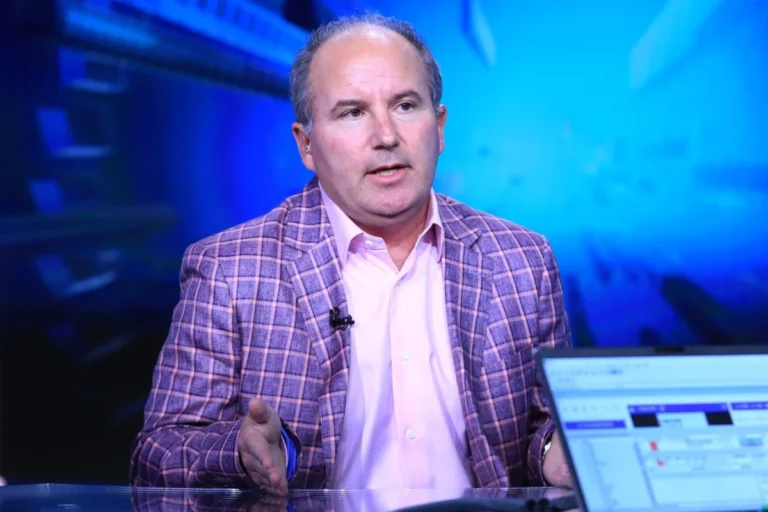
Wells Fargo banking analyst Mike Mayo quickly highlighted this development, noting on Monday morning that it "raises questions as to what Goldman executives see developing in credit markets." Such an elevated provision, particularly in a quarter that otherwise demonstrated strong financial performance, can signal a more cautious outlook by management regarding potential future loan defaults or a deterioration in credit quality within specific portfolios. While loan growth inherently requires increased provisions, the magnitude of the beat on expectations suggested that management was taking a more conservative stance, potentially anticipating headwinds in certain sectors or segments of its lending book. This could also reflect specific impairments on a few larger wholesale loans rather than a broad-based decline in credit quality across its entire portfolio. The broader economic environment, with lingering inflation and higher interest rates, continues to put pressure on certain corporate borrowers, making credit risk a key area of focus for financial institutions.
The Geopolitical Tapestry: Middle East Tensions and Market Volatility
The first quarter of 2024 was not solely defined by economic indicators and market trends; it was also heavily influenced by an increasingly complex geopolitical landscape. The original article specifically references "the Iran war that started on Feb. 28," which should be interpreted within the context of escalating geopolitical tensions in the Middle East during that period, including continued Houthi attacks on Red Sea shipping, the ongoing Israel-Hamas conflict, and broader regional instability impacting global supply chains and commodity markets. This surge in geopolitical risk added a layer of uncertainty for global financial markets, impacting investor sentiment and corporate decision-making.
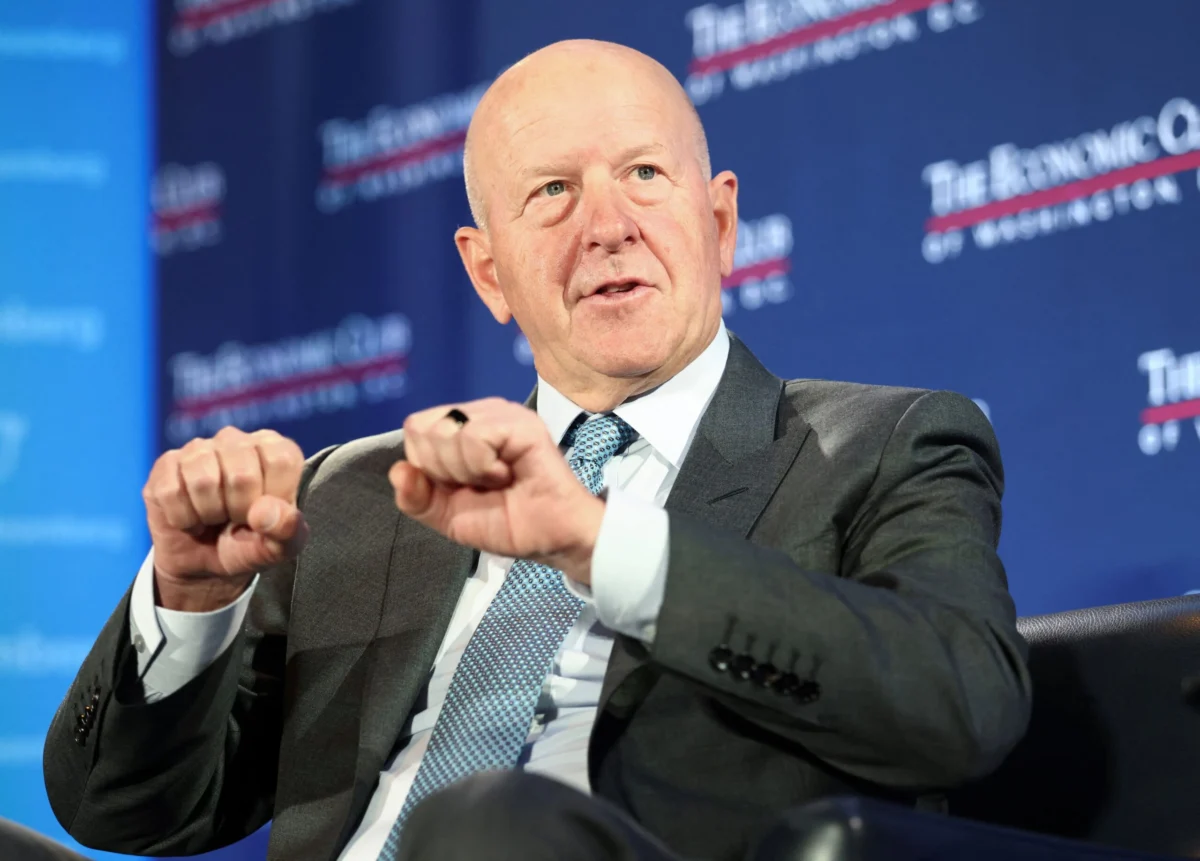
Goldman Sachs CEO David Solomon acknowledged this environment, referencing "rising volatility amid the broader uncertainty" of the period in the firm’s earnings release. "Goldman Sachs delivered very strong performance for our shareholders this quarter, even as market conditions became more volatile," Solomon stated. He emphasized the necessity of disciplined risk management, asserting, "The geopolitical landscape remains very complex – so disciplined risk management must remain core to how we operate."
Later on a conference call with analysts, Solomon delved deeper into the potential ramifications of these geopolitical developments. He noted that while the environment for mergers and other deals had shown resilience, he was closely monitoring the evolution of the conflict and tensions in the Middle East. Solomon cautioned, "If the resolution of the conflict drags, that probably will be a headwind in some of these areas, particularly inflation trends as we get further into the second and the third quarter." This suggests a recognition that prolonged instability could dampen corporate confidence, leading to deferred investment decisions and potentially impacting future capital markets deal flow, such as M&A or debt issuance. Disruptive events that influence commodity prices, as the Middle East tensions have, can sometimes force corporate clients to the sidelines, threatening future deals. Solomon also indicated that the market churn stemming from these tensions had cooled IPO listings in March, although he maintained an optimistic outlook for several large IPOs currently in the pipeline to eventually come to market.
Analyst Perspectives and Shareholder Reaction
Despite the overarching positive earnings beat, shares of Goldman Sachs experienced a more than 3% decline in morning trading following the announcement. This reaction often reflects investor scrutiny on specific details, such as the FICC miss, the elevated credit provisions, and the cautious forward-looking statements regarding geopolitical risks. Barclays banking analyst Jason Goldberg provided additional context, noting that the bank’s results were also positively influenced by a lower-than-expected tax rate, a favorable compensation ratio, and a larger-than-anticipated stock buyback program. These factors, while beneficial to EPS, might not have been sufficient to fully offset concerns about credit quality and the FICC performance.
Analysts typically focus on the sustainability of earnings drivers. While equities and investment banking showed impressive strength, questions about the consistency of FICC and the implications of increased credit provisions for future quarters likely contributed to the initial negative market reaction. The bank’s heavy reliance on its trading and investment banking franchise means that market volatility and geopolitical stability are always paramount concerns for analysts assessing its future performance.
Strategic Outlook and Future Trajectory
Looking ahead, Goldman Sachs appears to be navigating a complex financial landscape with a strategy focused on leveraging its core strengths while prudently managing emerging risks. CEO David Solomon’s commentary underscored the firm’s adaptability in the face of evolving market conditions. His acknowledgment of the resilience in the deals environment, coupled with a vigilant eye on geopolitical developments, indicates a balanced approach. The firm’s ability to capitalize on market activity driven by themes like AI disruption, while simultaneously managing credit exposures and operational efficiency, will be key to sustaining its momentum.
The first quarter’s results position Goldman Sachs as a formidable player capable of thriving even in turbulent times, particularly when market volatility creates opportunities for its trading and advisory businesses. However, the firm’s future trajectory will largely depend on its capacity to mitigate the "headwinds" identified by its CEO, including the potential for prolonged geopolitical instability to impact inflation and dampen capital markets activity. As the year progresses, investors and analysts will closely monitor the firm’s FICC performance, the evolution of its credit portfolio, and its ability to maintain its leading position in investment banking amidst a continually shifting global economic and political environment. The strategic decisions made in response to these challenges will ultimately determine whether Goldman Sachs can continue to deliver strong shareholder value throughout 2024.