


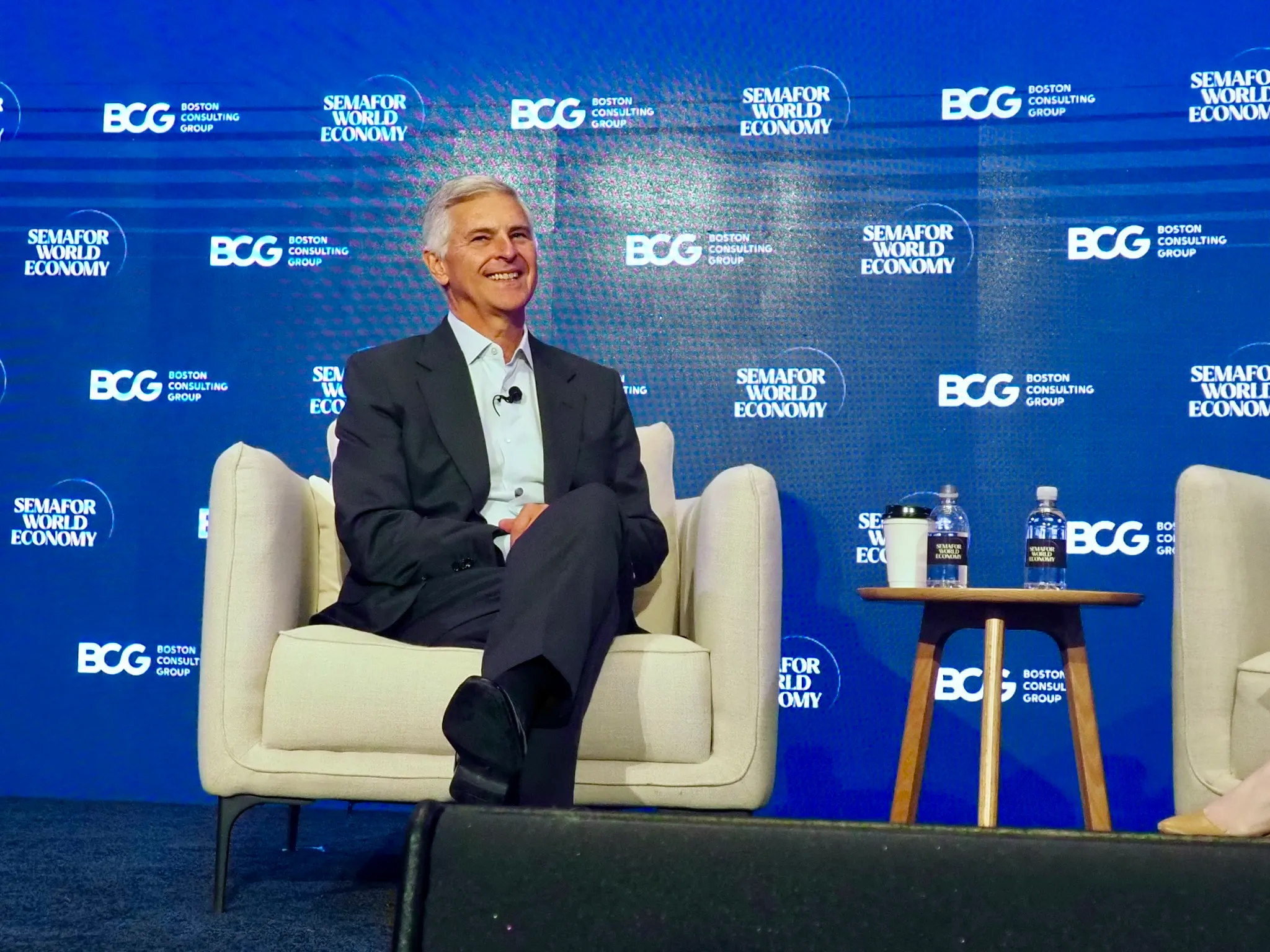
The global hospitality landscape is currently navigating a complex intersection of geopolitical volatility and shifting consumer behavior, yet Hilton Worldwide Holdings Inc. has emerged with a definitive, optimistic roadmap for the coming years. Speaking at the Semafor World Economy Summit in Washington, D.C., Hilton President and CEO Chris Nassetta issued what has been characterized as the hotel industry’s most bullish forecast for 2026. Despite immediate concerns regarding Middle Eastern instability and fluctuating booking data for major upcoming sporting events, Nassetta argued that a fundamental structural rebound in the United States midmarket demand will serve as a powerful engine for growth, more than compensating for regional headwinds.
Nassetta’s confidence is rooted in a strategic bet he made publicly last year—a prediction that 2026 would not only sustain the recovery seen in the post-pandemic era but would significantly outperform 2025 across the entire hotel sector. Addressing a room of global economic leaders and policy experts, Nassetta reaffirmed his stance with increased conviction, citing a growing body of hard evidence that suggests the macroeconomic environment in the United States is stabilizing in favor of the travel and leisure industry.
The Strategic Shift Toward the U.S. Midmarket
Central to Nassetta’s thesis is the resurgence of the "midmarket" consumer. While luxury travel saw a rapid, high-margin spike immediately following the lifting of COVID-19 restrictions, the broader midscale and upper-midscale segments—which constitute the backbone of Hilton’s portfolio—remained more sensitive to inflationary pressures and interest rate hikes. However, recent data suggests a pivot.
Hilton has been aggressively expanding its footprint in this segment, most notably through the launch of Spark by Hilton, a premium economy brand, and the expansion of its Hampton by Hilton and Hilton Garden Inn lines. Nassetta noted that as inflation begins to moderate and real wages stabilize, the "everyday traveler" is returning to the market with renewed frequency. This demographic, often consisting of domestic business travelers and middle-class families, provides a more consistent occupancy base than the more volatile luxury or international segments.
According to industry data from STR and CoStar, Revenue Per Available Room (RevPAR) in the U.S. midscale segment has shown a steady upward trajectory in early 2024. Nassetta’s focus on 2026 as a peak year suggests that the company anticipates the full fruition of its current construction pipeline. Hilton currently has one of the largest development pipelines in the industry, with a significant portion of those keys belonging to midmarket brands scheduled to open between late 2024 and 2025.
Navigating Middle Eastern Volatility and the Five-Year Outlook
The Middle East remains a focal point of concern for global investors due to ongoing regional conflicts and the potential for broader escalation. Nassetta acknowledged these "headwinds" but offered a surprisingly resilient long-term outlook. He predicted that within a five-year horizon, the Middle East would not only recover but would likely rank among Hilton’s highest-growth regions globally.
A key factor in this optimism is the evolving diplomatic and economic landscape of the region. Nassetta specifically noted that with "Iran in a sort of a different state," the potential for regional stabilization, while currently tested, remains a viable long-term outcome. Hilton’s strategy in the Middle East is heavily aligned with major national development projects, such as Saudi Arabia’s Vision 2030. The kingdom’s massive investment in tourism infrastructure, including the Red Sea Project and NEOM, represents a multi-billion-dollar opportunity that Hilton is positioned to capture through its luxury and lifestyle brands like Waldorf Astoria and Conrad.
Despite the current instability, Hilton’s internal data suggests that the appetite for travel to the Middle East remains robust among travelers from Asia and Europe, provided the conflict remains localized. The CEO’s "five-year" window suggests a belief that the current geopolitical friction is a cyclical hurdle rather than a permanent barrier to the region’s emergence as a global tourism powerhouse.
The 2026 World Cup and the Disappointment of Early Bookings
A notable point of discussion at the summit was the 2026 FIFA World Cup, which will be hosted across the United States, Canada, and Mexico. While such a mega-event is typically viewed as a guaranteed windfall for the hotel industry, recent reports have suggested that early booking volumes have not yet met the aggressive expectations set by some analysts.
Nassetta addressed these "disappointing" early figures with a pragmatic lens. He argued that the traditional booking window for such events has shifted. In an era of dynamic pricing and digital transparency, consumers are often waiting longer to commit to accommodations, or are opting for alternative lodging solutions in the short term. However, he maintained that the sheer scale of the 2026 World Cup—the first to feature 48 teams—will create a "compression effect" in host cities that will inevitably drive rates and occupancy to record highs as the event approaches.
The 2026 forecast also takes into account the broader "experience economy." Nassetta pointed out that travelers are increasingly prioritizing major events over traditional vacations. This shift in consumer spending—from goods to experiences—is a trend that Hilton expects to peak in 2026, coinciding with a more favorable interest rate environment that would encourage corporate travel and large-scale conventions.
A Chronology of Recovery: From Pandemic to 2026 Peak
To understand the weight of Nassetta’s 2026 prediction, it is necessary to view it through the timeline of Hilton’s recent performance and the broader industry’s recovery phases:
- 2020-2021: The Survival Phase. Hilton focused on liquidity and the launch of "CleanStay" protocols. Occupancy hit historic lows, but the company used the downtime to refine its "capital-light" business model.
- 2022-2023: The "Revenge Travel" Era. Leisure travel surged, particularly in the luxury and resort sectors. Hilton reported record RevPAR in several quarters as pent-up demand met limited supply.
- 2024: The Normalization Phase. The industry is currently seeing a "return to mean." Growth is steady but slower as the initial surge of post-pandemic travel fades and economic uncertainty persists.
- 2025: The Transition Year. Hilton expects the final pieces of its global pipeline to come online, while the U.S. economy is projected to enter a more stable, lower-inflation growth period.
- 2026: The Bullish Peak. This is the year Nassetta identifies as the point where domestic midmarket strength, a stabilized Middle East, and major global events like the World Cup converge to create a "perfect storm" of profitability.
Industry Reactions and Competitive Landscape
While Nassetta’s forecast is the most optimistic among his peers, it is not without its detractors. Analysts from firms such as Truist Securities and Bernstein have noted that while Hilton’s pipeline is impressive, the industry still faces a "higher for longer" interest rate environment that could dampen new construction starts in the 2025 window, potentially impacting supply in 2026.
Competitors like Marriott International and IHG Hotels & Resorts have also expressed confidence in the midmarket and the Middle East, though their forecasts have been more tempered by cautious language regarding consumer debt levels and the potential for a mild recession in Western Europe. Marriott, for instance, has focused heavily on its "City Express" acquisition to capture the affordable segment in Latin America, mirroring Hilton’s push into the premium economy space with Spark.
However, Hilton’s distinct advantage, according to Nassetta, is its organizational agility and the high percentage of its pipeline that is already under construction or in advanced planning. "I now have much more hard evidence that things are getting better," Nassetta told the summit audience, referring to the accelerating rate of groundbreakings and the resilience of the Hilton Honors loyalty program, which recently surpassed 180 million members.
Broader Implications for the Global Economy
The implications of Nassetta’s forecast extend beyond the hotel sector. As a bellwether for the broader economy, the hospitality industry’s health reflects consumer confidence and corporate health. A bullish 2026 for Hilton suggests a belief that the U.S. consumer is not as overleveraged as some economists fear and that "business transient" travel—the industry term for mid-week corporate trips—is finally decoupling from the "work-from-home" drag.
Furthermore, Hilton’s commitment to the Middle East despite current tensions underscores a significant trend in global capital: the long-term decoupling of investment from short-term geopolitical cycles. By betting on a five-year recovery for the region, Hilton is signaling to other multinational corporations that the fundamental drivers of growth in the Gulf—demographics, modernization, and diversification—outweigh the risks of the current conflict.
Conclusion: The Road to 2026
As Chris Nassetta concluded his remarks at the Semafor World Economy Summit, the message was clear: Hilton is doubling down on the stability of the American middle class and the long-term potential of emerging markets. While 2024 and 2025 may present a landscape of navigation and adjustment, 2026 is being positioned as the year when the hospitality industry fully realizes its new post-pandemic identity.
With a robust pipeline, a strategic focus on the midmarket, and a steadfast belief in regional resilience, Hilton is not just waiting for the future—it is actively building the infrastructure to capitalize on it. Whether the "hard evidence" Nassetta cites will manifest in the record-breaking year he predicts remains to be seen, but for now, Hilton has set the benchmark for industry expectations in a volatile global economy.