

Taekyung Tanja Inwol’s second feature documentary, Homesick (Hjemsøgt), a profound and unflinching exploration of family, belonging, and the complexities of transnational adoption, has premiered on the international stage. This "raw family chronicle," as described by its creators, navigates the intricate emotional landscape of the director’s own life, charting a course between the familiar shores of Western Denmark and the ancestral roots of South Korea. The film world-premiered in the prestigious NORDIC:DOX competition at the 23rd edition of CPH:DOX, the Copenhagen International Documentary Film Festival, marking a significant moment for a story that challenges conventional notions of home and identity.
A Tapestry of Disruption: Unraveling the Danish Facade
Homesick delves into a reality far removed from idyllic portrayals of family life. A synopsis for the film starkly reveals the fissures beneath a seemingly perfect surface: "In Taekyung’s family in Denmark, everything was meant to look perfect on the surface, but behind the façade, there was domestic violence, breakups, divorce, suicide attempts, death, loneliness, and much more." This poignant description sets the stage for a narrative that grapples with the profound impact of familial discord on an individual’s sense of self, particularly for someone whose origins have been deliberately obscured. The film poignantly asks, "When one’s origins have been erased in Korea, where does one turn when the family one has been placed in begins to crack?" This question lies at the heart of Inwol’s cinematic journey, a quest for understanding and reconciliation amidst fractured identities and buried truths.
The Weight of Deception: Human Rights Violations and the Search for Truth
The documentary’s narrative gains a critical dimension with the revelation of findings from June 2025 by the Korean Truth and Reconciliation Commission. The commission identified Inwol’s adoption case as one of 56 instances where human rights violations were uncovered. Crucially, the commission concluded that her adoption documents were deliberately falsified to present her as a foundling, a narrative designed to expedite her adoption for financial gain. This official acknowledgement of deception casts a long shadow over her early life, highlighting the systemic issues inherent in international adoption practices of the past.
However, these significant findings have not translated into tangible progress for Inwol. Despite the commission’s verdict, she has been unable to access genuine information about her birth parents or secure any concrete action from either the Korean or Danish states. This bureaucratic inertia underscores the persistent challenges faced by adoptees seeking to reclaim their histories and connect with their biological families, even when official recognition of past wrongdoing exists. The film, therefore, becomes not only a personal journey of self-discovery but also a broader commentary on the often-unresolved legacies of international adoption.
Crafting Identity: Visual Language and Political Realities
To piece together her fractured experience, Inwol employs a rich tapestry of cinematic elements. Interviews, intimate photographs, evocative landscapes, and reflective voice-overs converge to construct her narrative as an adoptee within a Danish family and as an individual who has felt "erased from Korea her entire life." The press notes for the documentary emphasize how the film masterfully "weaves together personal memories and imagination with the political realities of a transnational adoption system that long ago lost its shine." This fusion of the personal and the political is a hallmark of Inwol’s filmmaking, demonstrating a keen ability to translate deeply felt emotions into a compelling visual language that resonates with universal themes of belonging and loss.
The film is produced by Rikke Tambo Andersen, Sona Jo, and Virpi Suutari, with cinematography by Catherine Pattinama Coleman and Mathias Døcker. Matilda Henningsson helms the editing, and Impronta Film is managing international sales for the Tambo Film production. This collaborative effort brings together a team dedicated to bringing Inwol’s complex and emotionally charged story to a global audience.

The Power of Decision: Challenging the Parameters of Family
Inwol articulates her motivation for creating Homesick with a clarity that underscores the deeply personal nature of her artistic endeavor. "I have, as a child, had more families than most, belonged to many and nowhere at all – but the premise for them all was that someone had the power to decide where and to whom I was allowed to belong," she explains. This statement directly confronts the agency and authority embedded within the adoption system, highlighting the inherent power imbalance that dictates a child’s sense of belonging.
She further probes the subjective nature of familial worth: "By what parameters can one even determine whether one family is better than another? The childless couple in the West Danish town of Varde had more right to a child than the single mother in the Korean port city of Incheon. Not just any child – but the child she had given birth to. In this way, a child born in Korea grew up in Denmark. Isn’t it strange that the child grows up in a random family on the other side of the world – and no one talks about it." This poignant observation underscores the societal silence surrounding transnational adoption, a silence that Inwol argues can be "more painful than harmful words." The film seeks to break this silence, to give voice to the unspoken experiences of adoptees and to foster a more open dialogue about the emotional and psychological consequences of such decisions.
Processing Grief and Unearthing Secrets: The Genesis of Homesick
The impetus for Homesick emerged from a period of profound personal loss for Inwol: the deaths of her parents. This grief catalyzed a desire to process her complex feelings and confront the lingering questions that had long occupied her. "You know this whole thing about rest in peace?" she shared in an interview. "People have this idea: let’s not speak ill of the dead. But I was like: ‘No, now’s the time to talk about all the stuff that we couldn’t talk about before.’ It was too difficult when they were alive. Nobody seemed to really agree with me, but I just had all these questions." This desire to break the taboo of speaking ill of the deceased, particularly in the context of unresolved family issues, speaks to a profound need for catharsis and truth-telling.
Initially, Inwol’s directorial focus was not solely on her own narrative. "The idea was to make a film about all the things that we don’t talk about in the family," she explained. "I wanted to create a visual language for the things for which a language doesn’t exist." However, as she began interviewing her family members, she realized her own experiences were inextricably linked to the secrets and unspoken narratives. This realization led to a pivotal shift: "Interestingly, when I started interviewing the family, I realized that I was part of the secrets. So, I thought, okay, well, I guess it will have to be a film about me, or at least from my position in the family, as being one who we don’t talk about." This self-reflexive turn transformed the project into a deeply personal exploration, driven by an "urge to try and heal myself in some way, which then turned into this huge project, which wasn’t the original intention."
This personal catharsis is a continuation of themes explored in Inwol’s debut feature, A Colombian Family, which examined the healing of a mother-daughter relationship in Colombia. "You can see a trend here," Inwol quipped, reflecting on the thematic continuity. "I realized that the reason why I made that film was so that I could mirror myself in their relationship." This pattern highlights Inwol’s consistent engagement with the complexities of familial bonds and the search for connection, even across geographical and emotional divides.
The Dual Role: Director as Protagonist and Architect of Gaze
Navigating the dual role of director and protagonist in Homesick presented unique challenges and required deliberate strategies. "It was never my wish to be a protagonist in my own film. So, when I started out making it, it was so important for me to have control over how I was presented and what people were allowed to see," Inwol stated. The inherent power of being both creator and subject allowed her to meticulously control her portrayal and the narrative’s unfolding. "Being the filmmaker and the protagonist gives me all the control, but I needed to make a whole bunch of rules for myself and how I wanted to be seen. How do I keep control of the narrative, and how do I present the world through my gaze?"

A significant challenge Inwol anticipated was the absence of a readily available language to articulate difference. "There is just no language for difference, and so I had to [think about] how to give myself that language," she recalled. Furthermore, she was acutely aware of the audience’s potential perspective: "I am also very aware that the audience is not necessarily on my side, because I’m the minority in the story. So, how do I turn the gaze around? It means I had to make up a gaze. They have never seen my gaze on them." This deliberate construction of a unique perspective is central to the film’s artistic and emotional impact, inviting viewers to engage with the world through the eyes of someone who has historically been on the periphery.
Moving Portraits and the Randomness of Belonging
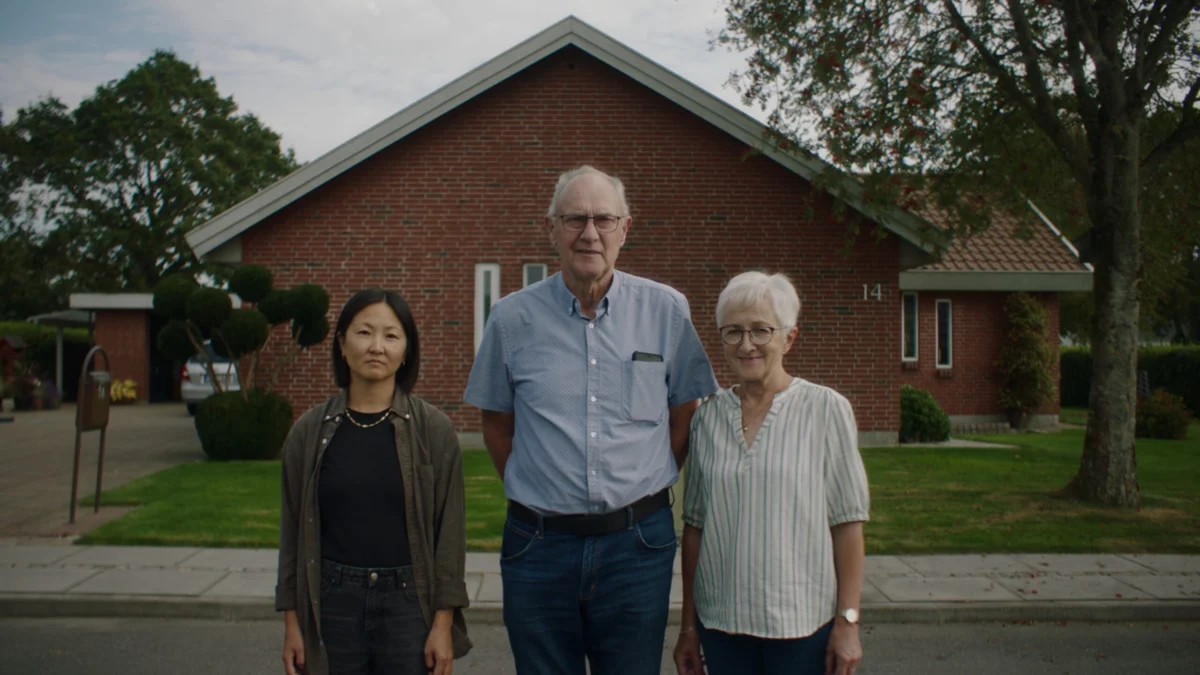
A recurring visual motif in Homesick features Inwol standing alongside other individuals, presented in a manner reminiscent of family photographs. These "moving portraits," as she terms them, serve a multifaceted purpose. "Because it’s as if you take a portrait, but then just keep it going. This is the first moment that you get to meet these people, because these people are both family, but also somebody who I want to invite the viewer to look at," Inwol explained. By placing herself adjacent to these figures without immediate identification, she blurs the lines of familial relation. "Putting myself next to them means you cannot tell from that shot alone whether it’s my parents or my brother or whoever. And I think that just shows the randomness of it all. So, by introducing them in that way next to me, it gives you the idea of the randomness of my being there." This artistic choice powerfully conveys the sense of arbitrary placement and the often-unforeseen circumstances that shape one’s familial landscape.
Threads of Resilience: Hanbok and Shared Experiences in Korea
In the Korean segments of the film, Inwol and her friends don hanboks, traditional Korean attire, in more performative scenes. This choice carries significant symbolic weight. "The other three women that I walk with are also adopted from Korea to Denmark," Inwol revealed. "And the idea for me was to show that I’m not alone, although the core feeling in the film is loneliness and not being seen or recognized." The visual of these women together, clad in traditional dress, creates a "sense of community," a counterpoint to the pervasive feeling of isolation. The hanbok itself symbolizes resilience and resistance, offering a potent visual representation of cultural identity and heritage, even amidst the backdrop of Korea as "a nation suffering." This communal portrayal offers a glimmer of shared understanding and solidarity among individuals who have navigated similar paths of displacement and identity formation.
Future Directions: A Continuing Exploration of Diaspora and Division
Looking ahead, Inwol identifies a clear thematic thread running through her body of work. "There’s a red thread through my films, and that is the theme of family divided by conflict or war or diaspora experiences," she stated. Her next project is in the early stages of development: a film focusing on a Korean community in Mexico, one of the oldest such communities abroad. This exploration aligns with her established interests, offering a new lens through which to examine themes of belonging, cultural preservation, and the enduring impact of historical events on familial structures. "For me, it would be nice because it touches on themes I know," she concluded, adding, "I constantly ask myself, ‘What films can I make? What films are for me?’" This ongoing self-interrogation and artistic commitment to exploring the complexities of family, identity, and displacement promise further compelling cinematic contributions from Taekyung Tanja Inwol.