

The Standoff in Brussels: Accusations of Blackmail and Disloyalty
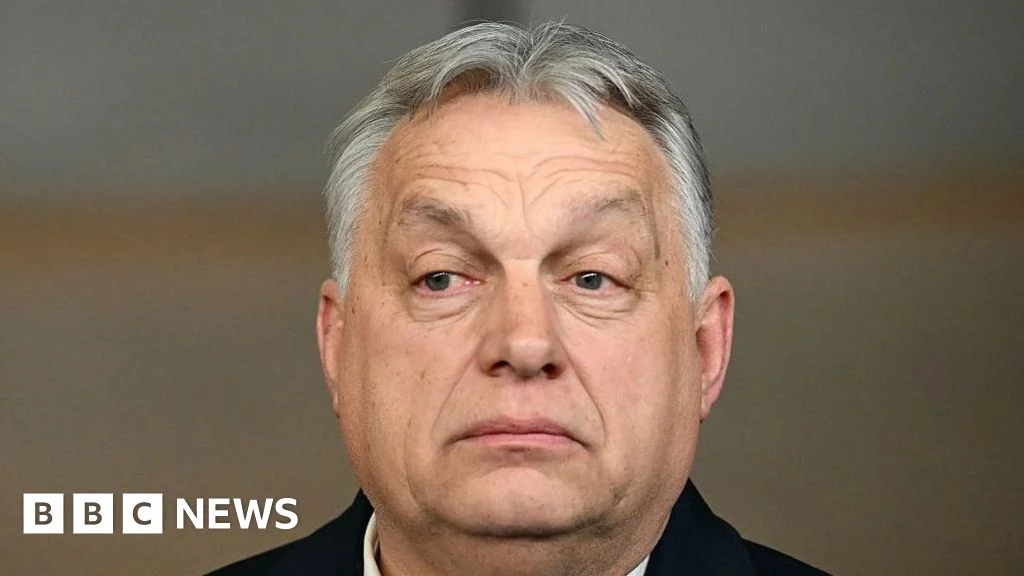
The late-night discussions at the European Council meeting culminated in a stark division, with Hungary standing firm against the proposed financial lifeline for Kyiv. Following his refusal to lift the veto, Prime Minister Orbán took to social media platform X, declaring, "No oil = no money," a direct reference to his grievance concerning the damaged Druzhba oil pipeline. This defiant stance immediately drew strong condemnation from fellow EU leaders, who did not mince words in expressing their frustration and anger.
German Chancellor Friedrich Merz, visibly perturbed by the outcome, characterized Orbán’s actions as "a gross act of disloyalty" within the European Union. Speaking to reporters in the early hours of Friday, Merz underscored the gravity of the situation, stating, "Colleagues who have been members of the European Council far longer than I have were deeply angered by what happened today. I am firmly convinced that it will leave deep marks." His sentiments were echoed by European Council President António Costa, who presided over the talks. Costa described Hungary’s obstructive move as "completely unacceptable," adding a stern warning: "Nobody can blackmail the European institutions." French President Emmanuel Macron also weighed in, calling the summit’s outcome "unprecedented" and stressing that the loan’s release "must be implemented without delay."
The proposed €90 billion aid package, equivalent to approximately £77 billion, is designed to provide critical budgetary support to Ukraine over the coming years, enabling the war-torn nation to maintain essential public services, stabilize its economy, and continue its defense against Russia’s full-scale invasion. The blocking of these funds represents a significant blow to Kyiv, which relies heavily on international financial assistance to sustain its war effort and prevent economic collapse.
Orbán’s Rationale: The Druzhba Pipeline and Energy Security
At the heart of Orbán’s justification for the veto lies Hungary’s profound dependence on Russian energy supplies and a specific grievance regarding the Druzhba pipeline. Hungary, a landlocked nation, has historically been heavily reliant on Russian oil and gas, a dependency that Orbán has consistently leveraged in his dealings with the EU, particularly concerning sanctions against Moscow. While many European nations have sought to diversify their energy sources following Russia’s 2022 invasion of Ukraine, Hungary has maintained its close energy ties, often securing favorable supply deals.
The Druzhba (Friendship) pipeline, a vast Soviet-era network, is a crucial conduit for transporting Russian crude oil to several Central and Eastern European countries, including Hungary and Slovakia, via Ukraine. Orbán alleges that Ukraine has disrupted these vital energy supplies by failing to adequately repair a section of the pipeline. According to Kyiv, the pipeline was damaged in January by Russian air strikes, and while repairs are estimated to take weeks, Ukrainian authorities have also indicated that restoring the full flow of oil would be tantamount to lifting certain sanctions on Moscow, a move they are reluctant to make given the ongoing conflict.
Orbán’s argument, encapsulated in his "No oil = no money" declaration, suggests a direct linkage between Hungary’s energy security and its willingness to support Ukraine financially. He asserts that as long as the pipeline remains out of commission, impacting Hungary’s energy supply, he will continue to block the release of EU funds to Ukraine. This stance, however, comes despite Hungary having reportedly approved the decision on aid at an earlier meeting, leading to accusations of bad faith and political opportunism from other member states.
A History of Dissent: Hungary’s Relationship with Russia and the EU
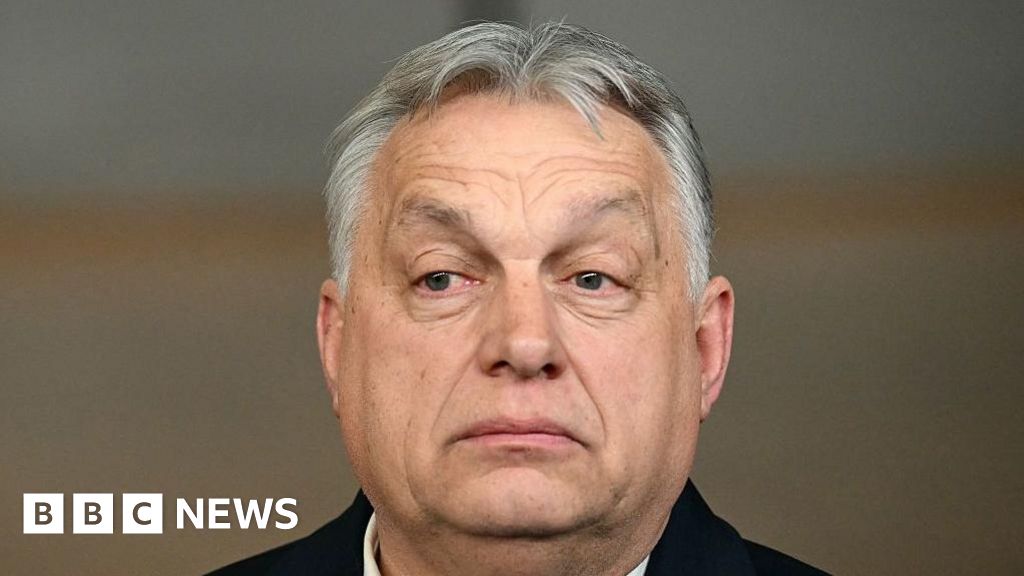
Prime Minister Viktor Orbán has cultivated a reputation as one of Russia’s closest allies within the European Union, a position he has steadfastly maintained since the full-scale invasion of Ukraine in February 2022. This alignment is part of his "eastern opening" policy, which prioritizes economic and political ties with non-Western powers, including Russia and China. Hungary’s unique position often puts it at odds with the consensus of the EU and NATO, which have largely adopted a unified front against Russian aggression.
Orbán’s government has repeatedly stalled EU initiatives aimed at supporting Ukraine or imposing further sanctions on Russia. From delaying approval of sanctions packages to obstructing military aid provisions and now financial assistance, Hungary has consistently acted as a dissenting voice within the bloc. This pattern of obstruction has fueled accusations that Orbán is exploiting critical European decisions to extract concessions or further his own domestic political agenda.
The Hungarian leader’s consistent advocacy for a more conciliatory approach towards Moscow, even in the face of widespread condemnation of Russian actions in Ukraine, has led to growing frustration among his European counterparts. His close relationship with Russian President Vladimir Putin, including face-to-face meetings since the invasion, contrasts sharply with the diplomatic isolation imposed on Russia by most Western nations. Hungary’s argument often centers on the economic impact of sanctions on its own economy and the necessity of maintaining pragmatic relations with its large eastern neighbor.
Ukraine’s Dire Need: The Criticality of EU Financial Support
For Ukraine, the €90 billion EU aid package is not merely an economic boost; it is a critical lifeline for national survival. President Volodymyr Zelenskyy had issued an urgent plea for the funds ahead of the Brussels summit, emphasizing the dire consequences of a delay. "For the third month now, the most important financial security guarantee for Ukraine from Europe is not working – the €90bn support package for this year and the next," Zelenskyy told EU leaders during the summit via video conference. "This is critical for us. It is a resource to protect lives."
Ukraine’s economy has been devastated by the ongoing conflict, with vast swathes of its industrial base and infrastructure destroyed. The country’s budget deficit is enormous, and it relies heavily on external financing to fund its defense, maintain public services like healthcare and education, and ensure macroeconomic stability. Without consistent and substantial international aid, Ukraine faces the very real prospect of economic collapse, which would severely undermine its ability to resist Russian aggression. The funds are earmarked not just for military hardware but also for paying civil servants, teachers, doctors, and ensuring the basic functioning of the state apparatus. A prolonged blockage of these funds would force Kyiv to take drastic measures, potentially cutting essential services or resorting to inflationary money printing, further destabilizing the nation.
The Geopolitical Chessboard: Regional Alignments and Divisions
The division at the EU summit also highlighted broader geopolitical alignments within Central and Eastern Europe. While Hungary remains Russia’s staunchest ally within the EU, it is not entirely alone in its more cautious approach towards Ukraine. Slovakia’s Prime Minister Robert Fico, another leader who has cultivated closer ties with Russian President Vladimir Putin, also refused to endorse the summit’s conclusions that reaffirmed the intent to release the funds to Ukraine. This growing axis of dissent, though small, poses a significant challenge to EU unity, particularly in the strategically vital eastern flank.
Fico, like Orbán, has voiced skepticism about the effectiveness of sanctions against Russia and has called for a more pragmatic approach to relations with Moscow. This shared perspective, rooted in historical ties, economic dependencies, and often a degree of Euroskepticism, creates a bloc of nations that can disrupt unanimous decision-making processes within the EU. Conversely, countries like Poland, the Baltic states (Estonia, Latvia, Lithuania), and the Czech Republic have been among the most vocal and robust supporters of Ukraine, advocating for stronger sanctions and greater aid. This ideological and geopolitical rift within the EU complicates the bloc’s ability to project a unified foreign policy, especially on issues as critical as the war in Ukraine.
EU’s Resolve: Searching for a Path Forward
Despite the setback, European Commission President Ursula Von der Leyen vowed that the loan would be delivered "one way or the other." French President Macron reinforced this resolve, stating there would be "no plan B" for the funds, because "plan A must be implemented." These statements underscore the collective determination of the majority of EU member states to ensure Ukraine receives the necessary financial support, even if it means exploring alternative mechanisms to circumvent Hungary’s veto.
The EU’s unanimity rule for certain decisions, particularly those involving the bloc’s budget or significant financial commitments, has long been a point of contention. While designed to protect national sovereignty, it also grants disproportionate power to a single member state to obstruct the will of the majority. Potential "Plan B" options could include an intergovernmental agreement among the other 26 member states, where funds are channeled directly to Ukraine outside the formal EU budget framework. Such an arrangement, however, would be more complex to implement, potentially slower, and could set a concerning precedent for future EU decision-making, highlighting internal divisions.
The leaders agreed that the issue of Ukraine’s aid would be discussed again at their next meeting, indicating a recognition of the urgency and the need to find a resolution. The pressure on Hungary is immense, with the vast majority of its partners condemning its actions. The credibility of the EU as a unified and effective geopolitical actor is at stake.
Domestic Stakes: Orbán’s Electoral Strategy
Prime Minister Orbán’s defiant stance at the EU summit is not merely about energy security; it is deeply intertwined with Hungary’s domestic political landscape. The country is gearing up for elections on April 12th, and opinion polls suggest that Orbán’s Fidesz party, while still leading, is facing a more competitive environment than in previous years, with its main rivals gaining traction.
Orbán has historically framed hostility towards Ukraine and resistance to EU policies as key planks of his electoral platform. By portraying himself as a protector of Hungarian national interests against perceived foreign interference and as a leader who stands up to Brussels, he appeals to a nationalist and conservative voter base. His strong rhetoric against supporting Ukraine, coupled with his emphasis on Hungary’s energy security, resonates with segments of the electorate concerned about the economic impact of the war and sanctions. Blocking aid to Ukraine, therefore, can be seen as a calculated move to solidify his base and project an image of strength and independence ahead of a crucial election. This strategy, however, comes at a significant cost to Hungary’s standing within the EU and its relationships with other member states.
Implications for European Unity and Future Decision-Making
The current deadlock over Ukraine aid casts a long shadow over the future of European unity and decision-making. The unanimity requirement, while a cornerstone of national sovereignty within the EU, has repeatedly proven to be a bottleneck in critical moments, particularly concerning foreign policy and financial commitments. This incident will undoubtedly reignite debates about reforming the EU’s decision-making processes, potentially moving towards qualified majority voting in more areas, though such reforms face significant political hurdles.
Beyond procedural implications, the episode damages the EU’s reputation as a reliable and decisive international actor. In a world increasingly defined by geopolitical rivalries, internal divisions weaken the bloc’s ability to respond effectively to crises and project a unified front against external threats. For Ukraine, the delay in aid translates into real-world consequences on the battlefield and for its civilian population. For Russia, the internal discord within the EU is a welcome development, potentially weakening the Western alliance supporting Kyiv.
The accusations of blackmail and disloyalty are not merely diplomatic pleasantries; they reflect a profound breakdown of trust and solidarity among member states. The EU faces the monumental challenge of either bringing Hungary back into alignment with the common European purpose or finding innovative ways to move forward without its consent, all while maintaining the integrity and effectiveness of the Union. The path ahead is fraught with difficulty, and the stakes for Ukraine, and for the future of European integration, could not be higher.