


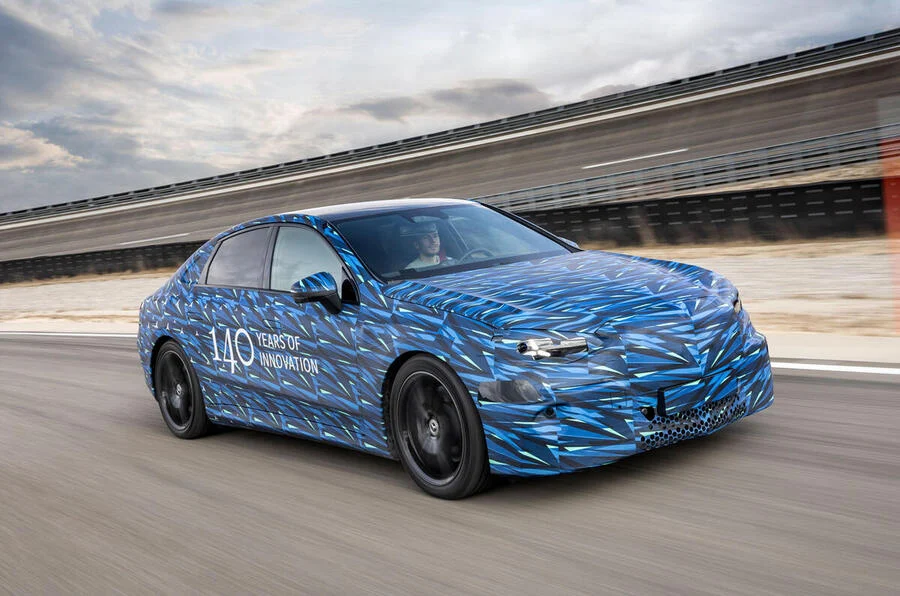
Mercedes-Benz has released the first official images of the upcoming C-Class electric vehicle, signaling a major shift in the brand’s approach to its most successful sedan lineage. Expected to be officially designated as the C-Class with EQ Technology, the new model is scheduled for a full unveiling at a dedicated media event in South Korea this coming Monday. The vehicle, which represents a cornerstone of the German automaker’s transition toward an all-electric future, is slated to go on sale this summer. This launch positions the C-Class EV as a direct competitor to the recently revealed BMW i3 saloon and the long-standing segment leader, the Tesla Model 3.
The C-Class has historically served as a high-volume driver for Mercedes-Benz, often acting as the gateway for customers into the brand’s luxury sedan portfolio. By electrifying this nameplate, Mercedes-Benz is addressing a critical segment of the market where efficiency, digital integration, and traditional luxury must coexist. The newly released images confirm that the C-Class EV will borrow heavily from the interior architecture of the larger GLC EV, emphasizing a "digital-first" philosophy that prioritizes screen real estate and minimalist physical controls.
A New Benchmark for Digital Integration
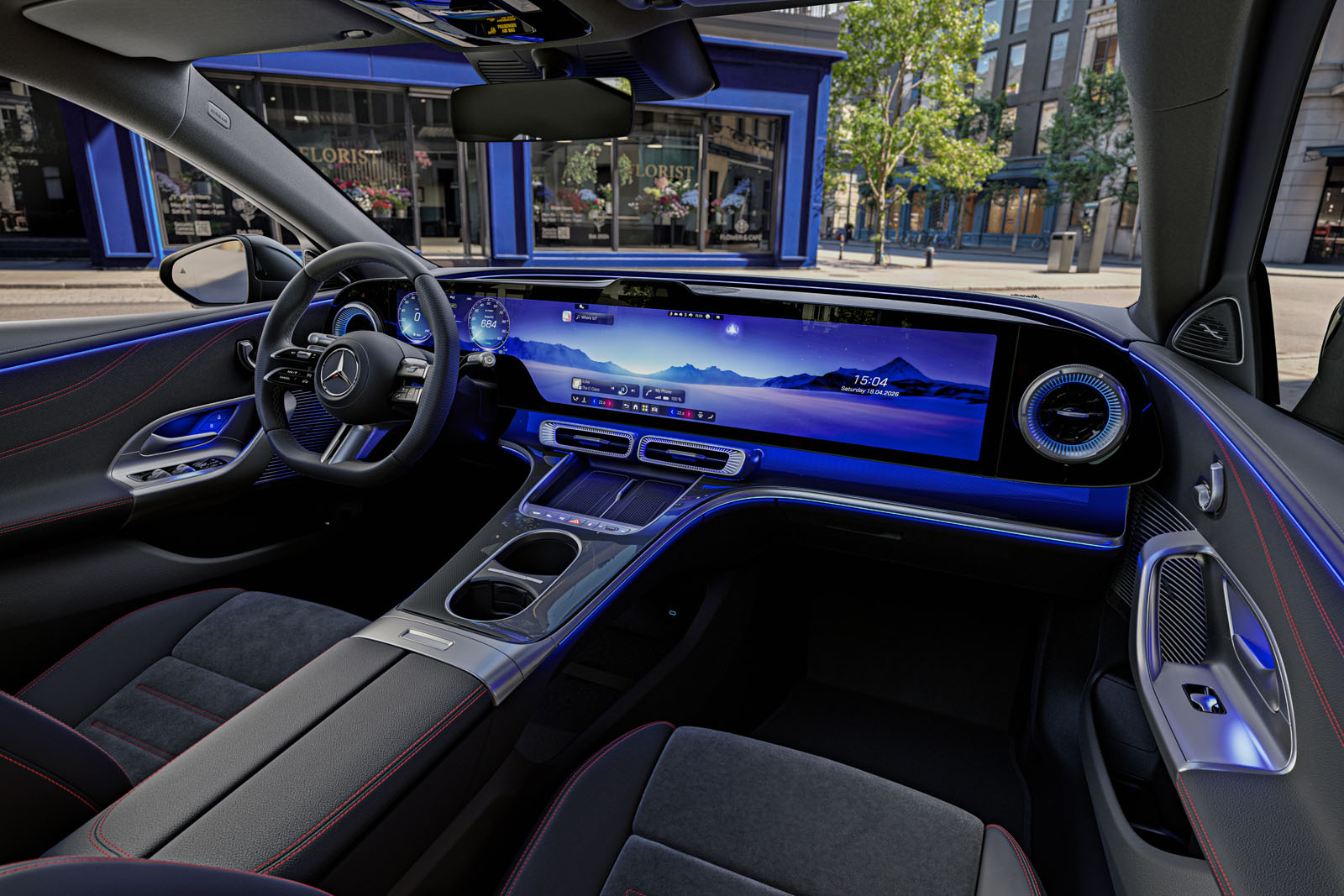
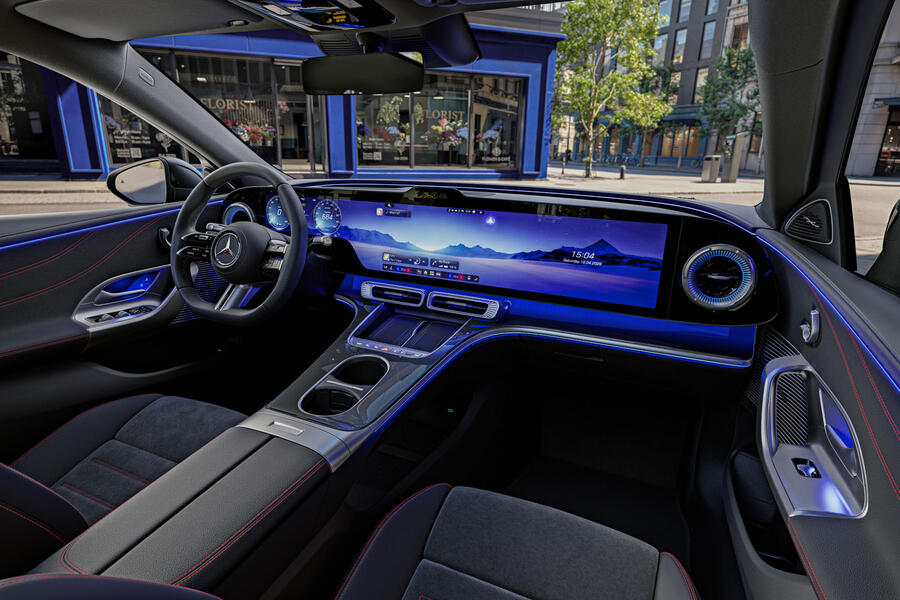
At the heart of the C-Class EV’s cabin is the 39.1-inch MBUX Hyperscreen, a dashboard-spanning glass panel that integrates multiple displays into a single seamless unit. This technology, which debuted on the flagship EQS sedan, has been scaled and refined for the C-Class segment. The Hyperscreen provides dedicated displays for the driver’s instrument cluster, the central infotainment system, and a separate screen for the front passenger, allowing for individualized media consumption and navigation control.
The integration of the MBUX (Mercedes-Benz User Experience) system in the C-Class EV is intended to streamline the user interface while maintaining a high level of customization. While the screen dominates the visual field, Mercedes-Benz has retained a small cluster of physical controls on the center console. These tactile buttons manage essential functions such as the parking camera activation, drive mode selection, and audio volume, providing a bridge between traditional ergonomics and modern digital interfaces. Additionally, the console features dual wireless phone chargers, reflecting the increasing demand for high-speed connectivity and device management within the vehicle.
Mercedes-Benz representatives have stated that the interior of the C-Class EV "sets new benchmarks" for quality in the premium compact segment. This claim is supported by a diverse palette of materials available to consumers. For the first time in the C-Class line—and only the second time in the brand’s history—Mercedes will offer a high-quality vegan leather alternative alongside traditional Nappa leather. The cabin is further accented by polished metal surfaces on key touchpoints, including the door handles and the redesigned air vents, which are intended to provide a premium tactile experience.
Technical Specifications and the MB.EA Platform
The C-Class EV is built upon the 800V MB.EA (Mercedes-Benz Electric Architecture) platform, a dedicated EV chassis designed to maximize interior space and optimize electrical efficiency. This 800-volt system is a significant upgrade over the 400-volt systems found in many current electric vehicles, allowing for much faster DC charging speeds. While specific charging times have not been finalized, the architecture is expected to enable the vehicle to add significant range in under 20 minutes at compatible high-speed charging stations.
One of the most critical metrics for the new C-Class EV is its range. Mercedes-Benz has targeted a figure of more than 450 miles (approximately 725 kilometers) on a single charge, likely measured under the WLTP (Worldwide Harmonized Light Vehicles Test Procedure) cycle. This range would place the C-Class EV at the top of its class, potentially outperforming its primary rivals from BMW and Audi. This efficiency is achieved through a combination of high-energy-density battery packs and an aerodynamic profile that minimizes drag—a hallmark of the Mercedes-Benz EQ design language.
The sharing of technical components with the electric GLC is a strategic move by Mercedes-Benz to achieve economies of scale. By utilizing the same platform, motors, and battery technology across its two most popular model lines, the company can streamline production and offer a more consistent performance profile across its "C-segment" electric offerings.
Enhanced Comfort and Acoustic Engineering
In addition to its digital capabilities, the C-Class EV introduces new seating technology designed for long-distance travel. The seats feature an "electro-pneumatic" lumbar support system. According to the manufacturer, this system uses air pockets that can be precisely adjusted to match the natural curvature of the passenger’s spine, reducing fatigue during extended commutes. These seats are also equipped with advanced climate control features, including heating, ventilation, and a variety of massage programs.
Acoustic comfort has been another primary focus for the engineering team. Because electric vehicles lack the masking noise of an internal combustion engine, secondary sounds like wind and tire noise become more prominent. To combat this, Mercedes-Benz has employed laminated side windows as standard on higher trims and "specially refined" electric motors designed to operate with minimal vibration. Furthermore, a newly developed air-conditioning unit has been engineered to operate silently, ensuring that the cabin remains a quiet environment even when the climate control is working at maximum capacity.
For audiophiles, the C-Class EV will offer an optional Burmester 4D Surround Sound System. This system goes beyond traditional audio by incorporating "exciters" or transducers directly into the seat structures. These components transmit low-frequency vibrations—the "fourth dimension" of the sound—allowing passengers to feel the bass of the music through their bodies. This technology was previously reserved for the S-Class and EQS, and its inclusion in the C-Class highlights the brand’s intent to move its entry-level luxury models upmarket.
Chronology of Development and Market Strategy
The development of the C-Class EV has been a multi-year project, with the first camouflaged test mules appearing on European roads in early 2023. Last month, members of the automotive press were invited to participate in early "ride-along" sessions with development engineers, where the vehicle’s refined ride quality and 800V charging capabilities were first demonstrated.
The decision to unveil the vehicle in South Korea is a strategic one. South Korea has become one of the most important markets for Mercedes-Benz globally, consistently ranking among the top five markets for the brand’s luxury sedans. The high adoption rate of electric vehicles and the sophisticated consumer base in the region make it an ideal location for the world premiere of a tech-heavy model like the C-Class EV.
Following the South Korean debut on Monday, the vehicle is expected to make its European appearance shortly thereafter, with production likely centered in Germany and China to serve major global markets. The "C-Class with EQ Technology" naming convention also marks a subtle shift in branding. Mercedes-Benz is reportedly moving away from the standalone "EQ" sub-brand (such as EQC or EQS) and instead integrating electric powertrains directly into its core model names, reflecting the philosophy that electric drive will soon be the standard rather than the exception.
Industry Implications and Competitive Landscape
The arrival of the C-Class EV comes at a pivotal time for the European luxury car market. BMW is currently readying its "Neue Klasse" platform, which will underpin the next generation of its 3 Series and i3 models starting in 2025. Audi is similarly preparing the A4 e-tron. By launching the C-Class EV this summer, Mercedes-Benz is attempting to capture early-adopter luxury buyers before its domestic rivals can bring their next-generation dedicated EV platforms to market in volume.
Industry analysts suggest that the success of the C-Class EV will be a bellwether for Mercedes-Benz’s "Ambition 2039" plan, which aims for a carbon-neutral new car fleet by 2039. The C-Class remains a high-volume seller, and its transition to electric power will be a major contributor to the company’s fleet-wide emissions targets.
"The C-Class has always been the heart of our brand’s sedan lineup," a Mercedes-Benz spokesperson noted in a recent briefing regarding the vehicle’s development. "With the new electric model, we are not just changing the powertrain; we are redefining what a compact luxury sedan can be in a digital age. The goal was to combine the efficiency of the 800V MB.EA platform with the comfort and prestige our customers expect from a C-Class."
Summary of Key Features and Data
As the official unveiling approaches, the key specifications for the Mercedes-Benz C-Class with EQ Technology can be summarized as follows:
- Platform: 800V MB.EA (Dedicated Electric Architecture).
- Range: Targeted at 450+ miles (WLTP).
- Interior Display: 39.1-inch MBUX Hyperscreen.
- Charging: High-speed DC charging capable of significant replenishment in under 20 minutes.
- Sustainability: Introduction of vegan leather options and recycled materials in the cabin.
- Audio: Burmester 4D Surround Sound with seat-integrated transducers.
- Comfort: Electro-pneumatic lumbar support and enhanced acoustic insulation (laminated glass).
The upcoming South Korean event will likely provide final details regarding battery capacities, motor configurations (expected to include both rear-wheel drive and 4MATIC all-wheel drive versions), and regional pricing. With its blend of long-range capability, ultra-fast charging, and a high-tech interior, the C-Class EV represents Mercedes-Benz’s most concerted effort yet to dominate the premium electric sedan market.