


The landscape of the British automotive market has undergone a seismic shift over the last decade, particularly within the niche of accessible open-top motoring. Where once the UK’s price lists were populated by a diverse array of affordable cabriolets—often derived from mass-market hatchbacks like the Peugeot 206 or the Vauxhall Tigra—the current era is dominated by the "crossover effect." This industry-wide pivot toward high-riding SUVs and crossovers has largely marginalized the traditional convertible, replacing the thrill of an open sky with the utilitarian appeal of a panoramic glass roof. Despite this trend, two manufacturers have remained committed to the sub-£30,000 convertible segment: Mazda, with its perennial MX-5, and Mini, with its newly updated fourth-generation Convertible.
The recent deployment of the Mini Cooper S Convertible to the sub-zero environments of Scandinavia serves as more than just a test of endurance; it is a strategic demonstration of the model’s continued relevance in a shrinking market. As the automotive industry moves rapidly toward electrification and homogenization, the persistence of a front-wheel-drive, internal combustion engine (ICE) soft-top represents a deliberate choice by the BMW Group to maintain a connection to its heritage of driver engagement and "go-kart" handling.
The Resurgence of British Manufacturing and the F67 Platform
A significant chapter in the story of the latest Mini Convertible is its return to its ancestral home. Production of this fourth-generation model, internally designated as the F67, has transitioned back to Plant Oxford in the United Kingdom. This move follows a decade-long hiatus during which the previous generation was manufactured by VDL Nedcar in the Netherlands. The repatriation of the Convertible production line to Oxford completes the UK-based manufacturing triangle for the brand: the four-cylinder "B48" engines are assembled at BMW Group Plant Hams Hall in Birmingham, while body panels and sub-assemblies are sourced from the BMW Group Plant Swindon.
The F67 Mini Convertible is, in technical terms, a comprehensive evolution of the outgoing F57 model. While it features the updated design language of the new Mini Cooper hatch—including a more minimalist interior and refined exterior surfacing—it retains the mechanical underpinnings that have defined the brand’s modern era. This evolutionary approach is reminiscent of the late 1990s Volkswagen Golf Cabriolet, which updated its aesthetics to match the Mk4 generation while retaining the Mk3 chassis. For Mini, this strategy allows the brand to offer a modern technological experience, including the high-resolution circular OLED touchscreen, without the prohibitive costs of developing an entirely new ICE platform in an era where R&D budgets are increasingly diverted to electric vehicle (EV) development.
Comparative Market Positioning and Pricing
The entry-point for the Mini Convertible range is currently set at £28,955 for the Cooper C. This model is powered by a 161bhp 2.0-litre turbocharged engine, offering a balance of performance and efficiency. For those seeking higher output, the Cooper S variant, priced from £31,990, provides 201bhp and 221lb ft of torque. When adjusted for inflation, these figures represent a competitive value proposition compared to the convertible market of twenty years ago.

The Mini’s primary rival remains the Mazda MX-5. While the Mazda offers a purist, rear-wheel-drive layout and a manual transmission starting at £28,585, the Mini counters with greater practicality. The Mini’s 2+2 seating configuration and a more substantial boot capacity (though still modest at 215 litres with the roof up) offer a level of daily usability that the strictly two-seater Mazda lacks. Furthermore, the Mini’s move to an automatic-only transmission across the range reflects broader market trends, where dual-clutch systems have become the standard for balancing performance with stringent emissions regulations.
Technical Specifications: The Mini Cooper S Convertible (F67)
| Feature | Specification |
|---|---|
| Engine | 4-cylinder, 1998cc, turbocharged petrol |
| Power | 201bhp @ 5000-6500rpm |
| Torque | 221lb ft @ 1450-5000rpm |
| Transmission | 7-speed dual-clutch automatic (FWD) |
| 0-62mph | 6.9 seconds |
| Top Speed | 147mph |
| Kerb Weight | 1455kg |
| Fuel Economy | 42.8mpg (WLTP) |
| CO2 Emissions | 149g/km |
The 1455kg kerb weight reflects the necessary structural reinforcements required for a convertible. To compensate for the loss of a fixed steel roof, the Cooper S and John Cooper Works (JCW) models feature additional chassis bracing to maintain torsional rigidity. This engineering ensures that the "scuttle shake" often associated with older cabriolets is significantly minimized, allowing the suspension to work effectively during high-lateral-load cornering.
The Scandinavian Expedition: From Trondheim to Åre
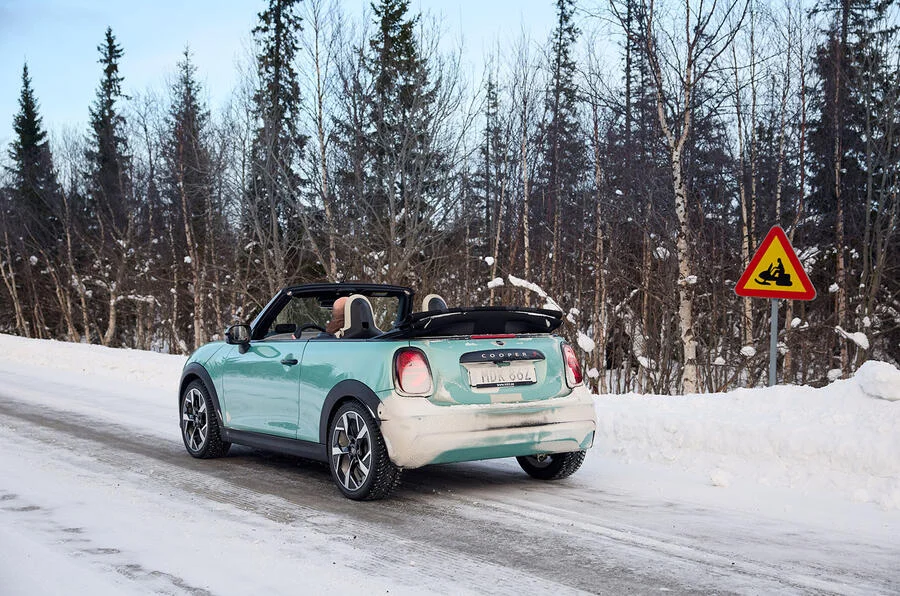
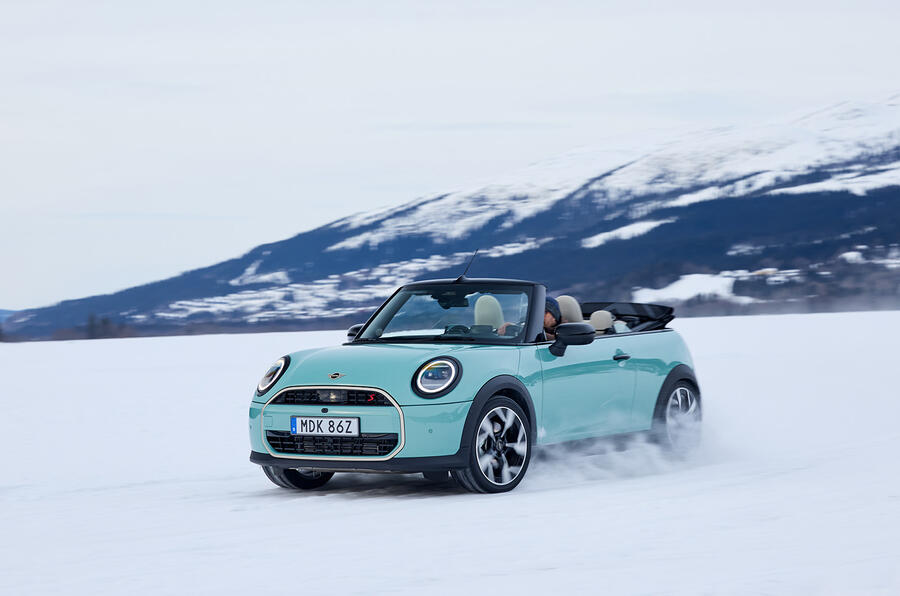
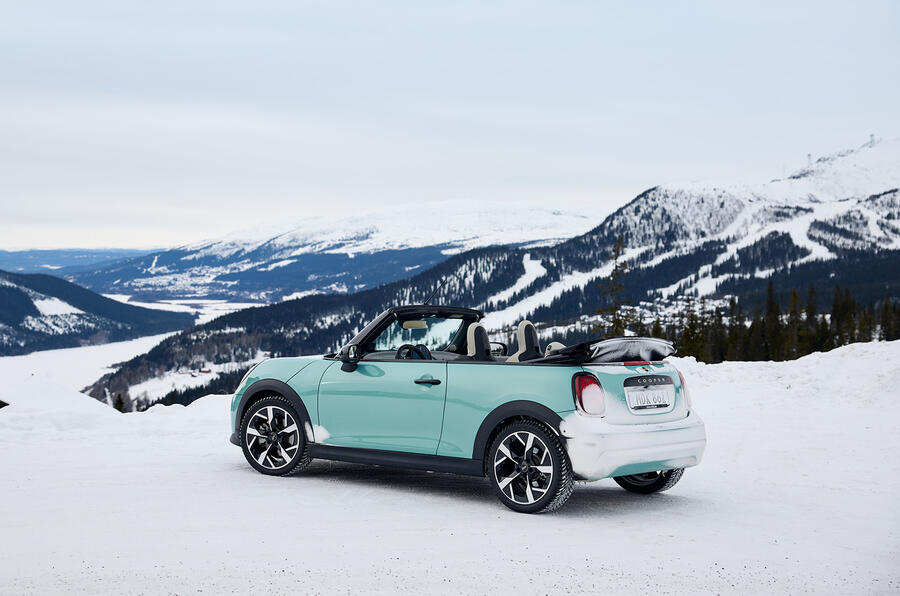
To validate the Mini’s capabilities in extreme conditions, a test route was established beginning in Trondheim, Norway, and extending two hours east across the Swedish border to the town of Åre. Known primarily as a premier destination for alpine skiing and mountain biking, Åre also serves as a hub for ice driving during the winter months. The journey was conducted in ambient temperatures hovering around -16°C, a deliberate attempt to test the vehicle’s thermal management and the functionality of its fabric roof mechanism in sub-zero climates.
One of the more notable events during the transit on the E14 highway was an unplanned encounter with local wildlife, necessitating a real-world "elk test." This maneuver, which gained notoriety in 1997 when it caused the first-generation Mercedes-Benz A-Class to roll over, remains a critical benchmark for vehicle stability. The Mini Cooper S, equipped with studded Nokian Hakkapeliitta tyres, demonstrated remarkable composure. The combination of quick-witted steering and a low center of gravity allowed the vehicle to navigate the sudden swerve and recovery without loss of traction or excessive body roll, affirming the efficacy of its electronic stability control (DSC) and mechanical balance.
Dynamics on Ice: The Åresjön Lake Evaluation
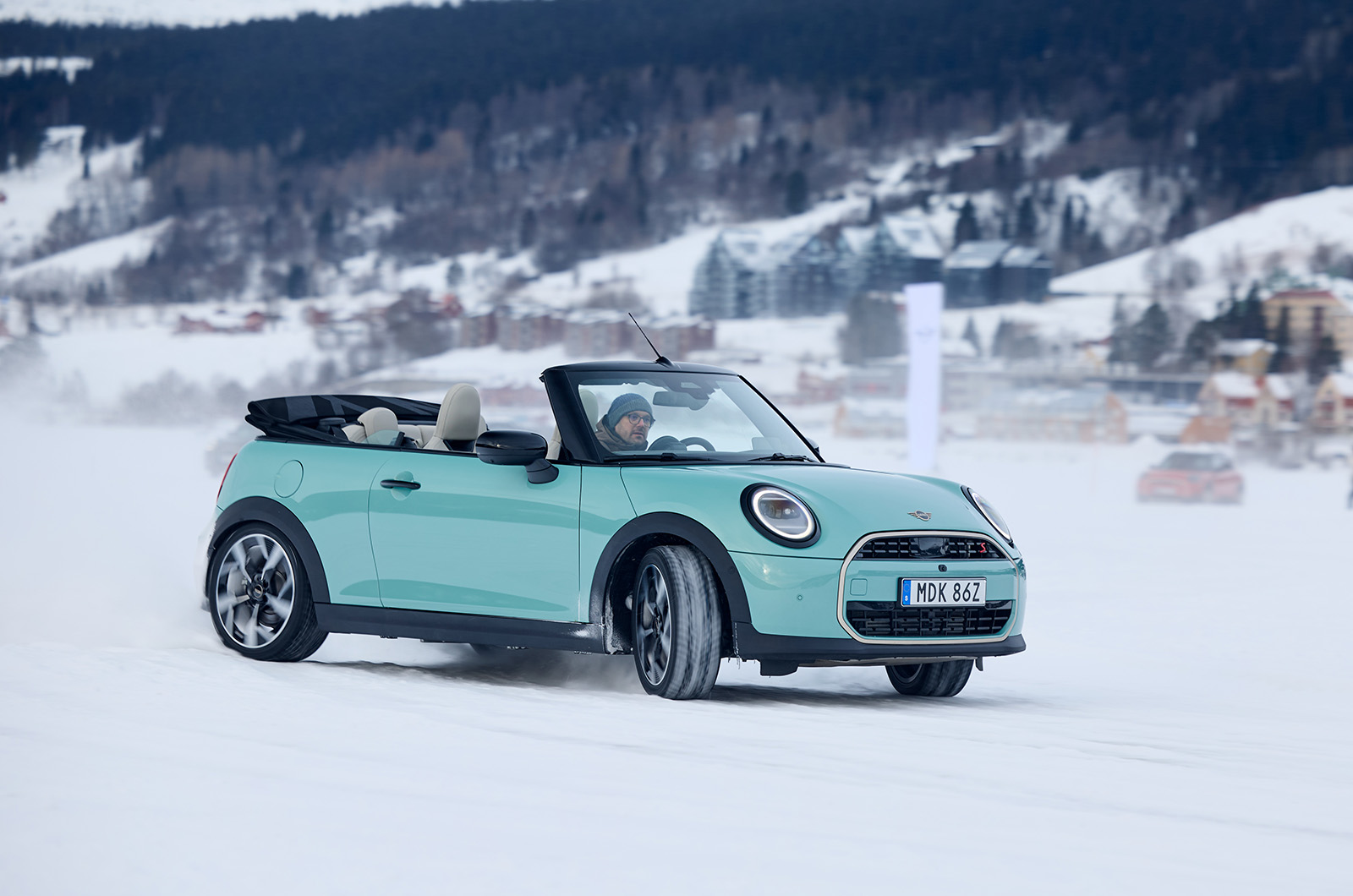
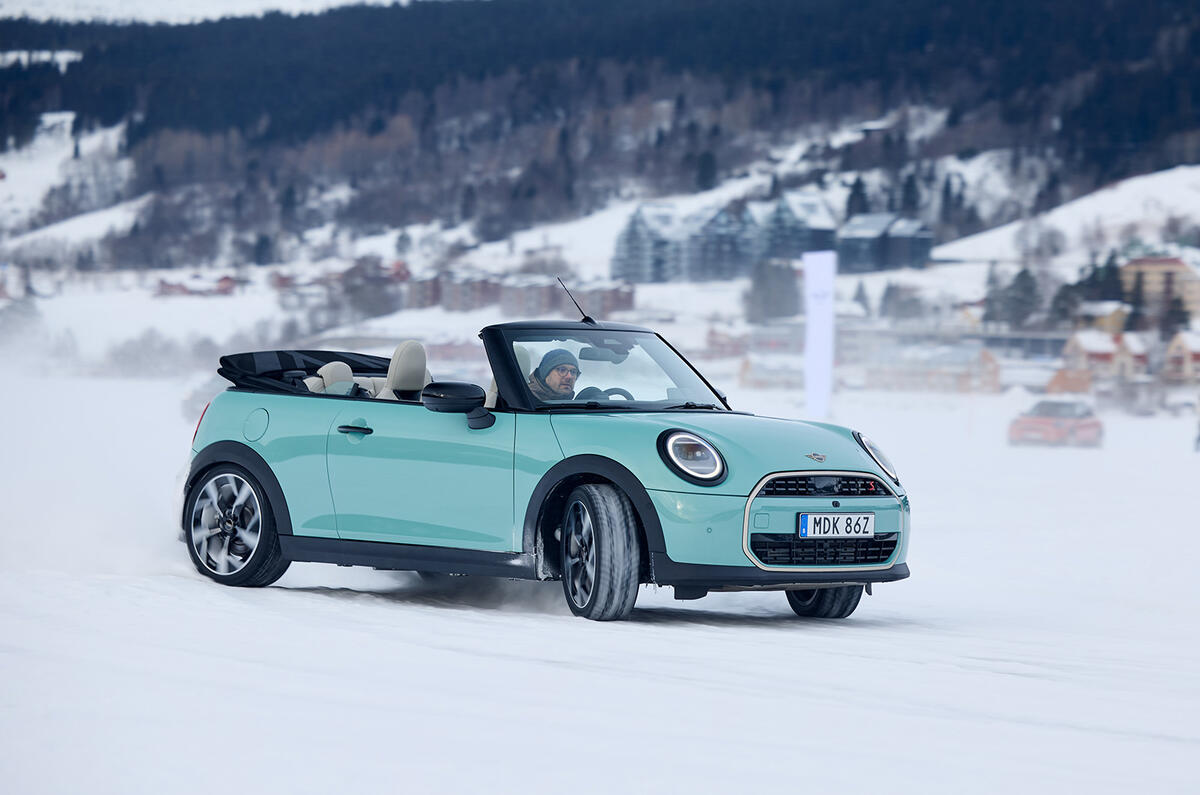
The culmination of the mission took place on the frozen surface of Åresjön lake. Driving on ice presents a unique set of challenges for a front-wheel-drive vehicle. While rear-wheel-drive cars are often preferred for their ability to initiate power-slides, the Mini’s setup proved surprisingly playful. By deactivating the Dynamic Stability Control (DSC), drivers can exploit the car’s natural tendency for lift-off oversteer.
On the low-friction surface, the Cooper S showed that its 201bhp is more than sufficient to break traction. The seven-speed dual-clutch transmission, while lacking manual paddle shifters in its standard configuration, manages shifts effectively when placed in "Go-Kart" mode. This mode sharpens throttle response and adjusts steering weight, providing a more direct connection between the driver and the icy surface. The use of studded tyres is essential in these conditions, as the small metal pins bite into the ice, providing the necessary longitudinal grip for acceleration and braking while allowing for controlled lateral slides.
Interior Technology and the "Always Open" Philosophy
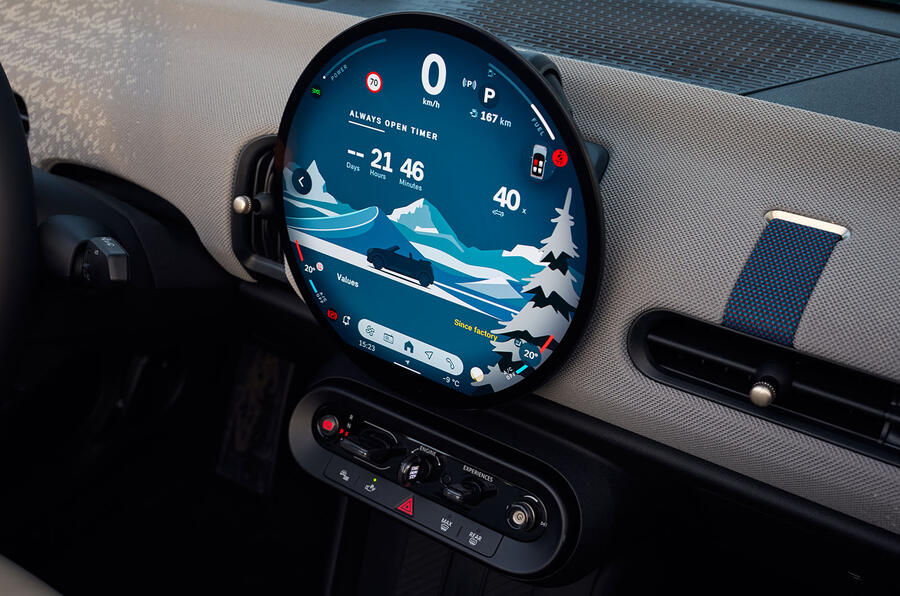
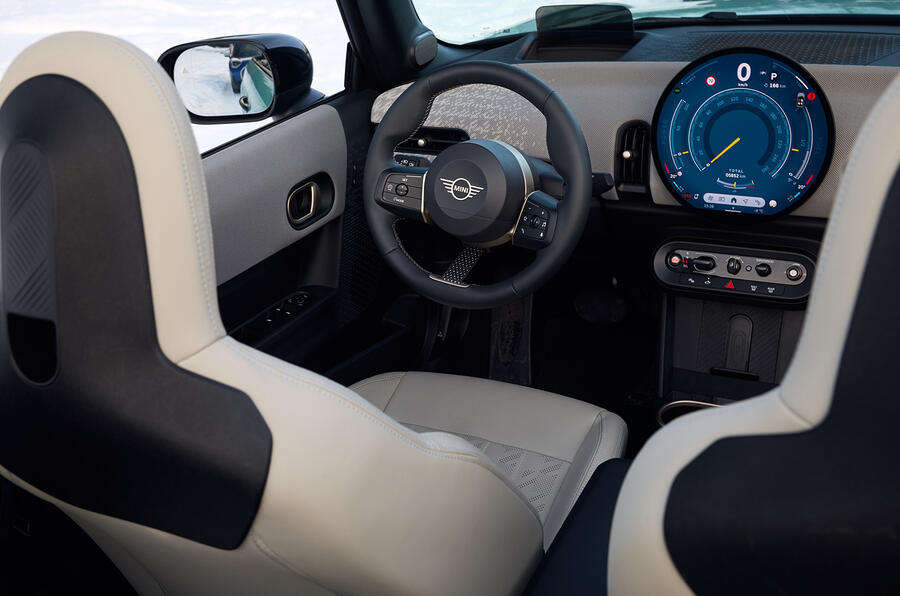
The interior of the F67 reflects a significant leap in digital integration. Central to the cabin is a 240mm circular OLED display, which handles everything from navigation to climate control. A unique feature highlighted during the Swedish mission is the "Always Open Timer." This digital gauge tracks the total duration the vehicle has been driven with the roof down. During the sub-zero trek, the timer reached a full 24-hour milestone, underscoring the vehicle’s robust heating systems, including three-level heated seats and a heated steering wheel, which make roof-down driving viable even in Arctic conditions.
The cabin materials have also seen a shift toward sustainability, with the use of recycled polyester textiles on the dashboard and door panels. The teal backlighting and customizable "Experience Modes" allow the driver to alter the interior ambiance, a feature that provides a psychological counterpoint to the grey, frozen landscapes of the Swedish winter.
Industry Analysis: The Future of the Niche Convertible
The Mini Convertible’s role in the BMW Group portfolio is multifaceted. While it may not command the high volume of the Countryman or the standard Cooper hatch, it serves as a critical brand halo. It appeals to a demographic that values lifestyle and aesthetic expression, providing a high-margin product that reinforces the brand’s premium positioning.
However, the future of such vehicles faces headwinds. The transition to electric powertrains presents packaging challenges for small convertibles, as the heavy battery floor can conflict with the need for a low seating position and structural bracing. While Mini has produced limited-run electric convertibles in the past, the F67’s reliance on internal combustion suggests that for the immediate future, the brand believes the best way to deliver an affordable, lightweight open-top experience is through refined petrol engines.
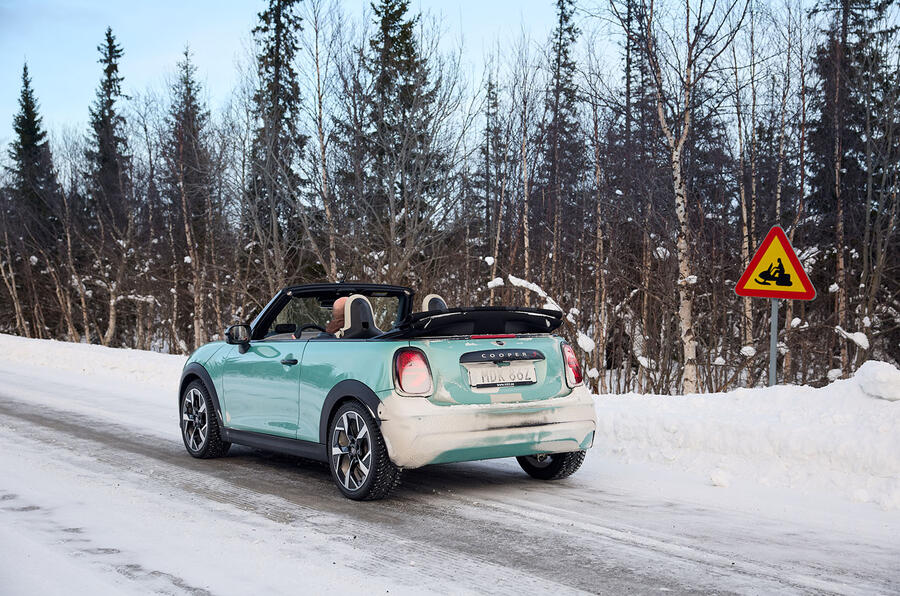
The success of the Mini mission to Sweden proves that the convertible is not merely a "fair weather" toy but a durable and engineered piece of machinery capable of handling some of the harshest environments on Earth. As long as there is a demand for driving engagement and the unique sensory experience of open-air motoring, the Mini Convertible remains one of the few vehicles keeping that tradition accessible to the mainstream market. Through a combination of British manufacturing heritage and German engineering, the F67 ensures that the affordable cabriolet remains a viable, albeit rare, fixture of the modern automotive landscape.