


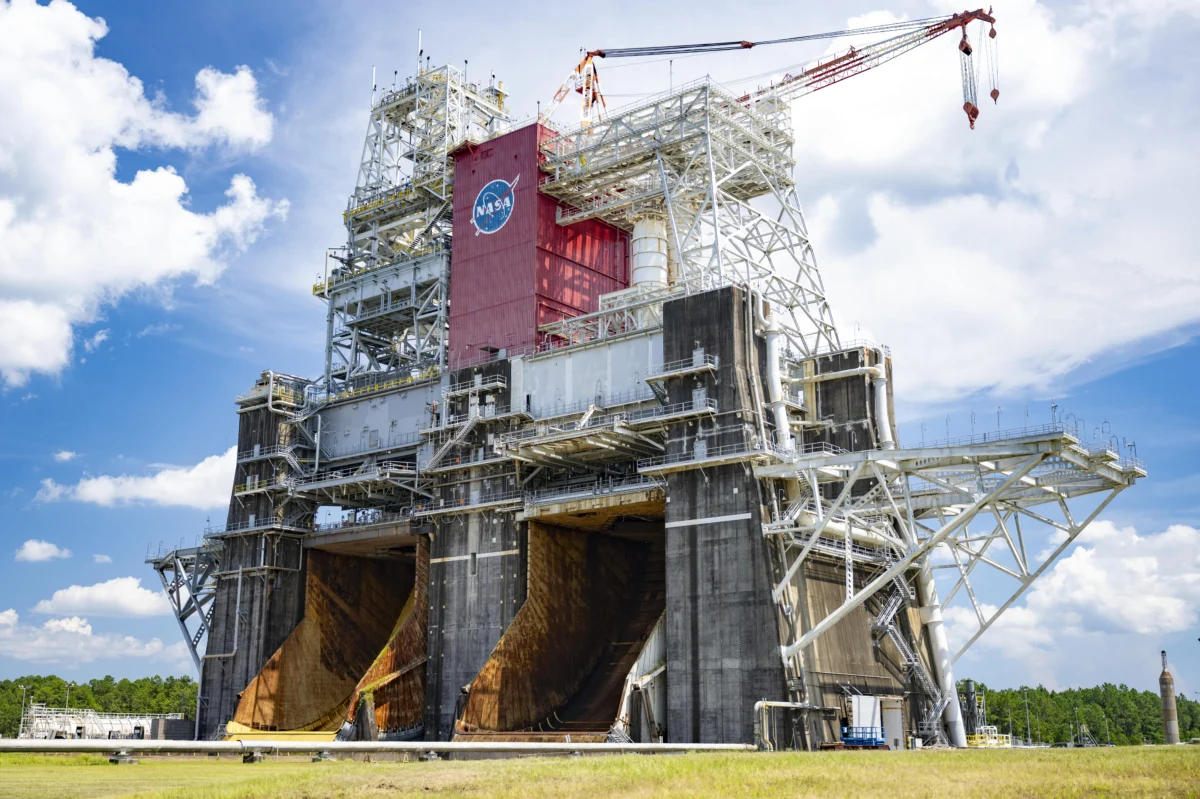
NASA and Blue Origin have officially announced a significant agreement to conduct second stage hot fire testing for Blue Origin’s New Glenn heavy-lift orbital launch vehicle at the agency’s historic Stennis Space Center near Bay St. Louis, Mississippi. This crucial collaboration, formalized through an annex to an existing reimbursable Space Act Agreement signed earlier this month, underscores NASA’s strategic commitment to leveraging commercial partnerships to advance its ambitious Artemis program, which aims to return American astronauts to the Moon by 2027 and establish a sustained lunar presence. The testing, slated to commence this fall, represents a pivotal step in the development of the New Glenn rocket, a key component in NASA’s broader vision for lunar exploration and future human missions to Mars.
Deep Dive into the Partnership and Testing Specifics
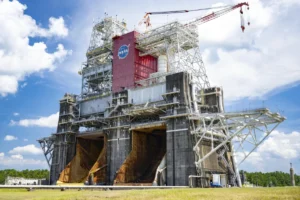
The core of this new agreement centers on the utilization of the B-2 test stand at Stennis, a facility renowned for its decades-long history of rigorous rocket propulsion testing. Blue Origin’s New Glenn second stage, powered by two BE-3U vacuum-optimized engines, will undergo a series of hot fire tests designed to validate its performance and reliability under simulated flight conditions. Each BE-3U engine is capable of generating approximately 200,000 pounds of thrust in a vacuum, utilizing liquid oxygen and liquid hydrogen propellants. These tests are essential for ensuring that the second stage can efficiently propel payloads into orbit and, critically, support the complex maneuvers required for lunar missions.
NASA’s role in this partnership extends beyond merely providing access to its world-class facilities. The agency will offer comprehensive engineering support, including personnel, specialized equipment, and building services necessary for the design, construction, and installation of the specific modifications required to prepare the B-2 stand for New Glenn testing. This includes adapting the existing infrastructure to accommodate the unique dimensions and thrust profiles of the New Glenn second stage. Furthermore, NASA will provide dedicated workspace for Blue Origin’s teams and, perhaps most valuably, share its vast institutional expertise and lessons learned from decades of propulsion testing at Stennis, including insights gleaned from the recent Space Launch System (SLS) Green Run test series. This collaborative approach highlights a synergistic relationship where NASA benefits from the acceleration of commercial capabilities, and Blue Origin gains access to unparalleled testing infrastructure and invaluable technical guidance.
The New Glenn Rocket: A Cornerstone for Future Space Exploration
The New Glenn rocket, named in honor of pioneering NASA astronaut John Glenn, represents Blue Origin’s formidable entry into the heavy-lift launch market. Standing at approximately 98 meters (322 feet) tall with a 7-meter (23-foot) diameter, it is designed to be a highly capable and largely reusable two-stage orbital launch vehicle. Its first stage, powered by seven BE-4 engines (which use liquid natural gas and liquid oxygen), is intended to be reusable, landing vertically back at a designated site or on a drone ship. While the current agreement focuses on the second stage, the overall design of New Glenn with its significant payload capacity (estimated at over 45,000 kg to low Earth orbit and over 13,000 kg to geostationary transfer orbit) positions it as a critical asset for a wide array of future space missions, from deploying large satellite constellations to launching deep-space probes and, crucially, supporting human lunar endeavors.
Blue Origin has already secured launch contracts for New Glenn from various commercial and government entities, underscoring the market’s demand for its capabilities. Its inclusion in NASA’s Human Landing System (HLS) program, where Blue Origin is developing its Blue Moon lunar lander, further solidifies New Glenn’s importance. The rocket is envisioned to play a dual role in the Artemis program: launching crewed missions as part of the HLS architecture and deploying robotic landers and other critical infrastructure to the lunar surface. The successful testing of its second stage at Stennis is a vital precursor to demonstrating the rocket’s readiness for these high-stakes missions.
Stennis Space Center: A Legacy of Powering Human Spaceflight
Stennis Space Center holds an unparalleled place in the annals of American space exploration, serving as the nation’s largest rocket propulsion test facility. Its B-2 test stand, where New Glenn’s second stage will undergo testing, possesses a storied history directly tied to humanity’s journey to the Moon. Originally constructed in the 1960s, the B-2 stand was instrumental in the Apollo program, enduring the thunderous firings of the Saturn V rocket’s mighty first and second stages. These tests were fundamental in certifying the engines that ultimately propelled American astronauts to the lunar surface.
Following Apollo, the B-2 stand continued its legacy, playing a crucial role in the Space Shuttle program, where it tested the Space Shuttle Main Engines (SSMEs) for decades. More recently, the stand was the site of the critical Green Run test series for the core stage of NASA’s Space Launch System (SLS) rocket, the most powerful rocket in the world and the backbone of the Artemis program. The successful Green Run in 2021 directly preceded the Artemis I uncrewed test flight, demonstrating the SLS core stage’s readiness for launch. This rich heritage provides Blue Origin with not just a facility, but a deep well of operational experience and a proven track record of ensuring the safety and performance of America’s most powerful rockets. The facility’s ability to handle cryogenic propellants and immense thrust levels makes it uniquely suited for the challenges of New Glenn testing.
Artemis Program: A Multi-faceted Return to the Moon
The agreement between NASA and Blue Origin is firmly embedded within the broader context of the Artemis program, NASA’s ambitious initiative to return humans to the Moon, establish a sustainable lunar presence, and ultimately prepare for human missions to Mars. The Artemis program is structured into a series of increasingly complex missions:
- Artemis I (completed): An uncrewed test flight of the SLS rocket and Orion spacecraft around the Moon, successfully demonstrating the integrated system’s capabilities.
- Artemis II (scheduled for April): A crewed flyby of the Moon, carrying four astronauts (three NASA, one CSA) to test Orion’s systems with humans aboard. The article mistakenly says "The success of Artemis II has roots at NASA Stennis," implying it’s already occurred. Given the context, it likely refers to the foundational testing at Stennis that enables Artemis II, which is still upcoming in 2024.
- Artemis III (targeted for 2027): The highly anticipated mission to land the first woman and first person of color on the lunar South Pole. This mission is envisioned as a complex, multi-launch campaign, requiring the Orion spacecraft to rendezvous and dock in low Earth orbit with commercial human landing systems provided by partners like Blue Origin and SpaceX.
Blue Origin’s involvement in Artemis extends beyond just launching elements. In May, NASA announced key steps towards building sustained lunar operations, including an award to Blue Origin for a robotic mission this fall. The company’s Blue Moon Mark 1 Endurance lander is slated to deliver NASA payloads to the lunar South Pole’s Shackleton Connecting Ridge. This mission will demonstrate critical capabilities for precision landing and resource utilization, directly reducing risk for future crewed landings during Artemis IV and V, projected for 2028 and beyond. These robotic precursors are vital for scouting landing sites, characterizing the lunar environment, and testing technologies that astronauts will rely on.
Commercial Collaboration: NASA’s Strategic Imperative
This partnership exemplifies NASA’s evolving strategy of working closely with the commercial space industry. This paradigm shift, which began in earnest with the Commercial Orbital Transportation Services (COTS) and Commercial Resupply Services (CRS) programs for the International Space Station, and continued with the Commercial Crew Program (CCP), has proven immensely successful. By fostering a vibrant commercial space sector, NASA can leverage private sector innovation, efficiency, and investment, thereby accelerating development cycles and often reducing costs for taxpayers.
NASA Administrator Jared Isaacman articulated this strategy, stating, "Winning the new space race means moving faster and working alongside a strong commercial industry. Supporting Blue Origin at NASA’s Stennis Space Center puts world-class American infrastructure to work advancing the capabilities needed to return astronauts to the Moon, establish a sustained lunar presence, and prepare for Mars. Partnerships like this strengthen our industrial base and help ensure the United States remains the world’s leader in space." This sentiment underscores the dual benefit of such agreements: advancing national space goals while simultaneously bolstering the domestic industrial base. The Space Act Agreement framework allows for flexible, collaborative partnerships where NASA can provide unique government resources, and commercial entities can bring their agility and innovative approaches.
Blue Origin CEO Dave Limp echoed this enthusiasm, emphasizing the shared vision: “We are proud to partner with NASA and build on our shared commitment to returning America to the Moon and our broader mission to build a road to space for the benefit of Earth. Stennis helped take Americans to the Moon, and through this partnership, it will help take us back.” This statement highlights Blue Origin’s long-term aspirations, aligning its commercial goals with NASA’s national objectives for space exploration.
Economic and Strategic Implications for Mississippi and the Nation
The return of Blue Origin to Stennis Space Center carries significant economic and strategic implications, particularly for Mississippi and the broader Gulf Coast region. The influx of testing activities translates directly into high-skilled job creation, ranging from engineers and technicians to support staff. This economic stimulus reinforces Stennis’s role as a vital hub for advanced aerospace technology and provides opportunities for local businesses and educational institutions.
Mississippi’s congressional delegation was quick to praise the announcement. Senator Roger Wicker emphasized, "Stennis continues to be a hub for the commercial space industry. Mississippi warmly welcomes Blue Origin’s return to the coast and to our legendary rocket testing facilities." Senator Cindy Hyde-Smith highlighted the long-term potential, stating, "The success of Artemis II has roots at NASA Stennis, and I’m excited about the prospect of Blue Origin establishing a rigorous test program in Mississippi as part of future American crewed missions to the Moon and beyond. I hope its use of B-2 test stand becomes a long-term arrangement that broadens our state’s contribution to space exploration. I will certainly do what I can to make that a reality." Representative Mike Ezell further underscored the impact: "Mississippi continues to play a vital role in America’s space program, and this agreement between NASA and Blue Origin is another major win for Stennis Space Center. The world-class capabilities at the B-2 test stand will help advance the next generation of rocket propulsion while supporting high-skilled jobs and strengthening our nation’s leadership in space exploration. I look forward to seeing the innovation that comes from this partnership."
These statements collectively underscore the regional pride and strategic importance of Stennis. The center not only provides critical infrastructure for national space endeavors but also acts as an economic anchor, fostering innovation and attracting investment. The agreement solidifies Mississippi’s position at the forefront of rocket propulsion development, contributing to American leadership in the fiercely competitive global space industry.
Looking Ahead: The Future of Lunar Exploration and Beyond
The upcoming hot fire testing of the New Glenn second stage at Stennis Space Center marks a significant milestone in the journey back to the Moon and beyond. It represents a tangible step forward in developing the robust and reliable launch capabilities essential for the complex multi-launch campaigns of Artemis III and subsequent missions. By validating the performance of New Glenn’s engines, this testing directly contributes to reducing the risks associated with sending astronauts farther into space than ever before.
Beyond the immediate technical objectives, this partnership is a testament to the power of public-private collaboration in accelerating human exploration. It demonstrates how NASA, with its unparalleled heritage and infrastructure, can empower commercial partners like Blue Origin to bring innovative solutions to fruition. The synergy between government vision and commercial dynamism is poised to unlock new scientific discoveries, drive technological innovation, and pave the way for a sustained human presence on the Moon, serving as a critical proving ground for the ultimate goal: sending humans to Mars. The reverberations of these tests will extend far beyond the B-2 stand, shaping the trajectory of American space exploration for decades to come.
For more detailed information regarding NASA’s Artemis program and its ongoing missions, the public is encouraged to visit the official NASA website at: https://www.nasa.gov/artemis