

Fifty years ago, NASA’s Viking 1 and 2 landers achieved the first successful soft landings on Mars, an unparalleled feat that fundamentally reshaped humanity’s understanding of the Red Planet and inaugurated a new era in interplanetary exploration. This monumental achievement was driven by the unwavering leadership and profound technical expertise of a dedicated team at NASA’s Langley Research Center in Hampton, Virginia. Their contributions transformed an audacious vision into a tangible mission, laying the groundwork for every subsequent journey to Mars.
The Genesis of an Ambitious Endeavor: From Voyager to Viking
The journey to Viking was not without its challenges and strategic pivots. In the post-Apollo era, NASA was looking towards the planets, and Mars, with its tantalizing potential for past or present life, was a primary target. Initial concepts, such as the ambitious "Voyager Mars lander," envisioned a massive dual-lander mission launched atop a single Saturn V rocket, the very launch vehicle that had powered the Apollo lunar missions. However, by the late 1960s and early 1970s, facing escalating costs and inherent risks associated with such a complex single-point-failure architecture, the Voyager program was deemed too unwieldy and ultimately canceled.
It was at this critical juncture that NASA Langley Research Center, a hub of aeronautical and space engineering excellence since its inception in 1917, stepped forward. In 1968, NASA officially selected Langley to spearhead the gargantuan Viking project, a decision that would cement its place in space exploration history. Under the astute leadership of Project Manager James S. Martin Jr., Langley charted a more pragmatic yet equally ambitious path. The redesigned Viking mission opted for two separate spacecraft, each comprising an orbiter and a lander, launched independently on the more economical Titan IIIE-Centaur rockets. This strategic shift significantly mitigated risk, enhanced mission flexibility, and made the ambitious scientific objectives — to orbit, land, and search for signs of life on Mars — truly achievable within budgetary and technological constraints. Martin’s ethos, emphasizing clear priorities, rigorous engineering reviews, and exhaustive system testing, permeated the entire project, instilling a culture of meticulous preparation essential for success in the unforgiving environment of deep space.
Langley’s Engineering Masterpiece: Conquering Entry, Descent, and Landing (EDL)
The most formidable engineering challenge of the Viking mission lay in perfecting the Entry, Descent, and Landing (EDL) sequence. No spacecraft had ever successfully soft-landed on Mars. Engineers at Langley faced the daunting task of decelerating a spacecraft from an incredible atmospheric entry speed of over 10,000 miles per hour (approximately 16,000 kilometers per hour) to a gentle touchdown on the Martian surface. Mars’ thin atmosphere, less than one percent the density of Earth’s, presented a unique conundrum: it was thick enough to cause significant aerodynamic heating and drag, but too thin to allow for a purely parachute-based descent like on Earth.
Leveraging their unparalleled expertise in atmospheric entry aerodynamics, thermal protection systems, and parachute technology, Langley engineers embarked on an intensive development program. Their ingenuity led to the creation of several groundbreaking systems that are still foundational to Mars missions today:
- The Protective Aeroshell and Heat Shield: This blunt-body aeroshell, reminiscent of Apollo capsules, was designed to withstand the searing heat generated during atmospheric entry. Its outer layer was composed of a phenolic-impregnated carbon ablator (PICA) material, which would char and flake away, carrying heat with it and protecting the delicate instruments inside. The aeroshell served as the primary braking mechanism, slowing the spacecraft dramatically through atmospheric drag.
- The Supersonic Parachute: Deployed at speeds still well above the speed of sound, this massive, 16-meter-diameter parachute was crucial for further deceleration in the thin Martian air. Its design required extensive testing in Earth’s atmosphere, including high-altitude balloon drops and rocket-sled tests, to ensure its reliability under extreme conditions.
- Terminal Descent Propulsion System: After the parachute was jettisoned, a set of three hydrazine-fueled retro-rockets fired in a pulsed manner, precisely controlled by a radar altimeter, to bring the lander to a soft landing. These thrusters were carefully designed to minimize contamination of the Martian soil, crucial for the onboard biology experiments.
These systems were not theoretical constructs; they were the product of years of relentless wind-tunnel tests, complex computational fluid dynamics analyses, and iterative problem-solving. Langley’s facilities, including its historic wind tunnels, were instrumental in refining these designs, ensuring they could perform flawlessly millions of miles away. This mastery of EDL remains a core competency at Langley, influencing every subsequent Mars lander and rover mission, from Pathfinder and the Mars Exploration Rovers (Spirit and Opportunity) to Curiosity and Perseverance.
Mapping the Way: Revolutionizing Landing Site Selection
Beyond the technical marvel of EDL, Langley also pioneered a revolutionary approach to identifying safe and scientifically compelling landing sites on Mars. Prior to Viking, knowledge of the Martian surface at high resolution was limited. The Viking teams integrated high-resolution imagery from the Viking orbiters with radar data meticulously gathered from Earth-based observatories. This novel, multi-source data fusion allowed them to create detailed topographical maps and characterize surface roughness, enabling the identification of regions that offered both high scientific potential for discovering signs of life and the necessary engineering safety for a successful landing. This methodology, balancing scientific ambition with engineering prudence, has since become the gold standard for all subsequent Mars surface missions.
A New Rhythm of Exploration: Adapting to the Martian Day
The Viking mission also introduced operational innovations that continue to shape planetary exploration. To synchronize daily mission operations with the local Martian environment, engineers and scientists adopted the "sol," a Martian solar day, which is approximately 24 hours and 39 minutes long. This simple but profound shift allowed ground teams to align their work cycles with the rhythm of the Martian day, optimizing command sequences, data downlink windows, and experiment timings. The "sol" concept is still integral to the daily routines of teams managing active Mars surface missions, fostering a deeper connection between Earth-bound operators and their robotic emissaries on another world.
The Mission Unfolds: Launches, Landings, and Initial Discoveries
The painstaking preparations culminated in 1975. Viking 1 was launched on August 20, 1975, followed by Viking 2 on September 9, 1975. After a nearly year-long journey across interplanetary space, Viking 1 successfully entered Mars orbit on June 19, 1976. Following weeks of intensive orbital reconnaissance to refine landing site selection, the Viking 1 lander separated from its orbiter and made its historic soft landing in Chryse Planitia ("Golden Plain") on July 20, 1976 — the seventh anniversary of the Apollo 11 moon landing. This was a moment of immense global celebration, marking humanity’s first successful descent onto another planet.
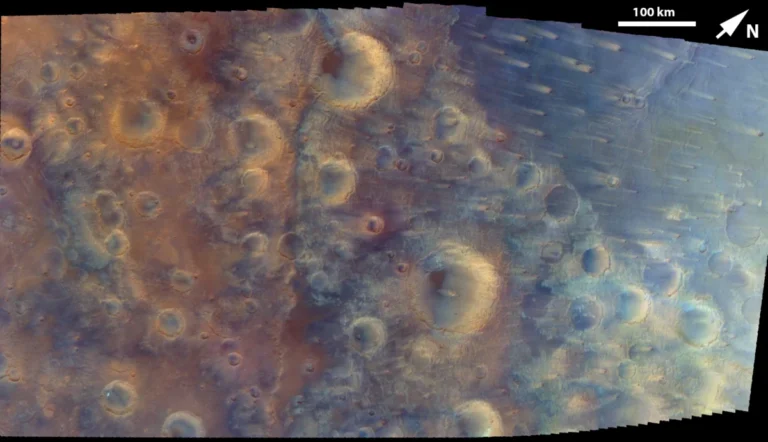
Viking 2 followed suit, landing in Utopia Planitia on September 3, 1976. Both landers immediately began transmitting thousands of unprecedented, high-resolution color images of the Martian surface, revealing a desolate yet captivating landscape of reddish rocks, fine-grained dust, and distant horizons. The images unveiled a world shaped by powerful winds, ancient floods, and volcanic activity, hinting at a dynamic geological past.
Beyond imagery, the landers were equipped with sophisticated meteorological stations, which provided the first direct measurements of Martian weather. They reported daily temperature swings, atmospheric pressure variations, and even observed dust devils swirling across the plains. Seismometers, though limited in their operational capacity, attempted to detect marsquakes, offering tantalizing clues about the planet’s internal structure. The X-ray fluorescence spectrometer provided compositional analysis of the Martian soil, revealing elements consistent with volcanic rock and weathered minerals.
The Enduring Quest: Viking and the Search for Life
Perhaps the most iconic aspect of the Viking mission was its primary objective: the search for extraterrestrial life. Each lander carried a miniature biology laboratory designed to detect metabolic activity in Martian soil samples. These experiments included:
- The Labeled Release (LR) Experiment: Designed to detect heterotrophic microbial metabolism. Martian soil samples were incubated with a nutrient broth containing radioactively labeled carbon. A positive result would be the detection of radioactive gas released, indicating metabolic breakdown of the nutrients.
- The Pyrolytic Release (PR) Experiment: Aimed at detecting photosynthetic activity. Soil samples were incubated with radioactively labeled carbon dioxide and carbon monoxide, simulating a Martian atmosphere. The samples were then heated (pyrolyzed), and any radioactive organic compounds incorporated into the soil would indicate photosynthetic processes.
- The Gas Exchange (GEX) Experiment: Monitored changes in the composition of a simulated Martian atmosphere when exposed to Martian soil, looking for evidence of respiration or other metabolic gas exchanges.
- The Gas Chromatograph Mass Spectrometer (GCMS): This instrument was designed to identify and quantify organic molecules in the Martian soil. The presence of organic molecules is often considered a prerequisite for life as we know it.
The results from the biology experiments were, and remain, highly controversial. The Labeled Release experiment on both landers yielded initial positive results, showing a release of radioactive gas that mimicked a biological response. However, subsequent heating of the samples or adding more nutrients did not produce the expected biological patterns. Crucially, the GCMS detected no definitive organic molecules in the Martian soil above background levels, a finding that seemed to contradict the LR results if life were present.
The prevailing scientific consensus eventually attributed the LR results to non-biological chemical reactions, possibly involving highly reactive oxidants in the Martian soil (like superoxides or peroxides) that mimicked biological activity. These oxidants, produced by ultraviolet radiation interacting with the surface, could have broken down the labeled nutrients without the presence of living organisms. Despite the inconclusive nature of the biology experiments, they profoundly influenced the field of astrobiology, forcing scientists to reconsider the definition of life, the conditions necessary for its survival, and the methods for its detection on other planets. The debate spurred by Viking continues to this day, fueling the ongoing search for biosignatures on Mars with missions like Perseverance.
A Planetary Playbook: Viking’s Transformative Legacy
The Viking mission operated far beyond its planned lifespan. Viking 1 lander functioned for over six years until November 1982, and Viking 2 lander for over three years until April 1980. Their accompanying orbiters continued to map Mars for even longer, providing invaluable data that would inform future missions.
Langley’s pivotal role in Viking established a "planetary playbook" that has guided virtually all subsequent deep-space exploration. This strategy emphasizes:
- Scouting with Orbiters: Prioritize orbital reconnaissance to characterize the target body and identify regions of interest.
- Certifying Landing Sites with Real Data: Use high-resolution orbital data combined with other observations to ensure safe and scientifically valuable landing zones.
- Landing with Systems Tested Beyond Limits: Develop and rigorously test EDL systems to ensure robust performance in extreme extraterrestrial environments.
This playbook was instrumental in the success of missions like Mars Pathfinder (1997), the Mars Exploration Rovers Spirit and Opportunity (2004), Phoenix (2008), the Mars Science Laboratory Curiosity (2012), and the Mars 2020 Perseverance rover (2021). Each of these missions built upon the technological foundations and operational philosophies established by Viking, continually refining EDL techniques and expanding the scope of scientific inquiry. The "sky crane" landing system used by Curiosity and Perseverance, for example, represents a significant evolution of the terminal descent strategies first pioneered by Viking.
The Enduring Spirit of Innovation at Langley
As the 50th anniversary of the Viking landings approaches, NASA Langley Research Center’s indelible mark on space exploration remains profoundly evident. The center continues to be at the forefront of advancing new entry, descent, and landing technologies, crucial for both robotic and future human missions to Mars and beyond. Current research at Langley includes developing advanced heat shield materials, sophisticated parachute designs for heavier payloads, and precision landing systems that will enable future explorers to target specific, high-value scientific locations.
The same spirit of steady leadership, insatiable curiosity, and relentless pursuit of technical excellence that guided the Viking project in the 1970s continues to drive the groundbreaking work happening in Hampton today. Viking proved that reaching another planet, working on its surface, and unraveling its mysteries was not just a dream, but an achievable reality. Its legacy serves as a testament to human ingenuity and a beacon for the next generation of explorers, forever looking toward the next horizon in our cosmic journey.