

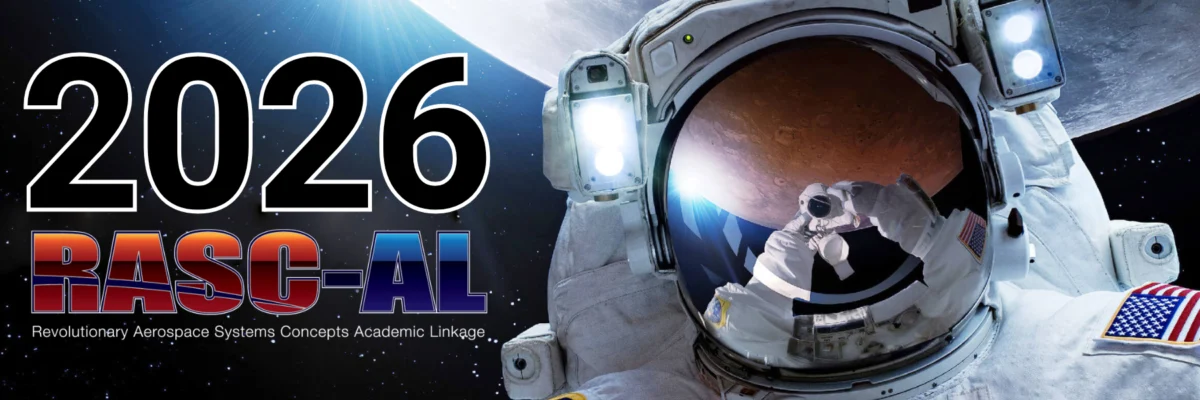
NASA has officially announced the selection of 14 distinguished university teams from across the United States as finalists for the highly anticipated 2026 Revolutionary Aerospace Systems Concepts – Academic Linkage (RASC-AL) Competition. This prestigious annual challenge, a cornerstone of NASA’s strategy to engage with academic institutions, tasks undergraduate and graduate students with designing innovative concepts that could significantly advance humanity’s long-term presence and operational capabilities on the Moon, Mars, and destinations beyond. The competition serves as a vital bridge between the academic community and the professional aerospace sector, meticulously fostering a culture of innovation, collaborative problem-solving, and critical workforce development, all in direct support of NASA’s ambitious exploration objectives, including the Artemis program and future human missions to the Red Planet.
The RASC-AL Initiative: A Deep Dive into NASA’s Academic Linkage
The RASC-AL program, which has been operational for over two decades, stands as a testament to NASA’s enduring commitment to cultivating future leaders and groundbreaking technologies within the aerospace domain. Launched with the vision of tapping into the creative potential of university students, RASC-AL invites teams to tackle real-world engineering and scientific challenges faced by the agency. Historically, the competition has been instrumental in generating fresh perspectives on complex problems, ranging from advanced propulsion systems and in-situ resource utilization (ISRU) to habitat designs and extravehicular activity (EVA) solutions. Each year, RASC-AL focuses on themes directly relevant to NASA’s evolving strategic roadmap, ensuring that student efforts contribute meaningfully to ongoing research and development initiatives. This direct alignment with agency priorities makes RASC-AL more than just a competition; it is a critical pipeline for innovative ideas and a proving ground for the next generation of aerospace engineers, scientists, and mission architects. The program’s longevity underscores its effectiveness in nurturing talent and providing invaluable hands-on experience in systems-level design and analysis, which are often difficult to replicate in traditional classroom settings.
Cultivating the Next Generation of Aerospace Leaders
The caliber of submissions received annually for the RASC-AL competition consistently impresses the agency’s experts. Daniel Mazanek, RASC-AL program sponsor and senior space systems engineer from NASA’s Langley Research Center in Hampton, Virginia, emphasized the exceptional quality observed this cycle. "The innovation and technical depth demonstrated this year are exemplary of the next generation of aerospace leaders," Mazanek stated, highlighting the dual requirement for both creative thinking and rigorous execution. He continued, "The strongest teams demonstrated not only creativity, but also the disciplined analysis and systems engineering required to develop credible solutions for space exploration challenges facing the agency." This sentiment underscores a core tenet of the RASC-AL program: to not merely reward novel ideas, but to push students towards developing feasible, well-researched, and systematically engineered proposals that could genuinely inform future NASA missions. The experience gained in conceptualizing, designing, and articulating complex aerospace systems provides students with a foundational understanding of the multidisciplinary nature of space exploration, preparing them for careers in a rapidly advancing field. It also exposes them to the iterative processes of engineering design, problem identification, and solution refinement, mirroring the challenges faced by professional teams at NASA and its industry partners.
The 2026 Challenge: Addressing Critical Exploration Frontiers
The 2026 RASC-AL competition specifically challenged university teams to develop technically rigorous proposals addressing one of four critically important mission themes, each directly reflecting relevant areas of exploration technology development aligned with NASA’s Artemis program – which aims to return humans to the Moon and establish a sustained presence – and the agency’s long-term vision for human missions to Mars.
-
Communications, Position, Navigation, and Time (CPNT) Architectures for Mars Surface Operations:
This theme focuses on the fundamental infrastructure required for any sustained human or robotic presence on Mars. Effective CPNT systems are paramount for ensuring safe transit, precise landing, efficient surface operations, and reliable communication with Earth. Teams were tasked with designing robust architectures that could withstand the Martian environment, provide precise location data for rovers and astronauts, enable autonomous operations, and maintain consistent communication links over vast distances. The challenges include mitigating signal delays, accounting for atmospheric interference, and ensuring redundancy for mission critical systems. The implications of advanced CPNT systems for Mars are profound, enabling more complex scientific endeavors, safer human exploration, and eventually, the establishment of permanent outposts. This area is crucial for de-risking future human missions, where the ability to know one’s exact location and communicate effectively can be the difference between success and failure. -
Lunar Surface Power and Power Management and Distribution (PMAD) Architectures:
Establishing a sustainable human presence on the Moon necessitates reliable and abundant power. This theme invited teams to innovate in the realm of lunar power generation, storage, and distribution. Concepts could range from advanced solar arrays optimized for lunar night survival, to small modular fission power systems, or even novel energy harvesting techniques. PMAD systems are equally critical, ensuring that power generated can be efficiently transmitted and distributed to habitats, scientific instruments, and mobility systems across a lunar base. Challenges include extreme temperature swings, pervasive lunar dust, and the long, dark lunar nights. Successful designs in this area are vital for supporting continuous operations, in-situ resource utilization (ISRU) efforts, and advanced scientific experiments that require significant energy input. Without robust power infrastructure, a sustained lunar presence remains largely theoretical. -
Lunar Sample Return Concepts:
The scientific value of lunar samples cannot be overstated, as demonstrated by the Apollo missions. This theme challenged teams to devise innovative approaches for collecting, processing, and returning lunar samples to Earth for detailed analysis. Beyond simply retrieving rocks, teams considered aspects like diverse sample acquisition (e.g., from permanently shadowed regions, deep regolith, or specific geological features), robotic manipulation for sample handling, contamination control, and the design of return vehicles capable of Earth re-entry. The complexity lies in designing systems that are lightweight, autonomous (or semi-autonomous), and capable of preserving the scientific integrity of the samples throughout their journey. New sample return missions are crucial for addressing outstanding questions about the Moon’s formation, evolution, and its potential resources, directly informing future exploration strategies. -
Lunar Technology Demonstrations Leveraging Common Infrastructure:
This theme encouraged teams to think about efficiency and scalability in lunar exploration. Students were asked to design technology demonstrations that could leverage existing or planned common lunar infrastructure, such as landers, power grids, communication networks, or mobility systems. The goal was to propose novel technologies that could be tested on the Moon by integrating them with shared resources, thereby reducing cost and complexity. Examples might include advanced sensors, robotics, materials science experiments, or innovative construction techniques. This approach promotes modularity and interoperability, key principles for building a sustainable and economically viable lunar ecosystem. By demonstrating new technologies in a cost-effective manner, NASA can accelerate the development and deployment of critical capabilities for future lunar and Martian missions.
A Rigorous Selection Process: From Concept to Forum
The journey to becoming a RASC-AL finalist is a demanding one, requiring significant dedication and technical acumen from the participating university teams. The initial phase of the competition involved each team submitting a detailed proposal paper outlining their innovative concept, accompanied by a concise two-minute video presentation. These submissions were subjected to a rigorous evaluation by an expert review panel comprising seasoned engineers and scientists from NASA and leading aerospace industry partners. The evaluation criteria focused not only on the novelty and scientific merit of the proposals but also on their technical feasibility, systems engineering rigor, and alignment with NASA’s strategic goals. The sheer volume of applications received annually, often numbering in the hundreds from institutions across the nation, underscores the competitive nature of the RASC-AL program and the high standard of innovation it consistently attracts. The selection of these 14 finalists represents the culmination of months of intensive work, research, and collaborative effort by the student teams, guided by their faculty advisors.
Dr. Christopher Jones, RASC-AL program sponsor and chief technologist for the Systems Analysis and Concepts Directorate at NASA Langley, underscored the practical relevance of the challenges presented to the students. "The RASC-AL competition challenges students to address many of the same technical and operational questions we encounter working on Artemis, from surface infrastructure to mobility and resource utilization," Dr. Jones remarked. He further elaborated on the broader impact of these student-led initiatives, stating, "The concepts developed through the competition help expand NASA’s thinking as we plan and refine future exploration missions." This feedback loop, where student innovation informs agency planning, highlights the symbiotic relationship between academia and NASA in pushing the boundaries of space exploration.
The Road Ahead: The RASC-AL Forum in Cocoa Beach
As finalists, the selected teams now embark on the next intensive phase of the competition. Each team is tasked with further developing their initial concept into a comprehensive technical paper, a significantly expanded document detailing their engineering designs, scientific rationale, and operational plans. This paper will then serve as the foundation for a formal oral presentation, which will be delivered at the culmination of the competition: the 2026 RASC-AL Forum. This highly anticipated in-person showcase is scheduled to commence on June 2, 2026, at the iconic Cocoa Beach, Florida, a location steeped in the history of space exploration.
The Forum represents a pivotal opportunity for these budding aerospace professionals. During this multi-day event, students will present their meticulously developed work to a distinguished audience comprising senior NASA leaders, prominent industry professionals, and their fellow finalist teams. This interactive environment provides an unparalleled platform for gaining valuable feedback, engaging in constructive dialogue, and networking with influential figures in the aerospace community. Beyond the competitive aspect, the Forum is designed as a crucial professional development experience, allowing students to refine their presentation skills, articulate complex technical concepts, and gain practical insights into systems-level mission design from seasoned experts. The top-performing teams at the Forum will be formally recognized for their outstanding technical merit, groundbreaking innovation, and exceptional presentation excellence, providing a significant boost to their academic and professional portfolios.
Strategic Partnerships and Program Administration
The seamless execution and continued success of NASA’s RASC-AL Competition are made possible through a robust framework of strategic partnerships and expert administration. The program is expertly administered by the National Institute of Aerospace (NIA), a non-profit research and graduate education institute that collaborates closely with NASA. NIA’s role is critical in managing the logistical complexities of the competition, from coordinating submissions and reviews to organizing the final forum, ensuring a high-quality and equitable experience for all participants.
The RASC-AL Competition receives vital sponsorship from multiple key entities within NASA, underscoring its agency-wide importance. These sponsors include NASA’s Strategy and Architecture Office, which operates within the Exploration Systems Development Mission Directorate, responsible for developing the human exploration capabilities for the Moon and Mars. Additional sponsorship comes from NASA’s Space Technology Mission Directorate, which focuses on developing transformative space technologies that enable future missions, and by the Systems Analysis and Concepts Directorate at NASA Langley, a center renowned for its research in aerospace technology. Furthermore, the NASA Tournament Lab, an integral part of the Prizes, Challenges, and Crowdsourcing Program within the Space Technology Mission Directorate, plays a crucial role in managing the challenge infrastructure and ensuring its operational efficiency. This multi-faceted sponsorship and administration model reflects NASA’s integrated approach to leveraging external expertise and fostering innovation across its diverse mission directorates.
Broader Implications: Fueling Future Space Exploration
The RASC-AL program’s impact extends far beyond the immediate competition cycle, playing a strategic role in NASA’s long-term exploration goals and the broader aerospace ecosystem. By investing in student-led innovation, NASA effectively de-risks future missions by exploring a wider array of conceptual solutions to complex engineering challenges. The concepts developed by these university teams can often serve as initial blueprints or thought-starters for internal NASA studies, potentially saving significant time and resources in the early stages of mission planning. Moreover, RASC-AL directly contributes to the development of a highly skilled workforce, ensuring a robust pipeline of talent for NASA, its industry partners, and the burgeoning commercial space sector. Graduates of the RASC-AL program often go on to careers at NASA centers, leading aerospace companies, and innovative startups, bringing with them a practical understanding of systems engineering and mission design forged in the crucible of this challenging competition.
The competition also plays a crucial role in promoting STEM education and inspiring the next generation of explorers. By providing a tangible platform for students to apply their academic knowledge to real-world space challenges, RASC-AL ignites passion and demonstrates the exciting possibilities within aerospace. In an era of increasing global competition in space, programs like RASC-AL are indispensable for maintaining the United States’ leadership in scientific discovery and technological advancement. The ideas cultivated through RASC-AL today could very well be the foundational technologies that enable humanity’s enduring presence on the Moon and our eventual journey to Mars and beyond.
For more detailed information about the Revolutionary Aerospace Systems Concepts – Academic Linkage (RASC-AL) Competition, interested parties are encouraged to visit the official website at RASCAL.nianet.org.