



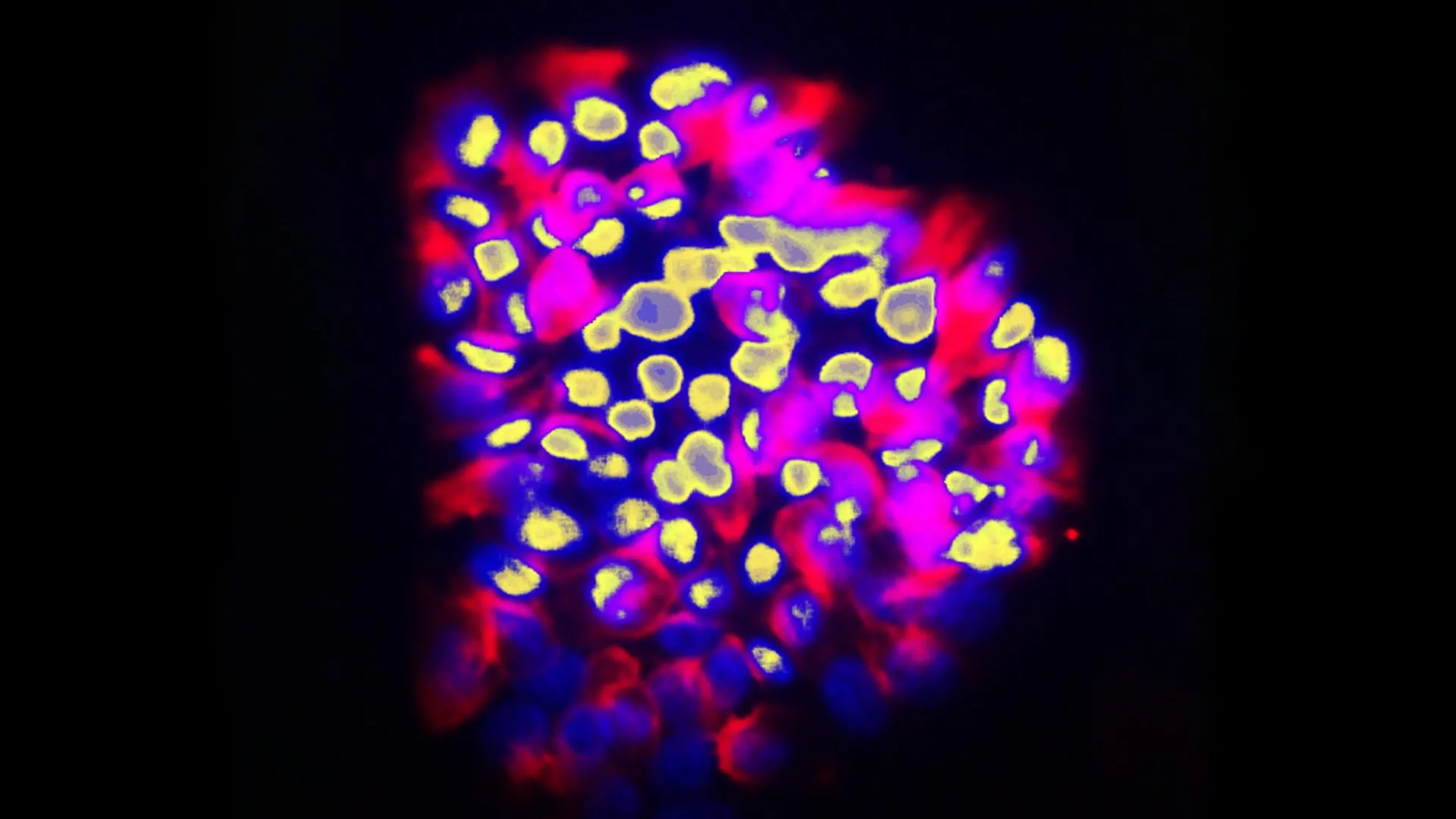
The enigmatic process by which some tumors aggressively spread throughout the body, forming dangerous secondary growths known as metastases, while others remain contained has long been a critical unanswered question in oncology. This fundamental mystery directly impacts patient outcomes and treatment strategies. Now, researchers at the University of Geneva (UNIGE) have made a significant breakthrough, identifying key molecular drivers of metastasis in colon cancer and developing an artificial intelligence tool that can predict this risk with remarkable accuracy across multiple cancer types. This advancement, detailed in the prestigious journal Cell Reports, promises to usher in a new era of personalized cancer care and illuminate novel therapeutic targets.
The Distorted Symphony of Cancer Development
For decades, cancer has often been simplified as the uncontrolled proliferation of "anarchic cells." However, Professor Ariel Ruiz i Altaba, a leading figure in the Department of Genetic Medicine and Development at the UNIGE Faculty of Medicine and the senior author of the study, posits a more nuanced understanding. "Cancer should rather be understood as a distorted form of development," he explains. This perspective shifts the focus from pure chaos to a perversion of biological programs that are essential for normal embryonic growth and development.
During early development, complex genetic and epigenetic mechanisms tightly regulate cell behavior, dictating when and where cells divide, migrate, and differentiate. In cancer, these finely tuned programs can be aberrantly reactivated, leading to uncontrolled growth and, crucially, the acquisition of invasive and migratory capabilities. "Rather than being random, cancer appears to follow structured biological rules," Professor Ruiz i Altaba emphasizes. "The challenge is therefore to find the keys to understanding its logic and form. And, in the case of metastases, to identify the characteristics of the cells that will separate from the tumor to create another one elsewhere in the body." This intricate dance of cellular behavior, governed by specific genetic and epigenetic cues, is at the heart of metastasis.
The Deadly Reach of Metastasis: A Global Health Crisis
Metastasis is the primary culprit behind the vast majority of cancer-related deaths globally, accounting for an estimated 90% of all cancer fatalities. While advancements in early detection and primary tumor treatment have improved survival rates for many localized cancers, the ability of cancer cells to invade surrounding tissues, enter the bloodstream or lymphatic system, and establish secondary tumors in distant organs remains a formidable obstacle. This is particularly true for prevalent and aggressive cancers such as breast, lung, and colorectal cancer.
By the time circulating tumor cells are detected in blood or lymph, the metastatic cascade has often already begun, making curative treatment significantly more challenging. While the genetic mutations that initiate tumor formation are increasingly well-understood, a singular genetic marker that explains why some cells detach and embark on a metastatic journey while others remain quiescent has remained elusive. This complexity stems from the fact that metastasis is not a single event but a multi-step process involving cellular detachment, invasion, intravasation (entering the bloodstream), survival in circulation, extravasation (exiting the bloodstream), and colonization of a new site. Each of these steps is influenced by a complex interplay of genetic and environmental factors.
Overcoming the Analytical Paradox: Tracking Metastatic Potential
A significant hurdle in studying metastatic cancer cells has been the inherent conflict between analyzing a cell’s molecular identity and observing its functional behavior. "The difficulty lies in being able to determine the complete molecular identity of a cell – an analysis that destroys it – while observing its function, which requires it to remain alive," explains Professor Ruiz i Altaba. This analytical paradox has historically limited researchers’ ability to precisely link specific molecular profiles to metastatic capabilities.
To circumvent this challenge, the UNIGE team employed an innovative approach. They meticulously isolated, cloned, and cultured individual tumor cells from colon cancer samples in the laboratory. These isolated cell clones, each representing a distinct subpopulation within the original tumor, were then subjected to rigorous evaluation. "These clones were then evaluated in vitro and in a mouse model to observe their ability to migrate through a real biological filter and generate metastases," elaborates Arwen Conod, a key member of the research team. This experimental design allowed the scientists to observe the functional metastatic potential of cells while simultaneously preparing them for molecular analysis without destroying their viability.
Unveiling Gene Signatures Linked to Cancer Spread
The research team embarked on a comprehensive analysis of gene activity, examining the expression of hundreds of genes in approximately thirty distinct cell clones derived from two primary colon tumors. This meticulous investigation revealed striking patterns: specific gene expression profiles consistently correlated with a cell clone’s propensity to migrate and spread. Crucially, the study found that metastatic potential was not solely dictated by the characteristics of individual cells but rather by the collective behavior and interactions of groups of related cancer cells. This discovery highlights the importance of tumor microenvironment and intercellular communication in driving metastasis.
This finding aligns with growing evidence suggesting that cancer is not merely a collection of rogue cells but a complex ecosystem where cells interact with each other and their surroundings. The gene expression patterns identified likely reflect a coordinated cellular response that facilitates invasion and migration. These "gene signatures" represent a molecular fingerprint that can potentially signal a tumor’s aggressive nature.
MangroveGS: An AI-Powered Sentinel for Metastasis
Leveraging these critical gene signatures, the researchers developed an innovative artificial intelligence tool named "Mangrove Gene Signatures (MangroveGS)." This sophisticated AI system is designed to translate these complex genetic signals into highly reliable predictions of metastatic risk. "The great novelty of our tool, called ‘Mangrove Gene Signatures (MangroveGS)’, is that it exploits dozens, even hundreds, of gene signatures," states Aravind Srinivasan, another principal investigator on the project. "This makes it particularly resistant to individual variations."
Unlike previous approaches that might focus on a limited number of biomarkers, MangroveGS integrates information from a vast array of gene expression patterns. This holistic approach enhances its robustness and accuracy, making it less susceptible to the inherent variability found in biological samples. After an extensive training period, the AI model demonstrated a remarkable ability to predict metastasis and the recurrence of colon cancer with nearly 80% accuracy. This performance significantly outperforms existing predictive methods, offering a more precise and actionable assessment of a patient’s risk.
A Paradigm Shift for Multiple Cancer Types
Perhaps one of the most exciting aspects of the MangroveGS development is its broad applicability. The gene signatures derived from colon cancer research proved equally effective in predicting metastatic risk in other major cancer types, including stomach, lung, and breast cancer. This cross-cancer validation suggests that the underlying biological mechanisms of metastasis may share common molecular pathways across different tumor origins. This universality opens the door for a more standardized and efficient approach to metastasis risk assessment across a wide spectrum of oncological diagnoses.
The implications of this finding are profound. It suggests that the fundamental "rules" governing cancer cell dissemination may be more conserved than previously understood, allowing for the development of predictive tools that can benefit a larger patient population. This cross-applicability could accelerate the adoption of this technology and reduce the need for developing entirely new AI models for each individual cancer type.
Towards Truly Personalized Cancer Care: Implications and Future Directions
The MangroveGS tool is designed for seamless integration into clinical workflows. It can process tumor samples directly collected from hospitals. The RNA from these samples is sequenced, and the data is fed into the AI model. Within a short timeframe, a metastasis risk score is generated. This crucial information is then securely transmitted to physicians and patients via an encrypted platform, facilitating informed decision-making regarding treatment and monitoring.
"This information will prevent the overtreatment of low-risk patients, thereby limiting side effects and unnecessary costs, while intensifying the monitoring and treatment of those at high risk," explains Professor Ruiz i Altaba. This personalized approach moves away from a one-size-fits-all treatment strategy. For patients identified as low-risk, it means avoiding potentially debilitating treatments and associated side effects, thereby improving their quality of life and reducing healthcare burdens. Conversely, high-risk patients can benefit from more aggressive and tailored treatment regimens, potentially leading to better survival outcomes.
Beyond individual patient care, MangroveGS holds significant promise for advancing cancer research and drug development. "It also offers the possibility of optimizing the selection of participants in clinical trials, reducing the number of volunteers required, increasing the statistical power of studies, and providing therapeutic benefits to the patients who need it most," Professor Ruiz i Altaba adds. By accurately stratifying patients based on their metastatic risk, researchers can recruit participants who are most likely to benefit from specific therapeutic interventions. This targeted recruitment can lead to more efficient and effective clinical trials, accelerating the discovery and approval of new cancer drugs and therapies.
The ability to precisely identify patients at high risk of metastasis also opens avenues for novel therapeutic strategies. Researchers can now focus on developing drugs that specifically target the identified gene signatures and molecular pathways driving metastasis. This targeted approach could lead to the development of more effective and less toxic anti-metastatic therapies, addressing a critical unmet need in cancer treatment.
The development of MangroveGS represents a significant leap forward in our understanding and management of cancer metastasis. By combining cutting-edge molecular biology with sophisticated artificial intelligence, the UNIGE team has provided a powerful new tool that promises to transform cancer care, making it more precise, personalized, and ultimately, more effective for patients worldwide. The ongoing validation and implementation of this technology will be closely watched by the global oncology community.