


In a pivotal strategic move aimed at solidifying the national objective of returning American astronauts to the lunar surface and reaffirming the United States’ preeminence in space exploration and scientific discovery, NASA announced on February 27th a significant recalibration of its Artemis program. The agency revealed plans to increase the frequency of its lunar missions, standardize the configuration of its formidable Space Launch System (SLS) rocket, and introduce a crucial new test mission into the meticulously crafted lunar architecture. These comprehensive updates underscore NASA’s unwavering commitment to establishing a sustainable human presence on the Moon, a vital stepping stone toward eventual crewed missions to Mars.
The ambitious adjustments were unveiled during a detailed press conference held at NASA’s iconic Kennedy Space Center in Florida, a site synonymous with humanity’s historic journeys beyond Earth. Officials provided an in-depth update on the near-term Artemis II mission and outlined a more robust, streamlined pathway for future lunar endeavors. This refined architecture is designed to optimize the transportation systems crucial for ferrying crews to the Moon, ensuring both enhanced safety and operational efficiency. A cornerstone of the updated plan is the addition of a new mission in mid-2027, specifically engineered to rigorously test critical system capabilities closer to Earth. This precedes the historic moment when astronauts will set foot on the lunar surface for the first time in over five decades, now targeted for early 2028. Following this landmark event, NASA aims to achieve a cadence of approximately one lunar mission per year, leveraging the standardized SLS rocket and other integrated systems to facilitate exploration of the Moon’s scientifically intriguing South Pole.
The Refined Artemis Architecture: A Strategic Shift Towards Sustainability
NASA’s Artemis program represents the most ambitious human lunar exploration initiative since the Apollo era, conceived not merely as a return to the Moon but as a sustained effort to build a long-term presence. The recent architectural refinements are born from lessons learned, technological advancements, and a proactive approach to de-risk complex operations. The goal is to establish a permanent human outpost and a robust lunar economy, fostering scientific breakthroughs and preparing for the ultimate leap to Mars. This strategic shift reflects a commitment to adaptability and continuous improvement, ensuring the program’s resilience and ultimate success.
The decision to increase mission frequency is a direct response to the imperative of maintaining momentum and leveraging investments in infrastructure and technology. A faster cadence allows for more rapid iteration, data collection, and crew experience accumulation, all of which are critical for long-duration deep-space missions. Furthermore, the standardization of the SLS rocket, a key pillar of the Artemis program, promises to streamline production, reduce operational complexities, and potentially lower costs over the long term, enabling the sustained pace of exploration envisioned by the agency. This move away from customized configurations for each mission towards a more uniform design for the SLS core stage and upper stage components is expected to enhance reliability and turnaround times.
Key Updates to the Mission Cadence and Hardware
A New Mission for Enhanced Safety and Capability (Artemis III – Mid-2027)
Perhaps the most significant addition to the Artemis manifest is a new demonstration mission slated for mid-2027. This mission, effectively becoming Artemis III in the revised sequence, will involve launching a crew aboard the Orion spacecraft atop the SLS rocket into low Earth orbit (LEO). Its primary objective is to thoroughly test the rendezvous and docking capabilities between Orion and one or both of the commercial human landing systems (HLS) being developed by SpaceX (Starship HLS) and Blue Origin (Blue Moon).
This crucial precursor mission is a direct response to the inherent complexities and risks associated with lunar landings. By proving the intricate choreography of orbital rendezvous and docking with the commercial landers in the relative safety of LEO, NASA significantly mitigates potential hazards for the subsequent human landing mission. The Starship HLS, for example, is a massive spacecraft requiring multiple in-orbit refueling operations before it can depart for the Moon. Blue Origin’s Blue Moon lander, while smaller, also presents unique interface challenges. Testing these critical interfaces, communication protocols, and orbital maneuvers with a crew on board before attempting a deep-space lunar landing is a prudent and essential step. This mission emphasizes NASA’s paramount commitment to astronaut safety, adding an extra layer of verification for the integrated system required to transport humans to and from the lunar surface.
Standardizing the SLS Rocket for Future Missions (Artemis IV onwards)
A major technical update involves the standardization of the Space Launch System (SLS) rocket, the world’s most powerful rocket. For the initial three Artemis missions (Artemis I, II, and the new LEO demo), the SLS Block 1 configuration utilizes an Interim Cryogenic Propulsion Stage (ICPS) as its upper stage. The ICPS, derived from the Delta IV Heavy rocket’s upper stage, provides the thrust needed to send Orion and its crew or payload on a trajectory to the Moon.
However, for Artemis IV and subsequent missions, NASA plans to replace the ICPS with a new, more powerful second stage. Critically, the agency announced it would no longer pursue the development of the Exploration Upper Stage (EUS) and Mobile Launcher 2, citing significant development delays. The EUS, designed to be more powerful than the ICPS, would have enabled the SLS Block 1B configuration, capable of lifting heavier payloads directly to the Moon or supporting the Gateway lunar outpost. The decision to abandon EUS and Mobile Launcher 2, while a setback for specific development tracks, frees up resources and allows NASA to explore alternative options for a standardized, high-performance second stage that can be developed more efficiently. This strategic pivot aims to ensure a reliable and consistent launch capability for the planned annual lunar missions, reducing the reliance on bespoke, mission-specific configurations that can introduce delays and cost overruns. The standardization will enhance the operational tempo and reduce the complexity of ground processing for each subsequent launch.
Mission-by-Mission Breakdown and Revised Timeline
Artemis I: Paving the Way (November 2022)
NASA successfully completed the uncrewed test flight of the SLS rocket and Orion spacecraft in November 2022. This monumental mission, lasting 25 days, marked the first integrated test of the deep space exploration systems. It rigorously tested the SLS launch vehicle, new ground systems, and Orion’s performance in a deep-space environment, including its critical heat shield during a high-speed re-entry. The mission successfully demonstrated the capability to send Orion beyond the Moon and back, validating numerous systems without the complexity of a human crew or the full suite of life support systems planned for future missions. Artemis I provided invaluable data, proving the foundational elements of the entire program.
Artemis II: The Crewed Lunar Flyby (Target: April Onwards)
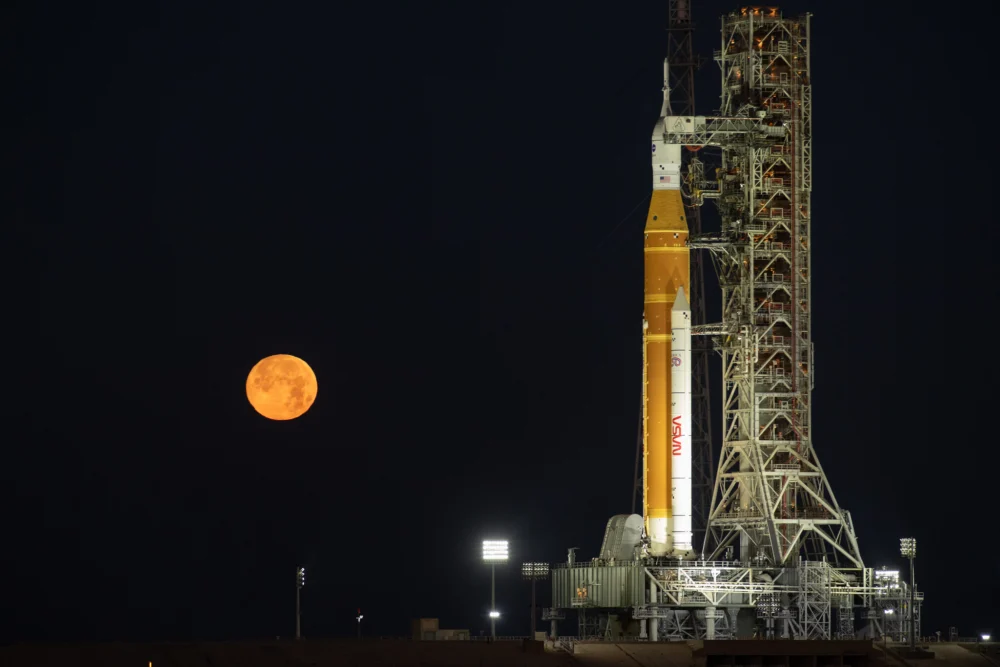
Artemis II is poised to be the first crewed test flight aboard the SLS rocket and Orion spacecraft, a mission that will send four astronauts on a journey around the Moon and back. Originally targeted for late 2024, recent technical challenges have pushed its launch window to no earlier than April 2025. Following a comprehensive wet dress rehearsal in February, NASA identified an issue with a helium flow component within the Interim Cryogenic Propulsion Stage (ICPS). This necessitated rolling back the rocket and spacecraft from Launch Pad 39B to the iconic Vehicle Assembly Building (VAB) at Kennedy Space Center for repairs. Engineers are diligently working to address the helium flow problem, a critical system for pressurizing propellant tanks, and are also utilizing this opportunity to replace batteries and conduct other maintenance tasks.
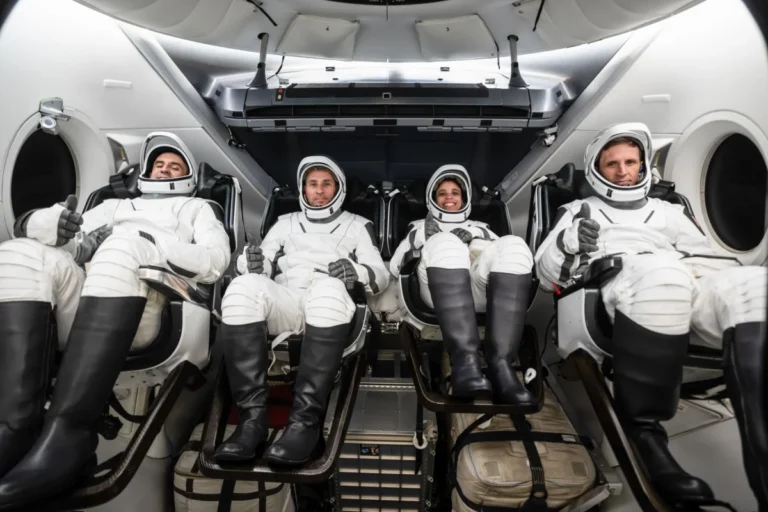
The crew for this historic 10-day mission includes NASA astronauts Reid Wiseman (Commander), Victor Glover (Pilot), and Christina Koch (Mission Specialist), alongside Canadian Space Agency (CSA) astronaut Jeremy Hansen (Mission Specialist). Their journey will mark humanity’s first return beyond low Earth orbit since Apollo 17 in 1972, serving as a vital precursor to lunar landings by testing Orion’s life support systems, deep-space communication, and radiation shielding with a human crew on board.
Artemis III: Crucial Commercial Lander Demonstration (Mid-2027)
As outlined in the new architecture, the mission designated as Artemis III will now be the uncrewed low Earth orbit demonstration flight in mid-2027. This mission’s specific focus on testing the commercial human landing systems (HLS) from SpaceX and Blue Origin is a critical de-risking step. An SLS/Orion stack will launch with a crew, who will then perform rendezvous and docking maneuvers with either one or both of the commercial landers in Earth orbit. This will validate the complex procedures and technologies required for crew transfer, habitat integration, and emergency protocols, ensuring that these private spacecraft are fully capable and safe before they carry astronauts to the lunar surface. This mission will essentially serve as a dress rehearsal for the lunar landing logistics.
Artemis IV: Humanity’s Return to the Lunar Surface (Early 2028)
With the new LEO demonstration mission preceding it, the first human landing under Artemis is now targeted for early 2028. This mission, effectively becoming Artemis IV in the updated sequence, will mark the long-awaited return of astronauts to the Moon. After launching on the standardized SLS rocket, the crew will transfer to a commercial lunar lander, which will then transport them to the lunar surface. The selection of the specific commercial provider (SpaceX or Blue Origin) for this pivotal mission will depend on their readiness and certification.
A key objective of Artemis IV is the exploration of the Moon’s South Pole. This region is of immense scientific interest due to the presence of permanently shadowed regions believed to harbor significant reserves of water ice. This ice is a critical resource, not only for potential in-situ resource utilization (ISRU) – providing potable water, breathable air, and rocket fuel – but also for understanding the Moon’s geological history and the distribution of volatiles in the solar system. After their historic lunar excursion, the crew will return to Orion in lunar orbit for their journey back to Earth, culminating in a safe splashdown in the Pacific Ocean.
Artemis V and Beyond: Towards a Sustainable Lunar Presence (Late 2028 & Annually)
Building on the success of the first landing, Artemis V is projected for late 2028, initiating a sustained campaign of lunar exploration. With the standardized SLS configuration, NASA anticipates launching missions to the lunar surface approximately once a year thereafter. A significant milestone for Artemis V is the planned commencement of building a lunar base. This "Artemis Base Camp" concept envisions a long-term human habitat and research station near the South Pole, enabling extended stays, more extensive scientific research, and the development of technologies crucial for Mars missions. These subsequent missions will gradually expand humanity’s footprint on the Moon, establishing infrastructure, conducting advanced scientific investigations, and testing technologies for self-sufficiency.
The Strategic Importance of the Lunar South Pole
The Moon’s South Pole is not merely a destination; it is a treasure trove of scientific and strategic value. Unlike the equatorial landing sites of the Apollo missions, the South Pole presents unique challenges and opportunities. Its permanently shadowed craters are believed to contain billions of tons of water ice, a resource that could be transformed into rocket propellant, breathable air, and drinking water for future lunar inhabitants. This "in-situ resource utilization" (ISRU) capability is vital for reducing reliance on Earth-launched supplies, making long-term lunar habitation and deep-space missions economically viable.
Scientifically, the South Pole offers unprecedented insights into the Moon’s formation and evolution, as well as the history of the solar system. The extreme temperature variations and unique geological features provide a natural laboratory for studying regolith properties, cosmic radiation effects, and the potential for astrobiological discoveries if ancient water ice contains preserved organic compounds. Establishing a base here would enable continuous research, allowing scientists to monitor lunar phenomena, deploy advanced telescopes, and conduct experiments that cannot be replicated on Earth.
Commercial Partnerships and the New Space Economy
The Artemis program heavily relies on partnerships with private industry, a fundamental shift from the government-led Apollo era. Companies like SpaceX and Blue Origin are not just contractors; they are integral partners developing the next generation of lunar landers and other critical infrastructure. This approach fosters innovation, drives down costs through competition, and stimulates the burgeoning commercial space economy. The new LEO demonstration mission for commercial landers highlights this collaborative model, ensuring that private sector capabilities are rigorously tested and integrated seamlessly into NASA’s overarching exploration goals. The success of Artemis is intrinsically linked to the health and dynamism of the private space sector.
Building Blocks for Mars: Artemis as a Stepping Stone
While the Moon is the immediate focus, every aspect of the Artemis program is designed with an eye toward Mars. The Moon serves as a proving ground for technologies and operational procedures essential for the much longer and more challenging journey to the Red Planet. Long-duration spaceflight, deep-space radiation protection, advanced life support systems, in-situ resource utilization (ISRU), and sophisticated robotics are all capabilities that will be honed on the Moon before being applied to Mars missions. The Artemis program is developing a generation of astronauts and engineers with the experience and knowledge necessary to eventually send humans to Mars and safely return them home, fulfilling humanity’s ultimate ambition for interplanetary travel.
Official Commentary and Vision
NASA Administrator Bill Nelson has consistently articulated a vision for Artemis that emphasizes both scientific discovery and global leadership. While specific new statements from the February 27th announcement were not detailed in the original brief, the overarching message from NASA leadership typically revolves around the critical importance of these architectural updates. Officials would likely stress that these adjustments are proactive measures to ensure mission success, enhance astronaut safety, and accelerate the timeline for a sustainable lunar presence. They would emphasize the agency’s commitment to learning and adapting, highlighting that space exploration is inherently challenging and requires continuous refinement of plans. The strategic shift is framed as a necessary evolution to overcome technical hurdles, leverage commercial innovation, and maintain momentum towards both lunar and Martian objectives.
Challenges and Outlook
Despite the renewed vigor and refined strategy, the Artemis program faces inherent challenges. Technical hurdles, such as the recent helium flow issue on Artemis II, are expected in such a complex undertaking. Funding remains a constant consideration, requiring sustained political and public support. The development timelines for cutting-edge technologies and commercial landers are ambitious and prone to delays. However, the structured, phased approach, with the addition of the LEO demonstration mission and the standardization of the SLS, indicates a robust strategy to mitigate these risks. The program’s success hinges on meticulous planning, international cooperation, and a steadfast commitment to overcoming the formidable obstacles of deep-space exploration.
In essence, NASA’s updated Artemis architecture is a bold declaration of intent: to not just revisit the Moon, but to stay, learn, and prepare for the next giant leap to Mars. These strategic adjustments mark a pivotal moment in human spaceflight, setting the stage for an unprecedented era of exploration, discovery, and innovation that promises to inspire generations to come.