


This Friday marks a unique confluence of humanity’s enduring fascination with space, as NASA prepares for the launch of Artemis II, its inaugural crewed mission under the ambitious Artemis program, while simultaneously, the highly anticipated science fiction film "Project Hail Mary" premieres, taking audiences on its own interstellar voyage. This synchronicity highlights an increasingly strategic collaboration between the scientific frontier and popular culture, with NASA actively leveraging the latter to connect its groundbreaking missions, innovations, and discoveries with a global audience. The agency’s deep involvement in the production of "Project Hail Mary" underscores a deliberate effort to inspire the next generation of explorers, engineers, and scientists, thereby solidifying American leadership in the cosmic arena.
Artemis II: Charting a Course Beyond the Moon
The Artemis program represents a monumental leap forward in human space exploration, aiming not just to return humanity to the Moon but to establish a sustainable presence there as a critical stepping stone for future crewed missions to Mars. Artemis II is poised to be a pivotal moment in this endeavor. Following the resounding success of Artemis I, an uncrewed test flight in late 2022 that meticulously validated the Space Launch System (SLS) rocket and the Orion spacecraft’s performance in deep space, Artemis II will be the first time humans fly aboard the Orion capsule. This mission will carry a diverse crew of four astronauts – NASA’s Reid Wiseman, Victor Glover, and Christina Koch, alongside CSA (Canadian Space Agency) astronaut Jeremy Hansen – on a meticulously planned lunar flyby.
The primary objective of Artemis II is to rigorously test Orion’s life support systems and demonstrate the critical maneuvers required for a lunar orbital mission with a crew onboard. This includes testing communications, navigation, and rendezvous procedures in cis-lunar space, validating the spacecraft’s heat shield during a high-speed re-entry, and ensuring the crew’s health and safety throughout the multi-day journey. While not landing on the lunar surface, the mission will orbit the Moon, providing invaluable data and experience crucial for Artemis III, which is slated to be the first mission to land astronauts near the Moon’s South Pole, including the first woman and person of color to walk on the lunar surface. The long-term vision extends to establishing the Lunar Gateway, a small space station orbiting the Moon that will provide access to the lunar surface and serve as an outpost for deep space exploration, ultimately paving the way for human exploration of Mars. The estimated budget for the Artemis program is substantial, reflecting its complexity and ambition, with billions invested annually in hardware, operations, and research, supported by international partnerships that signify a global commitment to expanding humanity’s presence in space.
"Project Hail Mary": A Sci-Fi Odyssey Grounded in Science
Simultaneously capturing the public’s imagination is the premiere of "Project Hail Mary," a cinematic adaptation of Andy Weir’s critically acclaimed novel. Weir, renowned for his scientifically rigorous storytelling in "The Martian," once again delves into a high-stakes interstellar narrative. The film features actor Ryan Gosling as a lone astronaut tasked with an audacious mission to save Earth from an astronomical catastrophe. The narrative heavily leans into themes of astrobiology – the study of life in the universe – and astrophysics – the physics of celestial objects and phenomena – making it a natural fit for NASA’s consultative expertise.
The plot, without revealing spoilers, centers on discovery, problem-solving under extreme duress, and the potential for life beyond Earth, echoing real scientific inquiries that NASA actively pursues. The choice of these scientific domains as central themes resonates deeply with NASA’s current research priorities, particularly in the search for biosignatures on other planets and moons, and understanding the fundamental forces governing the cosmos. The film’s ability to present complex scientific concepts in an accessible and engaging manner makes it a powerful tool for informal science education, potentially sparking interest in STEM fields among a broad audience, much like its literary predecessor.
NASA’s Strategic Integration with Pop Culture
NASA’s involvement in "Project Hail Mary" was far from superficial; it was a deeply integrated, strategic collaboration aimed at enhancing both the film’s authenticity and the agency’s public outreach. Will Boyington, Associate Administrator for the Office of Communications at NASA Headquarters, articulated this synergy, stating, "Space exploration captures the public’s imagination, and collaboration between science and storytelling brings that sense of discovery to a wider audience. Inspiring the next generation, whether through rocket launches or sci-fi movies, helps build the talent and support that underpin American leadership in space." This statement encapsulates NASA’s long-standing philosophy of engaging with the public, recognizing that popular culture serves as a potent vehicle for demystifying science and making it relatable.
Throughout the film’s production, NASA’s communications personnel provided informal yet crucial consultation on various aspects of human spaceflight and general space science. More specifically, experts from the agency’s astrobiology and astrophysics divisions were readily available to answer detailed questions, ensuring scientific accuracy even within the bounds of fictional narrative. These advisors are duly credited in the film, a testament to their significant contributions. This level of collaboration extends beyond mere factual checks; it involves shaping the narrative to reflect the realities and challenges of space travel, thereby grounding the fantastical in plausible scientific principles.
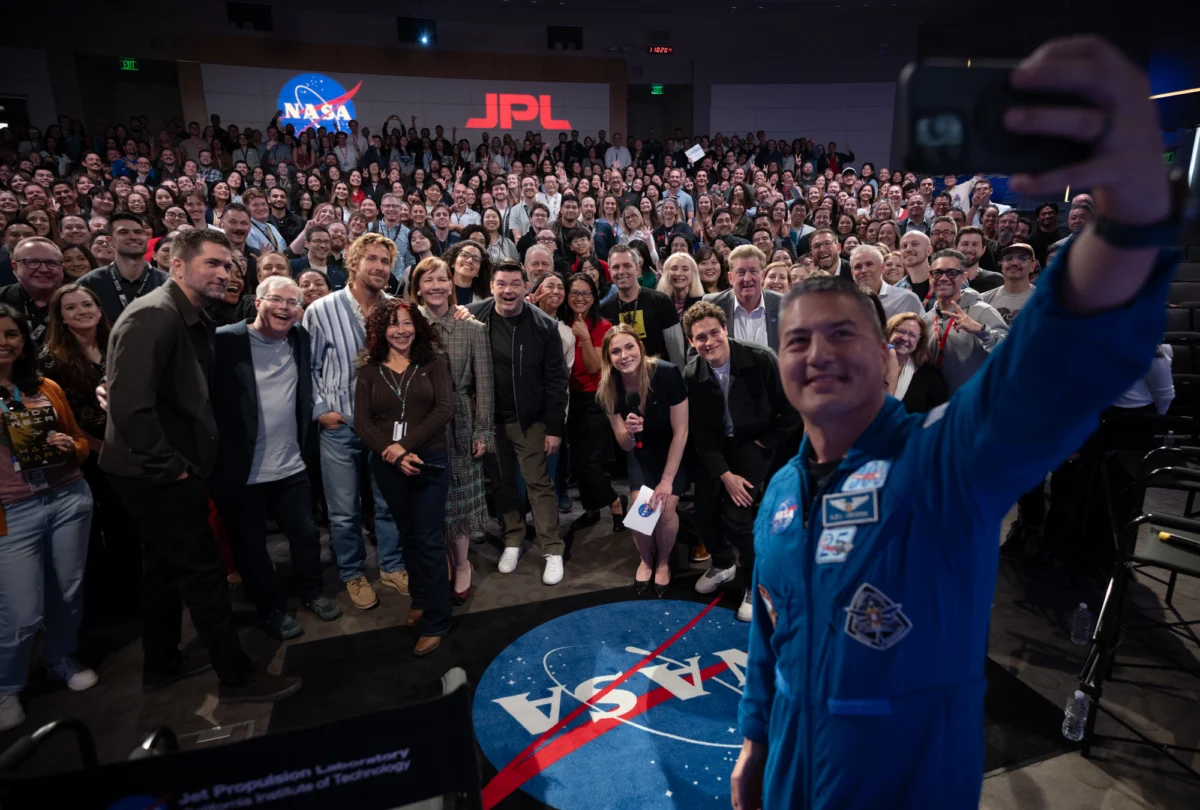
A highlight of this collaboration was an in-person consultation between NASA astronaut Kjell Lindgren and actor Ryan Gosling on the movie set. Such direct interaction allows actors to gain invaluable insights into the physiological and psychological demands of being an astronaut, lending authenticity to their portrayals. Lindgren, a veteran of two spaceflights and multiple spacewalks, could share firsthand experiences of microgravity, the isolation of space, and the operational intricacies of spacecraft, enriching Gosling’s performance. Furthermore, NASA facilitated brand use guidance and clearance for its iconic "meatball" and "worm" logos featured in the film. These logos are more than just branding; they are symbols of innovation, exploration, and national pride, and their accurate and appropriate depiction in a major motion picture reinforces NASA’s public identity.
An Audience Beyond Earth: From ISS to Quarantine
The reach of NASA’s activities related to "Project Hail Mary" extended far beyond Earth’s confines, illustrating the unique intersection of real-world space operations and cultural engagement. The crew members of Expedition 74, living and working aboard the International Space Station (ISS), enjoyed a special screening of the film while in orbit. This extraordinary viewing experience underscores the agency’s commitment to crew welfare and morale, allowing astronauts like Chris Williams, Jessica Meir, and Jack Hathaway a moment of entertainment that resonates with their own daily realities of space-bound research and technological demonstrations. Watching a fictional deep-space epic from an actual orbiting laboratory offers a surreal layer of immersion that few audiences could ever experience.
Closer to home, the Artemis II crew members—Reid Wiseman, Victor Glover, Christina Koch, and Jeremy Hansen—are also slated to view "Project Hail Mary" during their pre-launch quarantine period. This period, essential for ensuring the crew’s health and readiness for their upcoming deep space mission, provides a unique opportunity for them to engage with a narrative that mirrors, albeit fictionally, the very aspirations they are preparing to fulfill. As these astronauts prepare to make what was once science fiction a reality through their upcoming deep space launch, their viewing of the film serves as a poignant reminder of the enduring human drive to explore the unknown, a drive continuously fueled by both scientific endeavor and imaginative storytelling. Their mission to explore more of the Moon for scientific discovery, economic benefits, and to build the foundation for future crewed missions to Mars directly echoes the themes of ambition and discovery central to "Project Hail Mary."
The Enduring Legacy: Science, Storytelling, and Human Progress
The convergence of Artemis II and "Project Hail Mary" is not merely a coincidental alignment of events but a powerful demonstration of the symbiotic relationship between scientific progress and cultural narratives. Throughout history, fictional tales of space travel, from Jules Verne’s "From the Earth to the Moon" to the epic sagas of "Star Trek" and "Star Wars," have not only reflected humanity’s dreams but have actively inspired generations of scientists and engineers. These stories often serve as a crucial entry point, igniting curiosity and fostering a sense of wonder that can lead to lifelong passions in STEM fields. Conversely, real-world scientific breakthroughs and grand exploration projects provide rich material for storytellers, grounding their narratives in the astonishing capabilities of human ingenuity and discovery.
NASA’s proactive engagement in this cultural dialogue is a sophisticated strategy to maintain public interest and support for its ambitious programs. In an era of competing priorities and limited resources, public engagement is vital for securing the sustained funding and political will necessary for long-term projects like the Moon to Mars initiative. By making science accessible and exciting through mainstream entertainment, NASA helps to cultivate a scientifically literate populace that understands the value and implications of space exploration, from technological spin-offs that benefit life on Earth to the profound philosophical insights gained from looking back at our pale blue dot.
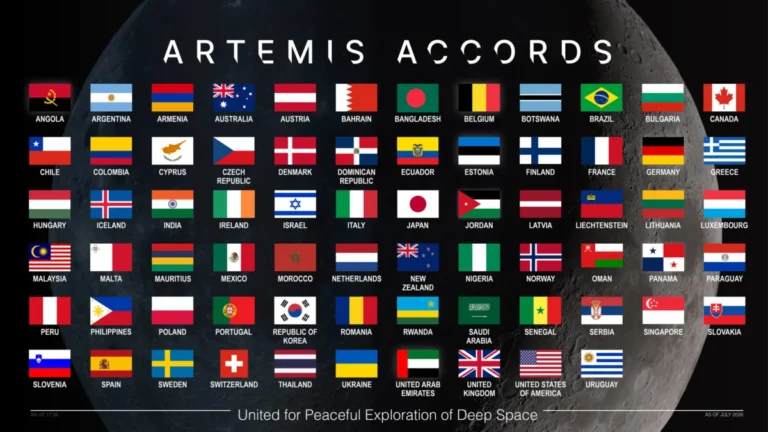
Moreover, the emphasis on "American leadership in space" articulated by Boyington speaks to the geopolitical and economic dimensions of space exploration. The Artemis program, with its international partners, seeks to establish a framework for peaceful and cooperative exploration while also ensuring the United States remains at the forefront of space technology and capability. The economic benefits are manifold, ranging from job creation in high-tech industries to the potential for new commercial ventures in cis-lunar space, including lunar resource utilization. The Moon, once merely a distant objective, is now seen as a proving ground and a resource-rich domain that will unlock new opportunities for global collaboration and economic growth.
The Road Ahead: From Lunar Outposts to Martian Frontiers
As the Artemis II crew prepares for their historic journey and audiences prepare for a cinematic adventure to the stars, the broader implications of this dual event resonate deeply. It signifies a renewed global commitment to human space exploration, moving beyond low Earth orbit to establish a sustained presence on the Moon and, ultimately, to send humans to Mars. The challenges are immense—from developing advanced life support systems for multi-year missions to Mars, to protecting astronauts from deep-space radiation, and perfecting in-situ resource utilization on celestial bodies. Yet, the confluence of real-world missions and aspirational fiction serves as a powerful motivator.
The "Moon to Mars" strategy is not just about planting flags; it’s about expanding the boundaries of human knowledge, fostering international cooperation, and building a foundation for humanity’s future as a multi-planetary species. Scientific discoveries on the Moon, such as identifying water ice at the poles, are critical for developing sustainable lunar habitats. These lunar outposts will then serve as testbeds for technologies and operational procedures vital for the far more challenging journey to Mars.
In essence, this Friday’s convergence of scientific endeavor and artistic expression encapsulates the human spirit of exploration—a spirit that has always been driven by both the tangible pursuit of knowledge and the boundless reaches of imagination. As NASA continues to push the boundaries of what is possible, films like "Project Hail Mary" ensure that the public’s dreams and aspirations keep pace, guaranteeing that the journey to the stars remains a shared human endeavor.