


Global energy markets were plunged into fresh turmoil on Monday as oil prices surged well above $100 a barrel following the collapse of crucial US-Iran negotiations and an immediate declaration from former President Donald Trump that the United States would initiate a naval blockade of Iranian ports. The dramatic turn of events, unfolding rapidly in Asia’s early trading hours, has amplified concerns over a deepening global energy crisis and sparked widespread alarm regarding potential military escalation in the vital Strait of Hormuz.
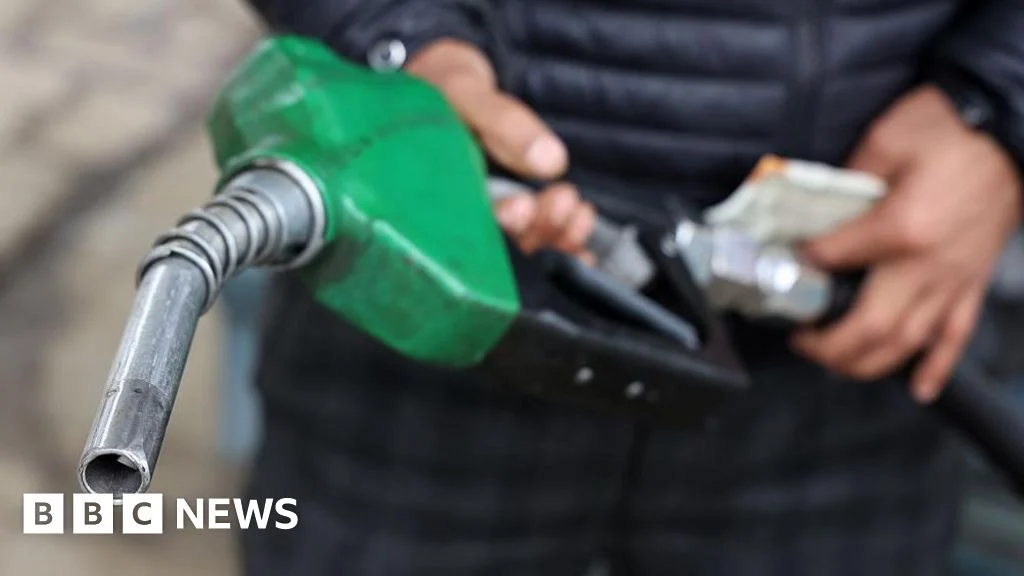
The benchmark Brent crude, a key global indicator, witnessed a sharp increase of 8.5%, climbing to $102.37 per barrel (£77.15). Simultaneously, West Texas Intermediate (WTI), the US benchmark, registered an even more pronounced jump of 9%, reaching $105.34. This sudden upward trajectory in oil prices marks a stark reversal from just last Wednesday, when prices had dipped below $100 after Washington and Tehran had tentatively agreed to a conditional two-week ceasefire, which crucially included the reopening of the Strait of Hormuz, a critical maritime chokepoint. The failure of these weekend talks to solidify a lasting accord, combined with the immediate and aggressive posture adopted by the US, has sent shockwaves through commodity markets and global capitals alike.
Escalating Tensions and the Strategic Strait of Hormuz
The Strait of Hormuz, a narrow waterway separating Iran from the United Arab Emirates and Oman, holds unparalleled strategic significance. Through its waters passes approximately one-fifth of the world’s total petroleum liquids consumption, equating to roughly 21 million barrels per day. Any disruption to this flow has immediate and profound implications for global energy supplies and prices. The strait has been a persistent flashpoint in the broader, undeclared "Iran War," which, according to reports, commenced on February 28th. Following alleged US-Israeli strikes, Tehran had previously retaliated by threatening to attack vessels attempting to use the strait, escalating maritime risks.
Since the onset of the conflict, commercial shipping through the Strait of Hormuz has largely been at a standstill, creating significant bottlenecks in global supply chains. While some nations, notably India and Malaysia, had managed to negotiate specific "safe passage" agreements for their vessels, the wider disruption had already contributed significantly to surging energy prices worldwide, even before the latest developments. The recent, albeit brief, ceasefire had offered a glimmer of hope for a return to normalcy, but that hope has now evaporated, replaced by heightened uncertainty and the palpable threat of direct confrontation.
Chronology of Recent Events and the Ceasefire’s Demise
The path to this latest crisis point has been fraught with tension, punctuated by brief periods of de-escalation that ultimately proved fragile. The "Iran War," which began on February 28th, marked a significant escalation in an already volatile region. Details surrounding its specific origins remain somewhat opaque in public reporting, but it is widely understood to stem from long-standing geopolitical rivalries, proxy conflicts, and disputes over Iran’s nuclear program and regional influence.
Following weeks of heightened hostilities and the initial disruption of shipping, a diplomatic breakthrough appeared to emerge last Wednesday. Reports indicated that a conditional two-week ceasefire had been brokered, leading to the temporary easing of tensions and, crucially, the agreement to reopen the Strait of Hormuz for international shipping. This news was met with cautious optimism in global markets, reflected in the temporary dip of oil prices below the $100 mark. The ceasefire was intended to create a window for more substantive negotiations aimed at a comprehensive de-escalation of the conflict.
However, these critical negotiations, reportedly held over the weekend in Pakistan with Iranian parliamentary speaker Mohammad Bagher Ghalibaf leading Tehran’s delegation, failed to yield a new deal. The precise reasons for the breakdown have not been fully disclosed, but the immediate aftermath suggests deep-seated disagreements that could not be reconciled within the allotted timeframe.
The failure of diplomacy was swiftly followed by a dramatic announcement from former President Donald Trump on Sunday. In a post on his social media platform, Truth Social, Trump declared, "The US will start BLOCKADING any and all Ships trying to enter, or leave, the Strait of Hormuz." This statement signaled an immediate and aggressive shift in US policy following the failed talks.
Later on Sunday, US Central Command (Centcom), the operational headquarters for US forces in the Middle East, confirmed the implementation of the blockade. Centcom announced that the blockade of traffic entering and exiting Iranian ports would commence at 10:00 ET (14:00 GMT) on Monday. Importantly, Centcom sought to clarify the scope of the operation, stating that it would be enforced "impartially against vessels of all nations entering or departing Iranian ports and coastal areas." However, it also emphasized that the US military "will not impede" ships in the Strait of Hormuz that are heading "to and from non-Iranian ports," an attempt to distinguish between blockade enforcement against Iran and the broader principle of freedom of navigation.
Iranian Reactions and the Prospect of Confrontation
The Iranian response to the US blockade announcement was swift and defiant, underscoring the high risk of military confrontation. Mohammad Bagher Ghalibaf, the Iranian parliamentary speaker who led the recent negotiations, issued a resolute statement, carried by local media, asserting that the country "will not submit to any threat." This declaration signals Tehran’s unwavering stance against what it perceives as coercive tactics.
Further escalating the rhetoric, the Islamic Revolutionary Guard Corps (IRGC) Naval Forces, a powerful and ideologically driven branch of Iran’s military, issued a stern warning. They declared that any military vessels approaching the Strait of Hormuz would be considered to be in violation of the (now defunct) ceasefire agreement between Washington and Tehran and would be "dealt with severely." This statement directly challenges Centcom’s operational guidelines and sets the stage for potential armed clashes if naval assets from either side come into close proximity. The IRGC’s history of assertive actions in the Gulf, including previous confrontations with US naval forces and harassment of commercial shipping, lends significant weight to this threat.
Broader Impact and Implications for the Global Economy
The failure of the US-Iran talks and the subsequent blockade order have profound implications, extending far beyond the immediate oil price surge. The global economy, already grappling with persistent inflationary pressures, supply chain fragilities, and the lingering effects of various geopolitical crises, now faces an even more precarious outlook.
Deepening Energy Crisis: The primary and most immediate consequence is the exacerbation of the global energy crisis. Higher oil prices translate directly into increased costs for transportation, manufacturing, and ultimately, consumer goods. This will fuel inflationary trends across economies, potentially pushing central banks to maintain tighter monetary policies for longer, risking economic slowdowns or even recessions in major economies. Nations heavily reliant on oil imports, particularly in Europe and Asia, will bear the brunt of these price hikes. The pre-existing energy crisis, driven by factors such as post-pandemic demand recovery, underinvestment in traditional energy sources, and geopolitical supply disruptions in other regions, now takes a far more dangerous turn.
Shipping and Trade Disruptions: Beyond oil, the blockade and the threat of IRGC action could severely impact global shipping and trade. Increased insurance premiums for vessels traversing the Gulf, potential rerouting of ships (which adds significant time and cost), and the risk of actual maritime incidents will disrupt supply chains for a wide array of goods. This uncertainty could lead to a slowdown in international commerce, impacting everything from raw materials to finished products. Even if Centcom aims to allow non-Iranian port traffic, the perceived risk in the region could deter shipping companies.
Geopolitical Instability: The most alarming implication is the heightened risk of direct military confrontation between the United States and Iran. The Strait of Hormuz is a confined space, and the presence of competing naval forces, each operating under assertive rules of engagement, creates a volatile environment prone to miscalculation. Any military incident, however minor, could rapidly escalate into a broader regional conflict, drawing in other regional and international actors. This would have devastating humanitarian and economic consequences, potentially destabilizing the entire Middle East.
International Reactions and Diplomacy: The international community is likely to react with a mix of alarm and calls for de-escalation. The United Nations and the International Maritime Organization will likely issue statements expressing concern for freedom of navigation and urging all parties to exercise restraint. Major global powers such as the European Union, China, Japan, and India, all heavily dependent on Gulf energy supplies, will be particularly anxious. These nations will face immense pressure to protect their energy interests while also seeking diplomatic avenues to defuse the crisis. The prior negotiations by India and Malaysia for safe passage now hang in the balance, as the new US blockade fundamentally alters the operational environment.
Economic Downturn and Stagflation: The combination of soaring energy prices and disrupted trade channels significantly increases the risk of global stagflation – a scenario characterized by high inflation coupled with stagnant economic growth. Businesses will face higher operational costs, consumers will have less disposable income, and investment confidence will likely plummet. Such an environment could trigger a global economic recession, unraveling years of recovery efforts.
Long-Term Energy Transition: While not an immediate concern, the crisis could also influence the trajectory of the global energy transition. On one hand, persistent volatility and high prices for fossil fuels might accelerate investments in renewable energy sources and energy independence initiatives. On the other hand, a severe short-term energy crunch could also lead to a renewed focus on securing traditional fossil fuel supplies from alternative, more stable sources, potentially diverting resources away from green energy development in the immediate future.
As the markets opened in Asia and news of the failed talks and blockade spread, the immediate reaction underscored the gravity of the situation. Energy analysts are now scrambling to revise their forecasts, with many anticipating sustained high oil prices and continued market volatility for the foreseeable future, unless a rapid diplomatic resolution can be found or a clear path to de-escalation emerges. The coming days will be crucial in determining whether the international community can avert a full-blown crisis in the Strait of Hormuz and mitigate the severe economic fallout that now looms large.