


Porsche has officially expanded its high-performance GT portfolio with the introduction of the 911 GT3 S/C, marking the first time in the company’s history that the legendary GT3 nameplate has been applied to a permanent production convertible. While Porsche has previously offered open-top models with GT-derived underpinnings—most notably the limited-run Speedster series—the new GT3 S/C represents a strategic shift for the Stuttgart-based manufacturer. Positioned as a permanent fixture alongside the GT3 coupe, the S/C enters the market with a starting price of £200,500, aiming to blend the visceral, high-revving nature of the GT3 with the sensory experience of open-air driving.
The designation "S/C" serves as a nod to the vehicle’s dual nature, bridging the gap between the track-honed GT3 and the more road-biased, heritage-inspired 911 S/T. According to Porsche’s GT division, the engineering objective was to ensure that the removal of the fixed roof did not compromise the sharp handling characteristics that define the GT3 brand. This development comes at a pivotal moment for the 911 range as Porsche navigates the transition toward the 992.2 generation, balancing traditional internal combustion excellence with increasingly stringent global emissions standards.
Engineering and Powertrain Specifications
At the heart of the 911 GT3 S/C lies the familiar 4.0-liter naturally aspirated flat-six engine, a powerplant that remains one of the few high-revving atmospheric engines left in production. In this iteration, the engine is tuned to deliver 503bhp. While this figure represents a 15bhp reduction compared to the ultra-exclusive 911 S/T, the decrease is a calculated necessity driven by the installation of new emissions-control hardware required for the latest environmental certifications. Despite the slight dip in peak power, Porsche has retained the high-lift camshafts from the 911 GT3 RS, ensuring the S/C maintains its characteristic 9000rpm redline and linear power delivery.
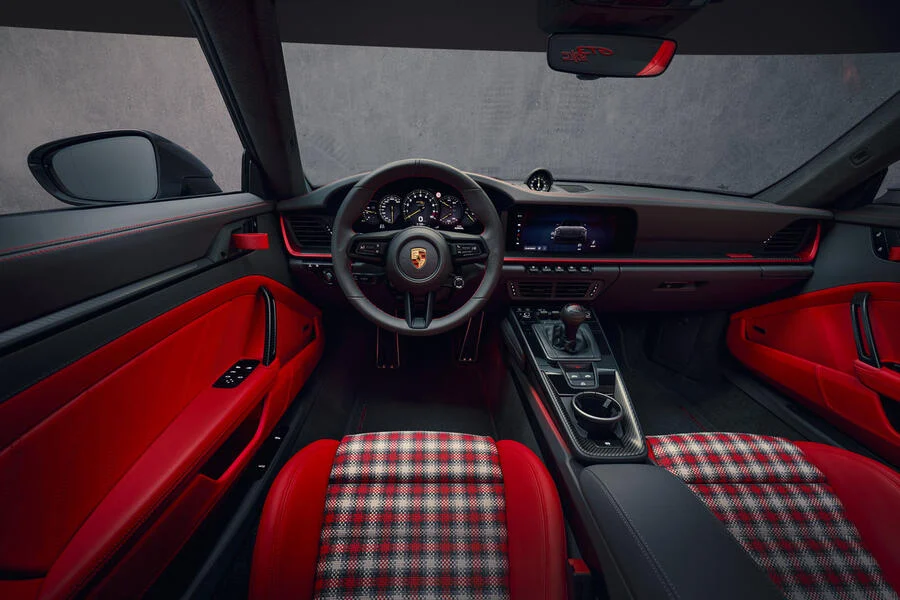
The S/C is offered exclusively with a six-speed close-ratio manual transmission. This decision underscores Porsche’s intent to market the car as a "driver’s tool" rather than a lap-time chaser. By eschewing the dual-clutch PDK (Porsche Doppelkupplung) gearbox, the GT division has prioritized mechanical engagement and weight savings. The manual gearbox features a shorter final drive ratio compared to the standard Carrera models, ensuring that the engine stays within its power band during spirited road driving.
In terms of performance metrics, the GT3 S/C matches the 0-62mph sprint of the GT3 coupe manual at 3.9 seconds. Interestingly, the top speed has seen a marginal increase to 194mph—1mph faster than its fixed-roof sibling. Engineering teams attribute this to the S/C’s aerodynamic profile; by removing the prominent "swan-neck" rear wing found on the standard GT3 and replacing it with a sleeker, more streamlined rear deck, the car experiences less drag at high velocities.
Lightweight Construction and Chassis Dynamics
Maintaining the structural integrity and weight targets of a GT3 in a cabriolet format presented significant engineering challenges. To mitigate the weight penalty typically associated with convertible mechanisms and chassis bracing, Porsche employed an extensive lightweighting program. The GT3 S/C has a curb weight of 1497kg, making it only 28kg heavier than the GT3 coupe and 32kg heavier than the 2019 991-generation Speedster.
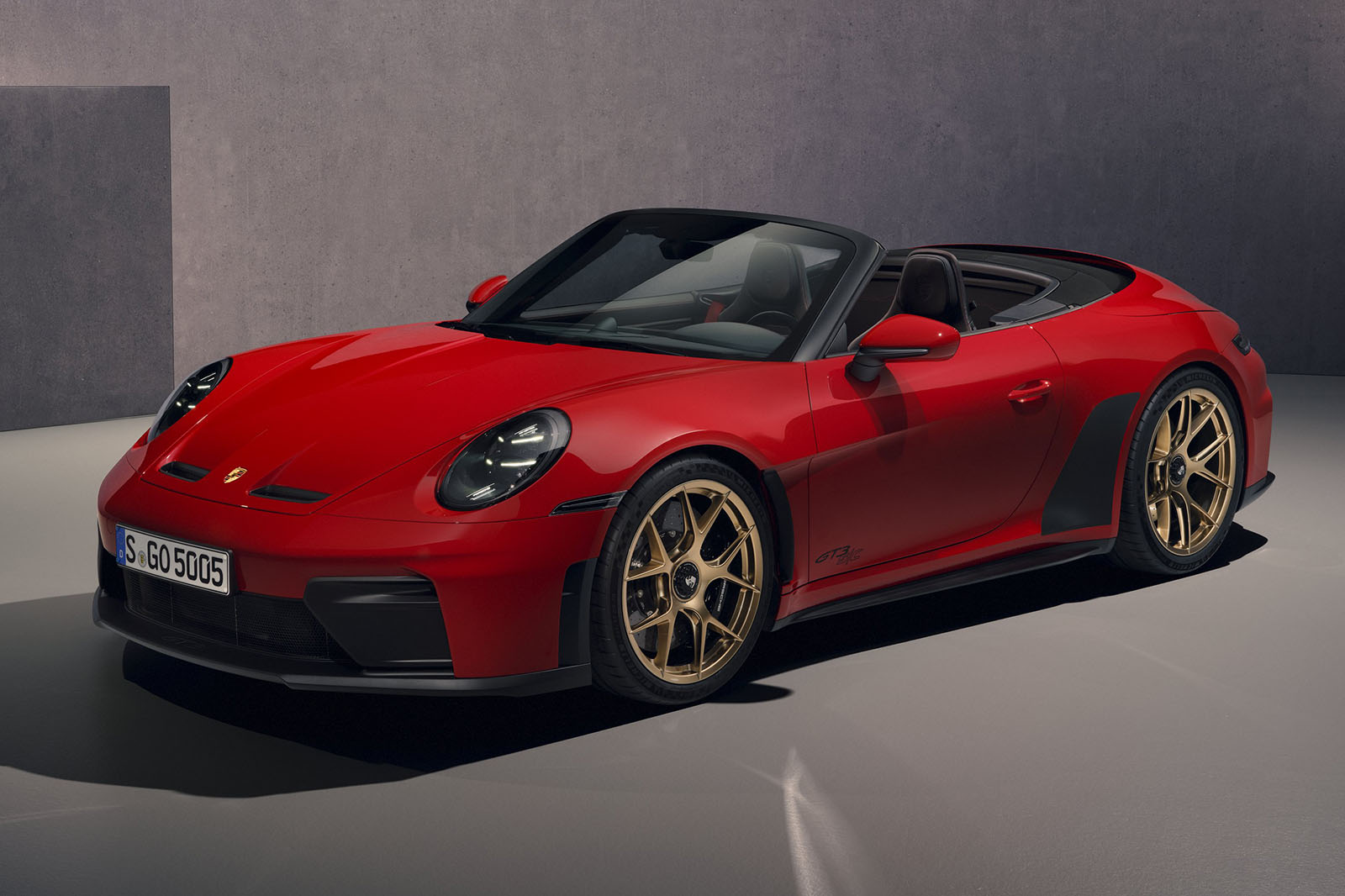
The weight-saving measures include:
- Carbon-Fiber Reinforced Plastic (CFRP): The bonnet, front wings, and doors are all constructed from CFRP, mirroring the materials used in the GT3 RS.
- Braking System: Porsche Ceramic Composite Brakes (PCCB) are fitted as standard, reducing unsprung mass significantly compared to steel alternatives.
- Interior Stripping: The rear seats have been removed entirely, a signature move for GT-division cars to save weight and emphasize the car’s focused nature.
- Magnesium Wheels: The S/C features staggered 20-inch front and 21-inch rear magnesium wheels, which further reduce rotating mass and improve suspension response.
The chassis setup is nearly identical to the GT3 coupe. Porsche engineers confirmed that the spring and damper rates remain unchanged, a testament to the stiffness of the 992-generation’s aluminum-steel hybrid chassis. The S/C also benefits from rear-axle steering, which has been recalibrated to account for the cabriolet’s specific center of gravity, ensuring high-speed stability and low-speed agility.
Historical Context and Development Background
The arrival of the GT3 S/C is the fulfillment of a long-standing ambition within Porsche’s GT department. Andreas Preuninger, the head of the GT division, noted that the company has harbored the desire to produce a GT3 cabriolet since the 997-generation (mid-2000s). However, production constraints and the prioritization of the GT3 RS and GT2 RS models meant that manufacturing capacity was previously unavailable.
The timing of the S/C’s launch is strategically linked to the production lifecycle of the 911. As production for the current GT3 RS begins to wind down, Porsche has redirected its manufacturing resources at the Flacht and Zuffenhausen facilities to accommodate the S/C. This move allows Porsche to maintain high-margin GT production while offering a product that appeals to a different demographic—those who seek GT3 performance but prefer the lifestyle appeal of a convertible.
Historically, Porsche’s open-top GT cars were limited-edition collector items. The 991 Speedster, for instance, was limited to 1,948 units globally to commemorate the company’s founding year. By making the S/C a permanent part of the lineup, Porsche is effectively democratizing (within a high-luxury context) the open-top GT experience, moving away from the "allocation-only" scarcity that has defined previous GT convertibles.
Strategic Positioning and Official Commentary
The GT3 S/C occupies a unique niche, which Preuninger has colloquially dubbed the "Cabster"—a hybrid of a traditional Cabriolet and a Speedster. Unlike the Speedster, which traditionally utilizes a cumbersome manual folding roof to save weight, the S/C features a fully electric folding top. This decision was made to enhance the vehicle’s daily usability, particularly in climates where weather conditions can change rapidly.
"It’s for those who want something that’s Speedster-ish but with an automatic top," Preuninger stated during the car’s reveal. He emphasized that the manual-only configuration was a non-negotiable aspect of the car’s identity. "Manual gearboxes matter for drivers. This car is positioned for the guys and girls who just go out to drive, not necessarily to hunt for tenths of a second on a circuit."
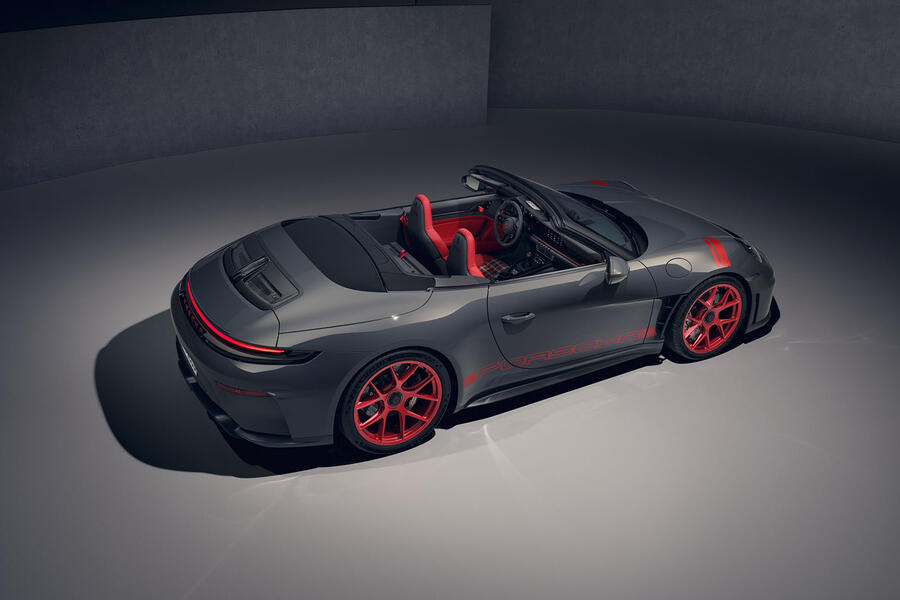
Industry analysts suggest that the S/C is a direct response to the "purist" trend in the supercar market. As modern performance cars become increasingly digital and turbocharged, there is a growing demand for analog experiences. By combining a naturally aspirated engine, a manual gearbox, and an open roof, Porsche is catering to the "emotional" segment of its customer base.
Broader Market Impact and Implications
The introduction of the £200,500 GT3 S/C places it in a competitive landscape that includes the Aston Martin Vantage Roadster and the Maserati MC20 Cielo, though the Porsche remains distinct due to its naturally aspirated high-revving engine. Its permanent status in the catalog is expected to impact the secondary market for previous limited-run Speedsters, as buyers now have a more accessible (though still premium) alternative with modern technology and greater convenience.
Furthermore, the S/C represents Porsche’s commitment to the internal combustion engine in its purest form. With the 911 Carrera recently adopting hybrid technology in its "T-Hybrid" GTS trim, the GT3 S/C stands as a bastion of the traditional 911 experience. It serves as a bridge between the racing-derived technology of Flacht and the grand touring heritage of the 911.
For the UK market specifically, the S/C’s electric roof and refined chassis are expected to make it a popular choice among enthusiasts who frequent the B-roads of Scotland or the Cotswolds, where the agility of a GT3 is prized but the convenience of a quick-folding roof is a practical necessity.
Conclusion and Availability
The Porsche 911 GT3 S/C is available for order immediately through Porsche Centres, with deliveries expected to commence in the coming months. By offering a permanent open-top GT3, Porsche has not only filled a long-vacant gap in its lineup but has also reinforced its strategy of diversifying the 911 range to meet specific driver profiles. The S/C stands as a celebration of mechanical purity, providing a rare combination of a motorsport-derived powertrain and the unencumbered experience of a cabriolet, ensuring that the GT3 legacy continues to evolve even as the automotive industry faces a period of rapid technological transformation.