



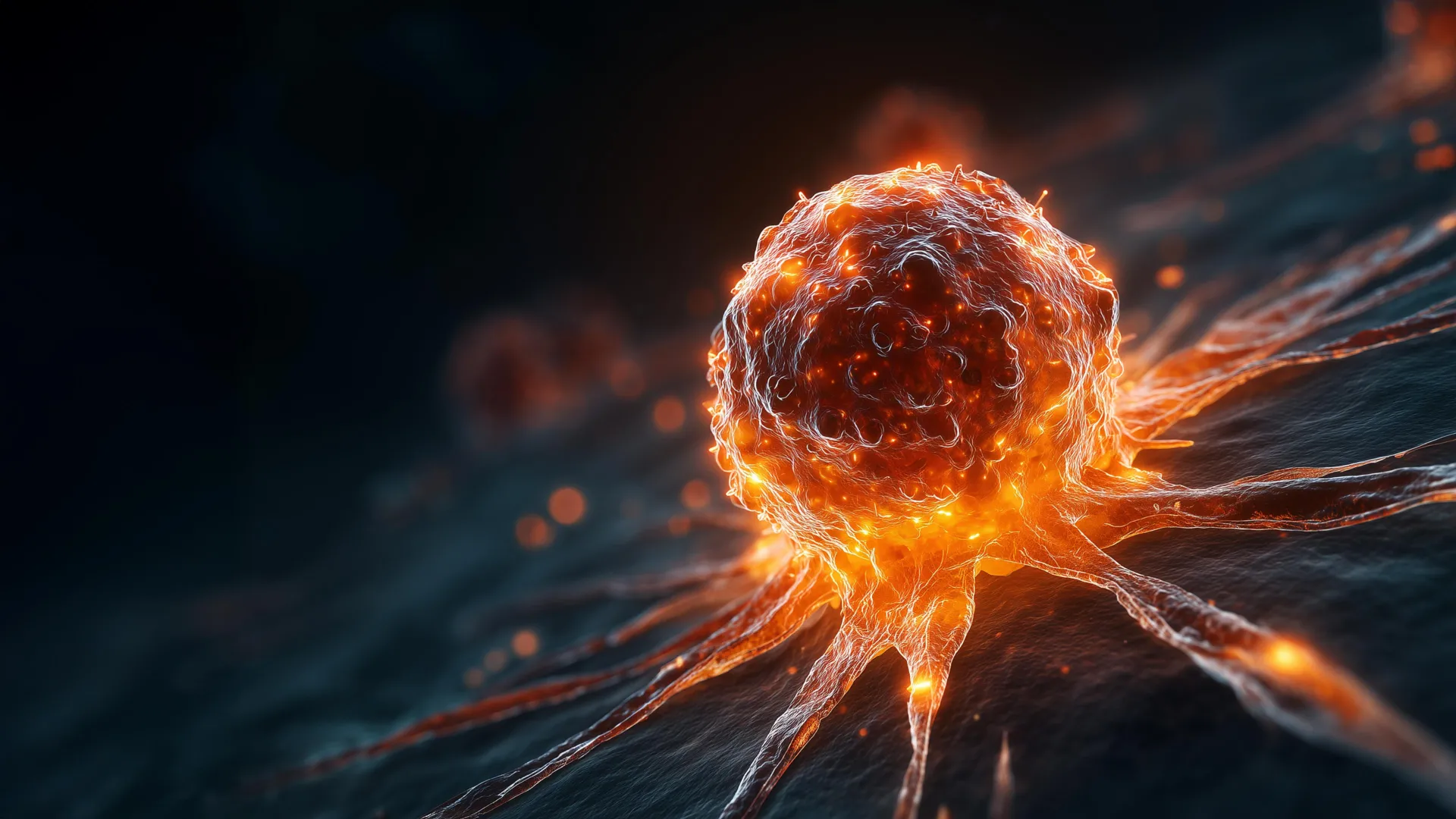
Researchers at the University of Missouri are pioneering a groundbreaking approach to cancer diagnostics, aiming to revolutionize how clinicians identify patients most likely to benefit from targeted therapies. This innovative method involves using a specially designed antibody, acting as a molecular "flashlight," to illuminate tumors within medical scans. The development promises to enhance the precision of cancer treatment, reduce unnecessary interventions, and accelerate the delivery of effective therapies to those who need them most.
The core of this advancement lies in the work of Dr. Barry Edwards, an associate professor of biochemistry in the University of Missouri School of Medicine, with a joint appointment in the College of Arts and Science. Dr. Edwards and his team have engineered a remarkably small antibody, a minibody, specifically designed to seek out and bind to EphA2. EphA2 is a protein that is frequently overexpressed in a variety of cancer tumors. By attaching a radioactive marker to this minibody, the researchers have created a tool that becomes visible during positron emission tomography (PET) scans, effectively highlighting the presence and location of EphA2-expressing tumors.
The "Antibody Flashlight" Revolutionizes Tumor Detection
In rigorous preclinical experiments conducted on laboratory mice, Dr. Edwards’ team demonstrated the efficacy of this novel cancer-detecting agent. The minibody, when administered, successfully and clearly illuminated tumors that were characterized by the presence of EphA2. This visual confirmation suggests a significant leap forward in diagnostic capabilities. The ability to precisely identify tumors that express EphA2 opens the door to a more personalized approach to cancer treatment, allowing physicians to determine which patients would be ideal candidates for therapies specifically designed to target EphA2-positive tumor cells.
A critical advantage of this approach is its inherent selectivity. Targeted therapies are designed to attack cancer cells while minimizing harm to healthy tissues, a stark contrast to traditional chemotherapy, which can have widespread and debilitating side effects. By accurately identifying EphA2-positive tumors, clinicians can confidently administer these precision treatments, ensuring that the therapy is directed at the most receptive cancer cells.
"By finding out which patients have high or low amounts of EphA2, we can determine who is most likely to benefit from a targeted cancer treatment," explained Dr. Edwards. "There is no sense in giving a treatment that won’t work to a patient, so this new process we created saves time and money while advancing precision medicine." This sentiment underscores the driving force behind the research: to optimize patient outcomes by ensuring that treatment is both timely and effective, aligning with the broader goals of precision medicine, which seeks to tailor medical treatment to the individual characteristics of each patient.
A Faster, Less Invasive Alternative to Current Diagnostic Modalities
The current standard of care for evaluating tumors in cancer patients often relies on invasive procedures such as biopsies and imaging techniques like magnetic resonance imaging (MRI). While these methods are invaluable, they each present limitations. Biopsies, by their nature, involve surgical removal of tissue, carrying inherent risks of infection, bleeding, and discomfort. Furthermore, biopsies can sometimes fail to capture representative samples of the entire tumor, potentially leading to incomplete information. MRIs, while non-invasive, can be time-consuming and may not always provide granular detail about the specific protein expression within cancer cells, which is crucial for selecting targeted therapies.
Dr. Edwards’ research, conducted using advanced imaging technology at the University of Missouri’s Molecular Imaging and Theranostics Center, offers a compelling alternative. The immunoPET agent, as it is technically known, is designed to be administered intravenously. The radioactive marker attached to the minibody allows for clear visualization of the target protein through PET scanning. This method is fundamentally non-invasive, requiring only an injection and a scan.
The speed at which results can be obtained is another significant advantage. Traditional biopsy analysis can take days, if not weeks, to yield definitive results. The immunoPET approach, on the other hand, can provide actionable diagnostic information within hours of administration. This accelerated timeline is particularly beneficial for patients who may be traveling long distances to seek specialized cancer care, reducing the burden of extended stays and repeated appointments.
"This new targeted approach is noninvasive, and you can get results from the imaging in hours rather than days, which can be huge for patients traveling long distances to seek treatment," Dr. Edwards stated. "By making the process easier and faster for both patients and clinicians, we’re showing that precision medicine is a win-win." This highlights the dual benefit of the technology: improving patient experience and streamlining clinical workflows, ultimately leading to more efficient and effective cancer care.
Background and Chronology of the Research
The development of this immunoPET agent is not an isolated event but rather the culmination of years of research in molecular imaging and targeted therapeutics. The concept of using antibodies to deliver imaging agents or therapeutic payloads to specific cancer cells has been a focus of cancer research for decades. However, challenges related to antibody size, tumor penetration, and clearance from the body have often limited their clinical application.
Dr. Edwards’ work addresses these challenges by utilizing minibodies. Minibodies are engineered antibody fragments that are significantly smaller than full-sized antibodies. This smaller size offers several advantages: it can lead to more rapid tumor penetration, faster clearance from the bloodstream and non-target tissues, and potentially reduced immunogenicity. The selection of EphA2 as a target protein is also a strategic choice. EphA2 has been implicated in tumor growth, invasion, and metastasis across a range of cancers, including breast, ovarian, lung, and pancreatic cancers. Its frequent overexpression in these malignancies makes it a promising biomarker for targeted therapy.
The journey from conceptualization to preclinical validation has likely involved several key stages:
- Initial Protein Identification and Validation: Researchers would have first confirmed the prevalence and significance of EphA2 in various cancer types through extensive literature review and experimental validation using cell lines and tissue samples.
- Antibody Design and Engineering: The creation of a specific minibody that exhibits high affinity and specificity for EphA2 would have been a critical step, involving recombinant DNA technology and protein engineering.
- Radiolabeling Optimization: Attaching a radioactive isotope to the minibody in a stable and efficient manner is crucial for PET imaging. This process requires careful selection of chelating agents and radioisotopes (such as Fluorine-18 or Gallium-68, commonly used in PET imaging) and optimization of labeling conditions.
- Preclinical Efficacy and Safety Studies: The experiments in mice would have involved several phases:
- Pharmacokinetics and Biodistribution: Determining how the radiolabeled minibody is absorbed, distributed, metabolized, and excreted by the body, and confirming its preferential accumulation in EphA2-positive tumors.
- Imaging Studies: Performing PET scans at various time points to visualize tumor uptake and assess image quality.
- Therapeutic Correlation (if applicable): While the current focus is diagnostic, future iterations might explore using similar constructs for therapy. This phase would have involved assessing the accuracy of the imaging in reflecting the EphA2 expression levels.
- Toxicity Assessment: Ensuring that the radiolabeled minibody does not cause significant adverse effects in the animal models.
The publication of the study, titled "Preclinical evaluation of anti-EphA2 minibody-based immunoPET agent as a diagnostic tool for cancer," in the peer-reviewed journal Molecular Imaging and Biology, signifies that the research has undergone rigorous scrutiny by experts in the field, lending further credibility to its findings.
Supporting Data and Future Directions
While the article does not provide specific quantitative data from the mouse experiments, the implication of "clearly illuminated tumors" suggests a significant signal-to-noise ratio, meaning the tumor was easily distinguishable from surrounding healthy tissue. In future clinical trials, researchers would aim to quantify this uptake using standardized uptake values (SUVs) derived from PET imaging. These quantitative measures would allow for objective assessment of EphA2 expression levels and provide a basis for patient stratification.
The research team’s ambitious timeline of advancing to human clinical trials within the next seven years indicates a strong commitment and a well-defined path forward. Human trials are typically conducted in several phases:
- Phase 1: Primarily focused on safety and determining the optimal dosage of the agent in a small group of human volunteers, often healthy individuals or patients with advanced cancer for whom standard treatments have failed.
- Phase 2: Evaluating the efficacy of the agent in a larger group of patients with specific types of cancer, further assessing safety and side effects.
- Phase 3: Large-scale trials involving hundreds or thousands of patients to confirm efficacy, monitor side effects, compare it to existing treatments, and collect information that will allow the agent to be used safely.
If successful, this immunoPET agent could become an indispensable tool in the oncologist’s arsenal. It could facilitate earlier diagnosis, more accurate staging of the disease, and more precise selection of patients for EphA2-targeted therapies, such as those involving small molecule inhibitors or antibody-drug conjugates that specifically target EphA2.
Broader Impact and Implications for Precision Medicine
The implications of this research extend far beyond the immediate diagnostic capabilities. It represents a significant stride towards truly personalized cancer care. By accurately identifying the molecular profile of a patient’s tumor, clinicians can move away from a one-size-fits-all approach and instead tailor treatments to the individual. This has several crucial benefits:
- Improved Patient Outcomes: Patients receive treatments that are more likely to be effective, leading to better response rates, longer progression-free survival, and potentially improved overall survival.
- Reduced Treatment Burden: Avoiding ineffective treatments spares patients from unnecessary side effects, toxicities, and the psychological and financial strain associated with undergoing therapies that will not benefit them.
- Economic Benefits: By avoiding costly and ineffective treatments, healthcare systems can allocate resources more efficiently. The accelerated diagnostic process also contributes to cost savings by reducing hospital stays and repeated investigations.
- Advancement of Theranostics: This research exemplifies the concept of "theranostics," a field that combines diagnostic and therapeutic capabilities. In the future, the same EphA2-targeting minibody could potentially be modified to carry a therapeutic payload, such as a radioactive isotope for targeted radiotherapy, allowing for simultaneous diagnosis and treatment with a single targeting molecule.
The development also highlights the importance of interdisciplinary collaboration, bringing together expertise in biochemistry, molecular imaging, radiology, and oncology. The University of Missouri’s investment in advanced imaging facilities like the Molecular Imaging and Theranostics Center plays a crucial role in fostering such innovative research.
While the focus is currently on EphA2, the underlying methodology of developing minibody-based immunoPET agents is adaptable. This platform technology could be extended to target other cancer-specific proteins, creating a pipeline of diagnostic tools for a wider range of cancers and molecular subtypes. This could dramatically expand the reach of precision oncology, making it accessible to a greater number of patients.
In conclusion, the research conducted by Dr. Barry Edwards and his team at the University of Missouri represents a significant and promising advancement in the field of cancer diagnostics. By developing a non-invasive, rapid, and highly specific molecular imaging agent, they are paving the way for more precise and effective cancer treatments, embodying the transformative potential of precision medicine. The journey from preclinical validation to widespread clinical adoption will undoubtedly be challenging, but the potential to improve the lives of countless cancer patients makes this endeavor exceptionally vital.