



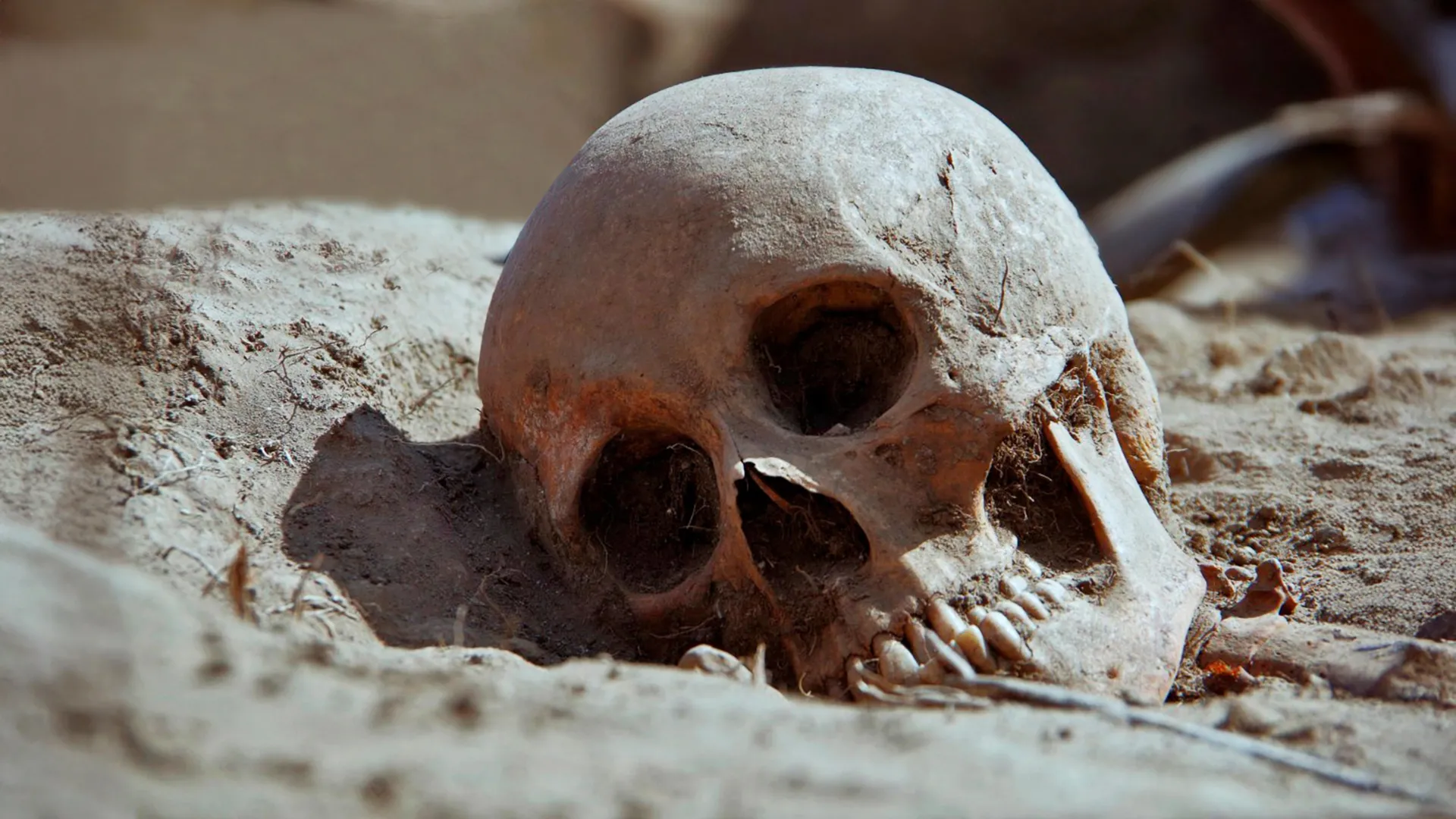
The specter of plague, often conjured by images of plague-ridden rats scuttling through the narrow streets of medieval towns and the catastrophic epidemics that decimated populations across Europe, may be rooted in a far more ancient and primal past. New groundbreaking research, published in the esteemed scientific journal Nature, has unearthed compelling evidence suggesting that the bacterium responsible for this dreaded disease, Yersinia pestis, was already claiming lives within small, mobile hunter-gatherer communities a staggering 5,500 years ago. This discovery predates the rise of settled agricultural societies and the emergence of cities by several millennia, fundamentally reshaping our understanding of plague’s deep evolutionary history and its impact on early human populations.
The international research team meticulously examined ancient DNA extracted from human skeletal remains unearthed at four distinct hunter-gatherer burial sites situated in the vicinity of Lake Baikal in East Siberia. The preservation of genetic material within the calcified matrix of ancient teeth proved instrumental, allowing scientists to painstakingly sequence bacterial genomes and identify previously unknown, archaic strains of the plague bacterium. This advanced genomic analysis provides an unprecedented window into the pathogen’s ancient lineage.
"Whether the earliest forms of plague were mild or virulent has been a matter of debate, but our findings demonstrate that these ancient strains were already highly lethal," stated Eske Willerslev, a senior author of the study, Professor at the University of Copenhagen, and a distinguished figure at the University of Cambridge. His assertion underscores the profound lethality of these prehistoric infections, challenging long-held assumptions about the gradual evolution of plague’s virulence.
Unraveling Prehistoric Outbreaks Through Ancient DNA
The scientific endeavor to reconstruct the narrative of these ancient outbreaks involved a sophisticated interdisciplinary approach, seamlessly integrating genetic evidence with archaeological findings and precise radiocarbon dating. This triangulation of data allowed researchers to construct a remarkably detailed and coherent picture of the events that transpired within these prehistoric communities.
"Based on the plague DNA, the genetic relationships between the victims, the archaeological analysis, and the radiocarbon dating, we’ve built a really clear, complete picture of what happened during these outbreaks," explained lead author Ruairidh Macleod. Macleod, who conducted this pivotal research during his doctoral studies at the University of Cambridge and is now a Research Fellow at the University of Oxford, emphasized the comprehensive nature of the reconstructed historical events.
The analysis revealed the presence of Yersinia pestis DNA in a significant proportion of the studied individuals. Specifically, the bacterium was detected in 18 out of 46 individuals examined, translating to nearly 40 percent of the remains bearing irrefutable evidence of infection. This detection rate is remarkably high, even exceeding those reported from certain medieval plague burial sites, which are historically associated with widespread and devastating epidemics. The prevalence of the pathogen within these ancient populations suggests that plague was not an isolated incident but a recurrent and significant threat.
Evidence Points to Highly Virulent Early Plague
Prior scientific research had suggested that the earliest strains of Yersinia pestis might have been less virulent due to a perceived lack of certain genetic adaptations. Specifically, it was believed that these ancient strains lacked some of the key genetic features that later facilitated the efficient transmission of bubonic plague through flea vectors and rodent hosts. Consequently, many scientists posited that these rudimentary forms of the disease were unlikely to have instigated large-scale or particularly deadly outbreaks.
However, the findings from the Lake Baikal region directly contradict this hypothesis. The new research presents compelling evidence that these ancient strains were, in fact, highly capable of causing severe mortality.
A particularly striking observation was made at the two largest cemeteries, where an unusually high number of child and adolescent individuals were found among the deceased. This demographic anomaly had long puzzled archaeologists, who had struggled for decades to provide a satisfactory explanation for this pattern.
"The unusually high number of children and the short timespan was a real puzzle that we’ve been trying to solve since the 1990s," commented archaeologist Andrzej Weber of the University of Alberta, who serves as a Principal Investigator for the Baikal Archaeology Project. "Finding out that plague was the cause is extraordinary, but it makes so much sense." Weber’s reaction highlights the significant breakthrough this research represents, offering a definitive explanation for a long-standing archaeological enigma and underscoring the devastating impact of plague on vulnerable young populations.
Further supporting the notion of rapid and deadly outbreaks, radiocarbon dating revealed that a substantial number of burials at these sites occurred within a relatively compressed timeframe. In several instances, evidence suggested that siblings or even parents and their children succumbed to the disease around the same period, leading to their commingling in burial. This temporal clustering strongly indicates swift and widespread mortality events, consistent with the rapid progression of a virulent infectious disease.
A Potent Genetic Factor May Have Amplified Severity
Adding another layer of complexity to the understanding of these ancient plague strains, the researchers identified a distinctive superantigen within the genetic makeup of the ancient plague bacteria. This specific toxin-producing genetic factor has not been observed in later, historically documented plague strains.
Superantigens are known to provoke exceptionally potent immune responses in their hosts, often leading to severe inflammatory reactions. This heightened immune activation, while seemingly a defense mechanism, can paradoxically exacerbate the severity of an infection, making it far more dangerous and potentially lethal. The presence of this superantigen in ancient Yersinia pestis strains suggests a built-in mechanism for increased virulence, independent of later adaptations for transmission.
"This finding changes our understanding of the earliest plague outbreaks: Even before the bacterium evolved efficient flea-borne transmission, these ancient strains appear to have carried a potent combination of virulence factors that could make infection highly lethal," stated Martin Sikora, an associate professor at the University of Copenhagen and a senior author of the study. His statement emphasizes that the inherent virulence of the pathogen, rather than solely its transmission mechanisms, played a crucial role in its devastating impact on early human societies.
The implications of this discovery are profound. They suggest that some of the earliest known plague outbreaks were likely as deadly, if not more so in specific demographic groups like children, as the later, more familiar forms of the disease, even though they lacked the sophisticated flea-borne transmission pathways that characterized the Black Death and subsequent epidemics. This challenges the linear model of virulence evolution, suggesting that high lethality was present from the pathogen’s early stages.
Illuminating the Origins and Spread of Plague
Beyond detailing the impact of plague on prehistoric populations, this study also provides critical support for the hypothesis that plague first originated in Central or North-East Asia. From this presumed epicenter, the disease is thought to have gradually disseminated across Eurasia, likely facilitated by the movement of wild rodent populations.
Archaeological evidence from the studied hunter-gatherer sites indicates close interactions between these communities and marmots, a species of large, burrowing rodent that continues to be a natural reservoir for plague in many regions today. Researchers posit that the disease may have been transmitted directly from infected marmots to humans, initiating the devastating outbreaks observed in these ancient communities. This direct zoonotic transmission from a specific host animal aligns with our current understanding of plague’s epidemiology.
The findings from this research have significant implications for public health, evolutionary biology, and our understanding of human history. By pushing back the timeline of plague’s lethality, the study compels a re-evaluation of the selective pressures faced by early human populations and the potential role of infectious diseases in shaping their development, migration patterns, and societal structures. Furthermore, the identification of novel virulence factors in ancient strains could offer valuable insights for contemporary efforts to combat bacterial infections, potentially revealing new targets for therapeutic intervention. The continued exploration of ancient DNA from diverse archaeological contexts promises to further illuminate the long and complex co-evolutionary history between humans and the pathogens that have shaped our existence.