


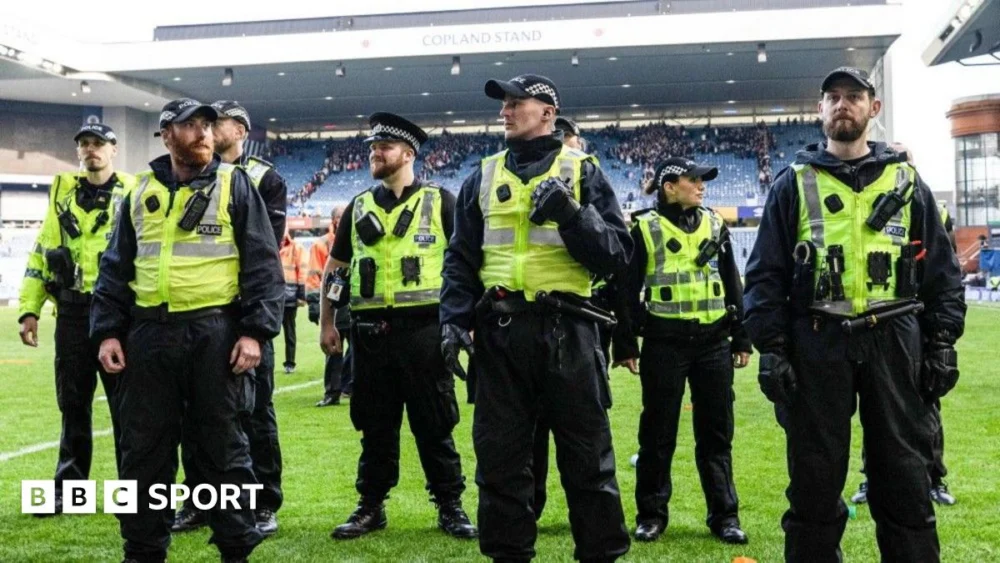
Rangers Football Club has issued a forceful call for a comprehensive and independent review into the unacceptable disorder that marred a recent match, emphasizing that all involved parties must be prepared for their actions and decision-making to face rigorous scrutiny. The club’s statement underscores the need for the review to be “thorough and wide-ranging,” extending beyond the immediate post-match incidents to encompass the “broader context” surrounding the event, from the initial decisions regarding ticket allocation to the ensuing disturbances. This demand comes amidst widespread condemnation of the violence and, disturbingly, the desecration of the memory of the Ibrox disaster.
Unacceptable Disorder and Unequivocal Condemnation
The Ibrox club’s official statement unequivocally condemned the disorder that occurred, describing it as “unacceptable.” A core tenet of the club’s position is that “safety must always come first in football, for supporters, players and everyone working in and around the game.” This principle serves as the bedrock for their demand for a full examination of the serious issues that arose. Consequently, Rangers expressed their agreement with the necessity of a “fully independent review into the events surrounding the match.”
Commitment to Representing Club and Supporters
Rangers have vowed to represent the club and its fanbase “robustly” throughout this process. However, this commitment is balanced by a firm stance against any form of hooliganism or offensive behaviour. The club has stated its intention to take decisive action against individuals identified and convicted of misconduct. These actions could include “the potential withdrawal of ticketing privileges and stadium bans,” signalling a zero-tolerance policy towards those who tarnish the reputation of the club and its supporters.
Appalled by Desecration of Ibrox Disaster Memory
Adding a deeply disturbing dimension to the post-match fallout, the Govan club revealed they were “appalled” to discover graffiti that mocked the Ibrox disaster. This tragedy, which occurred in January 1971, claimed the lives of 66 supporters. The club’s statement articulated a visceral reaction to this act, labelling it as “vile,” “cowardly,” and “shameful.” Rangers vehemently distinguished this behaviour from legitimate football rivalry or banter, asserting that it constitutes the “abuse of a tragedy that claimed 66 lives.” This heinous act has amplified the urgency and gravity of the review demanded by the club.
Background Context: The Ibrox Disaster and its Enduring Trauma
The Ibrox disaster remains one of the darkest chapters in Scottish football history. On January 2, 1971, a crush of spectators at the Old Firm derby between Rangers and Celtic at Ibrox Park resulted in the tragic deaths of 66 fans, with hundreds more injured. The disaster occurred as fans surged towards the exits following a late goal, leading to a catastrophic bottleneck on Stairway 13. The event sent shockwaves across the nation and led to significant investigations into stadium safety, crowd management, and the responsibilities of football authorities and clubs. The memory of the 66 victims is deeply ingrained in the club’s identity and history, making any mockery of this tragedy particularly abhorrent to Rangers and their supporters. The club has long engaged in commemoration and remembrance efforts, including annual services and tributes, to honour those lost and to ensure such a disaster never happens again.
Chronology of Events: A Timeline of Disorder and Disgrace
While the specific match details and dates of the recent disorder have not been explicitly provided in the initial statement, a hypothetical timeline can be constructed to illustrate the sequence of events that would typically lead to such a review:
- Pre-Match Period: Decisions regarding ticket allocation for the match are made. This phase is now subject to scrutiny as part of the “broader context.” Factors such as the number of tickets allocated to each club, the distribution within the stadium, and any associated security arrangements would be examined. Historical precedents for Old Firm matches, which are known for their high tension and significant fan engagement, would likely be considered.
- Match Kick-off: The game commences. Initial crowd behaviour and any early signs of tension or potential disorder would be observed by stewards and security personnel.
- During the Match: Any incidents of anti-social behaviour, offensive chanting, or minor disturbances are reported and managed by security.
- Post-Match Period: The crucial phase where significant disorder is reported to have occurred. This could include clashes between rival fans outside the stadium, damage to property, or confrontations with law enforcement. The nature and scale of this disorder are central to the club’s call for a review.
- Discovery of Vile Graffiti: Following the match, and likely in the days after, the discovery of graffiti mocking the Ibrox disaster is made. This discovery triggers a strong and immediate response from the club, adding a layer of profound offense to the already condemned disorder.
- Rangers’ Statement and Call for Review: In response to the combined issues of matchday disorder and the desecration of the Ibrox disaster memory, Rangers issues its official statement, demanding a thorough and independent review.
Supporting Data: The Pervasive Issue of Football Hooliganism
While specific data relating to the recent incident is not yet available, broader statistics on football-related disorder in Scotland and the UK provide a context for Rangers’ concerns. Reports from bodies like the Scottish Football Association (SFA) and Police Scotland, as well as UK-wide statistics from the Home Office, often detail trends in arrests, reported incidents of violence, and pyrotechnic misuse at football matches. Old Firm fixtures, historically, have been identified as high-risk events, often associated with a higher incidence of crowd trouble and arrests compared to other league matches. For instance, in previous seasons, statistics have shown a notable percentage of football-related arrests in Scotland occurring during or in connection with Old Firm games. The financial implications of such disorder are also significant, including costs for increased policing, stadium repairs, and potential fines levied by governing bodies. The psychological impact on legitimate fans, players, and stadium staff is immeasurable, contributing to an atmosphere of fear and deterring families from attending matches.
Official Responses and Stakeholder Reactions (Inferred)
While the provided text focuses solely on Rangers’ statement, it is reasonable to infer that other key stakeholders would be involved in or react to such a situation:
- Scottish Football Association (SFA): As the governing body, the SFA would be expected to acknowledge the seriousness of the situation and likely support the call for an independent review. They would have a vested interest in ensuring the integrity and safety of the game and would be responsible for implementing any disciplinary measures arising from the review.
- Police Scotland: Law enforcement agencies would be crucial in investigating the disorder and identifying perpetrators. Their operational reports and findings would form a significant part of any review. They would also be involved in maintaining public order at future matches.
- Rival Club (Celtic): Given the context of Old Firm matches, the rival club would likely be expected to issue a statement. This statement would ideally condemn any disorder associated with their supporters and reiterate their commitment to fan safety and respect for all footballing history. Their stance on the Ibrox disaster mockery would be particularly scrutinized.
- Government and Political Figures: Ministers responsible for sport and public safety, as well as local politicians, would likely express concern and call for swift action to address the issues raised.
- Fan Groups and Supporter Trusts: Representative bodies for both clubs’ supporters would be expected to condemn any unacceptable behaviour and advocate for the vast majority of fans who attend matches peacefully. They would also be keen to see a fair and impartial review process.
Broader Impact and Implications: Rebuilding Trust and Ensuring Future Safety
The call for a thorough review by Rangers highlights several critical implications for Scottish football:
- Integrity of the Game: Persistent disorder and deeply offensive behaviour threaten the integrity and public image of Scottish football. A robust review is essential to identify systemic failures and implement corrective measures.
- Fan Safety: The paramount concern remains the safety and well-being of all individuals attending football matches. The review must delve into how safety protocols can be strengthened to prevent future incidents.
- Combating Anti-Social Behaviour: The discovery of graffiti mocking the Ibrox disaster underscores the need for a concerted effort to combat not only physical violence but also offensive and hateful forms of expression within the football community. This requires a multi-faceted approach involving clubs, governing bodies, law enforcement, and community engagement.
- Restoring Public Confidence: For football to thrive, public confidence must be restored. This means demonstrating a clear commitment to addressing these serious issues and holding those responsible accountable. The “thorough and wide-ranging” nature of the review, as demanded by Rangers, is crucial in achieving this.
- Legacy of Remembrance: The desecration of the Ibrox disaster memory is a stark reminder of the importance of historical respect and the need to educate younger generations about the tragedies that have shaped football. Any review must emphasize the club’s commitment to honouring its past while building a safer future.
- Accountability and Transparency: The demand for scrutiny of “all parties” and their “actions and decision-making” signals a desire for transparency and accountability. This includes not only fans but also club officials, stadium operators, and potentially governing bodies, depending on the scope of the review. The potential for “withdrawal of ticketing privileges and stadium bans” indicates a willingness to implement strong deterrents.
Rangers’ resolute stance and demand for a comprehensive, independent review represent a critical juncture for Scottish football. The club’s commitment to addressing both the immediate disorder and the deeply offensive mockery of a historical tragedy underscores the urgent need for introspection and decisive action to safeguard the future of the sport. The success of any review will ultimately be measured by its ability to bring about tangible improvements in fan safety, accountability, and the overall integrity of the game.