

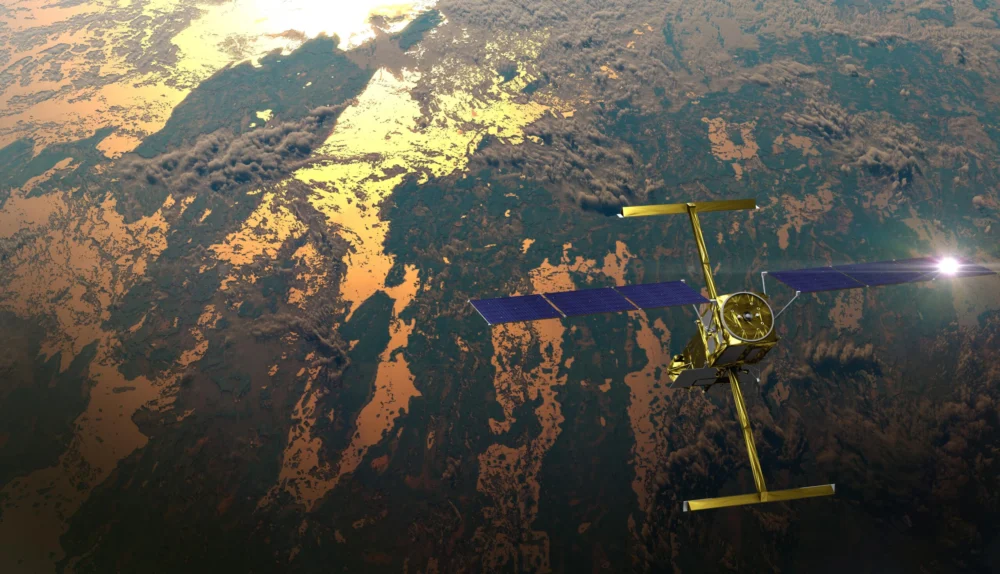
The quest to identify distant worlds capable of supporting life has reached a pivotal moment with the successful "first light" acquisition by NASA’s Star-Planet Activity Research CubeSat, or SPARCS. Following its launch on January 11 and the receipt of initial images on February 6, the mission is now fully prepared to embark on its ambitious year-long journey: meticulously charting the energetic lives of the galaxy’s most ubiquitous stars. This unprecedented detailed analysis of stellar activity, particularly in the ultraviolet (UV) spectrum, is crucial for answering one of humanity’s most profound questions: which exoplanets beyond our solar system truly possess the conditions necessary for habitability?
The Cosmic Abode: Understanding the Stars that Host Life
For decades, the search for life beyond Earth primarily focused on finding planets within the "Goldilocks Zone" – a region around a star where temperatures are just right for liquid water to exist on a planet’s surface. However, as exoplanet discoveries have surged, astronomers have increasingly recognized that a star’s inherent activity can profoundly influence a planet’s atmospheric integrity and, consequently, its potential for life. The stars targeted by SPARCS are low-mass stars, often referred to as M-dwarfs, which are significantly smaller and cooler than our Sun, typically ranging from 30% to 70% of its mass. Despite their modest size, these M-dwarfs are the most common stellar residents of the Milky Way galaxy, constituting an estimated 75% of its stellar population. Their sheer abundance implies that they host the vast majority of the galaxy’s terrestrial planets, including an estimated 50 billion rocky worlds residing within their respective habitable zones. This statistical prevalence makes M-dwarfs prime candidates for hosting life, yet their extreme stellar activity presents a significant challenge to planetary habitability that SPARCS aims to quantify.
Unveiling Stellar Fury: The Critical Role of Ultraviolet Radiation
While M-dwarfs are dimmer and cooler than the Sun in visible light, they are also notorious for their frequent and powerful flares – sudden, intense bursts of radiation that can dramatically outshine the star itself, particularly in the X-ray and ultraviolet wavelengths. These energetic outbursts, coupled with persistent high-energy radiation from their magnetic activity (analogous to sunspots but often far more extreme), can have devastating effects on any orbiting planet. UV radiation, in particular, carries enough energy to strip away planetary atmospheres, break apart crucial molecules like water, and even inhibit the formation of complex organic chemistry necessary for life’s emergence.
For a planet to sustain liquid water and potentially develop life, it must not only be within the habitable zone but also possess a stable atmosphere capable of shielding it from harmful stellar radiation and maintaining surface temperatures. SPARCS is the first dedicated mission designed to continuously and simultaneously monitor the far-ultraviolet (FUV) and near-ultraviolet (NUV) radiation from these low-mass stars over extended periods. This continuous observation is vital because flares are transient events, and previous, sporadic observations could only provide snapshots, failing to capture the full spectrum of stellar activity that a planet experiences over time. By providing a comprehensive UV activity log for these stars, SPARCS will offer an invaluable dataset for refining atmospheric models of exoplanets and assessing their long-term prospects for habitability.
A Mission in Miniature: The CubeSat Revolution
Roughly the size of a large cereal box, SPARCS exemplifies the growing capability and importance of CubeSat technology in space exploration. CubeSats are miniature satellites built to standardized units (U), with a single unit being 10x10x10 cm. SPARCS, likely a 6U or 12U CubeSat based on its description, leverages these advancements to deliver high-impact science at a fraction of the cost and development time of traditional space observatories. This approach has democratized access to space, enabling universities and smaller institutions to lead missions that contribute significantly to NASA’s overarching scientific goals.
The mission, led by Arizona State University’s School of Earth and Space Exploration, with significant contributions from NASA’s Jet Propulsion Laboratory (JPL), was selected in 2022 under NASA’s CubeSat Launch Initiative (CSLI). CSLI provides low-cost access to space for CubeSats developed by educational institutions, non-profit organizations, and NASA centers, fostering innovation and providing invaluable hands-on experience for students and faculty in designing, developing, and building flight hardware. The spacecraft bus itself was fabricated by Blue Canyon Technologies, a testament to the collaborative ecosystem supporting these agile missions.
A Journey from Earth to Orbit: The SPARCS Timeline
The journey of SPARCS from concept to its "first light" milestone has been a testament to collaborative innovation and meticulous engineering.
- Conceptualization and Development: The mission’s genesis lies in the recognition of the critical gap in our understanding of M-dwarf UV activity. Researchers, including Principal Investigator Evgenya Shkolnik at Arizona State University, began designing a mission specifically tailored to address this. The development involved years of planning, instrument design, and rigorous testing on the ground to ensure the robust performance of its delicate UV instruments in the harsh environment of space.
- NASA Selection: In 2022, SPARCS was officially selected by NASA’s CubeSat Launch Initiative (CSLI) as part of a rideshare opportunity to orbit. This selection provided the crucial launch vehicle and logistical support, underscoring NASA’s commitment to fostering innovative, smaller-scale missions.
- Launch: SPARCS embarked on its journey to space on January 11, 2024. While the specific launch vehicle wasn’t detailed, CubeSats are frequently deployed as secondary payloads on larger rockets, often via SpaceX’s Transporter missions, which deploy a multitude of small satellites into sun-synchronous orbit. The successful launch placed SPARCS into its operational orbit, marking the beginning of its in-space commissioning phase.
- First Light: The eagerly anticipated "first light" images were downloaded on February 6, just weeks after launch. This milestone, where the spacecraft’s primary science instruments capture their first photons from space, is a critical validation point for any mission. For SPARCS, it confirmed that the telescope, detectors, and all associated systems were functioning precisely as designed and tested on Earth, ready to transition from engineering checkout to full scientific operations. "Seeing SPARCS’ first ultraviolet images from orbit is incredibly exciting," stated Evgenya Shkolnik, professor of Astrophysics at ASU. "They tell us the spacecraft, the telescope, and the detectors are performing as tested on the ground and we are ready to begin the science we built this mission to do."
- Science Operations Commence: With "first light" successfully achieved and images subsequently processed, SPARCS is now poised to begin its one-year mission. Over this period, it will systematically observe approximately 20 carefully selected low-mass stars, dedicating observation durations ranging from five to 45 days for each target. This strategy is designed to capture the full range of stellar activity, from quiescent periods to powerful flaring events, providing an unprecedented continuous record of their UV output.
Pioneering Technology: The Heart of SPARCS
The success of SPARCS hinges on its cutting-edge instrumentation, particularly the SPARCam, a highly sensitive ultraviolet camera developed at NASA’s Jet Propulsion Laboratory (JPL). The innovation lies in its "delta-doped" detectors and the unique method of integrating filters directly onto these detectors.
- Delta-Doped Detectors: Traditional silicon-based detectors, like those in smartphone cameras, are not inherently efficient at detecting UV light. JPL’s Microdevices Laboratory (MDL), a facility established in 1989 known for pioneering first-of-their-kind devices in physics, chemistry, and material science, developed the "delta-doped" technology. This process involves adding an ultrathin layer of pure silicon to the detector’s surface, which dramatically boosts its sensitivity to UV photons while minimizing noise. This technique essentially optimizes silicon’s inherent properties for UV detection, a challenging feat given silicon’s strong absorption of UV light.
- Integrated Filters: Further enhancing performance, the SPARCam incorporates filters directly deposited onto these specially developed UV-sensitive detectors. This innovative approach eliminates the need for separate filter elements, which can introduce optical losses and complexity. By integrating the filters, the system achieves an unparalleled level of sensitivity and efficiency in space-based UV observations. "We took silicon-based detectors – the same technology as in your smartphone camera – and we created a high-sensitivity UV imager. Then we integrated filters into the detector to reject the unwanted light," explained Shouleh Nikzad, lead developer of SPARCam and chief technologist at JPL. "That is a huge leap forward to doing big science in small packages, and SPARCS serves to demonstrate their long-term performance in space." This compact, high-performance design is critical for a CubeSat mission where size, weight, and power are severely constrained.
The Power of Small Satellites and Smart Systems
Beyond its advanced detectors, SPARCS also leverages significant progress in computational processing. The spacecraft is equipped with an onboard computer capable of performing real-time data processing and intelligently adjusting its observation parameters. This autonomy is a game-changer for observing unpredictable phenomena like stellar flares.
- Flare Detection and Adjustment: Instead of rigidly following a pre-programmed sequence, the onboard intelligence allows SPARCS to detect the onset of a flare. Upon identification, it can dynamically re-prioritize observations, increase data collection rates, or adjust exposure times to better capture the rapid evolution and decay of these energetic events. This capability maximizes the scientific return by ensuring that transient but critical events are not missed or poorly characterized.
- Optimized Resource Use: This intelligent processing also optimizes the use of onboard resources, such as power and data storage. By processing data on the fly and focusing on scientifically relevant events, SPARCS can transmit more meaningful information back to Earth, reducing the burden on ground stations and allowing for longer, more productive observation campaigns. This represents a significant advancement over previous missions that relied more heavily on ground control for command sequencing and data triage.
Implications for Astrobiology and Future Missions
The data collected by SPARCS will have profound implications across several fields, particularly astrobiology and the design of future space telescopes.
- Refining Habitability Models: By precisely quantifying the UV environments around M-dwarfs, SPARCS will enable scientists to create far more accurate models of exoplanet atmospheres. This includes understanding the rates of atmospheric escape due to stellar winds and flares, the photochemistry occurring in these atmospheres (e.g., the destruction of water vapor, the formation of haze layers), and the potential for complex organic molecules to survive or form. This data will directly inform whether a planet’s atmosphere can protect liquid water and support life over geological timescales, moving beyond simple "Goldilocks Zone" calculations.
- Interpreting Biosignatures: As future missions aim to detect biosignatures – chemical signs of life – in exoplanet atmospheres, understanding the host star’s activity is paramount. A flare could, for example, produce transient chemical changes that might be misinterpreted as a biosignature if the stellar context isn’t fully understood. SPARCS will help differentiate between biologically induced atmospheric features and those caused by stellar activity, reducing false positives in the search for life.
- Pathfinder for Next-Generation Observatories: The technological advancements demonstrated by SPARCS, especially its high-sensitivity UV detectors and integrated filters, are critical for larger, more ambitious future missions. NASA’s next potential UV-capable flagship mission, the Habitable Worlds Observatory mission concept, as well as smaller interim missions like the forthcoming UVEX (UltraViolet EXplorer) led by Caltech, will directly benefit from SPARCS’ operational experience and validated technology. SPARCS is essentially proving the capabilities of these "big science in small packages" components in space, paving the way for their incorporation into even more powerful instruments. "By watching these stars in ultraviolet light in a way we’ve never done before, we’re not just studying flares," noted David Ardila, SPARCS instrument scientist at JPL. "These observations will sharpen our picture of stellar environments and help future missions interpret the habitability of distant worlds."
A Collaborative Endeavor Driving Innovation
The success of the SPARCS mission is a testament to the power of collaboration between academic institutions, NASA centers, and commercial partners. Funded by NASA under its Astrophysics Research and Analysis program, the mission leadership resides with Arizona State University. JPL’s crucial role in developing the cutting-edge SPARCam highlights its long-standing expertise in space instrument design and microdevice fabrication. Blue Canyon Technologies, a commercial provider, contributed the robust spacecraft bus, demonstrating the growing synergy between government agencies and private industry in advancing space exploration. This integrated approach, combining scientific vision with advanced engineering and agile project management, has enabled SPARCS to rapidly transition from concept to active scientific investigation.
As SPARCS now transitions into its full science operations, it stands as a shining example of how focused scientific objectives, cutting-edge detectors, and intelligent onboard processing can converge to deepen humanity’s understanding of the stars that most planets in our galaxy call home. The data it gathers will not only characterize the temperament of these common stars but will also provide indispensable insights into the true habitability of the countless exoplanets orbiting them, bringing us closer to answering whether we are truly alone in the universe.