



On Friday, March 6, 2026, Robinhood Markets’ highly anticipated Robinhood Ventures Fund I (RVI) experienced a significant downturn in its public market debut on the New York Stock Exchange, with its shares plummeting 11% from its initial public offering price. The launch of RVI, trading under the ticker RVI, was heralded by Robinhood Chairman and CEO Vlad Tenev ringing the Opening Bell, an event symbolizing the company’s ambitious foray into democratizing access to private capital markets for everyday retail investors. However, the immediate market reaction cast a shadow of doubt over investor confidence in riskier assets, particularly against a backdrop of escalating geopolitical tensions and broader market volatility that has gripped global financial markets.
Democratizing Finance: Robinhood’s Ambitious Vision for Private Markets
Robinhood Ventures Fund I was conceived to bridge a long-standing divide in the financial world, offering retail investors an unprecedented opportunity to gain exposure to high-growth private companies typically reserved for institutional investors, venture capital firms, and accredited high-net-worth individuals. For decades, the private markets have operated as an exclusive domain, characterized by stringent entry requirements, substantial minimum investments, a general lack of liquidity, and limited transparency. This exclusivity has meant that a significant portion of wealth creation, particularly from innovative startups and late-stage private enterprises, has occurred beyond the direct reach of the average investor.
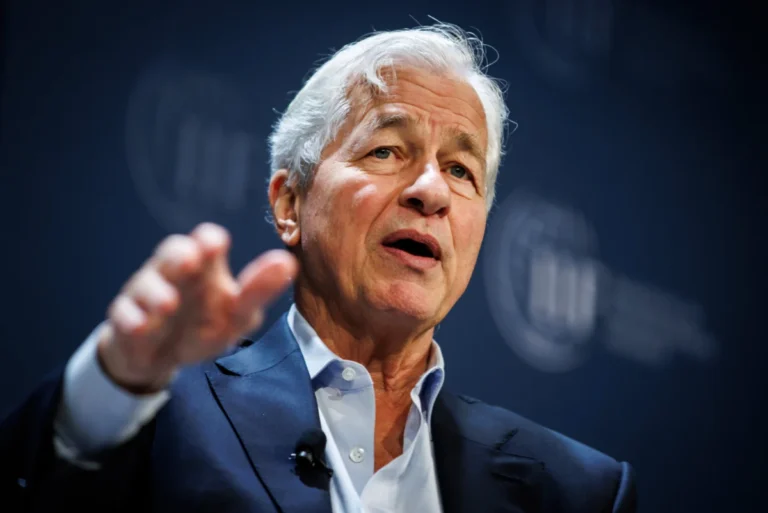
Vlad Tenev articulated this expansive mission during an interview on CNBC’s "Squawk on the Street" on Friday, emphasizing the accelerating trend of companies choosing to remain private for extended periods, often achieving valuations in the hundreds of billions, or even trillions, before ever considering a public listing. "You have companies that are out there at valuations in the hundreds of billions, even getting into the trillions in private markets before retail investors get a chance to come in at all, and this is happening more and more," Tenev stated. He underscored Robinhood’s commitment to fundamentally altering this landscape, asserting, "We’re trying to solve this by not just opening the door to private markets but completely blowing them off the hinges so that they can never be closed." This powerful metaphor highlights Robinhood’s intent to permanently dismantle barriers, reflecting its core philosophy of financial access for all.
The fund aims to achieve its objective by investing in a diversified portfolio of promising private companies, including notable names such as the rapidly expanding global financial services disruptor Revolut and the cutting-edge data and AI software giant Databricks. These companies represent sectors at the forefront of technological innovation and economic growth, making them attractive targets for long-term investment. By structuring RVI as a closed-end fund, Robinhood allows retail investors to buy and sell shares on a public exchange, much like traditional stocks, thereby introducing a degree of liquidity that is otherwise absent in direct private market investments. This innovative structure theoretically offers several advantages: diversification across multiple private ventures, professional management by Robinhood’s investment team, and a significantly lower entry point compared to direct investment in private equity or venture capital funds. However, it also introduces potential complexities, such as the fund’s shares trading at a premium or discount to its underlying net asset value (NAV) based on market sentiment.
RVI’s Challenging Market Debut: A Chronology of Performance
The initial public offering (IPO) of Robinhood Ventures Fund I was priced at $25 per share, a valuation reflecting the perceived potential and strategic importance of its underlying private assets. However, upon opening for trading on Friday morning, shares immediately dipped to $22, marking a 12% decline from its IPO price in the initial moments of trading. The downward pressure persisted throughout the trading session, with the fund hitting an intraday low of $21 per share. Although it recovered slightly to trade around $22.12 during midday, the momentum could not be sustained. By the close of trading on Friday, RVI settled at $21 per share, cementing an 11% loss for investors who acquired shares at the initial public offering price.
This performance contrasts sharply with the often enthusiastic initial trading of many public offerings, particularly those backed by well-known brands or innovative concepts. The immediate drop raised eyebrows among market observers and potential investors, signaling a cautious, if not outright skeptical, reception to this novel investment vehicle. While initial trading volatility is not uncommon for new listings, an 11% decline on day one, particularly for a fund designed to offer exposure to high-growth private companies, suggests underlying market anxieties and a lack of immediate buying conviction.
Broader Market Context: Geopolitical Tensions and Investor Caution
The challenging debut of RVI cannot be isolated from the broader economic and geopolitical landscape that has created a "risk-off" environment in global financial markets. The public markets have been experiencing a period of heightened volatility, with major U.S. stock averages on pace for weekly declines as traders reacted to a confluence of unsettling factors.
A primary driver of this market unease is the ongoing U.S.-Iran conflict, which has injected significant uncertainty into global markets. The conflict, characterized by escalating rhetoric, regional proxy engagements, and direct attacks on shipping in vital international waterways such as the Strait of Hormuz, has fueled fears of prolonged instability in the Middle East. Such geopolitical flashpoints have a cascading effect on global financial markets. Investors, seeking to mitigate risk, often reallocate capital away from growth-oriented or "riskier" assets towards safer havens such as government bonds, gold, or more stable, defensive equities in sectors like utilities or consumer staples. The prospect of an extended conflict threatens global oil supplies and prices, potentially exacerbating inflationary pressures already present in the global economy, which has been grappling with persistent price increases. Furthermore, disruptions to international trade routes and supply chains could significantly dampen corporate earnings and economic growth forecasts, leading to a more conservative outlook among institutional and retail investors alike.
Beyond the U.S.-Iran tensions, other macroeconomic factors have also contributed to investor caution. Persistent concerns about inflation, the trajectory of interest rates by central banks globally (including the Federal Reserve’s stance on monetary tightening), and the overall health of the global economy have created a climate where appetite for speculative or novel investment products is naturally diminished. Recent data indicating slowing economic growth in key regions, coupled with mixed corporate earnings reports, has further fueled skepticism. In such an environment, even a product designed to democratize access to attractive private markets may struggle to find enthusiastic buyers, as the perceived risks outweigh the potential rewards for a significant segment of the investing public.
Analyst Perspectives and Industry Reactions
The launch and subsequent performance of RVI have elicited a mixed response from market analysts and industry experts. While many commend Robinhood’s innovative approach to democratizing finance, some express reservations regarding the timing and the inherent complexities of bringing private market exposure to a broad retail audience.
"Robinhood is once again pushing the boundaries of retail investing, but the timing for RVI’s debut couldn’t be worse," commented Sarah Jenkins, a senior equity strategist at Global Market Insights, in an interview. "In a risk-off environment driven by geopolitical instability, inflation concerns, and higher borrowing costs, investors are naturally shying away from anything perceived as less liquid or more speculative, even if the underlying concept is sound." Jenkins further noted that the discount to its IPO price could reflect broader skepticism about the valuation of private companies in the current climate, where private market valuations may not yet have fully adjusted to the realities of higher interest rates and a more constrained funding environment for venture capital. Many private companies saw inflated valuations during the low-interest-rate era, and public market investors are now demanding more realistic pricing.
Other analysts highlighted the educational challenge for retail investors. "While the closed-end fund structure offers liquidity through public trading, understanding the true value and inherent risks of a portfolio of private companies requires a level of due diligence and sophistication that many retail investors might not be equipped for," explained Dr. Michael Chen, a professor of finance at a leading business school. "There’s a potential for the fund’s public market price to trade at a significant discount or premium to its net asset value (NAV), depending heavily on market sentiment rather than just the performance of its underlying holdings, which can introduce additional layers of risk beyond what a typical stock investor might expect."
From a regulatory standpoint, RVI’s launch could also prompt increased scrutiny. Regulators, including the Securities and Exchange Commission (SEC), have historically emphasized investor protection, particularly for retail participants in complex financial products. While RVI is structured as a publicly traded fund, its underlying assets are private and inherently less transparent than publicly traded companies. This could lead to discussions about enhanced disclosure requirements, suitability standards for such offerings, and how these funds manage valuation discrepancies between private and public market perceptions in the future. Industry groups representing traditional venture capital and private equity firms have largely remained silent, observing how this pioneering venture will reshape the landscape of capital access.
Robinhood’s Strategic Imperative and Historical Context
For Robinhood, the introduction of RVI represents a significant strategic pivot and an expansion beyond its core commission-free trading services. The company gained widespread notoriety during the "meme stock" phenomenon of 2021, which saw unprecedented retail investor engagement in highly volatile stocks like GameStop and AMC. While this period brought rapid user growth and brand recognition, it also drew criticism regarding the gamification of trading, its payment for order flow practices, and the platform’s perceived role in exacerbating market volatility and potential investor losses.
In the years following, Robinhood has sought to mature its offerings, diversify its revenue streams, and attract a broader, more sophisticated investor base beyond the day-trader segment. Initiatives have included expanding into retirement accounts with IRA offerings, providing access to cryptocurrency trading, and now, venturing into the complex realm of private market access. RVI fits squarely into Robinhood’s long-term vision of becoming a comprehensive financial services platform that empowers individual investors with tools and access traditionally reserved for the elite. By providing access to private companies, Robinhood aims to capture a share of the value creation that often occurs before companies go public, thereby offering its users a potential avenue for higher returns, albeit with commensurately higher risks. This move also aligns with a broader industry trend where fintech companies are seeking innovative ways to democratize previously inaccessible financial products and services, aiming to disrupt traditional financial institutions.
The Future of Private Market Access for Retail Investors
The challenging debut of Robinhood Ventures Fund I raises critical questions about the immediate future of democratized private market access. While the long-term vision articulated by Vlad Tenev remains compelling and represents a significant evolution in financial inclusion, the initial market reaction suggests that the path to widespread retail adoption of such products may be fraught with hurdles.
The ultimate success of RVI, and indeed any similar future offerings, will largely depend on several interconnected factors:
- Market Sentiment: A sustained period of market stability, a de-escalation of geopolitical tensions, and a return of investor appetite for growth and risk will be crucial. Should global uncertainties subside and economic forecasts improve, the appeal of RVI’s underlying private assets could significantly increase.
- Performance of Underlying Holdings: The ultimate success of RVI will be dictated by the performance of the private companies within its portfolio. If Revolut, Databricks, and other holdings continue their growth trajectories, achieve significant milestones, and eventually secure successful liquidity events (e.g., IPOs, strategic acquisitions at favorable valuations), this could validate the fund’s investment strategy and attract more capital.
- Investor Education and Transparency: Robinhood and similar platforms will need to invest heavily in educating retail investors about the unique characteristics, risks, and potential rewards associated with private market exposure, even through a fund structure. This includes understanding liquidity constraints (even with public trading, the underlying assets are illiquid), the methodologies used for valuing private companies which can differ greatly from public market valuations, and the often long-term investment horizon required for private equity-like investments. Clear and consistent reporting on portfolio performance and valuation methodologies will be paramount.
- Regulatory Environment: As more products like RVI emerge, regulators will likely continue to scrutinize their structure, marketing, and investor protections. Clarity and consistent regulatory frameworks could provide more certainty for both providers and investors, potentially streamlining the introduction of future similar products while safeguarding retail participants.
In conclusion, Robinhood Ventures Fund I’s debut is a testament to Robinhood’s continued innovation and its commitment to breaking down barriers in finance. However, its initial stumble serves as a stark reminder of the potent influence of broader market forces, particularly geopolitical instability, economic headwinds, and prevailing investor caution. While the vision of "blowing off the hinges" of private markets remains aspirational and aligns with a powerful trend towards financial democratization, the immediate reality underscores the significant challenges in translating that vision into immediate public market success, especially when global uncertainties prevail. The journey to truly democratize private market access appears to be a marathon, not a sprint, and RVI’s initial steps highlight the complexities involved in bringing such sophisticated investment opportunities to the broader public.