

The Ford-Cosworth DFV (Double Four Valve) stands as the most consequential piece of engineering in the history of grand prix racing, a power unit that defined an era and democratized the pinnacle of motorsport for nearly two decades. With a record encompassing 155 race victories, 12 drivers’ championships, and 10 constructors’ titles, the DFV’s statistical dominance remains unparalleled. Beyond its mechanical prowess, the financial arrangement that brought the engine to fruition—a mere £100,000 investment from Ford of Britain—is widely regarded as the most cost-effective marketing and technical triumph in the annals of the sport. As Ford prepares for a high-profile return to Formula 1 in 2026 alongside Red Bull Powertrains, the history of the DFV serves as both a benchmark for success and a cautionary tale regarding the complexities of manufacturer involvement in the world’s most expensive sport.
The Genesis of the DFV: A Strategic Partnership
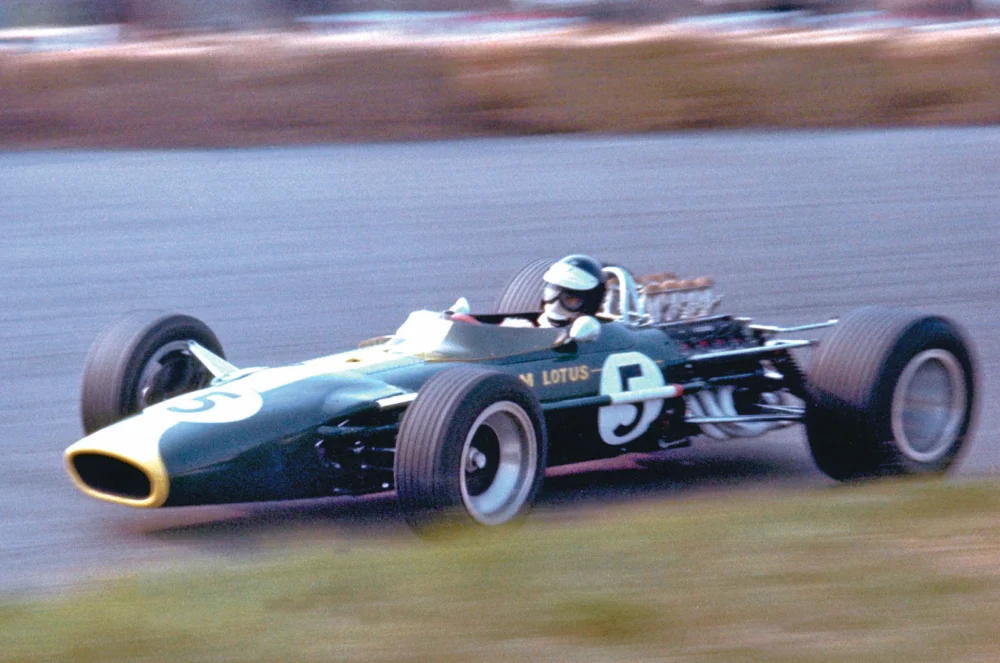
The origin of the Ford-Cosworth DFV was born of necessity and a shifting regulatory landscape. In 1966, Formula 1 transitioned from a 1.5-litre engine formula to a 3.0-litre atmospheric (or 1.5-litre turbocharged) regulation. This change left Lotus founder Colin Chapman in a precarious position. His long-term engine partner, Coventry Climax, had opted to withdraw from the sport rather than invest in the development of a new 3.0-litre unit. Chapman, known for his relentless pursuit of weight reduction and structural integration, required a bespoke engine that could serve as a stressed member of the chassis—a revolutionary concept at the time.
Chapman turned to Keith Duckworth, a former Lotus gearbox engineer who had co-founded Cosworth with Mike Costin. Duckworth asserted that he could design and build a competitive 3.0-litre V8 engine, provided he had an investment of £100,000. Chapman, lacking the capital himself, leveraged his relationship with Walter Hayes, the public relations chief for Ford of Britain. Hayes, a visionary who recognized the immense marketing potential of a successful racing program, managed to persuade the Ford board to provide the funding. This agreement led to the creation of the Ford-Cosworth DFV, an engine that would carry the Ford brand name on its cam covers while being designed and manufactured by the specialist team at Cosworth.
Technical Innovation and Immediate Impact
The DFV was a 90-degree V8 featuring four valves per cylinder and double overhead camshafts. Its most significant contribution to automotive design was its structural rigidity. Unlike previous engines that were cradled within a frame, the DFV was designed to be bolted directly to the cockpit bulkhead at the front and the gearbox at the rear. This allowed the engine to act as the rear structural member of the car, significantly reducing overall weight and increasing chassis stiffness.
The engine made its competitive debut at the 1967 Dutch Grand Prix at Zandvoort, installed in the back of the Lotus 49. In a testament to Duckworth’s engineering brilliance, Jim Clark took pole position and won the race on the engine’s first outing. While the engine initially suffered from reliability issues related to the timing gear, its inherent speed was undeniable. By 1968, Ford and Chapman agreed to lift the exclusivity clause that had kept the engine solely in Lotus chassis, allowing other teams to purchase the unit for approximately £7,500. This move effectively saved Formula 1 from a period of stagnation, providing a reliable, powerful, and affordable engine to "garagiste" teams like McLaren, Tyrrell, and Williams, allowing them to compete on equal footing with established manufacturers like Ferrari.
A Chronology of Dominance (1967–1983)
The timeline of the DFV’s supremacy is a record of consistency that modern manufacturers struggle to replicate. From its introduction in 1967 until its final competitive win in 1983, the DFV was the engine to beat.
- 1967: Debut victory at the Dutch Grand Prix with Jim Clark and Lotus.
- 1968: Graham Hill wins the Drivers’ Championship for Lotus; the engine is made commercially available to other teams.
- 1969: DFV-powered cars win every single race of the season (11 out of 11), with Jackie Stewart claiming the title for Matra.
- 1970–1972: Continued success with titles for Jochen Rindt (Lotus), Jackie Stewart (Tyrrell), and Emerson Fittipaldi (Lotus).
- 1973: The DFV repeats its "clean sweep" feat, winning all 15 races of the season. Jackie Stewart secures his third and final title.
- 1974–1982: The engine powers a diverse array of champions, including James Hunt (McLaren), Mario Andretti (Lotus), Alan Jones (Williams), Nelson Piquet (Brabham), and Keke Rosberg (Williams).
- 1983: Michele Alboreto claims the DFV’s 155th and final victory at the Detroit Grand Prix for Tyrrell.
The arrival of the turbo era in the early 1980s, led by Renault, Ferrari, and BMW, eventually rendered the naturally aspirated DFV obsolete. Despite various evolutions, such as the DFY and the DFR, the sheer horsepower of turbocharged units could no longer be overcome by the DFV’s superior packaging and fuel efficiency.
The Post-DFV Era: Success and Corporate Struggles
Following the retirement of the DFV from front-line competition, Ford continued its involvement in Formula 1, albeit with varying degrees of success. The most notable highlight of the 1990s was Ford’s partnership with Benetton. In 1994, Michael Schumacher secured his first World Championship using the Ford Zetec-R V8 engine. Schumacher won eight of the 16 races that season, demonstrating that the Ford-Cosworth partnership could still produce championship-winning hardware in the right chassis.
However, the corporate landscape was changing. In 2000, Ford moved away from being a mere engine supplier and opted for full factory ownership. The company purchased Stewart Grand Prix from Jackie Stewart and rebranded it as Jaguar Racing. The venture was intended to promote the Jaguar brand globally, but it quickly became a textbook example of corporate mismanagement in a racing environment.
Despite an annual budget estimated to be in the hundreds of millions of dollars—a stark contrast to the £100,000 spent on the DFV—Jaguar Racing was plagued by internal politics and a lack of technical direction. In five seasons of competition (2000–2004), the team managed only two podium finishes: Eddie Irvine’s third-place finishes at the 2001 Monaco Grand Prix and the 2002 Italian Grand Prix. By late 2004, Ford executives, frustrated by the lack of results and the escalating costs, decided to exit Formula 1 entirely.
The Sale to Red Bull and the Modern Context
The exit of Ford in 2004 led to one of the most significant shifts in modern Formula 1 history. Ford sold the ailing Jaguar Racing team for a nominal sum to Dietrich Mateschitz, the founder of the Red Bull energy drinks company. Under the leadership of Christian Horner and technical guru Adrian Newey, the team formerly known as Jaguar was transformed into Red Bull Racing—a powerhouse that has since secured multiple world championships and dominated the current "ground effect" era.
In a twist of historical irony, Ford announced in early 2023 that it would return to Formula 1 for the 2026 season, specifically partnering with Red Bull Powertrains. This return is driven by the 2026 regulation changes, which emphasize increased electrical power and sustainable fuels—areas where Ford aims to demonstrate its technical expertise.
Supporting Data: The DFV by the Numbers
To understand the scale of the Ford-Cosworth DFV’s impact, one must look at the statistical breakdown of its tenure:
| Category | Statistic |
|---|---|
| Total Grand Prix Wins | 155 |
| Drivers’ Championships | 12 (1968, 1969, 1970, 1971, 1972, 1973, 1974, 1976, 1978, 1980, 1981, 1982) |
| Constructors’ Championships | 10 (Lotus, Matra, Tyrrell, McLaren, Williams) |
| First Win | 1967 Dutch Grand Prix (Jim Clark, Lotus 49) |
| Last Win | 1983 Detroit Grand Prix (Michele Alboreto, Tyrrell 011) |
| Initial Power Output | ~400 bhp @ 9,000 rpm |
| Final Evolution Output | ~520 bhp @ 11,000 rpm |
| Original Investment | £100,000 (1966) |
Industry Reactions and Historical Significance
The legacy of the DFV is often discussed by those who witnessed its era as the "Golden Age" of the independent team. Former Formula 1 supremo Bernie Ecclestone frequently cited the availability of the Ford engine as the catalyst for the sport’s commercial explosion. By providing a "plug-and-play" solution for engine power, Ford allowed team owners to focus on chassis innovation and sponsorship acquisition.
Sir Jackie Stewart, who won all three of his world titles with Ford power, noted that the engine’s reliability was its greatest asset. "You knew that if you had a Ford on the back, you had a chance to finish. In those days, that was half the battle," Stewart remarked in historical retrospectives.
Conversely, the failure of the Jaguar Racing project serves as a case study for modern manufacturers. Analysts point out that Ford’s attempt to run a racing team like a traditional automotive subsidiary—complete with bureaucratic oversight and frequent leadership changes—was incompatible with the agile, high-speed decision-making required in Formula 1.
Broader Impact and Implications for 2026
Ford’s re-entry into the sport in 2026 represents a strategic pivot. Unlike the Jaguar era, Ford is not seeking to own the team outright but is instead entering a technical partnership. This allows the company to leverage Red Bull’s racing infrastructure while contributing expertise in battery cell technology, electric motor development, and power unit control software.
The implications of Ford’s return are significant for the North American market. With three races currently held in the United States (Miami, Austin, and Las Vegas), the demand for American manufacturer involvement has never been higher. For Ford, the move is a calculated attempt to align its "Model e" electric vehicle division with the high-tech, sustainable image Formula 1 is cultivating for the future.
As the sport moves toward a hybrid future, the ghost of the DFV remains a reminder of what is possible when engineering simplicity meets corporate vision. While the £100,000 bargain of 1966 will never be repeated in an era of billion-dollar valuations, the spirit of the Ford-Cosworth partnership continues to influence how manufacturers and independent teams collaborate on the global stage. The 2026 season will determine if the Blue Oval can once again reach the heights of its 20th-century dominance, or if the complexities of modern hybrid power units will prove as challenging as the corporate hurdles of the Jaguar years.