


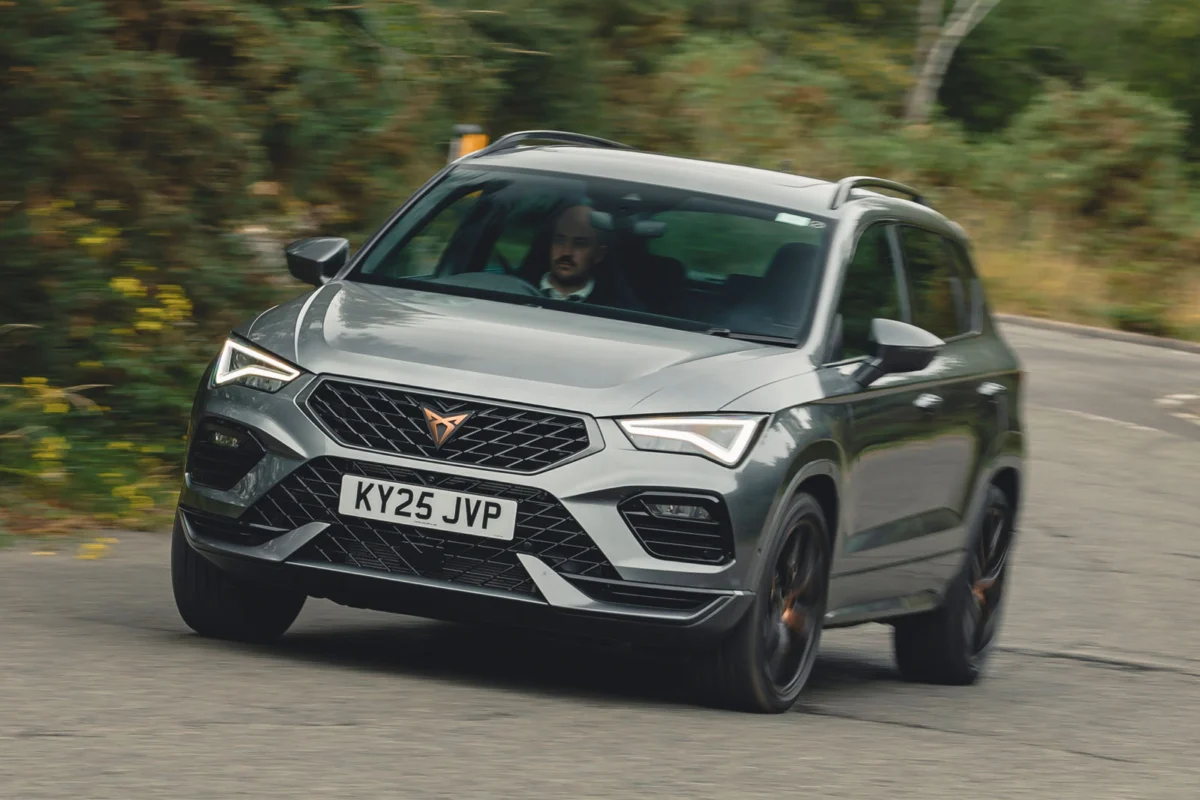
The automotive landscape in the United Kingdom is undergoing a significant transition as SEAT S.A. officially confirms the withdrawal of the Seat Ateca and the Cupra Ateca from the British market. After a decade of service for the Seat variant and eight years for the performance-oriented Cupra model, the mid-sized SUV siblings have been removed from new vehicle ordering systems. UK customers interested in the model will now be limited to existing dealership stock, as the company shifts its strategic focus toward newer architectures, electrified powertrains, and a restructured brand identity.
A spokesperson for both Seat and Cupra stated that the decision to discontinue the Ateca in the UK "reflects local market decisions and ensures alignment with Seat’s evolving range." While the model remains a staple in other international territories, including its domestic market in Spain where it continues to be sold in a streamlined trim configuration, its tenure in the UK has reached a natural conclusion. This move marks the end of an era for the vehicle that effectively launched Seat into the lucrative SUV segment and served as the foundational model for the birth of the Cupra brand.
The Legacy of the Ateca: A Decade of SUV Dominance
The Seat Ateca made its debut in 2016, representing a pivotal moment in the Spanish manufacturer’s history. Built on the Volkswagen Group’s versatile MQB A1 platform, the Ateca was designed to compete in the fiercely contested C-SUV segment against established rivals such as the Nissan Qashqai, Kia Sportage, and Ford Kuga. It was praised by critics and consumers alike for its sharp handling, practical interior, and competitive pricing, often being cited as the "driver’s choice" in a segment typically focused on utility over engagement.
In 2018, the model gained further prominence when it became the inaugural vehicle for the newly independent Cupra brand. The Cupra Ateca featured a 2.0-liter turbocharged engine producing 300hp, paired with 4Drive all-wheel drive and a DSG dual-clutch transmission. It carved out a unique niche as one of the first truly accessible performance SUVs, bridging the gap between mainstream crossovers and premium sports SUVs from manufacturers like Porsche or BMW.
Throughout its lifecycle, the Ateca underwent several updates, most notably a significant facelift in 2020 that introduced refreshed styling, enhanced connectivity features, and improved safety systems. However, as the industry began a rapid acceleration toward electrification and digital integration, the aging architecture of the Ateca—which lacked a dedicated plug-in hybrid (PHEV) or battery-electric (BEV) variant—began to fall behind the curve of the UK’s increasingly stringent environmental regulations and consumer preferences.
Strategic Realignment: The Rise of Cupra and the Evolution of Seat
The removal of the Ateca from the UK lineup is not merely a product retirement but a symptom of a broader corporate restructuring within SEAT S.A. Over the past five years, the Cupra brand has seen meteoric growth, largely driven by the Formentor—a bespoke crossover that does not have a direct Seat equivalent. In the UK, the Formentor has effectively cannibalized the sales of the Cupra Ateca, offering a more modern design and a wider range of powertrains, including high-efficiency plug-in hybrids.
Furthermore, the recent launch of the Cupra Terramar has provided a more direct and technologically advanced successor to the Ateca’s position in the lineup. The Terramar, which shares its DNA with the latest Volkswagen Tiguan and Audi Q3, offers the electrified options and premium interior finishes that the Ateca could not accommodate in its current form.
Simultaneously, the Seat brand is undergoing a fundamental repositioning. Once marketed as the "sporty" alternative within the Volkswagen Group, Seat is now being steered toward an "affordable mobility" brand. This strategy focuses on maintaining high-volume, accessible models like the Ibiza supermini and the Arona compact crossover, both of which recently received mid-cycle refreshes to extend their viability. By removing the Ateca, Seat can focus its UK resources on these high-volume segments while allowing Cupra to handle the higher-margin, performance-oriented SUV market.
Chronology of the Ateca in the UK Market
The following timeline highlights the key milestones of the Ateca’s journey in the British Isles:
- March 2016: The Seat Ateca is unveiled at the Geneva Motor Show as the brand’s first-ever SUV.
- September 2016: UK deliveries commence, with the model quickly becoming one of Seat’s best-selling vehicles.
- February 2018: Cupra is launched as a standalone brand, with the Cupra Ateca confirmed as its first model.
- October 2018: The Cupra Ateca officially goes on sale in the UK, offering 300hp and a 0-62mph time of 5.2 seconds.
- June 2020: A comprehensive facelift for the Seat Ateca is revealed, featuring a new front grille, LED headlights as standard, and the "Climatronic" touch-sensitive climate controls.
- Late 2023: Speculation begins regarding the model’s future as Seat S.A. focuses production capacity on the Formentor and the upcoming Terramar.
- Late 2024: Seat and Cupra UK officially close order books for the Ateca, moving to a stock-only sales model.
Supporting Data and Market Context
The decision to pull the Ateca from the UK is supported by shifting sales data and the impact of the UK government’s Zero Emission Vehicle (ZEV) mandate. Under the mandate, manufacturers are required to meet specific percentages of zero-emission vehicle sales each year, or face significant fines.
The Ateca’s powertrain lineup—consisting primarily of TSI petrol and TDI diesel engines—offered no zero-emission capability. In a market where fleet buyers and private consumers are increasingly incentivized to choose PHEVs or BEVs, the Ateca’s traditional internal combustion engine (ICE) focus became a strategic liability.
According to industry registration data, while the Ateca remained a steady performer, it was significantly eclipsed by the Cupra Formentor. In many months of 2023 and 2024, the Formentor accounted for more than 50% of Cupra’s total UK registrations. With the Formentor and Terramar providing the necessary PHEV technology to satisfy market demand and regulatory requirements, the business case for maintaining the Ateca in a right-hand-drive configuration for the UK market weakened.
Official Responses and Future Roadmap
The official stance from the manufacturer emphasizes a forward-looking approach. While the Ateca is not receiving a direct "one-for-one" replacement under the Seat badge, the brand has outlined a clear roadmap for the remainder of the decade.
"The entire Seat range will be renewed with electrified options by 2028," the spokesperson confirmed. This timeline includes:
- 2027: The introduction of mild-hybrid (MHEV) versions of the Ibiza and Arona, ensuring these core models meet tightening emissions standards.
- 2028: The launch of a full-hybrid (HEV) powertrain for the Seat Leon, bringing it in line with competitors like the Toyota Corolla.
- 2029: Further updates and life-cycle enhancements for the Leon and Leon Sportstourer.
The notable absence of the Ateca from this 2027–2029 roadmap suggests that SEAT S.A. does not intend to invest in a second generation of the SUV for the Seat brand. Instead, the company appears to be consolidating its SUV offerings under the Cupra banner, where higher price points can better absorb the costs of electrification.
Analysis of Implications for Consumers and the Industry
The withdrawal of the Ateca has several immediate implications for the UK automotive sector. For consumers, the loss of the Seat Ateca means the disappearance of one of the more competitively priced C-SUVs that prioritized mechanical simplicity and tactile controls. Used market values for the Ateca are expected to remain stable, as the vehicle maintains a strong reputation for reliability and practical design.
For the UK dealer network, the move simplifies the inventory but places more pressure on the success of the newer Cupra models. Dealers will need to pivot their sales strategies to explain the transition from the Ateca to the Terramar or Formentor, which typically carry higher MSRPs.
From a broader industry perspective, this move illustrates the "pruning" of product portfolios currently occurring across the Volkswagen Group. As the conglomerate pours billions into software development and battery technology, older "legacy" models that require expensive updates to meet new cybersecurity and emissions laws are being phased out in favor of global "world cars" or high-margin specialty vehicles.
The Ateca’s departure also highlights the diverging paths of European markets. While the UK—with its aggressive electrification targets—sees the model as redundant, the Spanish market’s slower EV adoption rate and strong local brand loyalty justify its continued presence. This regional fragmentation is becoming a common theme among global automakers as they navigate the uneven global transition to electric mobility.
Conclusion
The Seat and Cupra Ateca served as the vanguard for their respective brands during a period of intense growth and transformation. Their departure from the UK market is a pragmatic response to changing regulatory landscapes and a clear signal of SEAT S.A.’s future priorities. As the company prepares for its 2027–2029 electrification push, the Ateca leaves behind a legacy of versatility and performance that helped define the modern SUV era in Britain. While the nameplate may be fading from UK showrooms, the lessons learned from its success continue to influence the design and engineering of the next generation of Spanish-designed vehicles.