


The U.S. Securities and Exchange Commission (SEC) and the Commodity Futures Trading Commission (CFTC) have issued long-awaited interpretive guidance aimed at clarifying the regulatory classification of digital assets. This joint effort represents one of the most significant attempts to date by federal regulators to establish a definitive taxonomy for the cryptocurrency industry, addressing years of ambiguity surrounding which assets fall under the definition of a security. The release of this guidance coincided with a flurry of other regulatory and legal developments, including criminal charges against a major prediction market provider and renewed legislative activity in the U.S. Senate regarding market structure.
A New Framework for Digital Asset Classification
The newly published interpretive guidance seeks to move beyond the broad generalizations of the past, providing a more granular framework for how the SEC and CFTC view various categories of tokens. In a joint op-ed, SEC Chair Paul Atkins and Commissioners Hester Peirce and Mark Uyeda emphasized that the goal was to establish a "straightforward taxonomy" that recognizes that many crypto assets do not inherently meet the criteria for being classified as securities.
The guidance outlines several distinct categories:
- Digital Securities: These are assets that meet the definition of a security under traditional legal frameworks—most notably the Howey Test—regardless of their tokenized form. If a token represents an investment in a common enterprise with a reasonable expectation of profits derived from the efforts of others, it remains within the SEC’s jurisdiction.
- Payment Stablecoins: Tokens designed to maintain a stable value relative to a fiat currency and used primarily as a medium of exchange.
- Digital Commodities: Assets that serve as a store of value or a medium of exchange without the characteristics of an investment contract. The CFTC has indicated it will administer these under the Commodities Exchange Act.
- Digital Tools and Collectibles: This category includes utility tokens and non-fungible tokens (NFTs) that are used for specific functional purposes or as unique digital items, which generally fall outside the scope of securities regulation unless they are fractionalized or marketed as investment vehicles.
This classification system represents a departure from the "regulation by enforcement" approach that has characterized much of the last decade. By centering the analysis on the specific transactions and representations made by issuers rather than the underlying technology, the agencies hope to provide a clearer roadmap for compliance.
The Legislative Push for Market Structure Reform
While the interpretive guidance provides immediate administrative clarity, lawmakers and legal experts agree that lasting certainty requires congressional action. In Washington, D.C., momentum is building for comprehensive market structure legislation. Senator Cynthia Lummis (R-Wyo.) and Senator Kirsten Gillibrand (D-N.Y.) have been at the forefront of this effort, advocating for a bill that would codify the roles of the SEC and CFTC.
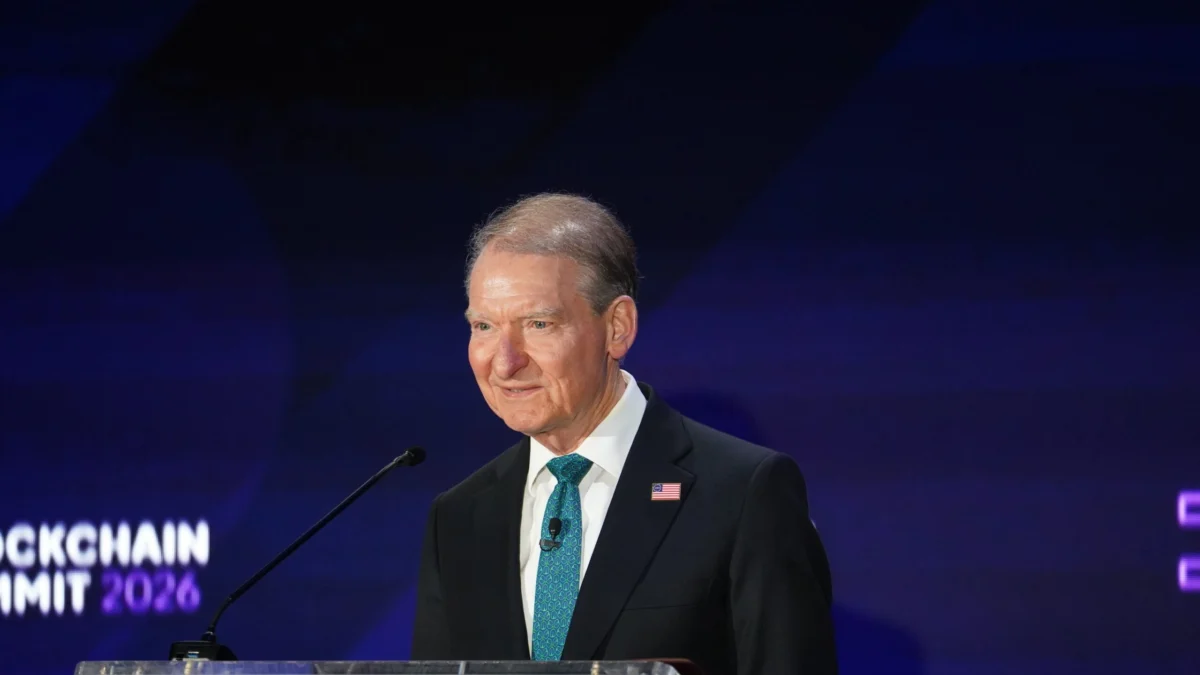
During the DC Blockchain Summit, Senator Lummis indicated that a committee markup of the legislation could occur as early as late April. A key hurdle in these negotiations has been the treatment of stablecoin yield. Traditional banking institutions have expressed concerns that if stablecoin issuers are permitted to offer interest-bearing products without the same regulatory burdens as banks, it could lead to "depositor flight," where capital leaves community banks in favor of digital asset platforms.
Recent reports suggest a breakthrough on this front. Senators Angela Alsobrooks (D-Md.) and Thom Tillis (R-N.C.) reportedly reached a tentative agreement on the yield issue, which may involve strict requirements on how stablecoin products are marketed to ensure they are not confused with traditional banking services.
Furthermore, Senator Gillibrand has emphasized the inclusion of robust ethics provisions. These measures are designed to prevent members of Congress and regulatory officials from leveraging non-public information for personal gain in the crypto markets. "It’s very important that members of Congress do not get rich off of this industry because they have access to positions of power and authority," Gillibrand stated, highlighting a point of bipartisan agreement that could facilitate the bill’s passage.
Legal Challenges and the Conflict Over Prediction Markets
As federal agencies seek to harmonize their approach, a new front has opened in the regulatory war over prediction markets. Kalshi, a prominent platform that allows users to trade on the outcome of real-world events, is currently facing a dual-pronged legal challenge from state authorities in Nevada and Arizona.
In Nevada, a state judge ordered Kalshi to cease offering contracts related to sports, elections, and entertainment for a minimum of two weeks. The ruling by Judge Jason Woodbury suggested that Kalshi’s products may fall under the state’s definition of gambling, thereby subjecting the company to Nevada’s stringent gaming regulations. This case highlights a burgeoning "turf war" between federal regulators like the CFTC—which oversees Kalshi at the national level—and state regulators who view these platforms as unlicensed sportsbooks.
Simultaneously, Arizona Attorney General Kris Mayes filed criminal charges against Kalshi, alleging that the platform’s election and sports-related contracts violate state laws prohibiting unlicensed wagering. Kalshi co-founder Tarek Mansour has decried the charges as a "total overstep," arguing that the platform operates under federal oversight and does not constitute gambling.
The backlash against prediction markets is also gaining traction in the Senate. Senator Catherine Cortez-Masto (D-Nev.) recently authored an opinion piece criticizing the CFTC for being "limp and overly permissive," arguing that prediction markets bypass critical consumer protections and integrity monitoring required of traditional casinos and sportsbooks.
Chronology of Recent Regulatory Events
The current state of crypto regulation is the result of a rapidly accelerating timeline of events over the past several weeks:
- Early March: The SEC begins drafting the final version of its interpretive guidance following internal deliberations among commissioners regarding the limitations of the Howey Test in digital contexts.
- March 17: Arizona Attorney General Kris Mayes officially files criminal charges against Kalshi, targeting small bets placed on professional and collegiate sports as well as political outcomes.
- March 18-19: The DC Blockchain Summit serves as a catalyst for legislative updates. Senators Lummis, Gillibrand, and Scott provide public updates on the progress of the market structure bill and the "Clarity Act."
- March 20: The SEC and CFTC jointly release the interpretive guidance, providing the first formal taxonomy of digital assets from the current administration.
- March 20: A Nevada judge issues a temporary restraining order against Kalshi, effectively banning most of its operations in the state pending a hearing on April 3.
- March 21: Senators Alsobrooks and Tillis signal a potential compromise on the stablecoin yield issue, clearing one of the final major obstacles for the Senate Banking Committee’s markup.
Implications for the Industry and Market Participants
The immediate impact of the SEC and CFTC guidance is a reduction in the "gray area" for developers and issuers. By explicitly stating that most crypto assets are not inherently securities, the agencies have provided a degree of comfort to the industry. However, legal experts caution that the SEC has retained significant enforcement discretion.
Chris LaVigne, a partner at the law firm Withers, noted that the guidance re-centers the analysis on the "promises of profit" made during the marketing of an asset. This means that even if a token is classified as a digital commodity, the way it is sold could still trigger an SEC enforcement action if it is packaged as an investment contract. This "transaction-based" approach ensures that the SEC can still pursue bad actors without necessarily labeling the underlying technology as a security in perpetuity.
For prediction markets, the outlook is more precarious. The conflict between federal preemption and state gaming laws remains unresolved. If state-level criminal charges against platforms like Kalshi are upheld, it could create a fragmented regulatory landscape where a platform is legal under federal law but prohibited on a state-by-state basis. This uncertainty may stifle innovation in the decentralized finance (DeFi) sector, particularly for non-custodial wallet providers. Notably, the CFTC recently issued a no-action letter for a non-custodial wallet provider, suggesting that the commission is willing to offer some protections to infrastructure providers who do not take custody of user funds.
Conclusion
The events of this week signal a transition from a period of high-profile litigation to one of formalizing rules and boundaries. The joint guidance from the SEC and CFTC provides a necessary, albeit incomplete, framework for the digital asset economy. As Congress moves toward a potential April markup of market structure legislation, the industry stands at a crossroads.
The path forward will likely involve a combination of federal oversight by the CFTC for commodities, SEC jurisdiction over clearly defined investment contracts, and a new regulatory regime for stablecoins that balances innovation with the stability of the traditional banking system. However, as the legal battles in Arizona and Nevada demonstrate, the tension between different levels of government and different regulatory philosophies continues to be a defining characteristic of the American crypto landscape. Market participants must now navigate this "new normal" where administrative guidance provides a map, but the final destination remains subject to the whims of both the courts and the upcoming legislative cycle.