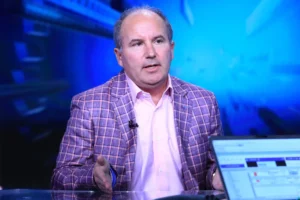



Speaking at the Semafor World Economy Summit in Washington, D.C., Southwest Airlines CEO Bob Jordan reaffirmed the carrier’s position as the cost leader among the United States’ major airlines. Despite the persistent pressure of rising jet fuel prices and a shifting macroeconomic landscape, Jordan emphasized that Southwest’s fundamental business model provides a durable shield against the high-cost structures of its primary legacy competitors. According to Jordan, the Dallas-based carrier maintains a cost structure approximately 20% lower than that of American Airlines, Delta Air Lines, and United Airlines, a gap that serves as the cornerstone of its competitive strategy.
The assertion comes at a pivotal moment for Southwest, as the airline navigates a period of profound internal evolution. For decades, the carrier was defined by its rigid adherence to a low-cost, no-frills philosophy. However, the modern aviation market—characterized by a surge in demand for premium services and the increasing complexity of global networks—has forced the airline to re-examine its traditional tenets. Jordan’s comments underscore a commitment to maintaining operational efficiency even as the airline integrates more sophisticated revenue-generating features into its service model.
The Pillars of Operational Efficiency
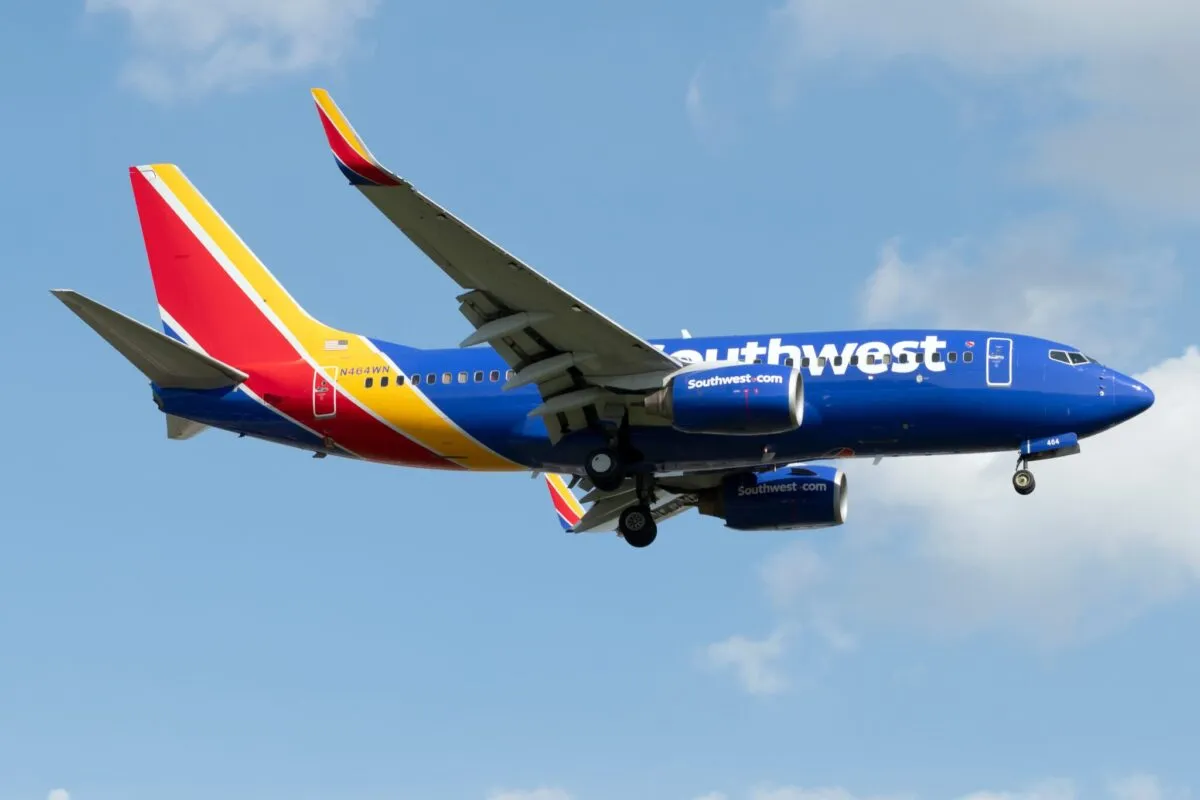
Southwest’s ability to underprice its "Big Three" rivals is rooted in several decades-old operational choices that continue to pay dividends. The first of these is the airline’s commitment to a single aircraft type: the Boeing 737. By operating an all-737 fleet, Southwest significantly reduces costs associated with pilot training, maintenance, and spare parts inventory. Unlike legacy carriers that manage diverse fleets ranging from regional jets to wide-body international aircraft, Southwest’s mechanics and flight crews are specialized in a single platform, allowing for seamless transitions and high utilization rates.
Furthermore, the airline’s point-to-point network remains a distinct advantage over the hub-and-spoke systems favored by Delta, United, and American. While hub-and-spoke models are efficient for consolidating passengers for long-haul international flights, they often lead to "banks" of flights that create congestion and downtime for aircraft and crews. Southwest’s point-to-point system minimizes these bottlenecks, allowing aircraft to spend more time in the air and less time on the ground, which is essential for maximizing revenue per unit of cost.
The CEO noted that these efficiencies are not merely historical artifacts but are actively managed. "At Southwest, we’re the most efficient," Jordan told the summit audience. "We have the lowest cost of the large carriers. Our costs are about 20% less than American, Delta, and United." This 20% margin provides the airline with the "oxygen" needed to absorb fuel price spikes that might otherwise force more drastic fare increases or service cuts.
A Strategic Pivot: Adapting to Modern Consumer Demands
While the core of the business remains focused on efficiency, the airline has recently embarked on the most significant brand and operational overhaul in its 53-year history. This transformation is driven by changing passenger preferences and the need to capture a larger share of the high-margin premium travel market.
In a landmark decision announced in mid-2024, Southwest revealed it would abandon its signature open-seating policy in favor of assigned seating. This move followed extensive market research indicating that 80% of Southwest’s current customers, and 86% of potential customers, preferred a pre-assigned seat. By moving to assigned seating, Southwest is also able to introduce "premium" seating sections with extra legroom—a move that aligns it more closely with the product offerings of its legacy rivals.
In addition to seating changes, Southwest has expanded its distribution channels. For years, the airline resisted listing its flights on Global Distribution Systems (GDS) and third-party travel sites like Expedia, preferring to drive all traffic to its own website to avoid commission fees. However, recognizing the need to capture more corporate and international travelers, the carrier has recently integrated its inventory into these broader platforms. While this adds some transactional cost, the airline believes the increase in high-yield passenger volume will more than offset the expense.
Chronology of Change: Southwest’s Recent Milestones
The current state of Southwest Airlines is the result of a rapid series of strategic shifts and external pressures that have accelerated since the post-pandemic recovery:
- Late 2022: A massive winter storm-induced operational meltdown led to thousands of flight cancellations, costing the airline over $800 million and highlighting the need for modernized crew-scheduling software and infrastructure.
- 2023: Southwest focused on "Operation Recovery," investing heavily in de-icing equipment and upgraded technology to prevent a repeat of the 2022 crisis.
- Early 2024: Rising labor costs became a focal point as the airline reached a new contract agreement with its pilots’ union, which included substantial pay raises. Simultaneously, Boeing’s delivery delays began to hamper Southwest’s planned capacity growth.
- June 2024: Elliott Investment Management, an activist hedge fund, disclosed a $1.9 billion stake in Southwest Airlines. The firm began a public campaign calling for leadership changes and a comprehensive review of the airline’s business model to improve lagging stock performance.
- July 2024: Southwest officially announced its plan to move to assigned seating and introduce premium cabin options, marking a departure from its "LUV" heritage in favor of modern revenue management.
- Late 2024: CEO Bob Jordan reaffirmed the carrier’s commitment to its cost-advantage roots at the Semafor World Economy Summit, positioning the airline as a "hybrid" that combines low-cost efficiency with modern passenger amenities.
Comparative Data: The Cost Advantage in Numbers
To understand the 20% cost advantage cited by Jordan, analysts look at Cost per Available Seat Mile (CASM), a standard industry metric. Legacy carriers typically operate with a significantly higher "CASM-ex" (cost per available seat mile, excluding fuel). This is due to several factors:
- Labor Seniority: Legacy carriers often have more senior workforces with higher pay scales and more complex pension obligations.
- International Operations: Managing wide-body fleets and international gate slots involves immense overhead that Southwest avoids by focusing primarily on domestic and near-international short-haul routes.
- Connectivity Costs: The hub-and-spoke model requires massive investments in airport infrastructure and ground handling staff to manage "connections" rather than just "departures."
According to industry reports, while Southwest’s labor costs have risen—narrowing the gap slightly—the airline’s "non-fuel" unit costs remain the benchmark for the industry. By maintaining a 20% lead, Southwest can remain profitable at lower load factors or offer lower fares during economic downturns, providing a competitive "moat" that is difficult for American, Delta, or United to breach without fundamentally restructuring their own operations.
The Influence of Activist Investors
The pressure to evolve is not coming solely from the market, but also from the boardroom. The entry of Elliott Investment Management into the fray has put Bob Jordan and his leadership team under a microscope. The activist firm has argued that Southwest has been too slow to adapt to the "new reality" of the airline industry, where travelers are willing to pay more for comfort and choice.
Elliott’s critique centers on the airline’s financial performance relative to its peers. While Southwest has remained profitable, its margins have been squeezed by the combination of rising pilot wages and the inability to charge for premium products. Jordan’s recent statements and the airline’s strategic pivot toward assigned seating and premium cabins are widely seen as a response to this investor pressure. By demonstrating that the airline can modernize its revenue streams while still protecting its 20% cost advantage, Jordan is attempting to satisfy both the value-seeking traveler and the profit-seeking shareholder.
Fuel Volatility and Economic Headwinds
The backdrop of Jordan’s comments is a volatile energy market. Jet fuel remains one of the largest and most unpredictable expenses for any airline. While Southwest has historically used aggressive fuel hedging—a financial strategy of buying fuel in advance at fixed prices—the broader trend of rising energy costs affects the entire sector.
Jordan’s focus on efficiency is a direct response to this volatility. If an airline’s base operating costs are lower, it can withstand higher fuel prices longer than its competitors. Moreover, Southwest’s point-to-point routes are often more fuel-efficient than hub-and-spoke routes, which involve more frequent take-offs and landings relative to the distance traveled. The airline is also in the process of retiring older, less fuel-efficient 737-700 aircraft and replacing them with the 737 MAX, which offers double-digit improvements in fuel burn and carbon emissions.
Broader Implications for the Aviation Industry
The evolution of Southwest Airlines signals a broader trend in the global aviation industry: the "blurring of the lines" between Low-Cost Carriers (LCCs) and Full-Service Carriers (FSCs). As Southwest adds premium seats and assigned seating, it begins to look more like a legacy carrier. Conversely, as legacy carriers like United and American introduce "Basic Economy" fares, they are attempting to mimic the low-cost model.
The critical difference, as Jordan highlighted, remains the "back-end" efficiency. If Southwest can successfully offer a "legacy-lite" experience while maintaining a "low-cost" operational engine, it poses a significant threat to the market share of the Big Three. For the consumer, this competition likely means more choices at various price points, though the era of extremely cheap "no-frills" tickets may be giving way to a more standardized, middle-tier service across all major domestic airlines.
As Southwest moves into 2025, the industry will be watching closely to see if the airline can maintain its 20% cost advantage while navigating the complexities of its new service model. If successful, Southwest will have proved that an airline can indeed have its cake and eat it too: the efficiency of a budget carrier and the revenue-generating power of a global titan. For now, Bob Jordan remains confident that the "Southwest Way" is not being abandoned, but rather refined for a new era of flight.