

The global automotive conglomerate Stellantis is set to dominate the floor at the upcoming Paris Motor Show this October, marking a significant strategic pivot for several of its key European brands. The biennial event, officially known as the Mondial de l’Auto, will serve as the backdrop for a series of high-profile unveilings, including two new models from Fiat, the much-anticipated rebirth of a Lancia flagship, and a forward-looking concept from Citroën. This multi-brand exhibition underscores the group’s commitment to its "Dare Forward 2030" strategic plan, which emphasizes electrification, software-driven mobility, and the revitalization of its storied Italian and French marques.
Fiat Targets the Family SUV Segment with Panda-Derived Models
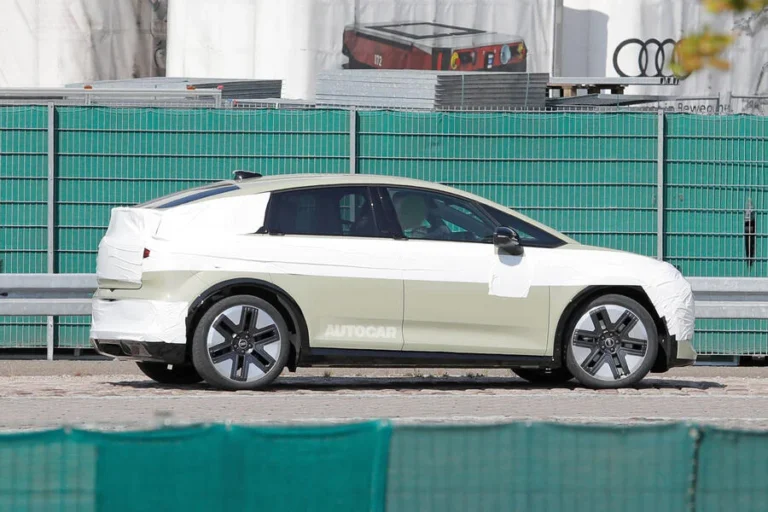
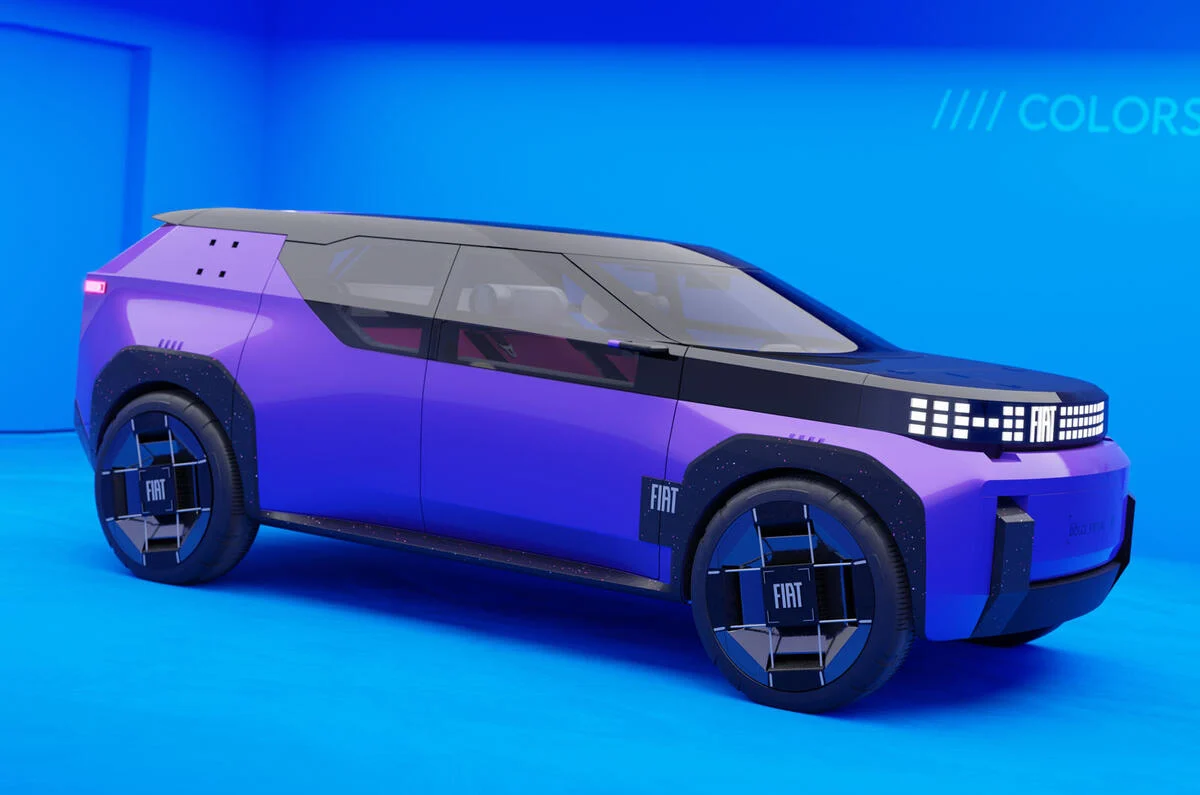
Fiat’s contribution to the Paris showcase is expected to focus on the expansion of its "Smart Car" platform lineup. Following the recent launch of the Grande Panda, the Italian manufacturer is slated to reveal production-ready versions of the Giga Panda and the Fastback concepts. These vehicles, which were first teased as design studies two years ago, represent a significant shift for Fiat as it moves into larger, more profitable segments.
The Giga Panda and Fastback are engineered to serve as C-segment family SUVs, positioning them as direct competitors to the Dacia Bigster and the Renault Austral. By utilizing the cost-effective Smart Car platform—a modular architecture designed to support both internal combustion and battery-electric drivetrains—Fiat aims to offer competitive pricing without sacrificing the brand’s characteristic Italian design flair. Industry analysts expect the production versions to maintain many of the rugged, boxy design cues seen in the concepts, prioritizing interior space and modularity.
The timing of the Paris reveal suggests an aggressive rollout schedule. Following their October debut, these models are projected to enter the United Kingdom and broader European markets by early 2025. This rapid transition from concept to showroom is a hallmark of Stellantis’ efforts to streamline product development cycles across its 14 brands.
Lancia and the Rebirth of the Gamma
One of the most significant moments of the show will be the unveiling of the Lancia Gamma. As part of a ten-year "Renaissance" plan spearheaded by Lancia CEO Luca Napolitano, the Gamma represents the second stage of the brand’s return to international relevance, following the launch of the new Ypsilon.
While the Gamma nameplate historically belonged to a series of executive sedans and coupés from the 1970s and 80s, the new iteration will take the form of a flagship SUV. The Gamma will be built upon the STLA Medium platform, sharing significant mechanical underpinnings with the upcoming DS No7. This strategic twinning allows Stellantis to leverage economies of scale while maintaining distinct brand identities through unique exterior styling and interior craftsmanship.
Technical specifications for the Gamma are expected to be class-leading. The electric variant is anticipated to utilize a large battery pack—likely in the 87kWh to 98kWh range—enabling a targeted driving range of approximately 460 miles (740 km) on the WLTP cycle. For markets where electric vehicle (EV) infrastructure is still maturing, the Gamma will also offer high-efficiency mild-hybrid petrol options. Visually, the Gamma will incorporate Lancia’s new "Pu+Ra" design language, featuring the distinctive cross-shaped "calice" lighting signature that debuted on the Ypsilon.
Citroën’s Vision for Accessible Sustainability
Citroën, a brand traditionally associated with avant-garde design and comfort, will use the Paris stage to present a new concept car described by the manufacturer as being "packed with personality." While specific details remain under wraps, the concept is expected to build upon the philosophies established by the previous Citroën Ami and the Oli (all-ë) concept.
The focus of this new design study is likely to be "frugal engineering"—a movement within Citroën to reduce vehicle weight, complexity, and environmental impact while maintaining high levels of practicality. By using recycled materials and simplified manufacturing processes, Citroën aims to address the growing consumer demand for sustainable mobility that remains financially accessible to the middle class. This concept is viewed by industry experts as a precursor to the next generation of Citroën’s core models, potentially influencing the design of future iterations of the C4 or C5 Aircross.
The European Entry of Leapmotor
In a move that highlights the shifting dynamics of the global automotive industry, Stellantis will also host the European debut of the Leapmotor B03. This launch follows the establishment of Leapmotor International, a joint venture in which Stellantis holds a 51% controlling interest, specifically created to manage the export and manufacturing of the Chinese brand’s vehicles outside of China.
The B03 is a compact electric hatchback designed to compete directly with the Volkswagen ID.3 and the MG4 EV. Official filings recently released by the Chinese Ministry of Industry and Information Technology (MIIT) have provided a preliminary look at the vehicle’s specifications. The B03 will be offered with two different battery capacities, powering electric motors with outputs of either 94bhp (70kW) or 121bhp (90kW).
The introduction of Leapmotor into the European market under the Stellantis umbrella is a strategic hedge against the influx of low-cost Chinese competitors. By partnering with Leapmotor, Stellantis can offer entry-level electric vehicles at price points that would be difficult to achieve using purely European supply chains, all while utilizing its extensive existing dealer and service networks to provide customer support.
Context and Chronology of the Paris Motor Show
The Paris Motor Show, held every two years, has faced challenges in recent years as many manufacturers moved toward digital launches or smaller, proprietary events. However, the 2024 edition is shaping up to be a resurgence for the event. Stellantis, as the parent company of French icons Peugeot and Citroën, naturally views Paris as its "home turf."
The chronology of Stellantis’ recent activity leading up to this event shows a clear pattern of platform consolidation. Over the last 24 months, the group has transitioned nearly all new product development onto four global platforms: STLA Small, Medium, Large, and Frame. The models debuting in Paris represent the first wave of vehicles designed from the ground up to maximize the efficiency of these architectures.
- 2022: Fiat teases initial concept sketches for a new global family.
- Early 2024: Lancia launches the Ypsilon, ending its decade-long isolation in the Italian market.
- May 2024: Stellantis and Leapmotor finalize their joint venture agreement.
- October 2024: Official debuts for Fiat, Lancia, Citroën, and Leapmotor in Paris.
- Q1 2025: Expected market launch for the Fiat SUV duo and Leapmotor B03.
Data and Technical Analysis
The move toward larger family vehicles like the Lancia Gamma and the Fiat Giga Panda reflects broader market trends in Europe. According to data from JATO Dynamics, SUVs and crossovers accounted for over 50% of new car registrations in Europe for the first time in 2023. Stellantis is positioning its brands to capture different segments of this growing market: Fiat for value-conscious families, Lancia for the "premium-luxury" niche, and DS for the "avant-garde" luxury buyer.
Furthermore, the 460-mile range target for the Lancia Gamma is a critical data point. As range anxiety remains a primary barrier to EV adoption, Stellantis is utilizing the STLA Medium platform’s 400-volt architecture to deliver performance that rivals premium German competitors. The platform’s ability to charge from 20% to 80% in under 30 minutes is expected to be a key selling point for the Gamma.
Industry Implications and Market Reactions
The aggressive showing by Stellantis is seen by many as a direct response to the "Renaultution" strategy implemented by its chief domestic rival, the Renault Group. Renault is also expected to have a massive presence in Paris, showcasing the new Renault 4 and the R5 E-Tech. The competition between these two giants is driving a rapid acceleration in vehicle development, particularly in the B and C segments.
"Stellantis is leveraging its scale in a way we haven’t seen before," notes one European industry analyst. "By bringing Fiat, Lancia, Citroën, and a Chinese partner like Leapmotor to the same show, they are demonstrating that they can cover every possible price point and consumer preference, from ultra-budget to high-end luxury."
The inclusion of Leapmotor is particularly significant given the current geopolitical climate regarding tariffs on Chinese-made EVs. By controlling the distribution and potentially the local assembly of Leapmotor vehicles in European plants (such as the Tychy plant in Poland), Stellantis can navigate trade barriers more effectively than independent Chinese manufacturers.
Conclusion
The 2024 Paris Motor Show represents a defining moment for Stellantis as it seeks to prove the viability of its multi-brand, platform-sharing business model. The transition of Fiat into larger segments, the luxury rebirth of Lancia, the sustainable innovation of Citroën, and the strategic integration of Leapmotor all point toward a diversified future. As the industry watches the curtains rise in October, the success of these models will likely determine the group’s market share trajectory through the end of the decade. With a focus on range, affordability, and distinct brand heritage, Stellantis is positioning itself to lead the European automotive sector through one of its most turbulent yet transformative eras.