

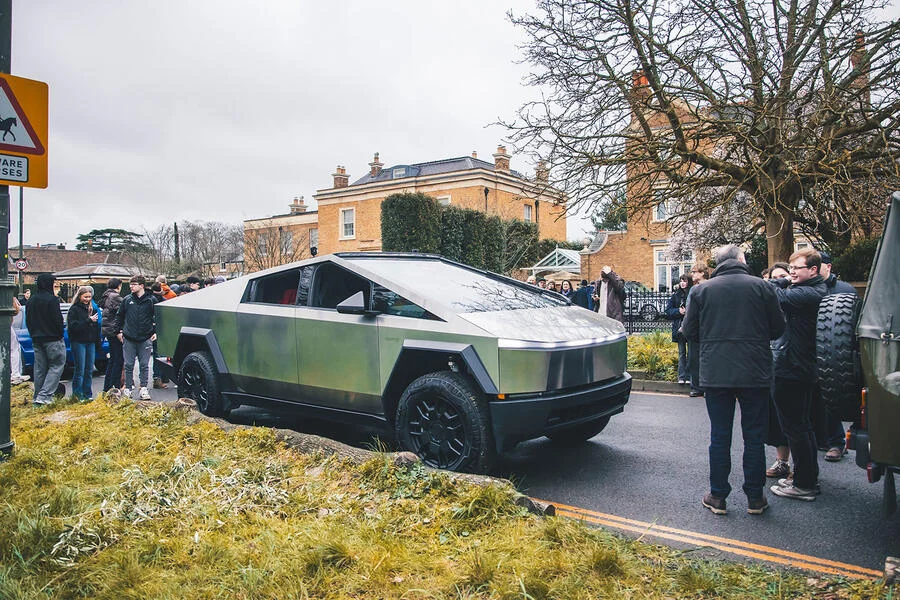
The appearance of a Tesla Cybertruck on the historic streets of Wimbledon Village earlier this month marked a significant moment in the intersection of American automotive innovation and British regulatory standards. For residents and visitors accustomed to the sight of traditional luxury vehicles and heritage classics, the arrival of the "Cyberbeast" variant—a vehicle often described as looking more like a lunar rover than a contemporary pickup—provoked a mixture of fascination, skepticism, and intense curiosity. The vehicle was brought to the Southside Hustle, a burgeoning monthly gathering of automotive enthusiasts, by tech entrepreneur Sam Seppälä, providing a rare opportunity for the British public to witness the polarizing electric vehicle on UK soil.
The Southside Hustle: A Growing Automotive Mecca
The Southside Hustle has established itself as a premier destination for petrolheads in the south-west London area. Held on the first Sunday of every month in Wimbledon Village, the event has grown rapidly since its inception a few years ago. Unlike more formal concours events, the Hustle is characterized by its democratic approach to automotive passion. On any given Sunday, the "combustion faithful" can be found admiring a diverse array of machinery, ranging from meticulously restored vintage cars to the latest high-performance exotics.
The event serves as a microcosm of global car culture, where the roar of traditional internal combustion engines (ICE) usually dominates the soundscape. However, the introduction of the Cybertruck—a vehicle that represents a radical departure from traditional automotive design and propulsion—created a unique juxtaposition. The presence of the 833bhp "Musk monster" among the "wheezy classics" highlighted the ongoing transition and tension between the heritage of the automotive past and the potential of a high-tech, electrified future.
Technical Specifications of the Cyberbeast
The specific model brought to Wimbledon was the high-performance "Cyberbeast" variant, the top-tier iteration of Tesla’s pickup line. This model features a tri-motor, four-wheel-drive configuration capable of producing 833 horsepower. According to Tesla’s official performance data, the Cyberbeast can accelerate from 0 to 60 mph in just 2.6 seconds, a figure that rivals many of the supercars typically seen in the more affluent areas of London.
The vehicle was also specced in the limited-edition "Foundation" trim, which includes laser-etched badges and specific interior finishes reserved for the earliest production units. Beyond its raw power, the Cybertruck is notable for its "exoskeleton" construction, utilizing ultra-hard 30X cold-rolled stainless steel. This material choice is intended to provide superior durability and passenger protection, though it remains one of the primary points of contention for international safety regulators.
The Regulatory Hurdles: Why the Cybertruck Remains a Rarity in the UK
Despite its global fame, the Cybertruck remains a rare sight in the United Kingdom due to significant regulatory obstacles. Sam Seppälä imported his vehicle from California in January, but it cannot be registered as a standard UK vehicle. The primary barrier is the Individual Vehicle Approval (IVA) process managed by the Driver and Vehicle Standards Agency (DVSA).
The IVA is a rigorous inspection required for vehicles that have not been manufactured to European or British type-approval standards. For the Cybertruck, several factors complicate this approval:
- Steer-by-Wire Technology: The Cybertruck utilizes a completely electronic steering system with no physical linkage between the steering wheel and the wheels. While this allows for a variable steering ratio and high maneuverability, British and European regulations have traditionally required a mechanical backup for safety, though these rules are currently under review in some jurisdictions.
- Pedestrian Safety Standards: The sharp angles and rigid stainless-steel body of the Cybertruck have raised concerns regarding "external projections." European safety standards are designed to minimize injury to pedestrians in the event of a collision, and the unyielding nature of the Cybertruck’s front end may not meet these specific energy-absorption criteria.
- Weight Classifications: With a curb weight exceeding 3,000kg and a gross vehicle weight rating (GVWR) that can surpass 3,500kg, the Cybertruck sits on the edge of what can be driven on a standard Category B UK driving license.
A spokesperson for the DVSA confirmed to Autocar: "No Cybertruck has passed IVA and so cannot be driven on UK roads as a DVLA-registered vehicle." This means that while the vehicle can be physically present in the country, it cannot be issued British number plates or be permanently based in the UK under current regulations.
The Six-Month Legal Loophole
The legality of Seppälä’s drive on Wimbledon Common rests on international conventions regarding temporary imports. Under current UK law, a vehicle that is taxed, registered, and insured in its home country (in this case, the United States) can be driven in the UK for a maximum of six months within a 12-month period.
Seppälä explained that his status as a tech entrepreneur with residences in both California and the UK allows him to navigate these requirements. By importing the vehicle in January, he has a 12-month window to keep the car in the country, during which he can utilize his six-month driving allowance. This specific legal framework allowed the "Beast" to make its debut at the Southside Hustle without violating DVLA registration requirements.
The Owner’s Perspective: Why Import a Cybertruck?
The decision to ship a massive, 833bhp electric truck across the Atlantic is neither simple nor inexpensive. For Seppälä, the motivation is rooted in a fascination with disruptive technology. "I love the reactions, both good and bad, that it provokes," he noted. This sentiment reflects the Cybertruck’s status as more of a cultural and technological statement than a mere utility vehicle.
In the United States, Seppälä utilizes the truck for practical, albeit demanding, tasks. He frequently uses it to tow his Bruder off-road caravan. However, he acknowledges the limitations of electric towing; the vehicle’s range reportedly drops from 300 miles to approximately 100 miles when hauling heavy loads. This "range anxiety" is a common critique of electric pickups, yet Seppälä views it as part of the learning curve of early adoption.
Interestingly, Seppälä’s personal garage is not limited to electric vehicles. His collection includes a Ferrari 488 Spider, a Ford F-350 pickup, a vintage Volkswagen Type 1 split-screen van, and even a John Deere 4066 tractor. This diverse collection suggests that for the Cybertruck’s early adopters, the vehicle is seen as an addition to, rather than a total replacement for, the traditional automotive experience.
Public Reception and the "Combustion Faithful"
The reaction at the Southside Hustle was a litmus test for the Cybertruck’s reception in a market dominated by traditional automotive values. The "combustion faithful"—enthusiasts who typically value the sound, smell, and mechanical purity of petrol engines—were faced with a silent, angular behemoth.
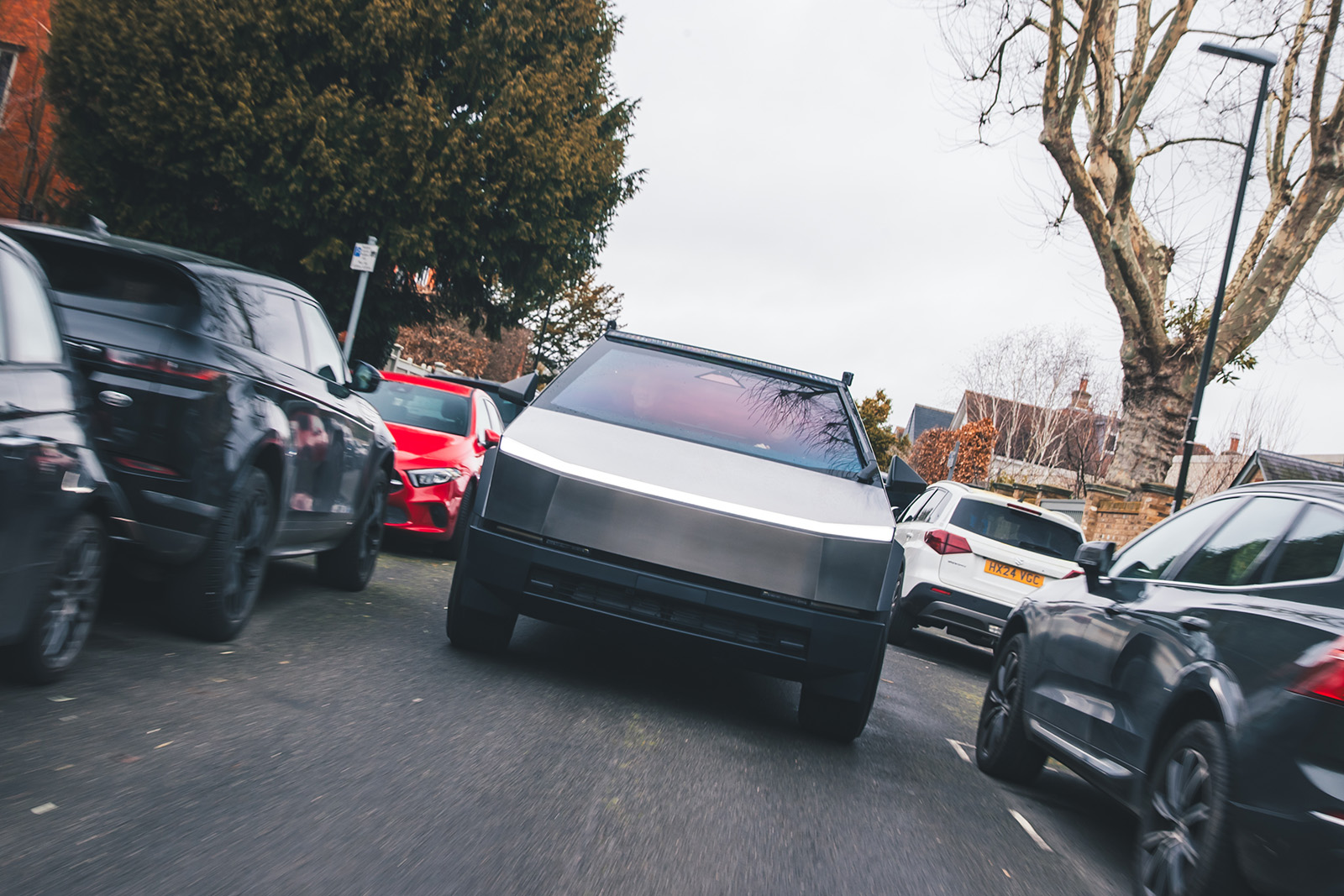
The response was predictably divided. While some attendees praised the engineering audacity and the "alien" aesthetic, others were more critical, citing the vehicle’s sheer size as being impractical for narrow British roads and its design as being too aggressive. However, the sheer volume of people surrounding the vehicle suggested that, regardless of personal opinion, the Cybertruck possesses an undeniable "gravity" that commands attention.
The event also highlighted the absence of certain features in the UK. While the Cybertruck possesses full autonomous functionality in California, these features are deactivated in the UK due to different mapping requirements and regulatory restrictions on self-driving technology.
Broader Implications for the UK Automotive Market
The appearance of the Cybertruck in London raises broader questions about the future of large-scale American EVs in Europe. Tesla CEO Elon Musk has previously hinted that a "scaled-down" version of the Cybertruck might eventually be produced for international markets to meet stricter safety and size regulations.
As it stands, the Cybertruck serves as a "halo" product—a vehicle designed to push the boundaries of what is possible and to generate brand excitement. Its presence in the UK, even temporarily, acts as a live demonstration of the technological gap between current regional standards and the "frontier" of EV development in the US.
The regulatory hurdles faced by Seppälä’s vehicle also underscore the challenges of global automotive harmonization. As vehicles become more like "computers on wheels," with steer-by-wire and advanced autonomous systems, regulators are struggling to keep pace with the speed of innovation. The Cybertruck’s inability to pass the UK’s IVA process is a clear indicator that, for now, the British government prioritizes traditional safety and mechanical standards over radical design departures.
Conclusion: A Temporary Visitor in a Changing World
The Cybertruck’s visit to Wimbledon Common was a fleeting glimpse into a potential future. By December, the vehicle must be returned to the United States to comply with temporary import laws. For the few months it remains on British soil, it will continue to be a source of debate and a magnet for cameras.
For the Southside Hustle and its community, the event was a reminder that the automotive world is in a state of rapid flux. Whether the Cybertruck is viewed as a masterclass in modern engineering or an oversized anomaly, its presence in London has successfully sparked a conversation about the limits of design, the strictness of safety regulations, and the enduring appeal of the "strange" in a world of increasingly homogenized car design. As Sam Seppälä continues his six-month journey on UK roads, the "Musk monster" remains a testament to the power of provocative technology to captivate and divide in equal measure.