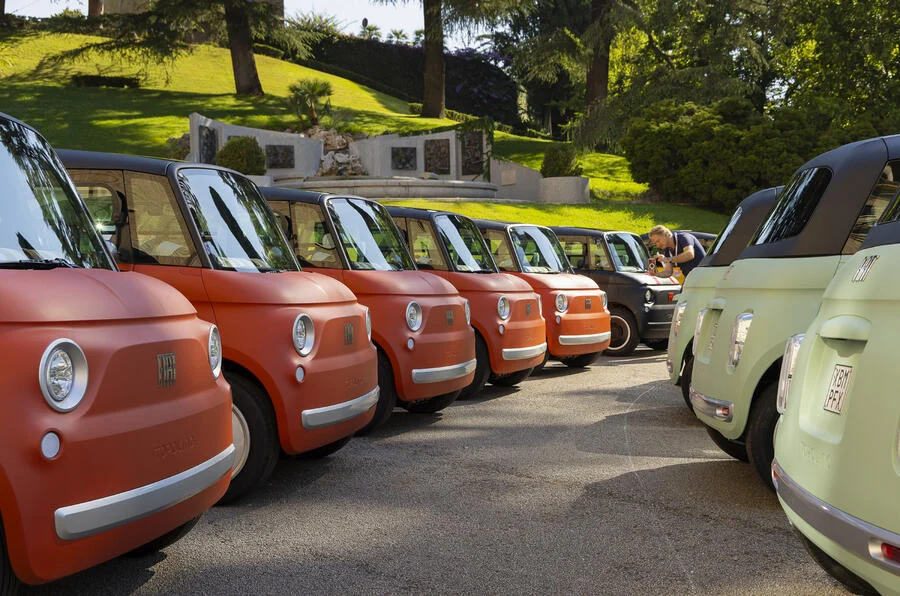
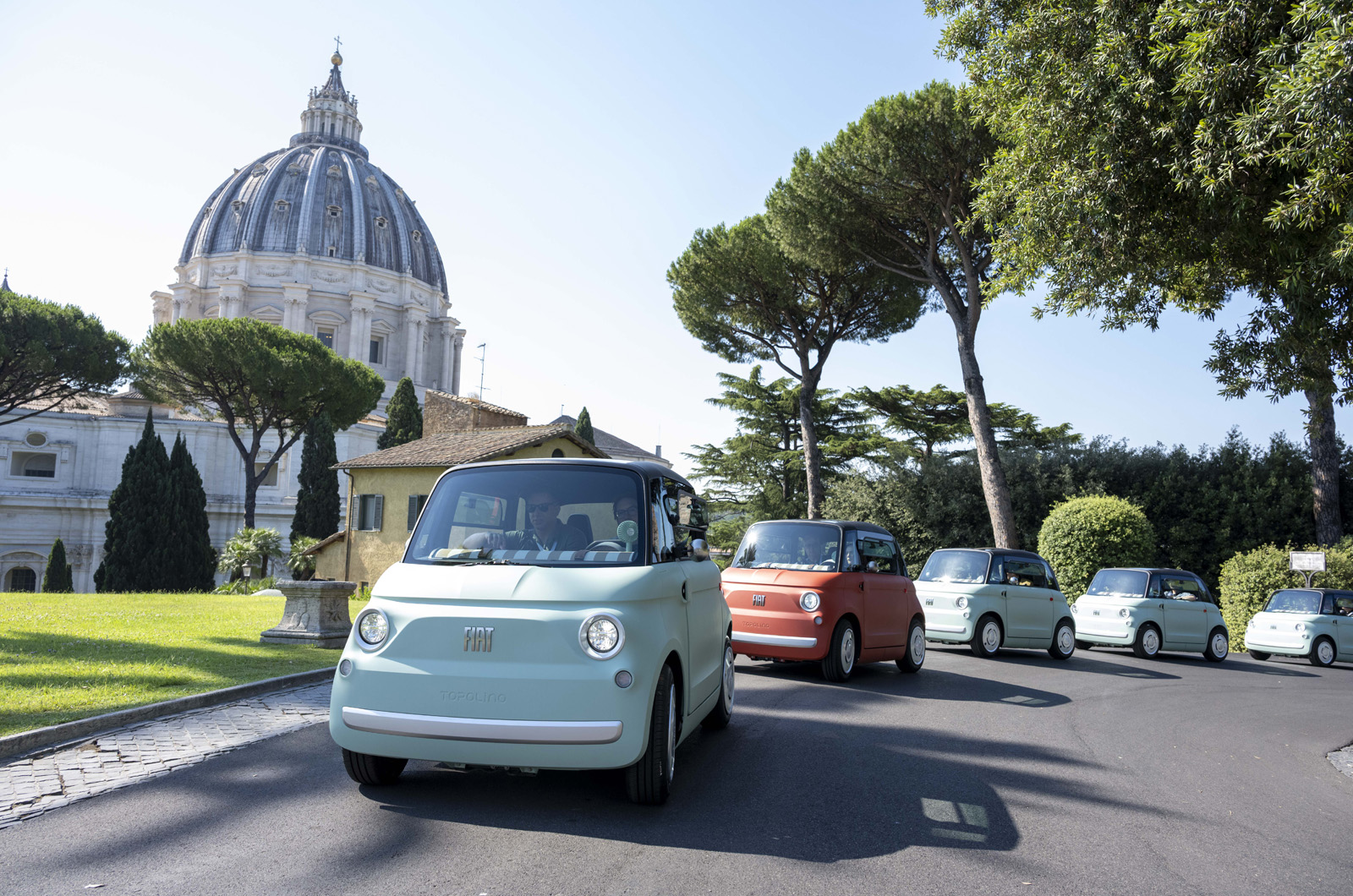
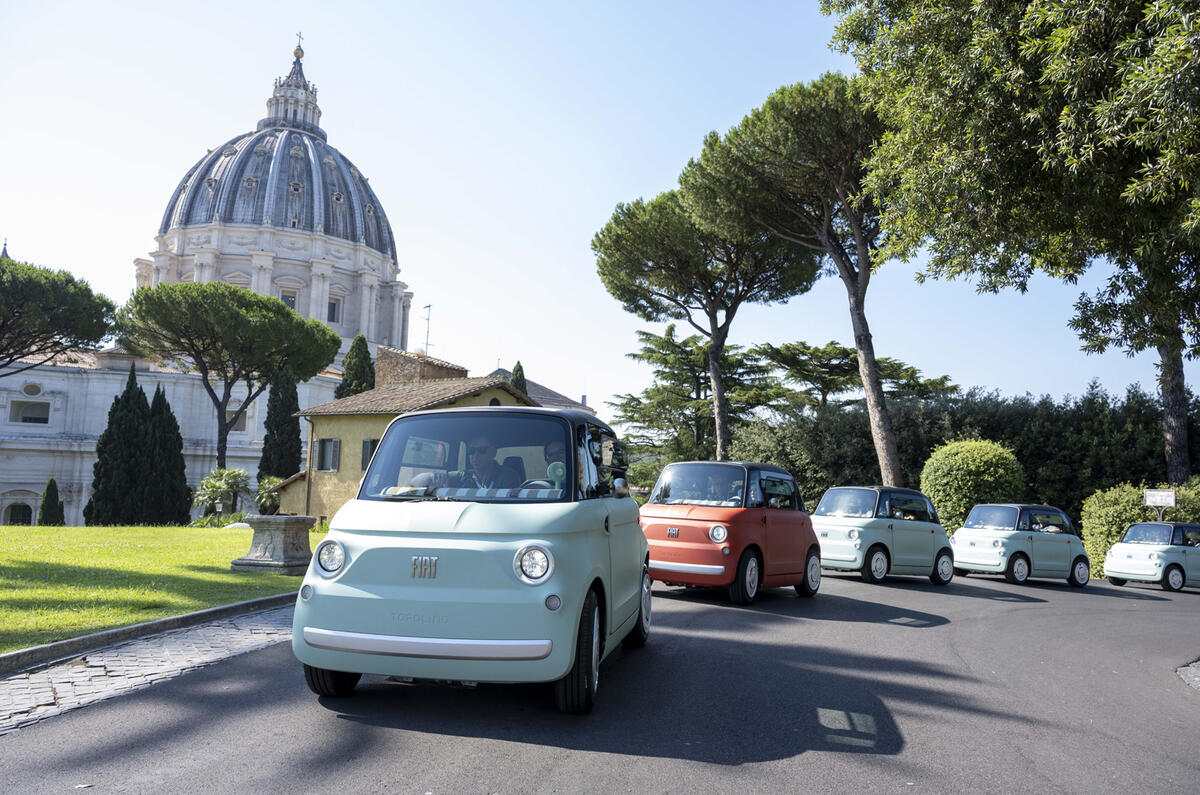
The intersection of automotive engineering and sovereign geography reached a unique milestone as the Fiat Topolino, a modern electric quadricycle, navigated the narrow, winding corridors of the Vatican City. Measuring just 0.19 square miles, the Vatican City State is the smallest independent nation in the world, presenting a topographical challenge that demands a vehicle of specialized proportions. The Topolino, whose name translates to "little mouse" and pays homage to the original 1936 Fiat 500, represents Fiat’s strategic pivot toward ultra-compact urban mobility. In the context of the Vatican’s walled enclave, where traditional automotive dimensions are often a liability, this micro-EV serves as a practical demonstration of how modern electrification can integrate with historical preservation.
The roads winding through the Vatican City Gardens, if viewed through the lens of a performance driver, mirror the technicality of a specialized rally stage. Though the total distance is inherently limited by the state’s borders—roughly the size of London’s Regent’s Park—the terrain is surprisingly complex. The access roads behind St. Peter’s Basilica rise toward the Palace of the Governorate, featuring steep gradients, sharp descents, and switchback hairpins that test a vehicle’s turning radius and low-end torque. For a vehicle like the Topolino, which is designed for the "dolce vita" of cramped Italian streets, these conditions provide a definitive proving ground for the efficacy of the electric quadricycle segment.
The Technical Specifications of the Fiat Topolino
To understand why the Topolino is uniquely suited for the world’s smallest country, one must examine its technical architecture. Unlike a standard passenger car, the Topolino is classified as a heavy quadricycle (L7e) or light quadricycle (L6e) depending on the specific market configuration. It shares its mechanical underpinnings with the Citroën Ami and the Opel Rocks Electric, products of the Stellantis Group’s unified platform for micro-mobility.
The vehicle is powered by a modest 5.5 kWh lithium-ion battery pack, which provides a range of approximately 47 miles (75 kilometers) on a single charge. While this range would be insufficient for cross-country travel, it is more than enough for the Vatican, where a driver could circumnavigate the entire nation dozens of times before requiring a plug. The powertrain delivers a top speed limited to 28 mph (45 km/h), a figure that aligns perfectly with the internal speed regulations of the Vatican’s pedestrian-heavy thoroughfares.
Physically, the Topolino measures just 2.53 meters in length. Its footprint is so minimal that it can be parked perpendicularly in spaces where a standard sedan would struggle to fit parallel. This compact nature is essential for navigating the "Via della Conciliazione" and the internal service roads that were originally designed for horse-drawn carriages and foot traffic rather than modern internal combustion engines.
Historical Context: From the 1936 Original to Modern Electrification
The debut of the electric Topolino marks a full circle for the Fiat brand. The original 1936 Topolino was one of the smallest cars in the world at the time of its production and was credited with democratizing car ownership in Italy. It was a vehicle born of necessity, designed to provide affordable transport in a post-depression economy.
In 2024, the necessity has shifted from affordability alone to environmental sustainability. The Vatican City, under the leadership of Pope Francis, has become a vocal advocate for ecological stewardship. The 2015 encyclical Laudato si’ (On Care for Our Common Home) laid the theological and operational groundwork for the Vatican’s transition toward carbon neutrality. In late 2023, the Vatican City State announced the "Ecological Transition 2030" plan, which aims to replace its entire service fleet with electric vehicles.
While the Vatican recently entered a partnership with the Volkswagen Group to provide ID.3, ID.4, and ID.5 models for its official fleet, the Fiat Topolino occupies a different niche. It represents the "last-mile" solution—a vehicle intended for the logistical movement of personnel, mail, and maintenance equipment within the tightest confines of the city-state where even a compact hatchback like the ID.3 might find the garden paths restrictive.
Navigating the Sacerdotal-Monarchical State
Driving within the Vatican is an exercise in precision. The route begins near the Santa Marta guest house, passing the rear of the majestic St. Peter’s Basilica. Here, the pavement transitions from modern asphalt to traditional "sanpietrini" (cobblestones). For many electric vehicles, the rigid suspension required to offset battery weight can make cobblestone driving uncomfortable. However, the Topolino’s lightweight construction—weighing less than 500kg—allows it to skitter over the stones with a level of agility that larger EVs lack.
As the road ascends toward the Vatican Gardens, the Topolino’s electric motor provides instantaneous torque, which is vital for the 15% gradients found near the Grotto of Our Lady of Lourdes. The gardens themselves, which cover more than half of the country’s territory, are a patchwork of Renaissance and Baroque landscaping. The paths here are narrow, often lined with priceless statuary and manicured hedges. In this environment, the Topolino’s 7.2-meter turning circle becomes its greatest asset, allowing it to navigate hairpins that would require a multi-point turn for a standard van.
Economic and Environmental Implications
The deployment of micro-EVs like the Topolino in administrative hubs like the Vatican serves as a case study for urban planners worldwide. The data suggests that for 80% of urban trips, a full-sized five-seater vehicle is an inefficient use of space and energy.
| Comparative Data: Urban Mobility Efficiency | Feature | Fiat Topolino | Standard Compact SUV |
|---|---|---|---|
| Length | 2.53 meters | 4.30+ meters | |
| Energy Consumption | ~7-8 kWh/100km | ~18-22 kWh/100km | |
| Weight | 485 kg | 1,600+ kg | |
| Turning Circle | 7.2 meters | 10.5+ meters |
From a policy perspective, the Vatican’s adoption of such vehicles reinforces the "Ecological Transition 2030" goals. By utilizing vehicles with smaller batteries, the state reduces the "embodied carbon" associated with vehicle production—the emissions generated during the mining and manufacturing of battery cells. Smaller batteries require fewer raw materials like lithium and cobalt, aligning with the Pope’s calls for more ethical and less extractive industrial practices.
Official Responses and Strategic Partnerships
While Fiat has not officially confirmed a permanent "Popemobile" version of the Topolino, the brand has leaned heavily into the cultural synergy between the Italian manufacturer and the Holy See. During the vehicle’s promotional phases, Stellantis executives emphasized that the Topolino is designed to "reclaim the city," making it a natural fit for a city-state that is both a religious center and a UNESCO World Heritage site.
Vatican officials have noted that the transition to electric mobility is not merely about prestige but about the preservation of art. The emissions from internal combustion engines—specifically nitrogen oxides and particulate matter—contribute to the "black crust" that forms on historical limestone and marble buildings. By moving to a zero-emission fleet, including micro-cars for garden maintenance and internal security, the Vatican is actively reducing the chemical weathering of its architectural treasures.
The Future of Micro-Mobility in Historic Centers
The "Topolino vs. Vatican City" experiment highlights a growing trend in European urbanism. Cities like Rome, Florence, and Paris are increasingly implementing "Limited Traffic Zones" (ZTL) to restrict large, polluting vehicles. In these zones, the electric quadricycle is becoming the preferred mode of transport for residents and local businesses.
The Topolino’s success in the Vatican suggests that the future of the automotive industry may not just be about "going big" with long-range Teslas or high-performance Porsches, but also about "going small." The vehicle’s simplicity—it lacks a traditional trunk, instead using an internal storage rack, and features a minimalist interior—reflects a move toward "de-cluttered" transportation.
As the Vatican continues its journey toward becoming the world’s first carbon-neutral state, the presence of the Fiat Topolino within its walls serves as a visible symbol of that commitment. It is a marriage of Italian design heritage and 21st-century environmental necessity. Whether it is used for transporting clergy across the gardens or simply as a demonstration of sustainable technology, the "little mouse" has proven that in the world’s smallest country, less truly is more. The technical agility, zero-emission profile, and cultural resonance of the Topolino make it perhaps the most logical vehicle ever to traverse the hallowed grounds of the Vatican.