



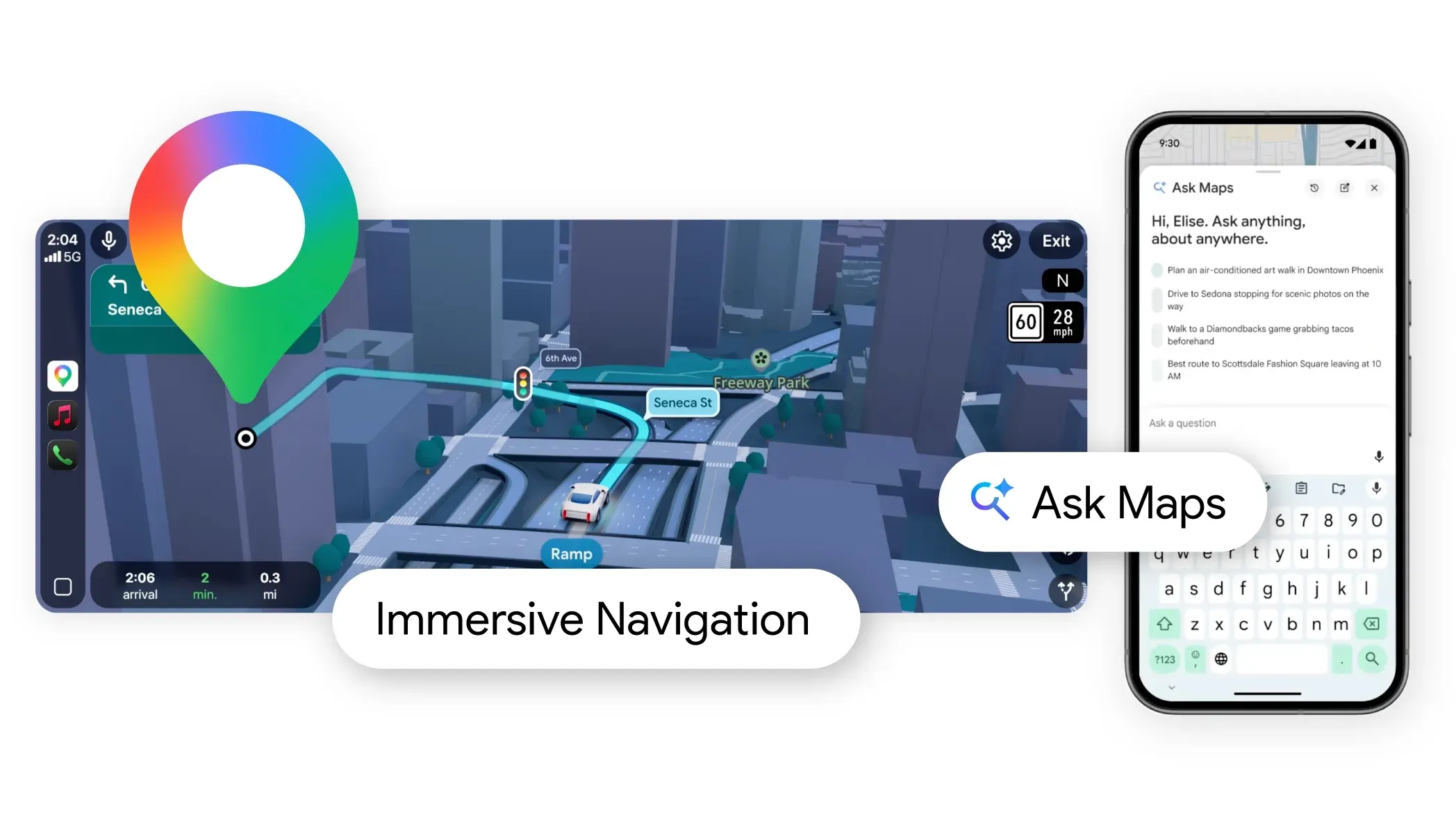
In a significant expansion of its generative artificial intelligence capabilities, Google has announced a major update to Google Maps that fundamentally alters how travelers discover and book accommodations. By integrating advanced large language models (LLMs) directly into the mapping interface, Google is shifting the platform from a utility-based navigation tool toward a comprehensive, AI-driven travel concierge. This update introduces "Ask Maps," a conversational interface that allows users to perform complex, multi-layered queries for hotels, combining spatial awareness, real-time inventory, and personal itinerary data into a single, cohesive user experience.
The integration represents a pivotal moment in the evolution of travel search. Historically, travelers have had to toggle between multiple applications: search engines for inspiration, maps for location analysis, and online travel agencies (OTAs) for pricing and availability. Google’s new AI-powered search aims to collapse these steps, leveraging the unique spatial context that only a mapping platform can provide. By understanding the relationship between a hotel, nearby points of interest, transit routes, and the user’s own schedule, Google Maps is positioning itself as the primary gateway for the modern traveler.
Redefining the Search Interface through Ask Maps
The core of this update is the "Ask Maps" feature, which utilizes Google’s Gemini AI models to process natural language requests. Unlike traditional search filters that rely on rigid categories such as "price" or "star rating," the AI search can interpret nuanced, subjective criteria. For example, a user can now input a highly specific prompt: “For next week’s conference in downtown Miami, find me a decently priced, top-rated hotel with an artsy vibe, within walking distance from a gym and restaurants.”
This level of specificity requires the AI to synthesize several distinct data streams. First, it must define "artsy vibe" by analyzing millions of user reviews, photos, and descriptions. Second, it must calculate "walking distance" based on real-world pedestrian infrastructure and topography. Third, it must cross-reference this with the user’s specific dates to ensure the recommendations are not just relevant in style, but available in practice.
Crucially, this update moves beyond the "price range" estimates that have historically hampered AI travel assistants. While previous iterations of AI search might provide a general idea of what a hotel costs, the new Google Maps integration provides actual pricing and real-time availability. This is achieved through deeper integration with Google’s existing hotel booking engine, ensuring that the transition from discovery to transaction is seamless.
Chronology: The Evolution of Google’s AI Travel Strategy
The rollout of AI-powered hotel search in Google Maps is the latest step in a multi-year strategy to dominate the travel planning ecosystem. To understand the significance of this update, it is necessary to look at the timeline of Google’s development in this space:
- 2011–2015: Google acquires ITA Software and launches Google Flights and Google Hotel Search. These tools primarily functioned as meta-search engines, aggregating data from airlines and hotels.
- 2019: Google merges various travel features into a centralized "Google Travel" hub, allowing users to see their trips, flights, and hotels in one location, often pulling data from Gmail confirmations.
- 2023 (May): Google introduces Search Generative Experience (SGE) at its I/O conference, demonstrating how AI can provide narrative-driven answers to travel queries within the standard Google Search results.
- 2024 (Early): Google begins experimenting with generative AI features within Google Maps, such as AI-generated summaries of places and "vibe" descriptions for neighborhoods.
- Late 2024: The current update brings full-scale hotel search and itinerary integration into Google Maps, marking the first time spatial context and personal scheduling have been fully synthesized by generative AI.
This progression shows a clear move away from being a mere intermediary toward becoming an end-to-end travel assistant that anticipates user needs based on location and intent.
The Strategic Importance of Spatial Context
The most significant advantage Google Maps holds over other AI platforms, such as ChatGPT or Claude, is spatial context. While a general-purpose AI can provide a list of popular hotels in a city, it lacks the underlying geospatial database required to understand the logistics of a trip. Google Maps understands the "why" behind a location.
Spatial context allows the AI to consider factors such as traffic patterns at specific times of day, the proximity of public transit entrances, and the safety or walkability of specific neighborhoods. For a business traveler attending a conference, the AI can prioritize hotels that are not just geographically close to the venue, but are accessible via a specific subway line or within a short walk of a preferred fitness center. This level of logistical intelligence transforms the search result from a list of options into a viable itinerary.
Furthermore, by bringing AI search into a "surface" already built around transit and routes, Google is capturing the user at the moment of highest intent. Travelers often check maps to see where a venue is before they decide where to stay; by offering search and booking capabilities in that exact moment, Google minimizes the friction that often leads to cart abandonment in the travel industry.
Integration with Personal Itineraries and Private Data
Beyond general spatial context, the new update allows Google Maps to layer in a user’s personal itinerary. This is a significant leap in personalization. If a user has a flight confirmation in their Gmail or a meeting scheduled in their Google Calendar, the AI in Maps can use that data to anchor its hotel recommendations.
For instance, if the AI knows a user lands at Miami International Airport at 6:00 PM and has a 9:00 AM meeting the next morning at the Miami Beach Convention Center, it can suggest hotels that optimize the commute for both events. It can also account for personal preferences stored in the user’s Google profile, such as a preference for specific hotel loyalty programs or a history of staying in boutique properties.
This integration of private data with public information creates a highly personalized "Travel Graph." While this raises questions regarding data privacy—a topic Google continues to address through its privacy dashboard and opt-in settings—the utility provided to the user is substantial. It eliminates the need for the user to manually input dates, locations, and preferences for every search.
Supporting Data: The Growing Role of AI in Global Tourism
The move by Google is supported by broader industry trends. According to data from various market research firms, the intersection of AI and travel is one of the fastest-growing sectors in the digital economy.
- Market Share: Google currently accounts for an estimated 60% to 70% of all travel-related search queries globally. By integrating AI into Maps, which has over 2 billion monthly active users, Google is leveraging its massive scale to set a new standard for user expectations.
- Consumer Behavior: A recent survey by Expedia Group found that 50% of travelers are interested in using generative AI to plan their trips, with "finding the right hotel" cited as one of the top use cases.
- Bleisure Trends: The rise of "bleisure" travel—combining business and leisure—has increased the complexity of travel planning. Travelers now require accommodations that meet professional needs (proximity to offices, high-speed internet) while also satisfying leisure desires (nightlife, cultural venues). Google’s AI search is specifically designed to handle these multi-faceted requirements.
- Mobile Dominance: Over 70% of travelers use their smartphones to research travel while on the go. Google Maps, being a mobile-first platform, is perfectly positioned to capture this "in-destination" and "pre-trip" mobile traffic.
Competitive Landscape: Google vs. Online Travel Agencies (OTAs)
The evolution of Google Maps into an AI travel planner presents a formidable challenge to traditional OTAs like Booking Holdings and Expedia Group. For years, these companies have spent billions of dollars on Google Ads to ensure they appear at the top of search results. However, as Google moves toward providing direct answers and booking options through its AI, the traditional "click-through" model is under pressure.
OTAs have responded by launching their own AI plugins and tools. Expedia, for example, was one of the first to launch a ChatGPT plugin. However, OTAs lack the native mapping and transit data that Google possesses. While an OTA can tell you about a hotel’s room types, it cannot as easily tell you how the walk from that hotel to a specific restaurant will feel at 10:00 PM on a Tuesday.
Industry analysts suggest that we are entering an era of "verticalized AI," where the platform with the best specialized data wins. In the case of travel, that specialized data is location-based, giving Google a significant competitive moat.
Industry Reactions and the Evolution of Hospitality SEO
The hospitality industry has reacted with a mix of optimism and caution. Hotel operators generally welcome any tool that can help them reach the right guest, particularly if it highlights the unique "vibe" or amenities of their property that might be lost in a standard list.
However, the shift to AI-driven search also necessitates a change in how hotels approach Search Engine Optimization (SEO). In the past, hotels focused on keywords like "hotels in Miami." In the era of generative AI, they must focus on "entity-based" data. This means ensuring that their Google Business Profile is rich with high-quality images, detailed descriptions of their "vibe," and up-to-date information about their proximity to local landmarks.
"The way a hotel is perceived by an AI is different from how it’s perceived by a keyword-matching algorithm," says one digital marketing consultant for the hospitality sector. "Hotels now need to ensure they are providing enough qualitative data—through reviews and detailed descriptions—so that when a user asks for an ‘artsy’ or ‘quiet’ hotel, the AI has the evidence to recommend them."
Technical Challenges and the Future of AI-Driven Navigation
Despite the advancements, the integration of AI into Google Maps is not without its challenges. One of the primary concerns is the "hallucination" problem inherent in LLMs, where the AI might confidently provide incorrect information about a hotel’s amenities or location. To combat this, Google has implemented a "grounding" system where the AI’s responses are strictly verified against its core database of business listings and real-time pricing feeds.
Another challenge is the processing power required to run these queries at scale. Google has been optimizing its Gemini models to ensure that "Ask Maps" responses are nearly instantaneous, as travelers are unlikely to wait for a slow AI response when they are on the move.
Looking ahead, the implications of this technology extend beyond hotels. The same spatial AI logic could soon be applied to finding apartments for rent, selecting office spaces, or even planning complex multi-city road trips that account for electric vehicle charging stations, pet-friendly stops, and scenic detours.
Conclusion: The New Frontier of Discovery
The update to Google Maps marks a transition from a world where we search for information to a world where we ask for solutions. By combining the vast intelligence of generative AI with the granular detail of its mapping data, Google is creating a tool that understands not just the geography of the world, but the intent of the people moving through it.
For the travel and hospitality industry, this means a more personalized, efficient, and contextually aware marketplace. For the consumer, it means the end of the "tab fatigue" associated with travel planning. As Google continues to refine these AI capabilities, Google Maps is likely to become more than just a way to get from point A to point B; it will become the primary engine that determines where we go, why we go there, and where we stay when we arrive.