



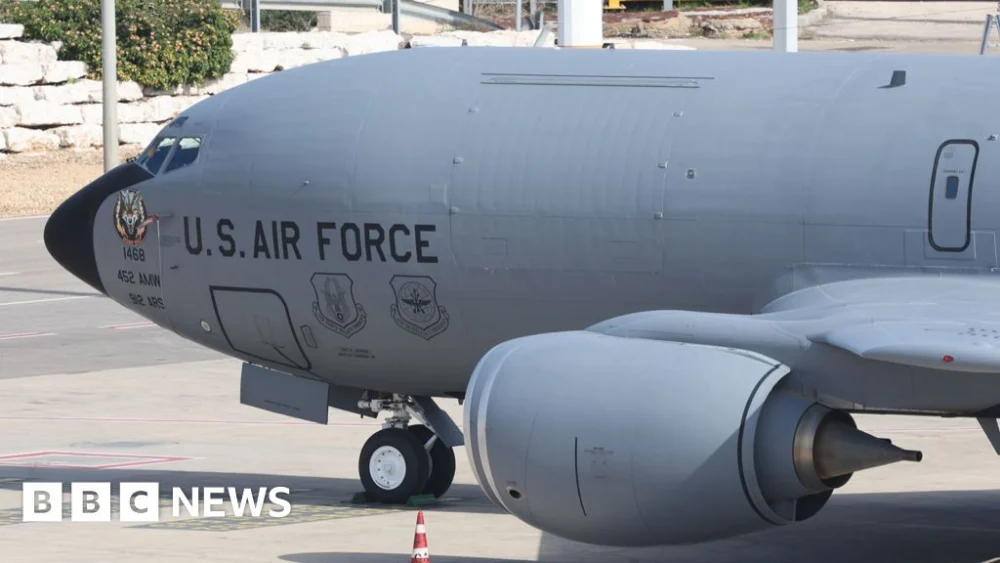
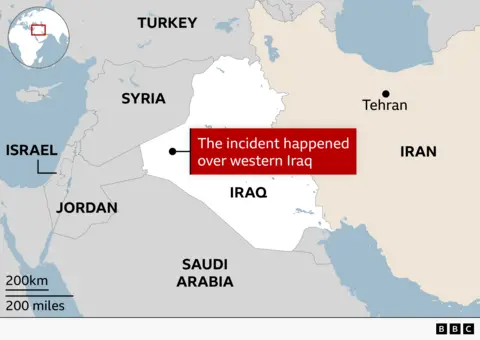
A United States Air Force KC-135 Stratotanker aerial refuelling aircraft has crashed in western Iraq, resulting in the confirmed deaths of four of its six crew members, US Central Command (Centcom) announced. The incident, which occurred on Thursday around 14:00 ET (19:00 GMT), marks a significant loss for the US military as it continues operations in a volatile Middle East theatre, particularly amidst what has been described as an ongoing "US-Israel war with Iran." Rescue efforts are still underway for the two remaining crew members, with Centcom stating that neither hostile nor friendly fire was involved in the downing of the aircraft, an assertion that stands in stark contrast to claims made by Iranian state television.
The KC-135, a vital component of US air power, was reportedly involved in ongoing US operations against Iran when it crashed. It was one of two aircraft engaged in the mission, with the second tanker successfully landing after the incident. The circumstances surrounding the crash are currently under investigation by military authorities, a standard procedure for such serious aviation incidents. The identities of the deceased personnel are being withheld for 24 hours to allow for proper notification of their next of kin, a protocol designed to afford privacy and respect to military families during a period of immense grief.
The KC-135 Stratotanker: Backbone of US Air Power
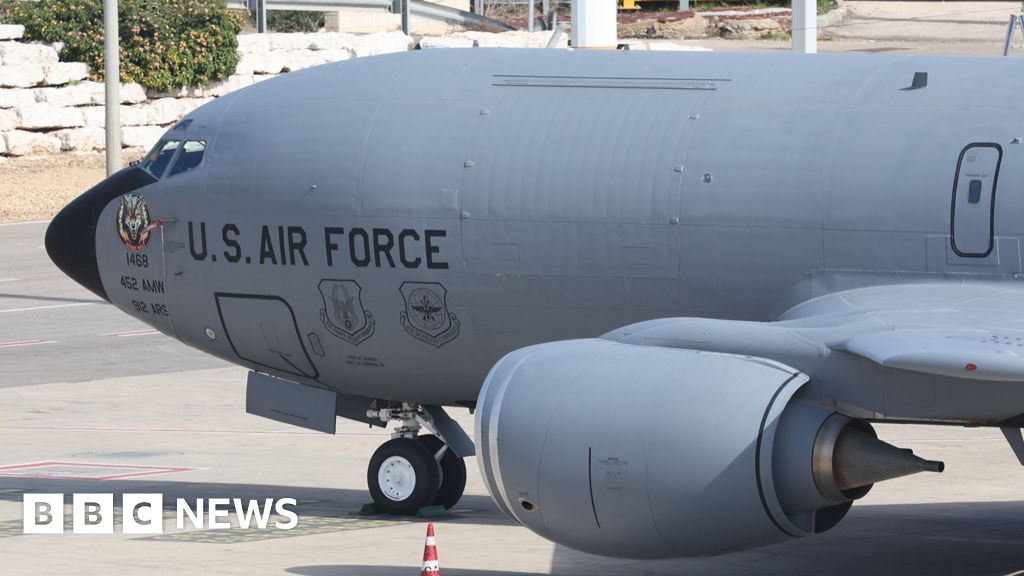
The Boeing-manufactured KC-135 Stratotanker is an iconic aircraft, having served as the primary aerial refuelling platform for the United States Air Force since the mid-1950s. Its remarkable longevity and adaptability underscore its critical importance to global US military operations. First delivered in 1957, the KC-135 fleet has continuously undergone upgrades to maintain its operational relevance, a testament to its robust design and strategic value. These aircraft are designed to extend the range and endurance of combat aircraft, allowing fighter jets, bombers, and other military planes to conduct longer missions without needing to return to base for fuel. This capability is indispensable for projecting power and maintaining air superiority across vast distances.
A standard KC-135 crew typically consists of at least a pilot, a co-pilot, and a boom operator. The boom operator is responsible for controlling the crucial refuelling arm, a complex task requiring precision and coordination, particularly during mid-air operations that can take place at high altitudes and speeds. Some missions may also include a navigator, depending on the operational requirements and the specific variant of the aircraft. The loss of four experienced crew members represents not only a profound human tragedy but also a significant blow to the operational readiness of a highly specialized unit. The individuals serving on these tankers are highly trained professionals, critical to the success of complex air combat and reconnaissance missions.
Historically, KC-135s played an extensive role in conflicts such as the Vietnam War, the Persian Gulf War, and more recently, operations in Afghanistan and Iraq. During the first Gulf War in 1990-1991, they were instrumental in enabling coalition air forces to conduct sustained air campaigns over Iraq and Kuwait, significantly extending the reach and effectiveness of fighter and bomber fleets. Their presence in the current Middle East theatre underscores their ongoing importance in supporting air assets involved in intelligence, surveillance, reconnaissance (ISR), and combat operations against various threats, including state and non-state actors. The aircraft involved in Thursday’s crash was operating in support of US efforts against Iran, highlighting the strategic context of its mission.
Conflicting Accounts and the Search for Answers
Centcom’s immediate statement that neither hostile nor friendly fire was involved in the crash is a critical detail, suggesting a potential mechanical failure or an unforeseen operational issue. However, this assertion has been directly challenged by Iranian state television, which, citing military sources, claimed that an "allied group" had targeted the plane with a missile. This stark contradiction immediately introduces a layer of complexity and geopolitical tension to the investigation.
The region of western Iraq where the crash occurred is known for the presence and activity of various pro-Iranian militias, often operating under the umbrella of the Popular Mobilization Forces (PMF). While these groups are nominally integrated into the Iraqi security apparatus, many maintain strong ideological and operational ties to Iran, and some have been involved in past attacks against US forces and interests in Iraq. Centcom described the airspace as "friendly," a term that can be ambiguous in a region where different factions exert varying degrees of control and influence. Even in areas officially under Iraqi government control, the presence of non-state actors capable of hostile actions complicates the security landscape.
The ongoing investigation will be crucial in determining the veracity of these conflicting claims. A thorough inquiry will involve analyzing flight recorders, examining debris, interviewing witnesses, and reviewing intelligence data. The findings will have significant implications not only for understanding the cause of this specific tragedy but also for informing future US military operations and strategic assessments in the region. If a mechanical failure is confirmed, it could lead to fleet-wide inspections and maintenance reviews for the aging KC-135 fleet. If, however, evidence surfaces supporting a hostile act, it would represent a dangerous escalation in the already fraught US-Iran tensions.
Escalating Regional Conflict: A Broader Canvas of Instability
Thursday’s crash adds a somber chapter to the rapidly escalating conflict in the Middle East, which has been characterized by increased hostilities between the US, Israel, and Iran. The article refers to this as the "US-Israel war with Iran," which began "a fortnight ago," indicating a recent surge in direct confrontations and proxy engagements. The loss of the KC-135 brings the official US military death toll in this specific period of conflict to 11 and marks the fourth US aircraft lost during the current hostilities.
Earlier this month, a separate incident saw three F-15 fighter jets shot down over Kuwait in what officials described as "an apparent friendly fire incident." Fortunately, all six crew members from those aircraft were able to safely eject. While distinct in their circumstances, both incidents highlight the inherent dangers and complexities of military operations in a highly contested environment, whether due to mechanical failure, operational error, or hostile action. The cumulative loss of personnel and advanced military assets underscores the growing human and material cost of the regional standoff.
The geopolitical landscape is further complicated by other developments. On Friday, Israel’s military announced a fresh "wide-scale wave of strikes" targeting Iranian infrastructure across Tehran, with explosions subsequently reported in and near the Iranian capital. These strikes represent a significant escalation of direct confrontation between Israel and Iran, echoing the broader regional tensions. The timing of these events, coinciding with the US aircraft crash, paints a picture of a region teetering on the brink of wider conflict.
Allied Casualties and International Involvement
The instability in Iraq is not solely impacting US forces. The French military announced on Friday the death of a French soldier, Staff Sgt Arnaud Frion, who was killed by a drone strike yesterday at a Kurdish military base in northern Iraq. Six other French soldiers were wounded in the attack. These soldiers were stationed at the base as part of an international effort to train Iraqi units, underscoring the multinational nature of military presence and the shared risks faced by allied forces in the region. This incident serves as a stark reminder that the conflict’s reach extends beyond direct US-Iran or Israel-Iran confrontations, impacting all international actors involved in stabilizing the region and countering various extremist and hostile groups.
The involvement of multiple international players – including the US, Israel, France, and various local Iraqi and Kurdish forces – each with their own objectives and alliances, contributes to an extremely complex and unpredictable operational environment. The presence of these forces is often aimed at supporting Iraqi sovereignty and combating terrorism, but it also places them squarely in the crosshairs of regional power struggles and proxy conflicts.
Political Reactions and Economic Implications
The escalating tensions have not gone unnoticed at the highest political levels. US President Donald Trump has made statements indicating that the "war could end ‘very soon’" while simultaneously suggesting the US could "go further." This dual message reflects the delicate balance between de-escalation and maintaining a strong posture in the face of perceived threats. Trump’s comments also explicitly linked the conflict to the price of oil, which has "shot up" recently. The global energy market is highly sensitive to instability in the Middle East, a major oil-producing region, and any sustained conflict carries significant economic implications worldwide. Higher oil prices can impact global economies, consumer costs, and geopolitical strategies, adding another layer of complexity to the calculus of military action.
The immediate implications of the KC-135 crash are profound. For the US military, it is a devastating loss of life and a critical asset. It will undoubtedly prompt a thorough review of operational procedures, intelligence assessments, and force protection measures in the region. For the families of the fallen, it is an unimaginable tragedy. For the wider geopolitical landscape, the incident, coupled with the conflicting reports regarding its cause, further fuels the narrative of a region engulfed in a dangerous and unpredictable conflict. The claims of a missile strike by an "allied group" from Iranian state TV, if proven true, would necessitate a robust response from the US, potentially leading to further escalation. Conversely, if the investigation confirms a non-hostile cause, it might offer a sliver of de-escalation potential, though the broader tensions remain.
The coming days and weeks will be critical as investigations unfold and diplomatic efforts, or indeed military actions, continue to shape the trajectory of this complex and dangerous regional confrontation. The loss of the KC-135 Stratotanker and its crew serves as a stark and tragic reminder of the human cost and inherent risks associated with military operations in an increasingly volatile Middle East.