


Swedish director Nathan Grossman’s latest documentary, Amazomania, presents a searing and multifaceted examination of a 1996 expedition into the Brazilian Amazon, transforming archival footage into a profound exploration of colonial legacies, media ethics, and the very nature of observation. The film, which premiered in the main competition at the 23rd edition of CPH:DOX, the Copenhagen International Documentary Film Festival, on March 16, is structured as a compelling narrative of two distinct halves, each reflecting on the initial encounter and its enduring consequences.
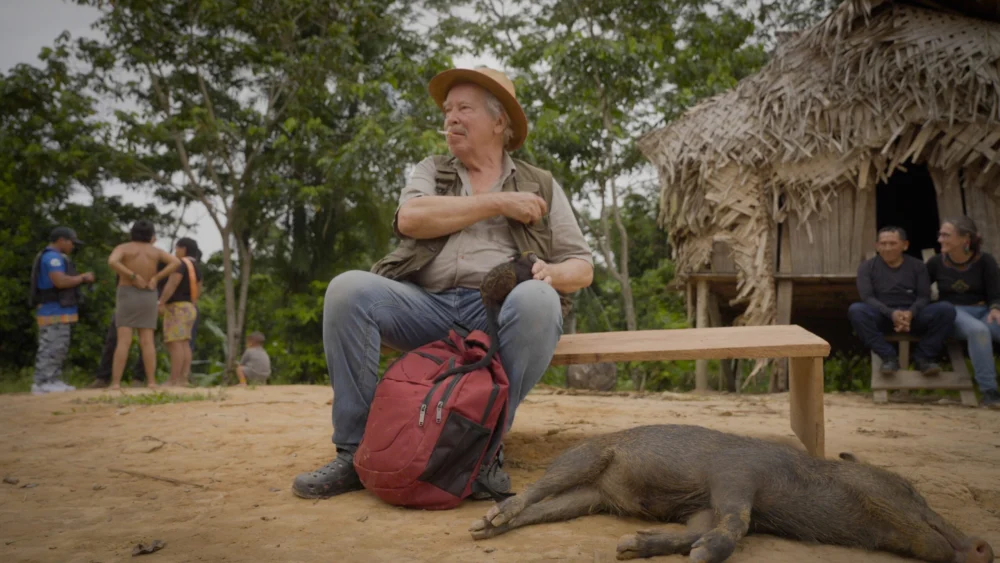
The documentary’s genesis lies in a trove of unexamined archival material from a 1996 expedition. This journey, spearheaded by Brazilian civil servant and Swedish journalist Erling Söderström, aimed to make contact with the Korubo tribe, a group known for their deliberate isolation from the encroaching modern world. The footage captured during this initial foray was, at the time, hailed as a groundbreaking achievement, offering rare and sensational glimpses into a life untouched by external civilization. However, as Grossman delves deeper, the celebratory narrative begins to unravel, revealing a complex web of cultural misunderstandings and ethical quandaries.
Amazomania meticulously dissects the white man’s gaze, critically turning the lens back onto the colonial mindset that often underpins such "explorations." Grossman, known for his previous works like I Am Greta and Climate in Therapy, employs a rigorous approach, not only re-examining the historical footage but also engaging directly with the Korubo people themselves, decades after the initial contact. This dual perspective forms the core of the documentary’s "tale of two halves."
The First Encounter: A Sensational Discovery
The initial segment of Amazomania transports viewers back to 1996. The expedition, driven by a desire to document an uncontacted tribe, captured images that were perceived as extraordinary at the time. The footage depicted the Korubo in their natural environment, living a life seemingly removed from the complexities of global society. The success of this initial documentation lay in its ability to present a novel and captivating narrative to Western audiences, fulfilling a deep-seated fascination with the "other" and the allure of the unknown. This period, characterized by a sense of discovery and anthropological curiosity, laid the groundwork for the film’s later, more critical introspection. The prevailing narrative surrounding such encounters often prioritized the "discoverers" and their achievements, with limited consideration for the perspectives or agency of the indigenous populations.
The Return: Confronting the Legacy
The second half of Amazomania follows Söderström on a return journey to the Korubo tribe, thirty years after the initial expedition. This subsequent encounter, however, is far from a simple reunion. It exposes profound misunderstandings that have festered over the decades and brings to the forefront the Korubo’s evolving understanding of their own representation. The tribe, now more aware of the implications of their depiction in Western media, demands compensation and asserts their inherent right to control their own narrative. This shift signifies a crucial turning point, moving from passive subjects of observation to active participants in the storytelling process.
The CPH:DOX website aptly describes Amazomania as "a complex study in documentary method and ethics, and it is a film with enormous confidence in the audience’s own judgement." This statement underscores Grossman’s intention to engage viewers in a critical dialogue, prompting them to question their own preconceived notions and the ethical frameworks governing documentary filmmaking, particularly when engaging with isolated communities.
Genesis of a Critical Inquiry
Director Nathan Grossman shared insights into the film’s origins and the complex moral issues it navigates. The project began during the COVID-19 pandemic, when a friend informed Grossman about an archive belonging to Swedish filmmaker Erling Söderström. Intrigued, Grossman visited the archive, discovering a substantial collection of un-digitized footage in precarious condition. He felt compelled to at least digitize the material and examine its contents.
"During the COVID pandemic, a friend of mine told me that he had heard that this archive of a Swedish filmmaker, Erling, existed," Grossman explained. "So, I decided to go visit, figuring that this wouldn’t be the complete material. But a large part of it still existed and had never been digitized and was in fairly touchy condition. I felt that I wanted to at least digitize the full material and have a look."

Unearthing Decades of Footage
The archive contained approximately 60 to 70 hours of raw footage. The process of organizing this material, piecing together audio components of varying quality, and viewing it in chronological order proved to be a significant undertaking. It was during this meticulous review that Grossman realized the depth and complexity of the recorded events, which differed substantially from the initial presentation of the adventure documentary that emerged in the early 2000s. The original film, likely emphasizing the adventure aspect, had seemingly glossed over the nuanced interactions and potential ramifications of the encounter.
The Korubo’s Perspective: A Demand for Agency
Grossman’s approach to understanding the Korubo’s perspective was deeply rooted in curiosity and a commitment to ethical engagement. He initiated discussions with anthropologists and, crucially, with members of the Korubo community themselves. His primary objective was to gauge their interest in a new film and to understand their views on the 1996 encounter and its subsequent media representation.
"I watched the footage and started discussing it with anthropologists and members of the Korubo themselves," Grossman stated. "I just went in with a very big chunk of curiosity and wanted the community’s view on this. And I wanted to understand if they thought it would have any relevance to make a new film looking at this. I was also interested in their relationship with the Western media. I saw in the original footage that there was this friction. And I also read some academic reports pointing out that the Korubo group had experienced a very big disappointment, looking at Western media and, actually, the camera as an object."
This research revealed a significant point of friction and disappointment among the Korubo regarding their portrayal in Western media. The camera, a symbol of technological advancement and observational power for the outsiders, was perceived very differently by the tribe.
The Camera as a Misunderstood Object
The documentary highlights a pivotal moment of misinterpretation during the initial contact: the Korubo mistook the large cameras for firearms. This profound misunderstanding underscores the vast cultural chasm and the inherent power imbalance at play.
"What is interesting is that this was a group that lived in isolation, and one of the first hyper-industrialized objects that they ran into was a really big camera," Grossman elaborated. "And the Korubo thought the camera was a gun. Amazomania really circles around that. It’s not an anthropological film about the Korubo community specifically. It’s more about looking at the Western media and the white man’s gaze and fascination for this kind of adventure story."
This revelation shifts the focus from an ethnographic study of the Korubo to a critical examination of the Western media’s role, its inherent biases, and its long-standing fascination with exoticized narratives of discovery. The film posits that the "adventure story" is often constructed through a specific lens, one that may not accurately reflect the reality or agency of the people being documented.
Audience Engagement and the Concept of Reparations
Amazomania‘s impact on audiences has been a key aspect of its reception. Grossman notes that viewers are initially captivated by the adventure inherent in the footage, but are then drawn into a more critical reflection when the Korubo’s voices and perspectives are introduced. This dual engagement allows the audience to become active participants in the film’s critique.
"What’s lovely is that more or less all audiences that have seen the film have been thrilled by the adventure, which is the plan of the movie, and then when it kind of turns on its head and we get to hear the voices of the community, they really look at their own fascination for these images in a different way. The audience is included in this critique. So, there is an audience part of both seeing the adventure and then looking critically at yourself. I think it’s a nice way to include the audience that way."

The film also tackles the complex issue of reparations, translating academic concepts into visceral cinematic experiences. Editor Jordana Berg, whose work on Apocalypse in the Tropics is also recognized, played a crucial role in crafting this narrative. Grossman emphasizes the power of cinema to make abstract ideas tangible.
"Questions of reparations are a fairly academic subject. But the cinematic room is so great for making sure that these intellectual ideas become visceral. When we zoom in on a specific event and a specific place and time, we can understand more complicated cultural ideas. I think the idea of reparations is very interesting, and it’s been big in the museum world when it comes to artifacts, but I think it’s also interesting to look at it a little bit from an immaterial rights perspective and from the journalistic world."
This suggests a broadening of the reparations discourse beyond tangible assets to include intellectual property, narrative control, and the intangible harms inflicted by historical misrepresentation.
Relevance in an Era of Increased Contact
Grossman underscores the continued relevance of Amazomania in a world where interactions with isolated groups, though perhaps less frequent than in the past, are still occurring and may even increase due to environmental shifts. He notes that over 200 groups worldwide still live in voluntary isolation.
"We may think that there are no more groups living in voluntary isolation, that everyone is part of our Western or global civilization. But that’s not true. There are more than 200 groups still living in voluntary isolation, and with the changes in the global climate and environment, unfortunately, we will have more contact events. So, it’s important to have a film like Amazomania for us in the media, also to think critically about how we should address such future events and consider what the best way could be."
The film serves as a cautionary tale and a guide for future journalistic practices, urging a more ethical and respectful approach to documenting and interacting with such communities.
Evolving Practices and Future Aspirations
Grossman expresses hope that the ethical standards in documentary filmmaking will continue to evolve. In Amazomania, the Korubo community is recognized as executive producers, signifying a significant step towards shared ownership and collaboration. However, Grossman aspires for a future where indigenous communities possess full rights to their own historical materials and can create their own films.
"I hope that in 30 years’ time, things will have advanced even further from the way we made this film and that there will be even better practices. On Amazomania, the [members of the] Korubo community are executive producers. They are stakeholders in the film. But in the future, I hope that they will be able to get the rights to this material and also make their own films about the development of this community."
This vision champions self-determination and empowers indigenous voices to shape their own historical narratives, moving beyond external interpretation.

Collaborative Creation and Community Input
The process of finalizing Amazomania involved direct collaboration with representatives from the Korubo community. This collaborative editing phase, conducted in late 2025, ensured that the film reflected their perspectives and arguments. While not the entire community of 150 individuals had seen the final cut, key representatives across different age groups and genders participated, marking a critical step in ensuring the film’s ethical integrity.
"I worked on the last edit of the film together with representatives from the community in late 2025. So, it’s not that the full community of 150 people has seen it, but community representatives of different ages and genders have watched the film. That was a very, very important step, watching it together with them and representing them [based on their input and] arguments."
The Meaning Behind "Amazomania"
The film’s evocative title, Amazomania, emerged organically during the project’s final stages. Grossman describes it as a reflection of a shared Western fascination with the Amazon and the thrill of adventure.
"It’s crazy, we’ve come up with a new noun. I think we all have slight Amazomania. I come back to this fascination with this place and this feeling of adventure. We didn’t decide on the title until the final steps of the project. Erling probably has more Amazomania than most of us, but the title is not pointed directly at Erling. I think it [reflects] a broader feel for our Western gaze that has Amazomania."
The title encapsulates a collective, perhaps even obsessive, desire within Western culture to explore, document, and ultimately possess the exotic and the unknown, particularly when it pertains to places like the Amazon. Amazomania itself challenges this impulse, urging a more equitable and respectful engagement with the world and its diverse inhabitants.
The documentary is produced by Cecilia Nessen, with cinematography by Grossman, Söderström, and Diego Lajst. Jordana Berg and Grossman served as editors. Autlook Filmsales is handling international sales. Amazomania is poised to spark crucial conversations about media responsibility, historical accountability, and the ongoing dialogue between cultures in an increasingly interconnected world.