

A federal judge in New York on Thursday expressed significant sympathy towards arguments that former Venezuelan President Nicolas Maduro and his wife, Cilia Flores, should be permitted to utilize funds from the Venezuelan government to finance their legal defense. This pivotal development emerged during a contentious hearing in a high-profile narco-terrorism case, where the fundamental right to legal representation clashed with stringent U.S. sanctions against the South American nation and its former leadership. The unusual legal dispute underscores the intricate geopolitical complexities inherent in the prosecution of a former head of state by a foreign power.
The Heart of the Legal Battle: Funding and Sanctions
The crux of Thursday’s proceedings revolved around a motion filed by Maduro and Flores’s legal team, seeking the dismissal of the narco-terrorism charges on the grounds that the U.S. government, through its Office of Foreign Assets Control (OFAC), had unlawfully denied them access to Venezuelan state funds for their defense. Their attorneys argued that this denial effectively crippled their ability to mount an adequate defense, violating core due process rights.
Prosecutors, however, countered forcefully, asserting that Maduro had "plundered" Venezuela’s national wealth during his tenure and should therefore not be allowed to draw upon those same state coffers for his legal expenses. They highlighted national security concerns and claimed the couple possessed personal funds sufficient to cover their legal costs—a claim vehemently denied by the defense.
Presiding over the hearing, 92-year-old Judge Alvin Hellerstein acknowledged the gravity of the situation. While he indicated he would not dismiss the entire case over the funding impasse, he firmly stated that "the right to defense is paramount." The judge’s remarks signal a critical dilemma: balancing the U.S. government’s policy of sanctions and its efforts to recover allegedly misappropriated state assets against the universal principle of a fair trial, even for individuals accused of severe international crimes. Judge Hellerstein concluded the session without a definitive ruling on the funding issue or a new court date, indicating a decision would be issued at a later time.
The Dramatic Arrest and Charges
Nicolas Maduro and Cilia Flores were apprehended by U.S. forces in a dramatic night-time raid on January 3, from their compound in Caracas. The extraordinary operation saw them swiftly transported to New York to face a litany of severe allegations, including narco-terrorism conspiracy, cocaine importation conspiracy, possession of machine guns and destructive devices, and conspiracy to possess such weaponry. Both Maduro and Flores have vehemently denied all charges.
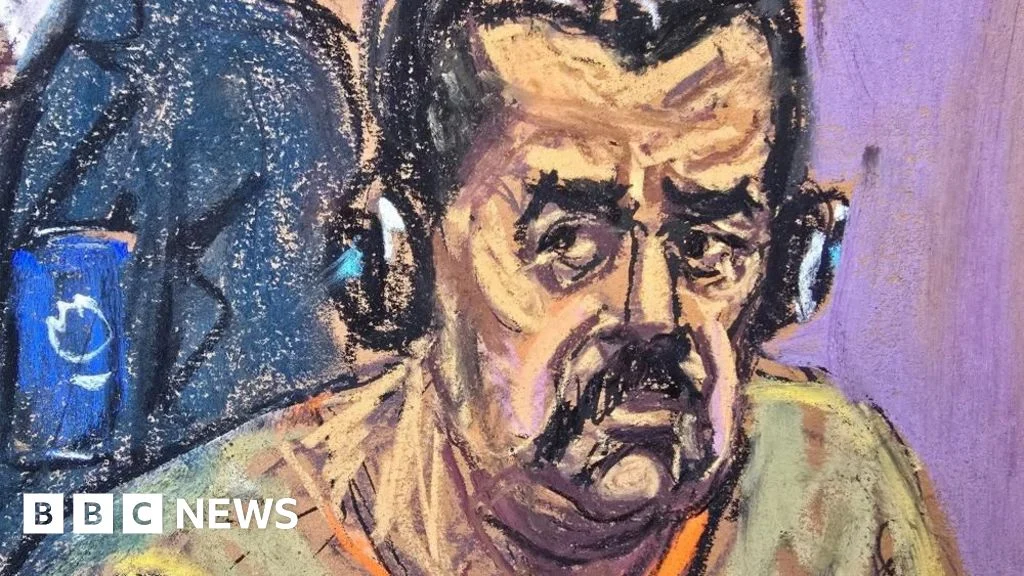
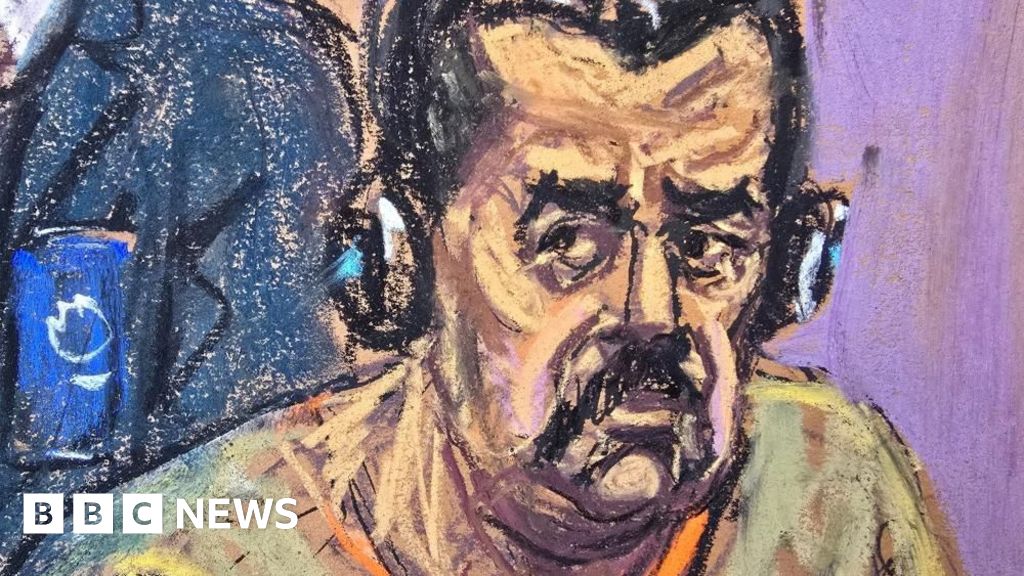
This was not their first appearance in a New York courtroom. The couple’s initial hearing was marked by a defiant speech from Maduro, who claimed he had been "kidnapped" and asserted his innocence. That tumultuous session reportedly concluded with a man shouting at Maduro from the back of the courtroom, reflecting the intense public and political polarization surrounding the former leader. In stark contrast, Thursday’s hearing saw Maduro and Flores, clad in green khaki prison jumpsuits, sitting quietly between their lawyers, listening intently to translations of the arguments through headphones. Their subdued demeanor underscored the immense pressure of their legal predicament.
Background and Chronology of a Geopolitical Storm
The legal battle unfolding in New York is the culmination of years of escalating tensions between the United States and Venezuela under Nicolas Maduro’s leadership.
Maduro’s Ascent and Venezuela’s Crisis: Nicolas Maduro rose to power in 2013 following the death of his mentor, Hugo Chávez. Inheriting a nation rich in oil but deeply divided, his presidency coincided with, and is widely blamed for, a catastrophic economic collapse. Venezuela has since been gripped by hyperinflation, severe shortages of food and medicine, widespread poverty, and a massive exodus of its citizens, with over 7 million Venezuelans having fled the country—one of the largest displacement crises in the world. The U.S. and many international bodies have consistently criticized Maduro’s government for human rights abuses, suppression of dissent, and undermining democratic institutions.
U.S. Sanctions and Policy: The United States began imposing targeted sanctions on Venezuelan officials and entities in 2014, gradually escalating them to cripple the country’s oil industry and financial system in an attempt to pressure Maduro to step down. In January 2019, the U.S. recognized opposition leader Juan Guaidó as Venezuela’s legitimate interim president, further isolating Maduro’s regime on the international stage. These sanctions, managed by OFAC, are designed to prevent U.S. persons from engaging in transactions with sanctioned individuals or entities, including providing financial services. It was under these sanction regimes that OFAC initially granted, then controversially revoked, the license allowing Venezuelan government funds to be used for the Maduros’ defense.
The Narco-Terrorism Indictment: The specific charges against Maduro and Flores stem from a landmark indictment unsealed by the U.S. Justice Department in March 2020. This indictment accused Maduro and more than a dozen other current and former Venezuelan officials of operating a "narco-terrorism partnership" with the Revolutionary Armed Forces of Colombia (FARC) for over two decades. Prosecutors alleged that Maduro, along with other high-ranking officials, utilized Venezuela as a staging ground for drug shipments, enriching themselves through drug trafficking while conspiring to flood the U.S. with cocaine. The indictment offered a $15 million reward for information leading to Maduro’s arrest, underscoring the severity with which U.S. authorities viewed the alleged criminal enterprise.
The Political Aftermath of the Arrest: Maduro’s dramatic capture on January 3, 2024, marked a seismic shift in Venezuelan politics and U.S.-Venezuelan relations. The subsequent ascension of former Vice-President Delcy Rodríguez to power, and her government’s stated resumption of diplomatic ties with the U.S., introduces a complex new dynamic. Judge Hellerstein specifically questioned the prosecution’s logic regarding sanctions and national security, noting that the foreign policy situation had fundamentally changed since Maduro’s arrest. "We are doing business with Venezuela," he remarked, implying that the rationale for denying funds based on a hostile, sanctioned regime might no longer fully apply to the new administration. This pivot suggests a potential U.S. interest in stabilizing relations with the post-Maduro Venezuelan government, even as the legal proceedings against the former leader continue.
Legal Arguments and Judicial Deliberations
The debate over legal fees is far from a mere procedural hurdle; it touches upon fundamental principles of justice. Defense attorney Barry Pollock argued passionately that the extraordinary nature of the case against a former foreign leader, being tried in another country, would overwhelm any public defender. He contended that such a complex and internationally scrutinized case demands specialized legal expertise and resources, which a court-appointed lawyer might struggle to provide, thereby hampering the quality of counsel. Judge Hellerstein appeared receptive to this argument, acknowledging the unique challenges posed by the prosecution of a former head of state.
Prosecutors, meanwhile, maintained that OFAC’s decision to deny access to Venezuelan government funds was justified, not only due to longstanding sanctions against Maduro’s regime but also because of the alleged "plundering the wealth of Venezuelans" for personal gain. They argued that allowing state funds to be used would effectively reward past corruption and circumvent the very purpose of the sanctions. However, the judge’s questioning of this logic, in light of the new Venezuelan government and resumed diplomatic ties, highlights the delicate balance the court must strike between upholding sanctions policy and ensuring due process.
The judge openly sought "relief" from both sides, pressing them on what specific outcomes they envisioned if he were to side with one party. Prosecutors indicated that if the judge were to issue a ruling signaling an inclination towards the defense’s request for dismissal based on the funding issue, they would be willing to revisit the matter with the U.S. government to reconsider releasing the funds. This suggests a potential avenue for compromise, avoiding a full dismissal of the case while addressing the defense’s concerns about adequate representation.
Confinement and Future Proceedings
Currently, Maduro and Flores are being held at the Metropolitan Detention Center, a federal prison in Brooklyn. They have not yet made an application for bail, and no trial date has been set. The pre-trial phase is expected to be protracted, given the complexities of the charges, the international implications, and the ongoing dispute over legal funding. The case promises to be a landmark legal battle, scrutinizing not only the alleged crimes but also the intricate intersection of international law, U.S. foreign policy, and the rights of defendants, regardless of their past political stature.
Reactions from Caracas: A Nation Divided
News of the court proceedings in New York continues to reverberate deeply within Venezuela, a nation still grappling with profound political and economic divisions. Despite government censorship and control over state media, citizens are closely following developments through international news outlets and social media, highlighting the intense interest in Maduro’s fate.
Ana Patricia, a 72-year-old retired lawyer residing in Caracas, conveyed a complex mix of emotions to BBC News Mundo reporters. "They can control what Venezuelan media publish, but not what is published in the international press," she noted, underscoring the pervasive information control. Regarding Maduro, she expressed a degree of personal sympathy, stating, "He is a man who had everything but lost it through greed and an inflated ego. I feel sorry for him, because in the end he is a human being, but I hope he receives a life sentence. He has to pay for his crimes." Her sentiment reflects a widespread desire for accountability among those who believe Maduro’s policies led to the nation’s downfall.
In stark contrast, Agustina Parra, a 67-year-old retired nurse from western Caracas, expressed unwavering faith in the former leader. "My President Maduro will be released," she confidently told the BBC. "Despite his flaws, he has not been a bad president. He knows he is innocent and he will prove it." Parra’s perspective highlights a segment of the Venezuelan population that remains loyal to Maduro, often attributing the country’s woes to U.S. intervention and sanctions. She criticized the U.S. government, claiming, "They don’t even know what to accuse him of: They accuse him of drug trafficking, of weapons possession… And I cannot accept the actions of President Trump in Venezuela, in which so many people died." Her comments underscore the deep-seated anti-U.S. sentiment prevalent among some Chavista supporters, who view the trial as a politically motivated attack.
Broader Implications and the Path Ahead
The prosecution of Nicolas Maduro carries significant implications, extending far beyond the confines of a New York courtroom. It sets a powerful precedent for how the U.S. and other nations might pursue justice against former foreign leaders accused of serious crimes. The case challenges traditional notions of diplomatic immunity, particularly for leaders no longer in power, and could embolden efforts to hold others accountable for alleged human rights abuses or criminal enterprises.
For U.S.-Venezuela relations, the trial represents a delicate balancing act. While the U.S. has resumed diplomatic ties with the new Venezuelan government under Delcy Rodríguez, the continued prosecution of Maduro could remain a point of contention. The new administration’s stance on the trial—whether it cooperates, condemns, or maintains a neutral position—will be crucial in shaping the future trajectory of bilateral relations.
Regionally, the trial sends a clear message about the U.S. commitment to combating narco-terrorism and organized crime in Latin America. It could influence the dynamics of drug trafficking routes, potentially disrupting established networks, and may encourage greater cooperation from other regional governments in law enforcement efforts.
As Judge Hellerstein deliberates on the critical issue of legal funding, the world watches. The outcome of this dispute will not only determine the immediate future of Nicolas Maduro’s defense but will also cast a long shadow over international legal norms, the reach of U.S. jurisdiction, and the complex interplay between justice, foreign policy, and national sovereignty. The path ahead promises to be a long and arduous one, marked by intricate legal arguments and profound political resonance.