

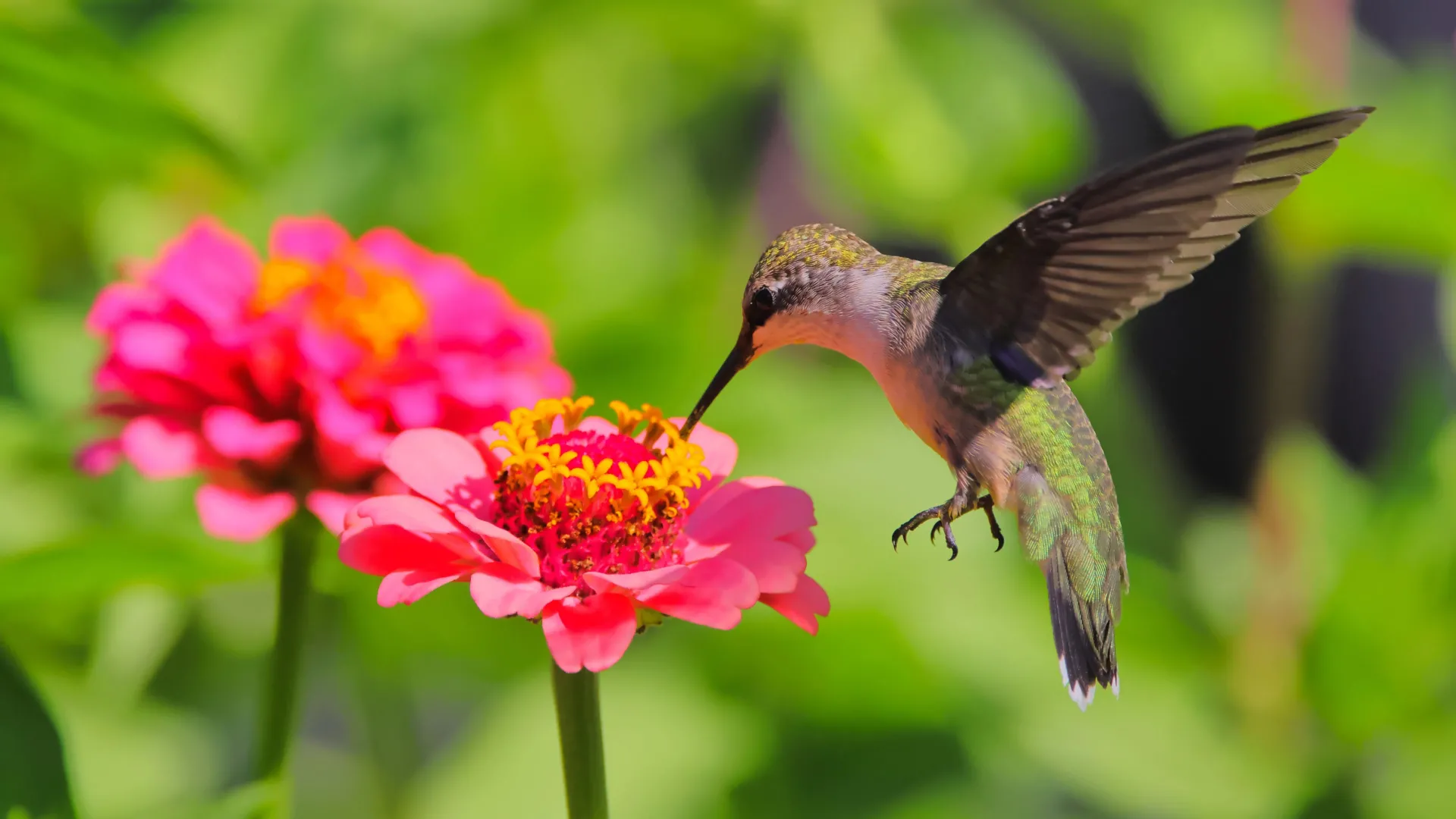
As the delicate dance of pollination unfolds, with bees and hummingbirds flitting between blossoms, their vital work of transferring pollen is accompanied by an unexpected dietary component: small, yet measurable, amounts of alcohol. A groundbreaking study by biologists at the University of California, Berkeley, has revealed the widespread presence of ethanol in floral nectar, prompting a reevaluation of how pollinators interact with their environment and potentially shedding light on evolutionary adaptations in various species.
Unveiling the Hidden Ingredient in Nectar
The research, published on March 25 in Royal Society Open Science, represents the first comprehensive survey to systematically investigate alcohol content in floral nectar. The findings indicate that ethanol is not an anomaly but rather a common constituent, detected in at least one sample from a significant majority of the 29 plant species examined. While most samples contained only trace amounts, attributed to the natural fermentation of sugars by yeast present in the nectar, one sample registered a notable concentration of 0.056% ethanol by weight. This level, while seemingly minuscule, is roughly equivalent to one-tenth of a proof.
The implications of this discovery are far-reaching, especially considering the crucial role nectar plays as an energy source for many pollinator species. Hummingbirds, for instance, are renowned for their prodigious nectar consumption, ingesting daily quantities that range from 50% to 150% of their body weight. Extrapolating from these feeding habits, the UC Berkeley team estimates that an Anna’s hummingbird, a common sight along the Pacific coast, could consume approximately 0.2 grams of ethanol per kilogram of body weight each day. This intake is remarkably comparable to a human consuming about one standard alcoholic beverage.
Despite this regular exposure, bees and birds do not exhibit overt signs of intoxication. This observation aligns with earlier research by the same team, which demonstrated that hummingbirds can tolerate sugar water with up to 1% alcohol. However, their preference shifts, and they begin to actively avoid solutions when alcohol concentrations exceed this threshold.
Beyond Intoxication: Subtle Effects and Behavioral Influences
The presence of ethanol in nectar, even at low concentrations, raises intriguing questions about its potential effects beyond simple inebriation. Nectar is known to contain a variety of bioactive compounds, including nicotine and caffeine, which are known to influence animal behavior. Researchers are now considering whether ethanol might exert similar subtle, yet significant, modulatory effects on pollinator behavior.
Doctoral student Aleksey Maro, a key researcher in the nectar analysis, explained the physiological perspective: "Hummingbirds are like little furnaces. They burn through everything really quick, so you don’t expect anything to accumulate in their bloodstream." However, he added, "But we don’t know what kind of signaling or appetitive properties the alcohol has. There are other things that the ethanol could be doing aside from creating a buzz, like with humans."
Professor Robert Dudley, a leading figure in integrative biology at UC Berkeley and a senior author on the study, echoed this sentiment. He suggested that ethanol might offer other benefits specific to the foraging biology of these species. "There may be other kinds of effects specific to the foraging biology of the species in question that could be beneficial," Dudley stated. "They’re burning it so fast, I’m guessing that they probably aren’t suffering inebriating effects. But it may also have other consequences for their behavior."
A Timeline of Discovery: From Feeder Experiments to Feather Analysis
The current study builds upon a foundation of previous research conducted by Dudley’s lab, which has been meticulously exploring the relationship between pollinators and alcohol for several years.
2017: Early experiments involving feeders placed outside Dudley’s office provided initial insights into hummingbird behavior. These trials revealed that Anna’s hummingbirds displayed indifference to low alcohol concentrations (below 1% by volume) in sugar water. However, when the concentration increased to 2%, their visits to the feeder were reduced by approximately half, suggesting a discernible limit to their tolerance. "Somehow they are metering their intake, so maybe zero to 1% is a more likely concentration that they would find in the wild than anything higher," Dudley commented at the time, indicating that natural nectar likely falls within a range that is palatable and manageable for these birds.
Later Investigations: Building on these observations, a subsequent study led by former graduate student Cynthia Wang-Claypool focused on the metabolic processing of alcohol. This research detected ethyl glucuronide, a known byproduct of ethanol metabolism, within the feathers of various bird species, including Anna’s hummingbirds. The presence of this metabolite provided crucial evidence that these birds not only ingest alcohol but also possess the physiological machinery to process it, mirroring metabolic pathways observed in mammals. This discovery was a significant step in understanding how these creatures cope with dietary ethanol.
Consolidating Evidence: Ammon Corl, a postdoctoral fellow who collaborated on the current study, highlighted the convergence of these findings: "The laboratory experiment was showing that yes, they will drink ethanol in their nectar, though they have some aversion to it if it gets too high," Corl stated. "The feathers are saying that, yes, they will metabolize it. And then this study is saying that ethanol is actually pretty widespread in the nectar they consume." This cumulative evidence paints a compelling picture of a widespread and integrated interaction between pollinators and naturally occurring alcohol.
Quantifying Intake: A Comparative Look at Alcohol Consumption
To further contextualize their findings, the UC Berkeley team conducted detailed measurements of ethanol levels in nectar samples using an enzymatic assay. They then estimated the daily alcohol intake for several nectar-feeding species, taking into account their caloric needs and known feeding patterns. Due to limitations in detailed feeding data for many species, the researchers focused their comparisons on two hummingbird species, including the Anna’s hummingbird, and three species of sunbirds. Sunbirds, which inhabit Africa, fill an ecological niche similar to that of hummingbirds in the Americas, feeding on plants like honeybush (Melianthus major).
The estimated daily alcohol intake for these nectar-feeding birds, ranging from approximately 0.19 to 0.27 grams per kilogram of body weight, was then compared to that of other animals. This comparative analysis included the European honeybee (0.05 g/kg/day), the pen-tailed tree shrew (a remarkable 1.4 g/kg/day), fruit-eating chimpanzees, and humans consuming one standard drink per day (0.14 g/kg/day). Notably, the pen-tailed tree shrew emerged as the highest consumer among the surveyed species, while the European honeybee exhibited the lowest intake. The nectar-feeding birds, however, fell within a range that suggests a substantial and regular exposure to dietary ethanol.
Interestingly, the feeder experiments provided a further layer of insight. When presented with fermented sugar water, Anna’s hummingbirds appeared to ingest even more alcohol, reaching an estimated 0.30 g/kg/day, exceeding their intake from natural nectar. This observation hints at a potential preference or a greater tolerance for higher concentrations when readily available, further supporting the idea that some species may have evolved specific adaptations to alcohol.
Evolutionary Implications: Tolerance and Preference as Adaptive Traits
The findings of this research are intrinsically linked to a broader, five-year National Science Foundation project. This overarching initiative aims to collect genetic data from hummingbirds and sunbirds to unravel the complex mechanisms by which these species adapt to diverse environments and food sources. These adaptive pressures include living at high altitudes, subsisting on sugar-rich diets, and frequently encountering fermented nectar.
Professor Dudley posited that these studies suggest a wider spectrum of physiological adaptations to dietary ethanol across the animal kingdom than previously understood. "These studies suggest that there may be a broad range of physiological adaptations across the animal kingdom to the ubiquity of dietary ethanol, and that the responses we see in humans may not be representative of all primates or of all animals generally," he stated.
He further elaborated on the potential for unexamined physiological pathways: "Maybe there are other physiological detoxification pathways or other kinds of nutritional effects of ethanol for animals that are consuming it every day of their lives. That’s the interesting thing — this is chronic through the course of the day, but that’s a lifetime exposure post-weaning. It just means that the comparative biology of ethanol ingestion deserves further study."
The research team, which included Berkeley colleagues Rauri Bowie and Jimmy McGuire, both professors of integrative biology and curators at the campus’s Museum of Vertebrate Zoology, is continuing to explore these evolutionary questions. Their work suggests that the human relationship with alcohol, often characterized by intoxication and potential harm, may be just one facet of a much larger and more diverse biological story of ethanol consumption and adaptation. The ability of pollinators to regularly ingest and metabolize alcohol without apparent impairment points towards sophisticated physiological mechanisms that have evolved over millennia, potentially conferring advantages in energy acquisition or resource utilization.
The implications extend beyond understanding pollinator biology. The discovery of widespread ethanol in nectar could prompt a re-examination of historical theories of alcohol’s role in human evolution, suggesting that our ancestors may have also been exposed to and adapted to similar dietary sources of alcohol. This line of inquiry promises to enrich our understanding of the intricate interplay between diet, physiology, and evolutionary success across the natural world.