


Delta Air Lines has officially announced the launch of a new nonstop service between Los Angeles International Airport (LAX) and Ninoy Aquino International Airport (MNL) in Manila, marking a significant milestone in the carrier’s aggressive trans-Pacific expansion strategy. Scheduled to commence on March 28, 2027, this route establishes Delta as the only United States-based airline to offer direct, nonstop flights between Los Angeles and the Philippine capital. This move underscores a broader corporate shift as the airline continues to consolidate its West Coast operations and leverage its multi-billion-dollar infrastructure investments at LAX to capture a larger share of the growing travel demand between North America and Southeast Asia.
The introduction of the Manila route represents a strategic pivot for Delta, which has historically served the Philippines through its hub at Seoul-Incheon via its joint venture partnership with Korean Air. By introducing a direct flight from Los Angeles, Delta is directly challenging incumbent carriers and positioning itself to serve the massive Filipino-American population in Southern California, which represents one of the largest concentrations of the Philippine diaspora globally. The decision to set the launch date for early 2027 allows the airline to align the route with the full operational integration of its latest terminal upgrades and fleet acquisitions.
Strategic Reorientation of the West Coast Gateway
The announcement of the Los Angeles to Manila route is the latest chapter in Delta’s long-term plan to transform LAX into its premier trans-Pacific gateway. For years, Delta has been engaged in a competitive struggle for West Coast dominance, traditionally splitting its focus between Seattle-Tacoma International Airport and Los Angeles. However, recent capital investments suggest a heightened priority for the Southern California market.
Jeff Arinder, Delta’s Vice President of Network Planning, emphasized that the new service is a direct result of the airline’s commitment to the Los Angeles market. "Customers traveling through Los Angeles continue to benefit from Delta’s investments in LAX, including an expanding Asia-Pacific network and the opening of our second Delta One Lounge," Arinder stated. The synergy between high-end ground services and long-haul international connectivity is a cornerstone of Delta’s premium-focused business model.
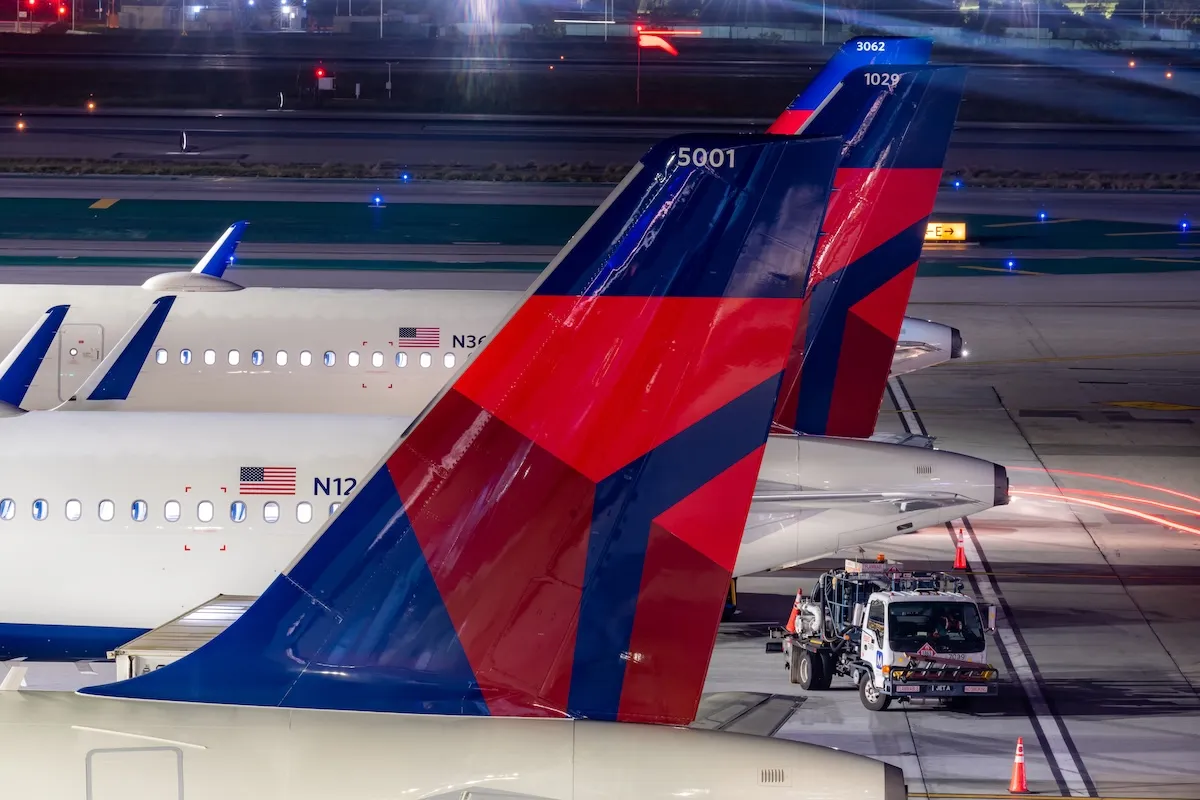
Delta’s "Delta Sky Way" project at LAX, a $2.3 billion joint investment with Los Angeles World Airports (LAWA), has completely reimagined the traveler experience. The project, which was largely completed in 2023, centralized check-in facilities, security checkpoints, and baggage claim areas in Terminal 3, while creating a seamless airside connection to the Tom Bradley International Terminal. This infrastructure is critical for the Manila route, as it allows for efficient transfers for passengers originating from other parts of Delta’s domestic network.
The Economic and Demographic Rationale
The selection of Manila as a nonstop destination is supported by robust demographic and economic data. The Greater Los Angeles area is home to over 600,000 Filipino-Americans, representing the largest Filipino community outside of the Philippines. This creates a consistent, year-round demand for "Visiting Friends and Relatives" (VFR) travel, which has proven to be one of the most resilient segments of the aviation industry, particularly during the post-pandemic recovery period.
Beyond VFR travel, the Philippines has emerged as a critical hub for business process outsourcing (BPO), manufacturing, and technology services. Direct connectivity between Los Angeles—a global hub for entertainment, aerospace, and technology—and Manila is expected to facilitate increased bilateral trade and corporate travel. Currently, the route is primarily served by Philippine Airlines, the nation’s flag carrier. By entering this space, Delta introduces competition that is likely to impact pricing structures and service standards, offering travelers a choice between a foreign national carrier and a major U.S. network airline.
Market analysts suggest that Delta’s entry into this specific nonstop market is a calculated move to capture high-yield corporate contracts that prioritize the consistency and loyalty benefits associated with U.S. carriers. Furthermore, the 2027 launch allows Delta to wait for the delivery of additional long-range aircraft, likely the Airbus A350-900 or the A350-1000, which are capable of handling the nearly 7,300-mile journey with high fuel efficiency and superior passenger comfort.
Technical Specifications and Fleet Integration
While Delta has not yet finalized the specific aircraft tail numbers for the 2027 launch, the route’s distance and demand profile point toward the Airbus A350-900. This aircraft is the flagship of Delta’s international fleet, featuring the Delta One Suite, which provides passengers with a full-height door for privacy, a lie-flat seat, and high-resolution entertainment screens.
The A350 is uniquely suited for the trans-Pacific corridor due to its advanced aerodynamics and carbon-fiber fuselage, which allow for lower cabin altitude and higher humidity levels, significantly reducing the effects of jet lag on ultra-long-haul flights. For a flight duration that is expected to exceed 14 hours westbound, these amenities are crucial for attracting premium-cabin travelers.
The 2027 timeline also provides Delta with a buffer to manage its pilot staffing and training schedules. As the airline takes delivery of more widebody aircraft over the next three years, it will have the capacity to sustain daily service to Manila without compromising its existing schedules to Tokyo-Haneda, Sydney, and Auckland.
Chronology of Delta’s Asia-Pacific Evolution
To understand the significance of the Los Angeles-Manila nonstop flight, one must look at the evolution of Delta’s footprint in Asia over the last decade:
- The Narita Era: Historically, Delta inherited a massive hub at Tokyo-Narita from its merger with Northwest Airlines. Manila was served as a "beyond-Tokyo" tag flight.
- The Shift to Haneda: As the Japanese government opened more slots at the more convenient Tokyo-Haneda airport, Delta moved its entire Tokyo operation there, eventually closing its Narita hub.
- The Incheon Joint Venture: In 2018, Delta launched a joint venture with Korean Air, making Seoul-Incheon its primary gateway to the rest of Asia, including Manila. This allowed Delta to offer dozens of destinations via a single transfer.
- The Direct-Flight Strategy: Post-2020, Delta began prioritizing "point-to-point" ultra-long-haul flights from its U.S. hubs. This led to the launch of Los Angeles to Tahiti, Auckland, and now the announcement of Manila.
This timeline illustrates a clear trajectory: Delta is moving away from relying solely on partners to carry its passengers to Southeast Asia and is instead investing in its own metal for high-demand routes.
Enhancing the Premium Passenger Experience
A central component of Delta’s strategy for the Manila route is the focus on the premium traveler. The airline recently opened its second Delta One Lounge at LAX, an exclusive space designed specifically for international business class passengers. These lounges offer fine dining, spa services, and private workspaces, creating a "clubhouse" atmosphere that begins long before the aircraft departs.
For the Manila route, this premium focus is essential. The competition on trans-Pacific routes is fierce, with carriers like Singapore Airlines, Cathay Pacific, and EVA Air setting high standards for service. Delta’s strategy is to match these international standards with American-style efficiency and the benefits of the SkyMiles loyalty program, which remains one of the most lucrative in the industry.
The Manila service will also feature Delta Premium Select, the airline’s premium economy product. This cabin has seen significant growth in popularity as leisure travelers look for more comfort than standard economy without the price tag of a lie-flat business class seat. Given the long duration of the LAX-MNL flight, the Premium Select cabin is expected to be a high-performer for the airline.
Broader Implications for the Aviation Industry
Delta’s move is likely to trigger a response from other "Big Three" U.S. carriers. United Airlines has already made significant inroads into the Manila market, launching nonstop service from San Francisco and even a flight from Los Angeles via Tokyo. However, Delta’s commitment to a direct, nonstop flight from LAX specifically targets the largest O&D (Origin and Destination) market for the Philippines in the United States.
Industry experts also note that the 2027 launch date is strategically positioned after several major global events, including the 2026 FIFA World Cup, which will see Los Angeles as a host city. The infrastructure stress tests provided by the World Cup will likely ensure that LAX is operating at peak efficiency by the time the Manila route commences.
Furthermore, the flight signifies a vote of confidence in the Philippine aviation sector. The Philippine government has been working to upgrade Ninoy Aquino International Airport and is in the process of developing the New Manila International Airport (Bulacan). Delta’s entry suggests that the logistical and regulatory environment in Manila is viewed as stable and capable of supporting increased U.S. carrier operations.
Conclusion and Future Outlook
The launch of nonstop service from Los Angeles to Manila in March 2027 is more than just a new route; it is a statement of intent. By bridging the 7,292-mile gap between these two metropolises, Delta Air Lines is cementing its role as a dominant force in trans-Pacific aviation. The airline is betting that its multi-billion-dollar investment in LAX, combined with a superior onboard product and a deep understanding of Southern California’s demographic needs, will make the Manila route a cornerstone of its international network.
As the 2027 launch approaches, travelers can expect further details regarding flight times, specific aircraft configurations, and potential introductory loyalty offers. For now, the announcement serves as a clear indicator that the "Battle for the Pacific" is entering a new phase, with Delta Air Lines positioning itself at the forefront of connectivity between the United States and Southeast Asia. The success of this route will likely determine the future of Delta’s expansion into other emerging markets in the region, such as Vietnam or Thailand, as the airline continues to fine-tune its West Coast strategy.