

Eighteen months after its formal inception, Horse Powertrain—the ambitious joint venture owned 45% by Renault Group, 45% by Geely Holding Group, and 10% by Aramco—is rapidly transitioning from a nascent industrial project into a dominant global force in the internal combustion and hybrid engine markets. Headquartered in the United Kingdom, the company was established with a clear mandate: to design, develop, and manufacture highly efficient conventional combustion engines and hybrid powertrains for a diverse range of global clients. While the company’s initial portfolio focused heavily on high-volume, small-displacement engines designed for fuel efficiency and emissions compliance in passenger cars, its recent strategic moves indicate a pivot toward high-performance applications and specialized motorsport categories.
The company’s trajectory highlights a significant shift in the automotive landscape. As many legacy manufacturers divert resources exclusively toward battery electric vehicles (BEVs), Horse Powertrain is positioning itself as a "one-stop-shop" for the millions of vehicles that will continue to require internal combustion technology, particularly in markets where electrification infrastructure remains underdeveloped. By leveraging the combined engineering expertise of its parent companies and the petrochemical insights of Aramco, Horse is proving that the internal combustion engine (ICE) remains a fertile ground for innovation, especially when paired with sustainable fuels and advanced thermal management.
The Evolution of the H13 Engine: From Road to Track
A central pillar of Horse Powertrain’s recent success is the H13 engine, a 1.3-litre turbocharged four-cylinder unit. This engine, already a staple in mainstream passenger vehicles produced by Renault and Geely, has become the primary candidate for the company’s expansion into the enthusiast and racing sectors. The versatility of the H13 was first showcased last summer when the British automotive publication Autocar conducted tests on a Caterham Seven race car equipped with a Horse-sourced H13 unit.
In the Caterham application, the engine was tuned to produce 130bhp, serving as a modern, efficient replacement for the discontinued Ford Sigma engine. The Ford Sigma had long been the backbone of lightweight British sports cars, and its departure left a vacuum in the market that Horse has moved quickly to fill. The successful integration into the Caterham Academy series demonstrates the H13’s potential for reliability and performance in demanding, high-revving environments.
Building on this momentum, Horse announced in December a significant partnership with Sports and Racing Brazil. This collaboration involves the co-development and supply of a high-output version of the H13 for a brand-new pick-up truck racing category in Brazil. This racing-spec engine is currently in an advanced stage of development and is engineered to produce approximately 200bhp. Crucially, the Brazilian variant is designed to run on pure ethanol (E100), reflecting Horse’s commitment to regional fuel requirements and carbon reduction.
Technical Innovations: The Delta-Shaped Cylinder Head
The performance gains seen in the Brazilian racing project are the result of several sophisticated engineering choices. The H13 engine features a "Delta-shaped" cylinder head, a design characterized by its triangular cross-section. This geometry is not merely aesthetic; it allows for a more compact engine footprint and a lower center of gravity, which are critical factors in motorsport where weight distribution directly impacts handling and lap times.
Furthermore, the engine incorporates an integral exhaust manifold. By integrating the manifold directly into the cylinder head casting, engineers can achieve better thermal management and reduce the overall weight of the engine assembly. For the Brazilian market, Horse has also optimized the direct injection system specifically for ethanol. This includes the use of specialized six-hole injectors capable of operating at pressures of 200 bar, ensuring optimal atomization of ethanol, which has different combustion characteristics and energy density compared to traditional gasoline.
These technical refinements suggest that Horse is not merely repurposing existing hardware but is actively innovating to push the boundaries of what small-displacement engines can achieve. The compact, lightweight nature of the H13 makes it an attractive proposition for a variety of lightweight sports cars, off-road vehicles, and entry-level racing series worldwide.
Strategic Significance of the Brazilian Market and Biofuels
The decision to focus on Brazil for its next major motorsport venture is a calculated strategic move. Brazil has been a global leader in biofuel adoption for nearly half a century. Following the 1973 oil crisis, the Brazilian government mandated the blending of ethanol with gasoline starting in 1976, beginning with an 11% blend (E11). By 2007, the standard mandatory blend had risen to 25% (E25), and today, the country maintains a robust infrastructure for E100 (pure ethanol) and "flex-fuel" vehicles.
For Horse Powertrain, Brazil serves as a real-world laboratory for sustainable ICE technology. The environmental advantage of ethanol-based powertrains lies in the "well-to-wheel" CO2 analysis. Assuming the ethanol is derived from renewable feedstocks—such as sugarcane, which is abundant in Brazil—the carbon absorbed during the plant’s growth offsets a significant portion of the CO2 emitted during combustion. By developing engines that can maximize the efficiency of high-ethanol blends, Horse is providing a viable pathway for decarbonization in regions where full electrification is not yet economically or logistically feasible.
The Brazilian pick-up truck racing series will feature standardized chassis across all competing teams, placing the focus squarely on engine performance and driver skill. The first vehicles are scheduled to be unveiled later this year, followed by an exhibition race to conclude the testing phase. Full competitive racing is slated to begin in 2027, providing Horse with a multi-year window to refine the H13’s durability under extreme conditions.
Global Reach: Rallying in the United States
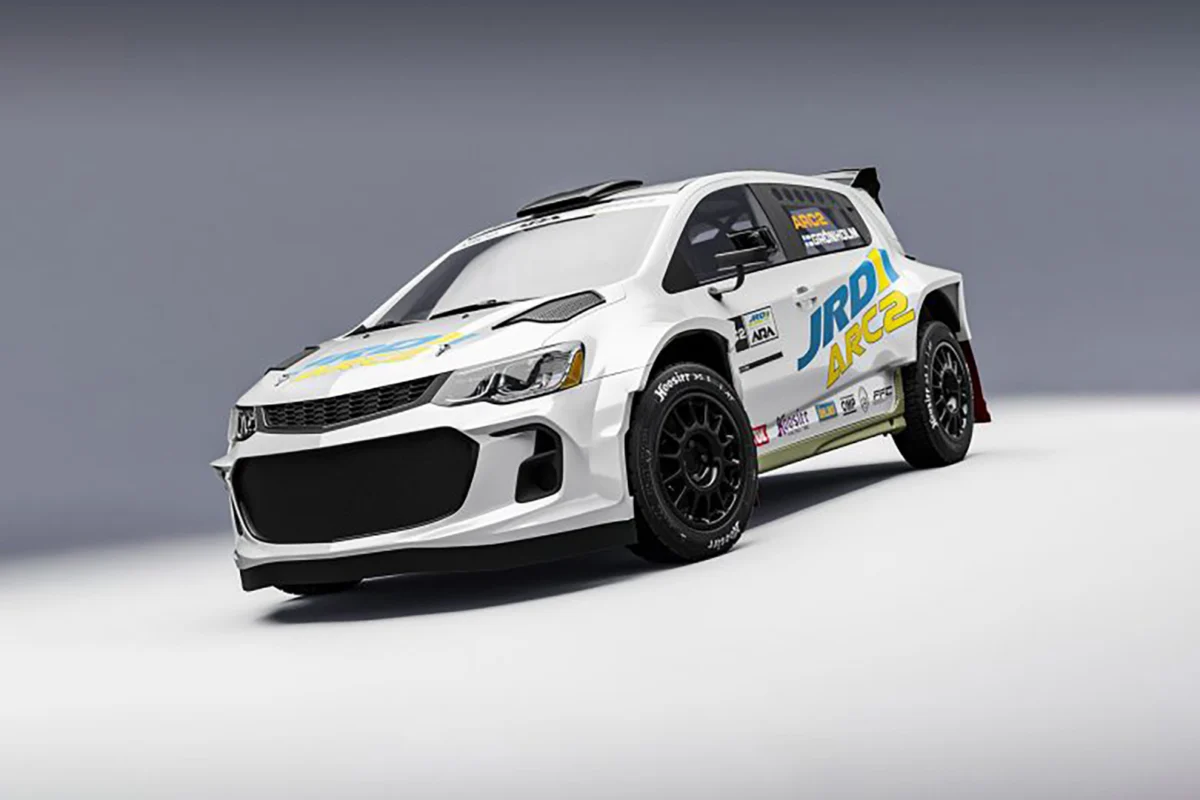
While the H13 engine handles the small-displacement duties, Horse’s Aurobay Technologies division is making inroads into the North American market. Horse recently signed an agreement to supply 2.0-litre engines for the ARC2, a new rally car based on the Chevrolet Sonic chassis. This vehicle is designed to compete in the American Rally Association’s (ARA) RC2 class, a category that demands high levels of torque and ruggedness.
The 2.0-litre unit provided by Aurobay is paired with a five-speed sequential gearbox, a setup optimized for the rapid shifts and harsh terrain typical of stage rallying. To ensure a level playing field and maintain the integrity of the RC2 class, Horse will deliver these engines with locked ECUs and tamper-proof seals. This "turnkey" approach allows race organizers to control costs and prevent expensive "engine wars" among privateer teams, further cementing Horse’s reputation as a reliable partner for spec-racing series.
A Synergy of Giants: The Renault-Geely-Aramco Alliance
The rapid growth of Horse Powertrain is underpinned by the immense resources of its three primary stakeholders. Renault Group brings decades of experience in European engine manufacturing and a history of success in Formula 1. Geely Holding Group provides a massive manufacturing footprint in Asia and access to a diverse portfolio of brands, including Volvo, Polestar, and Lotus.
The inclusion of Aramco as a 10% shareholder is perhaps the most forward-looking aspect of the venture. As the world’s largest oil company, Aramco is heavily investing in the development of synthetic fuels (e-fuels) and hydrogen-based energy carriers. Aramco’s involvement ensures that Horse Powertrain is at the forefront of "fuel-agnostic" engine development. By designing engines that can run on gasoline, ethanol, synthetic fuels, or hydrogen, Horse is effectively future-proofing its business model against shifting regulatory and energy landscapes.
Industry analysts suggest that the creation of Horse allows Renault and Geely to achieve significant economies of scale. By pooling their ICE assets into a separate entity, the two manufacturers can reduce R&D costs while continuing to supply their own vehicle lineups with cutting-edge engines. Furthermore, as other carmakers exit the ICE development space, Horse is positioned to become the primary external supplier for the entire automotive industry.
Timeline of Key Milestones
- Mid-2022: Initial discussions between Renault and Geely regarding a powertrain joint venture.
- May 2023: Official formation of Horse Powertrain and the announcement of Aramco’s intent to invest.
- Summer 2023: First successful integration of the H13 engine into the Caterham Seven Academy race car.
- Late 2023: Agreement signed for the American Rally Association ARC2 project via the Aurobay division.
- December 2023: Announcement of the Brazilian pick-up truck racing partnership and E100 engine development.
- 2024 (Projected): Unveiling of the first Horse-powered Brazilian racing trucks and commencement of field testing.
- 2027 (Projected): Launch of the full competitive season for the Brazilian pick-up racing series.
Future Implications and Market Outlook
The emergence of Horse Powertrain signals a pragmatic realization within the automotive sector: the transition to zero-emission mobility will be a multi-decade process requiring a "ladder" of technologies. While BEVs are ideal for urban environments in developed nations, heavy-duty applications, long-distance transport, and emerging markets will continue to rely on liquid fuels for the foreseeable future.
Horse’s focus on motorsport is not merely a marketing exercise. The high-stress environment of racing accelerates the development of more efficient combustion cycles, better materials, and more robust electronic control systems. These innovations eventually trickle down to consumer vehicles, resulting in cars that are cleaner, more reliable, and more engaging to drive.
As the company enters its second year of operation, its challenge will be to balance its growing list of specialized motorsport projects with the high-volume demands of its parent companies. However, with a clear focus on lightweight design, renewable fuel compatibility, and global scalability, Horse Powertrain is well on its way to defining the "next chapter" of the internal combustion engine. By proving that ICE technology can be both high-performance and environmentally conscious, the company is ensuring that the roar of the engine will remain a fixture of the automotive world for years to come.