
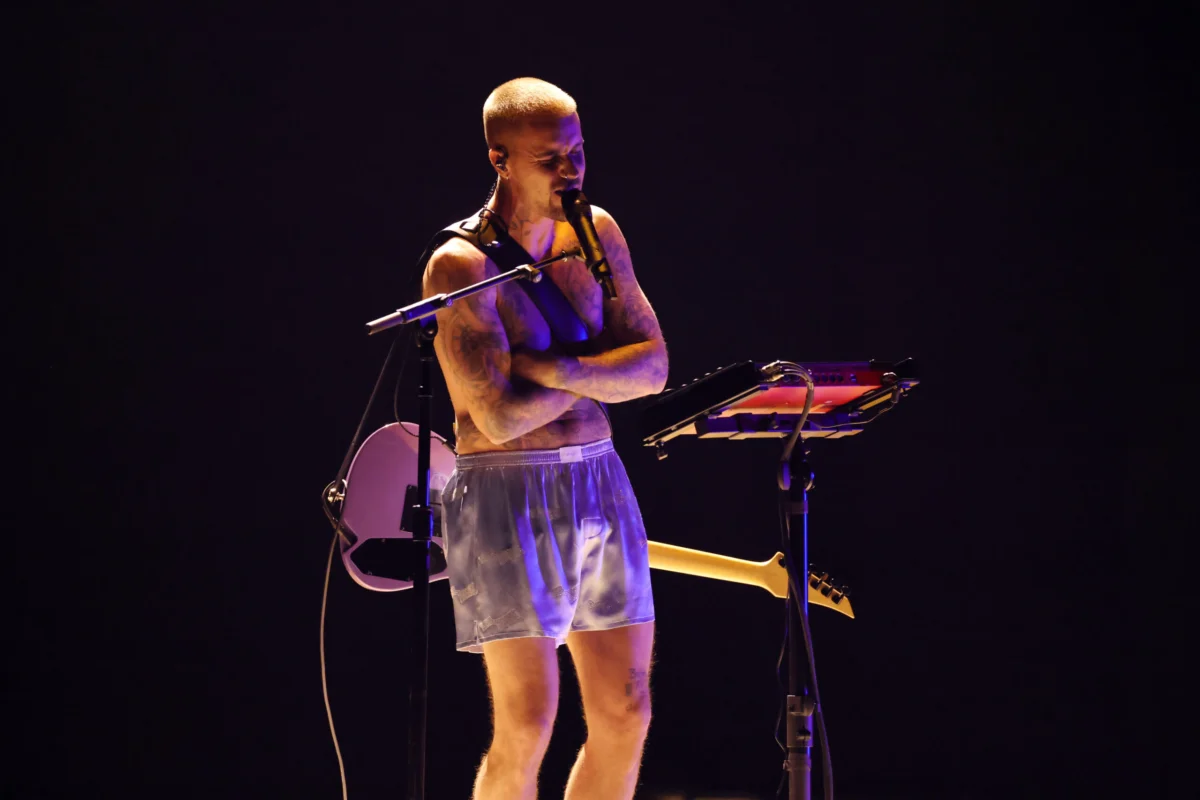
Indio, CA – Justin Bieber captivated the Coachella Valley Music and Arts Festival on Saturday night, delivering a deeply personal and career-spanning performance as a headliner. In a stark departure from the elaborate productions often seen on the main stage, Bieber opted for an intimate, stripped-down set that emphasized his vocal performance and connection with the audience. The show, his most significant concert in years, saw the global superstar delving into his musical archives, even referencing early YouTube clips to guide fans through his evolution from a teen sensation to a seasoned artist.
Bieber’s appearance marked a significant return to the festival circuit after a period of personal and professional recalibration. He recently navigated significant life changes, including canceled tour dates due to health concerns, the sale of his music publishing catalog, and embracing fatherhood. These experiences, coupled with his departure from long-time manager Scooter Braun, have undoubtedly shaped his artistic trajectory. His latest album, Swag, released last year and followed by its deluxe version Swag II, garnered critical attention and a Grammy nomination for Album of the Year, signaling a mature and introspective phase in his career.
The Saturday night performance commenced around 11:30 p.m. PST, with Bieber immediately immersing the crowd in the sonic landscape of his Swag era. The setlist opened with “All I Can Take,” followed by a sequence of tracks from the album including “Speed Demon,” “First Place,” and “Go Baby.” This deliberate focus on his most recent work established a contemporary foundation for the evening before transitioning into a nostalgic journey. The artistic choice to focus on his newer material first served to ground his current artistic identity before inviting a retrospective exploration.
The stage design itself mirrored Bieber’s minimalist approach. A large, halfpipe-like structure dominated the stage, providing a dynamic yet uncluttered backdrop. Unlike many headlining acts that feature a battalion of backup dancers, intricate set changes, and elaborate costume transitions, Bieber’s performance was largely a solo affair. The few instances of additional performers were limited to a pair of guitarists who joined for select songs, and a series of high-profile guest artists who made surprise appearances. These included Tems, Wizkid, Dijon, and The Kid Laroi, each adding their unique flavor to the set without detracting from Bieber’s central role. This deliberate focus underscored a desire to place the spotlight squarely on his voice and his personal narrative.
“Wow wow wow, to be up close and personal with you guys, this is special,” Bieber shared with the enthusiastic Coachella crowd. “This is a night I dreamed about for a long time, so to be here is amazing.” This sentiment, expressed with genuine emotion, resonated with the audience, many of whom have followed his career since its inception.
The concert’s unique structure became apparent as Bieber progressed through his set. At one point, he revealed a laptop connected to the massive screens behind him, initiating a playful and engaging segment that harked back to his early days. “Tonight is such a special night, but I feel like we’ve gotta take you guys on a bit of a journey,” he announced, before typing “Baby” into a YouTube search bar. The crowd’s immediate recognition and excited reaction signaled the profound impact this song and others from his formative years have had on popular culture.
This segment transformed the performance into a communal trip down memory lane. Bieber sang snippets of his early hits, including “Baby,” “Beauty and a Beat,” “Never Say Never,” and “Confident,” often alongside archival footage of his younger self. This visual juxtaposition was a powerful reminder of his meteoric rise to fame at an exceptionally young age. While this “YouTube karaoke” approach might have been perceived by some as less polished than a fully produced segment, it offered a compelling and authentic glimpse into his personal history, contrasting the fully grown artist with the burgeoning talent he once was. The raw, unscripted nature of this segment allowed for genuine audience participation and a sense of shared nostalgia.
However, the execution of some of these older tracks also presented challenges. The improvisation of singing “Sorry” alongside a buffered YouTube video, punctuated by Bieber’s lighthearted plea for better Wi-Fi, highlighted the potential pitfalls of such a spontaneous approach. While endearing to some, it also raised questions about whether these beloved anthems might have benefited from a more formal presentation, allowing for their full musical impact to be realized without technical interruptions.
As the nostalgic interlude continued, Bieber veered into internet culture with clips of millennial-era memes, including the “Deez Nuts” and “Double Rainbow” videos. He humorously described this as “getting pulled into the deep dark web,” before ultimately abandoning the laptop to resume his live performance with the song “Yukon.” This segment, though unconventional, underscored Bieber’s ability to connect with a generation that grew up alongside him, navigating both musical and digital cultural shifts.
The momentum of the evening was significantly amplified by the series of guest appearances. The Kid Laroi joined Bieber for a rousing rendition of their 2021 collaboration, “Stay,” a track that dominated global charts and solidified their status as pop powerhouses. Later, Dijon, who had performed earlier in the festival, reappeared to lend his distinctive vocals to “Devotion.” Tems followed, sharing the stage with Bieber for a captivating duet of “I Think You’re Special.” The collaboration with Wizkid on a cover of his hit song “Essence” further showcased the global reach and collaborative spirit of Bieber’s music.
The set concluded with “Daisies,” a poignant track co-produced by guitarist Mk.gee, who joined Bieber on stage for the finale. As fireworks illuminated the desert sky behind him, Bieber expressed his gratitude and affection for the audience, declaring his love before quickly exiting the stage. This marked the first of his two scheduled headlining performances at Coachella, with a second appearance slated for the following Saturday.
Coachella’s Evolving Landscape: A Platform for Artistic Evolution
Coachella, renowned for its eclectic mix of genres and its role as a trendsetter in the music industry, has increasingly become a stage for artists to redefine their public image and showcase their artistic development. The festival’s expansive reach and diverse audience provide a unique platform for established artists to reconnect with fans and introduce new facets of their artistry. Bieber’s intimate performance can be viewed within this broader context of artistic maturation, where established figures leverage the festival’s spotlight to engage with their audiences on a more personal level, moving beyond the spectacle to emphasize authentic connection and artistic growth.
A Career in Retrospective: From Teen Idol to Global Icon
Justin Bieber’s journey to headlining Coachella is a testament to his enduring influence and remarkable longevity in the music industry. Emerging as a global phenomenon in the late 2000s, his early career was characterized by infectious pop anthems and a massive social media following. His debut album, My World 2.0, released in 2010, spawned the mega-hit "Baby" and established him as a teen idol of unprecedented proportions. Over the subsequent decade, Bieber navigated the intense pressures of global superstardom, evolving his sound and image through albums like Believe, Purpose, and Changes.
The period leading up to his Coachella performance has been marked by significant personal and professional milestones. The sale of his music catalog in 2023 for an estimated $200 million to Hipgnosis Songs Fund underscored his commercial value and signaled a potential shift in his long-term career strategy. His embrace of fatherhood, becoming a parent with wife Hailey Baldwin Bieber, has also been a prominent aspect of his public life. Furthermore, his health challenges, which led to the postponement and eventual cancellation of several tour dates in 2022 due to Ramsay Hunt syndrome, brought his well-being into sharp focus, highlighting the physical demands of a global touring artist.
Analyzing the Implications: Authenticity and Audience Connection
Bieber’s choice of a stripped-down, intimate performance at Coachella, a festival often synonymous with grand spectacles, carries significant implications for how artists are perceived and how they engage with their fan bases. In an era saturated with highly produced, technologically driven live shows, Bieber’s focus on his voice and personal narrative suggests a deliberate effort to foster a deeper, more authentic connection with his audience. This approach can be seen as a strategic move to resonate with fans on an emotional level, particularly after a period of personal upheaval and reflection.
The success of such a strategy hinges on the artist’s ability to maintain a compelling stage presence and deliver a vocally strong performance. By leaning into his past hits through a nostalgic lens and integrating his newer material, Bieber aimed to bridge the generational divide within his fanbase, acknowledging both his early supporters and those who have embraced his more recent artistic direction. The inclusion of diverse guest artists also amplified his reach and demonstrated his continued relevance across different musical communities.
While the “YouTube karaoke” segment offered a unique and memorable interactive experience, its execution also highlighted the fine line between relatable improvisation and a less-than-polished presentation. For a festival of Coachella’s magnitude, the balance between authenticity and professional execution is crucial. Nevertheless, the overall sentiment of the performance leaned towards a genuine and heartfelt expression of an artist at a significant juncture in his career, one who is not afraid to share his journey with the world. The anticipation for his second Coachella performance suggests that this intimate approach may have successfully resonated with a substantial portion of his audience, setting a precedent for how established artists can choose to engage with major festival platforms.