


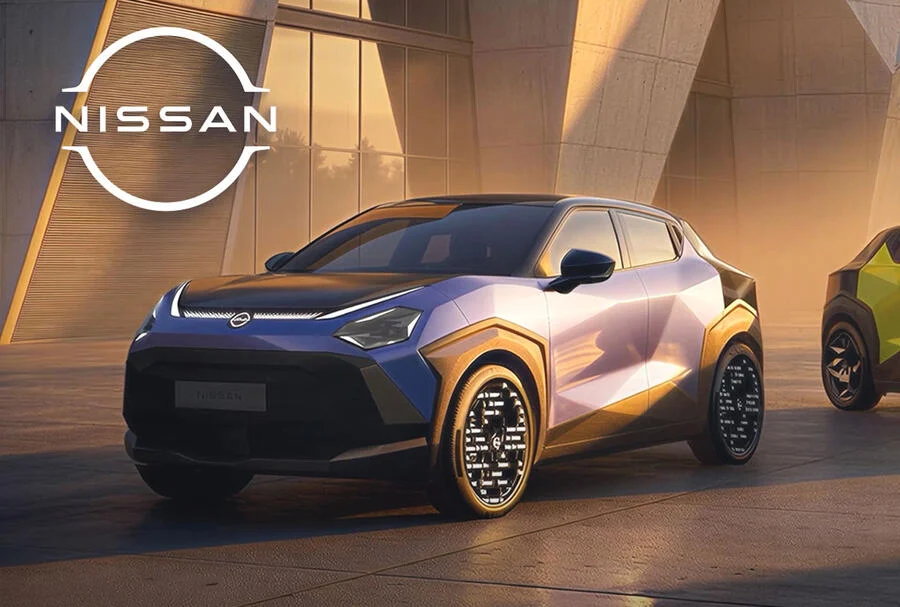
Nissan has officially pulled the wraps off the third-generation Juke, marking a pivotal moment in the manufacturer’s aggressive shift toward electrification. Unveiled at the company’s forward-looking Vision Event in Japan, the new Juke arrives as Nissan’s third dedicated battery-electric vehicle (BEV), following in the footsteps of the Ariya and the upcoming replacement for the Leaf. Designed to capitalize on the success of a model that has defined the compact crossover segment for over a decade, the new Juke EV represents a radical departure in both powertrain and aesthetics, aiming to secure Nissan’s foothold in an increasingly competitive European market.
Since its initial debut in 2010, the Juke has been a cornerstone of Nissan’s European operations. With more than 1.5 million units sold to date, it ranks as the brand’s second most popular model in the region, trailing only the Qashqai. The transition to an all-electric platform for the third generation signifies Nissan’s commitment to its "Ambition 2030" strategy, which envisions a lineup dominated by zero-emission vehicles. However, in a move that reflects the current volatility of the global automotive market, Nissan confirmed that the new electric Juke will launch alongside an updated version of the existing second-generation hybrid model, ensuring the brand retains its reach across varying consumer segments.
A Radical Design Evolution Inspired by the Hyper Punk Concept
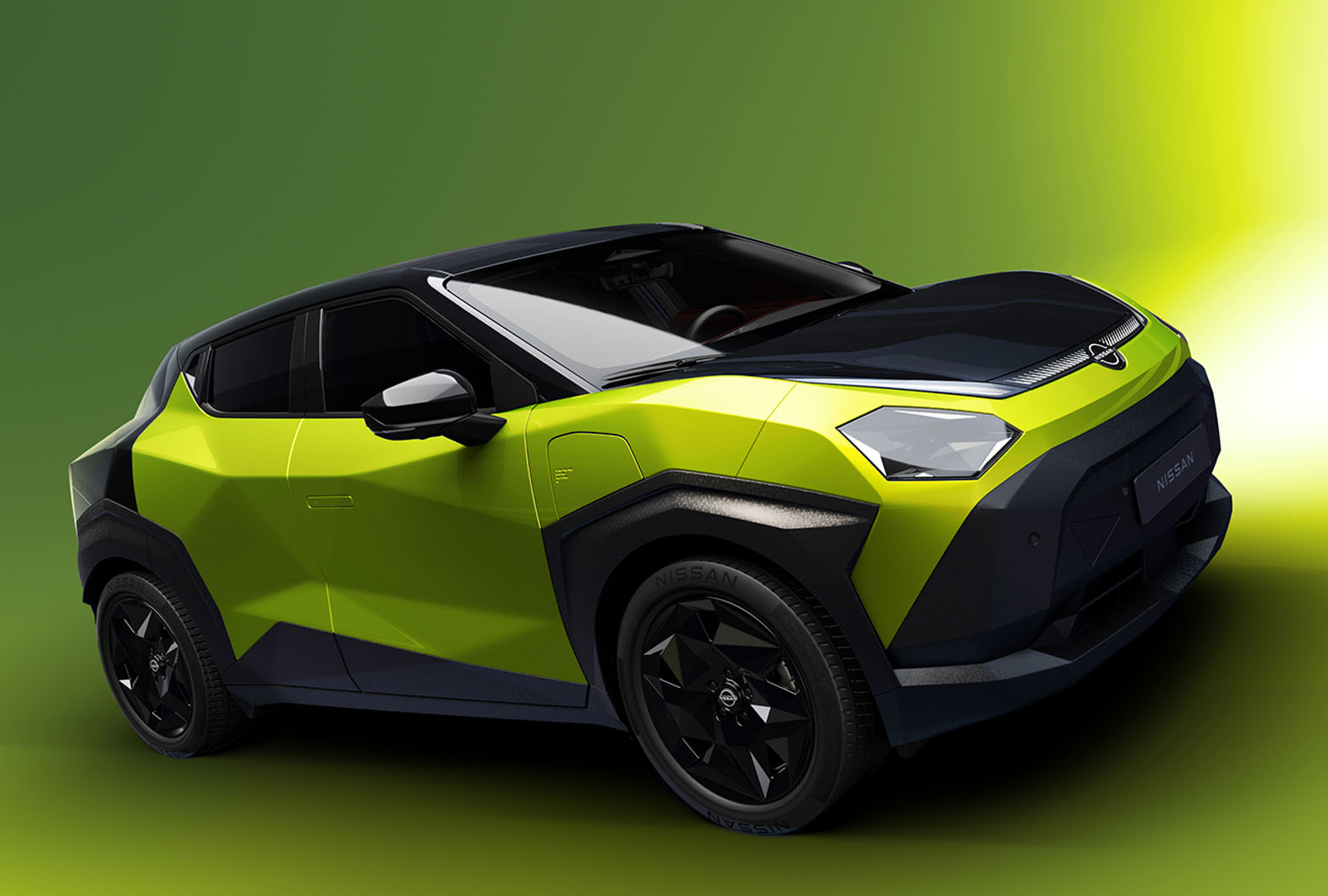
The aesthetic direction of the new Juke EV is heavily influenced by the Nissan Hyper Punk concept, which debuted at the Japan Mobility Show in 2024. Known for its "origami-like" surfaces and bold, polygonal lines, the Hyper Punk served as a blueprint for the Juke’s "reimagined" exterior. The production version retains the "sculptured and distinctive" DNA that has made the Juke a polarizing yet highly successful entry in the B-SUV category.
Key design features of the new model include a sophisticated new light signature at both the front and rear, which utilizes thin LED arrays to emphasize the car’s width and futuristic stance. While the original Juke was famous for its bug-eyed headlights and hidden rear door handles, the third generation pushes these unconventional cues further. The vehicle’s silhouette is more aerodynamic than its predecessors, a necessity for maximizing electric range, yet it maintains the high-riding, muscular wheel arches that consumers associate with the Juke nameplate.
Clíodhna Lyons, Nissan’s Regional Vice President for Product Planning, emphasized that the design remains central to the Juke’s identity. "As its predecessors have done since 2010 with their bold designs that challenge convention, the new Juke will help us reach new customers within the EV market," Lyons stated. The goal is to appeal to a younger, tech-savvy demographic that prioritizes digital integration and striking visual identity.
Technical Foundation: The CMF-EV Platform and Sunderland Production
Underpinning the new Juke is the CMF-EV (Common Module Family – Electric Vehicle) platform, a dedicated architecture developed through the Renault-Nissan-Mitsubishi Alliance. This platform also supports the larger Nissan Ariya and the Renault Megane E-Tech. By utilizing a dedicated EV chassis, Nissan engineers have been able to optimize the interior packaging, offering more cabin space and a flat floor—addressing one of the primary criticisms of the internal combustion engine (ICE) versions of the Juke.
Manufacturing for the new Juke EV will remain centered at Nissan’s Sunderland plant in the United Kingdom. This facility is currently undergoing a £2 billion transformation into the "EV36Zero" hub, a world-first EV manufacturing ecosystem that integrates vehicle production, a battery gigafactory (operated by partner Envision AESC), and a renewable energy microgrid. The Juke EV will share its production lines and many of its core components with the next-generation Leaf, creating significant economies of scale for the manufacturer.
While final technical specifications are still being finalized, industry insiders expect the Juke to mirror the powertrain options of the new Leaf. This includes the use of nickel-manganese-cobalt (NMC) battery technology, which offers higher energy density and faster charging capabilities compared to older lithium-ion chemistries. Prospective buyers can expect two battery variants: a 52kWh entry-level pack and a larger 75kWh long-range option. The latter is projected to provide a range of up to 386 miles on the WLTP cycle. Power is expected to peak at approximately 215bhp, with drive sent exclusively to the front wheels, distinguishing it from the dual-motor, all-wheel-drive "e-4ORCE" system found in the premium Ariya.
The Dual-Track Strategy: Balancing EV Transition with Market Reality
Perhaps the most significant strategic revelation from the Vision Event was Nissan’s decision to maintain the second-generation Juke hybrid in the lineup alongside the new EV. Originally, the company had intended for the third-generation electric model to completely replace the Mk2. However, shifting market dynamics and a cooling of EV sales growth in certain European territories have necessitated a more flexible approach.
Massimiliano Messina, Nissan Europe’s Vice President for Marketing and Sales, addressed this pivot during the event. He noted that while the brand remains "firmly committed to a fully electric future," providing "greater choice" is essential for a smooth transition. The dual-track strategy allows Nissan to cater to markets where charging infrastructure may be lagging, while simultaneously pushing the brand toward its goal of a 100% electric lineup in Europe by 2030.
The current Mk2 Juke, which has been on the market for seven years, will receive a substantial mid-cycle refresh to keep it competitive. This update is expected to focus on aligning its exterior styling with the new "Hyper Punk" aesthetic of the EV, as well as upgrading its aging infotainment and safety technology. By maintaining the hybrid variant, Nissan can protect its volume sales in the B-SUV segment, which remains one of the most profitable and high-volume sectors in the industry.
Competitive Landscape and Market Positioning
The Juke EV enters a crowded and rapidly evolving marketplace. Its primary rivals include the Ford Puma Gen-E and the Kia EV3, both of which are vying for dominance in the compact electric crossover space. The Ford Puma has been the Juke’s fiercest competitor in the UK and Europe, and its transition to electric power represents a direct threat to Nissan’s market share.
To differentiate the Juke, Nissan is leaning heavily into its "radical" design and its heritage as a segment pioneer. While the Kia EV3 focuses on a minimalist, tech-heavy interior and the Ford Puma emphasizes driving dynamics, the Juke positions itself as the "lifestyle" choice—a car for those who want to stand out.
Supporting data suggests that the B-SUV segment is increasingly driven by "conquest sales," where buyers switch brands based on design and technology rather than traditional brand loyalty. Nissan’s focus on a distinctive light signature and a digital-first interior is a calculated move to capture this segment of the market. Furthermore, the integration of V2X (Vehicle-to-Everything) technology, hinted at during the Vision Event, could allow Juke owners to use their car’s battery to power their homes or feed energy back into the grid, a feature that is becoming a key selling point for modern EVs.
Chronology of the Juke’s Development
The journey to the Juke EV has been a decade-long evolution of the Nissan brand:
- 2010: The first-generation Juke launches, creating the B-SUV segment and shocking the industry with its unconventional styling.
- 2019: The second-generation Juke is introduced, offering more refinement, a hybrid powertrain, and improved technology, though it remains built on a platform designed for internal combustion engines.
- 2021: Nissan announces the "EV36Zero" project in Sunderland, laying the groundwork for future electric models.
- 2024: The Hyper Punk concept is revealed in Tokyo, providing the first glimpse of the Juke’s future design language.
- 2025 (Projected): Production of the third-generation Juke EV begins in Sunderland, with deliveries expected shortly thereafter.
Broader Impact and Industry Implications
The unveiling of the Juke EV is more than just a product launch; it is a barometer for the health of the UK’s automotive manufacturing sector and Nissan’s global electrification roadmap. By committing the Juke and the Leaf to the Sunderland plant, Nissan has secured the future of thousands of jobs and reinforced the UK’s position as a hub for electric vehicle excellence.
From a broader perspective, Nissan’s "The Arc" business plan relies on the success of models like the Juke to drive the volume necessary to fund future R&D in solid-state batteries and autonomous driving. The decision to keep the hybrid model alive shows a pragmatic recognition that the "road to zero" is not a straight line, but a complex transition requiring a mix of technologies to satisfy a global customer base.
As the automotive world moves toward the 2030 deadline set by many European governments for the phase-out of new petrol and diesel cars, the Juke EV stands as a testament to Nissan’s ability to adapt. It combines the brand’s history of daring design with the necessities of modern sustainability, ensuring that the "quirky SUV" that started a revolution in 2010 will continue to be a major player in the electric era. Final pricing and exact delivery dates for the Juke EV are expected to be announced in the coming months, as the company prepares for a phased rollout across European markets.