



Rolls-Royce Motor Cars has officially unveiled a significant evolution in its bespoke manufacturing strategy with the introduction of the Coachbuild Collection, a new tier of limited-run models designed to bridge the gap between its highly successful Bespoke program and its ultra-exclusive, one-off Coachbuild masterpieces. The inaugural vehicle under this new initiative, currently designated as Project Nightingale, represents a landmark shift for the Goodwood-based marque, offering a more streamlined but no less extravagant path to automotive exclusivity. This strategic move is designed to cater to a specific segment of the brand’s global clientele: those who desire the unique aesthetic and prestige of a coachbuilt vehicle but lack the multi-year availability required to participate in the company’s most intensive, individualised design programs.
The Coachbuild Collection arrives at a pivotal moment for Rolls-Royce, following a record-breaking 2023 in which the firm delivered 5,664 motor cars to clients in more than 50 countries. While the brand’s financial health is robust, the leadership team identified an opportunity to further monetize the high demand for personalization. By creating limited series of up to 100 units, Rolls-Royce can maintain higher profit margins than series-production models like the Ghost or Cullinan, while simultaneously serving as a laboratory for "extravagant" design elements that may eventually influence the broader portfolio.
The Evolution of Bespoke: Introducing the Coachbuild Collection
The genesis of the Coachbuild Collection lies in direct feedback from the marque’s most loyal patrons. According to Rolls-Royce executives, including Harnett, the project was driven by a recurring sentiment among high-net-worth individuals (HNWIs) who found the existing "full" Coachbuild program—which produced the likes of the Boat Tail and the Droptail—too time-intensive. A full coachbuilt project often requires the client to be involved in hundreds of hours of consultations over several years, a commitment that many of the world’s busiest entrepreneurs and collectors find difficult to sustain.
The "Coachbuild-lite" approach, as it has been internally described, reverses the traditional power dynamic of bespoke design. Rather than the client bringing a blank-sheet concept to the designers, Rolls-Royce designers lead the creative process, presenting a vision that clients can then refine. This "back-to-front" fashion allows owners to join the journey at the sketch stage, providing input on materials and finishes without the burden of engineering a vehicle from the ground up.
Furthermore, this new tier allows Rolls-Royce to flex its creative muscles. The design studios in Goodwood are reportedly filled with "extravagant things" that designers wish to build but which may be too radical for a standard production car. The Coachbuild Collection provides a platform for these experimental features, such as massive 24-inch alloy wheels and revolutionary lighting signatures, to transition from paper to the road.
Project Nightingale: A Modern Homage to the 17EX Torpedo
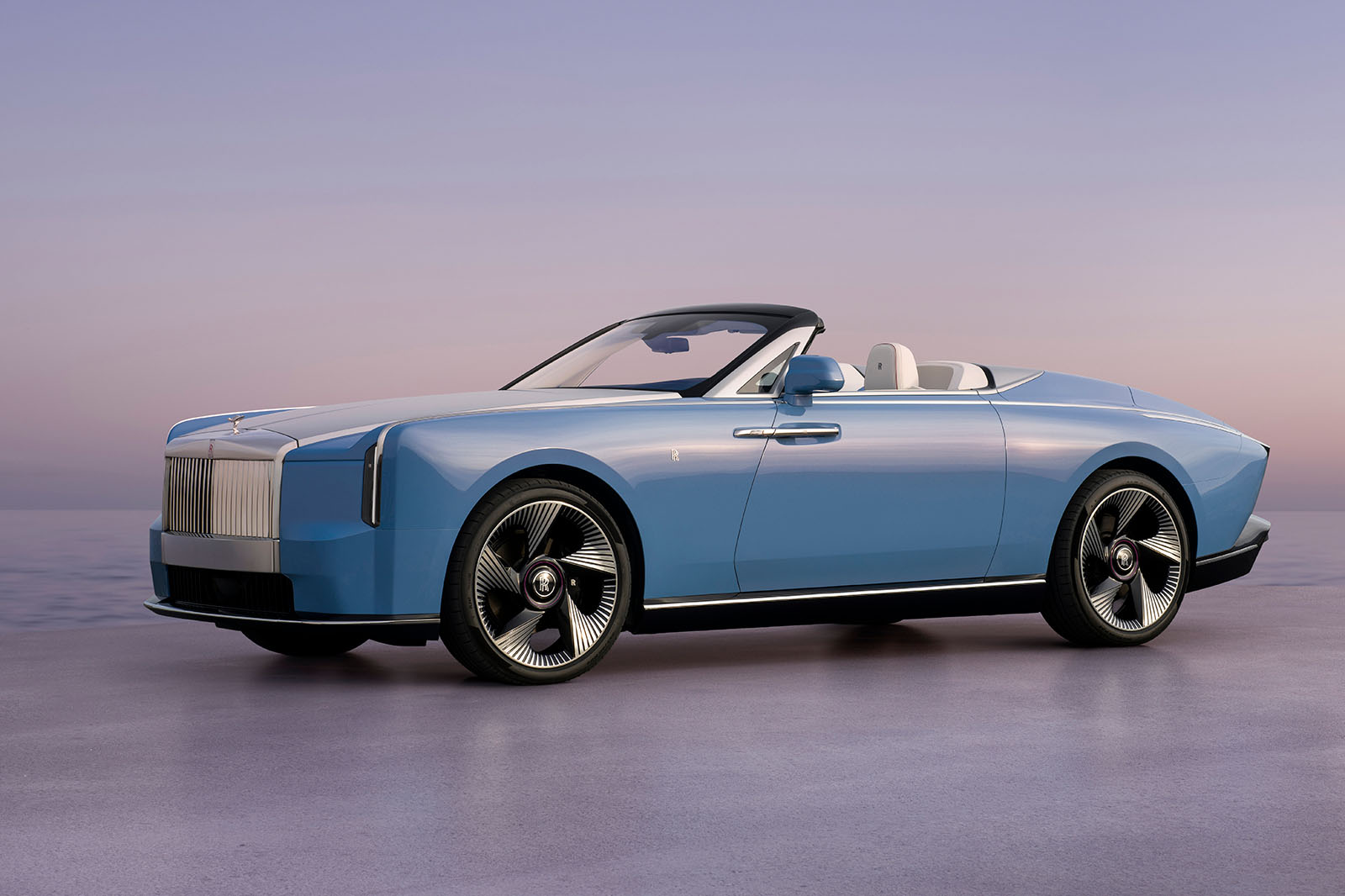
Project Nightingale, the first fruit of this new collection, is a two-seater electric convertible that balances historical reverence with futuristic ambition. The project’s name is steeped in Rolls-Royce lore, derived from Le Rossignol (French for "the nightingale"), a residence near co-founder Sir Henry Royce’s winter estate on the Côte d’Azur. This location was a frequent retreat for the brand’s designers, serving as a creative sanctuary where some of the most beautiful silhouettes in automotive history were conceived.
The aesthetic lead for Project Nightingale is Jacobo Dominguez Ojea, a veteran of the BMW Group for over two decades. Ojea, whose portfolio includes the current BMW 3 Series and 8 Series Gran Coupé, noted that the team recognized early on that Nightingale was a "once-in-a-lifetime model." The design takes heavy inspiration from the 17EX Torpedo of the late 1920s, specifically its distinctive "boat tail" rear and dramatic proportions.
The vehicle possesses the physical presence and length of a flagship Phantom, yet it is dedicated entirely to just two occupants. This creates a silhouette that Ojea describes as "bold and pure," emphasizing a small cabin perched ahead of a sweeping, elongated rear deck. The decision to make the car a convertible was central to its mission: it is intended to be an experiential machine where the journey is the destination, allowing drivers to hear and feel the environment around them—a sensation enhanced by the near-silent electric powertrain.
Technical Specifications and the Transition to Electrification
While Project Nightingale remains in the development phase, Rolls-Royce has confirmed several key technical parameters that position it at the pinnacle of the luxury EV market. The vehicle will utilize the marque’s proprietary "Architecture of Luxury," an all-aluminum spaceframe that has been adapted for electric propulsion.
Crucially, Harnett confirmed that Project Nightingale will feature a battery pack larger than the 107kWh lithium-ion unit found in the Spectre. Despite the increased weight associated with a larger battery and the car’s substantial dimensions, the engineering goal is to maintain a range "close to" the 329 miles (530 km) offered by the Spectre. This suggests a battery capacity that could approach 120kWh, ensuring that the car remains a viable grand tourer for the European and American coastal routes it is expected to frequent.
In terms of performance, the vehicle is expected to employ a dual-motor, all-wheel-drive configuration. While official figures are pending global testing, industry analysts expect the output to mirror or exceed the 650bhp found in the Black Badge Spectre. This power level ensures that the Nightingale maintains the "waftability" and effortless acceleration that define the Rolls-Royce driving experience, even with the added luxury of open-top motoring.
Design Innovations and Trickle-Down Technology
One of the primary functions of the Coachbuild Collection is to serve as a testbed for new design languages. Project Nightingale introduces several elements that could soon find their way into the rest of the Rolls-Royce lineup, including the highly anticipated electric SUV slated for the latter half of the decade.
- Lighting and Grille: The car features a front grille that is nearly a meter wide, flanked by 55mm-wide hand-built headlights integrated seamlessly into the nose. While these specific headlights are too labor-intensive for high-volume production, their "look" will likely influence future models.
- Wheels and Badging: The 24-inch alloy wheels represent a new scale for the brand, while a frameless "RR" badge on the flanks and rear introduces a cleaner, more contemporary branding approach.
- The Saddle Armrest: Inside, the cabin features a center armrest designed to mimic the ergonomics and aesthetic of a horse saddle, a nod to the equestrian lifestyle shared by many of the brand’s clients.
- Starlight Innovation: The famous Starlight Headliner has been reimagined for the convertible format. Since there is no fixed roof, the fiber-optic "stars" have been integrated into the door panels and behind the seats, creating an immersive celestial effect that Ojea describes as "stars being blown around you."
Market Strategy and Financial Implications
The decision to limit Project Nightingale to 100 units is a calculated move to maintain extreme exclusivity while maximizing revenue. The production run has already been allocated to a "diverse" group of enthusiasts across the United States, Europe, and Asia. By offering both left- and right-hand-drive configurations from the outset, Rolls-Royce has ensured global appeal.
From a business perspective, the Coachbuild Collection is a high-margin engine. While series-production cars are the bread and butter of the firm, the heavy personalization and limited nature of the Collection allow for a significantly higher price point per unit. Last year’s sales of 5,664 cars were a record, but as CEO Chris Brownridge has noted, the brand’s focus is on value and exclusivity rather than raw volume.
The project also involves a "revolutionary" testing phase. Clients who have purchased a Nightingale are invited to participate in the car’s global testing program. This level of engagement—allowing a customer to witness and perhaps influence the final calibration of their vehicle—is unprecedented in the automotive industry and further justifies the premium price tag associated with the collection.
Historical Context and Broader Impact
The launch of the Coachbuild Collection marks a return to the brand’s roots. In the early 20th century, Rolls-Royce provided the chassis and engine, while independent coachbuilders like Mulliner, Park Ward, and Hooper crafted the bodywork. By bringing this process entirely in-house and "revolutionizing" it for the 21st century, Rolls-Royce is asserting its dominance in the ultra-luxury sector.
CEO Chris Brownridge summarized the ambition of the project by stating that it brings together three previously separate pillars: the complete design freedom of coachbuilding, the serenity of an electric powertrain, and the emotional resonance of open-top motoring.
As the automotive industry moves toward a future defined by electrification and automation, Rolls-Royce is betting that the ultimate luxury will not be technology itself, but the human artistry and exclusivity that technology can facilitate. Project Nightingale is not merely a car; it is a statement of intent for the next chapter of the world’s most prestigious automotive brand. With the first units expected to reach clients following the completion of rigorous testing, the Coachbuild Collection is set to become a permanent and highly profitable fixture of the Rolls-Royce portfolio, ensuring that the spirit of Le Rossignol continues to sing in a new, electric era.