


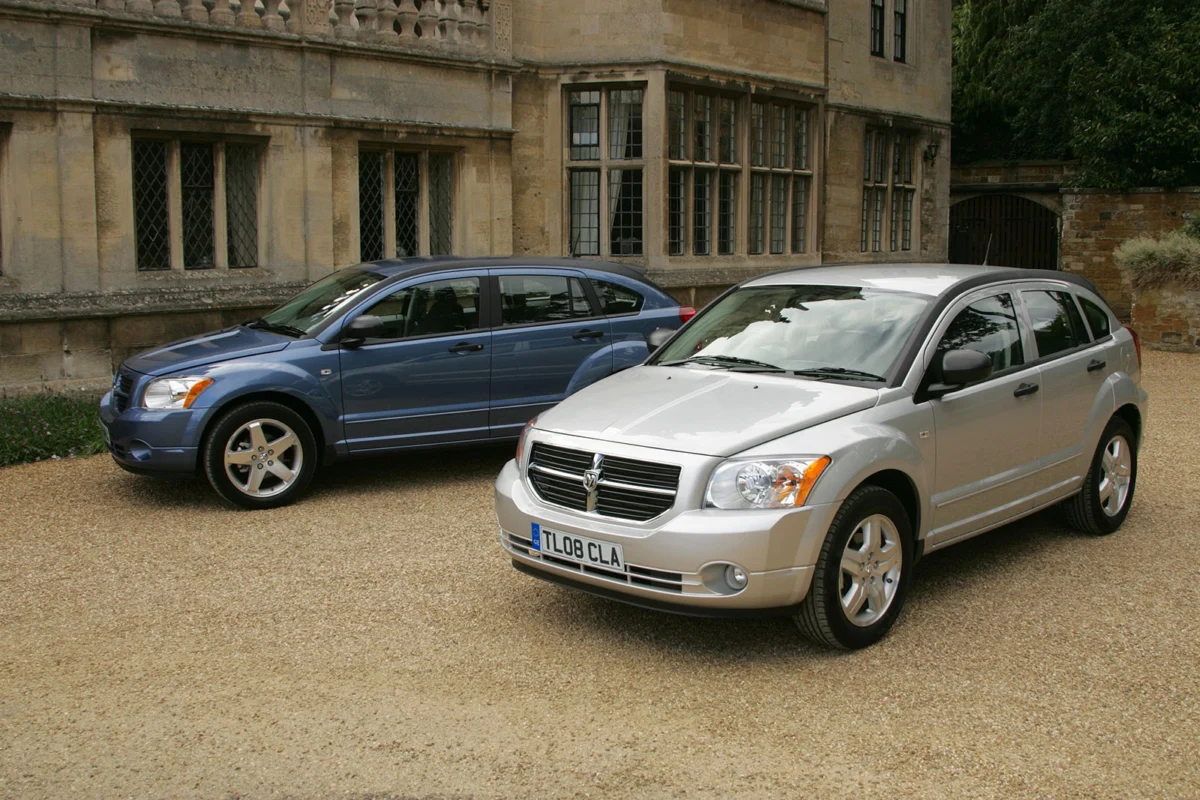
The Dodge Caliber arrived on the global automotive stage in 2006 as a bold departure from the traditional compact sedan, marking a pivotal moment in the evolution of the Chrysler Group’s product strategy. Positioned as a replacement for the long-running Dodge Neon—marketed in several international territories as the Chrysler Neon—the Caliber was designed to capture the burgeoning interest in versatile, high-riding vehicles that bridged the gap between traditional hatchbacks and full-sized sport utility vehicles. While its tenure was marked by polarized critical reception, the Caliber stands as a significant, if flawed, trailblazer that anticipated the industry-wide shift toward the crossover segment. Its development occurred during the complex era of the DaimlerChrysler merger, a period characterized by ambitious global platforms but often criticized for cost-cutting measures that impacted interior refinement.
The Strategic Shift from Sedan to Crossover
The transition from the Dodge Neon to the Caliber represented more than just a change in nameplate; it was a fundamental shift in market philosophy. The Neon had been a quintessential front-wheel-drive, low-slung sedan that achieved success primarily through its aggressive pricing and cheerful styling. However, by the mid-2000s, consumer preferences were beginning to migrate toward vehicles that offered a "command" seating position and greater perceived utility.
DaimlerChrysler’s response was to develop a vehicle that sat higher than a standard hatchback but retained a compact footprint. This placed the Caliber in a unique, albeit crowded, lineage of "faux off-road" or "soft-road" vehicles. It followed in the footsteps of niche predecessors like the Talbot Matra Rancho and various "Cross" variants of superminis such as the Volkswagen Polo Cross and the Rover Streetwise. Unlike these models, which were often just standard cars with plastic cladding, the Caliber was engineered from the ground up to embody a more rugged aesthetic, sharing its GS platform with the Jeep Compass and Jeep Patriot.
Architectural Design and Exterior Aesthetics
While the Caliber shared mechanical underpinnings with its Jeep cousins, its exterior design was strictly a Dodge endeavor. The objective was to translate the visual "toughness" of the Ram pickup truck line into a package suitable for urban and suburban environments. This "mini-Ram" approach was evident in the vehicle’s prominent crosshair grille, which featured the ram’s head badge prominently at its center—a branding element used before the Ram truck line was spun off into its own distinct division in 2009.
Designers utilized several visual cues to emphasize robustness. The bonnet sat noticeably higher than the front wings, creating a "power bulge" effect. Chunky, blistered wheel arches and a substantial rear bumper contributed to a muscular stance that contrasted sharply with the sleek, aerodynamic silhouettes of contemporary competitors like the Ford Focus or the Volkswagen Golf. Perhaps the most distinctive design element was the pair of matte black arcs running the length of the roofline. These served a dual purpose: they masked the roof joints while visually lowering the glasshouse, lending the vehicle a coupe-like profile despite its tall stature.
The Interior Challenge and Material Quality
Despite the creative success of the exterior, the interior of the Dodge Caliber became a point of significant contention among automotive journalists and consumers alike. The cabin was a product of an era where the Chrysler, Jeep, and Dodge brands lacked a centralized, high-priority interior design department. During the DaimlerChrysler years, interior development was often treated as a secondary concern, focused more on assembly efficiency and cost reduction than on tactile quality or ergonomic sophistication.
As a result, the Caliber inherited the "budget" feel of the outgoing Neon. The plastics used throughout the dashboard and door panels were frequently described as brittle and industrial, lacking the soft-touch materials that European and Japanese competitors were beginning to standardize. While the components were generally well-secured to the chassis, the aesthetic and sensory experience remained subpar.
To compensate for these material shortcomings, Dodge integrated several "lifestyle" features designed to appeal to younger, active buyers. These included:
- The Chill Zone: A cooled glovebox compartment capable of holding four 500ml bottles.
- MusicGate Power: An optional Boston Acoustics sound system featuring two articulating speakers in the liftgate that could be swung down to face outward for tailgating or outdoor events.
- Rechargeable Torch: A removable LED flashlight integrated into the rear headliner, which doubled as the interior cargo light.
Technical Specifications and Global Powertrains
The Caliber was powered by the "World Gas Engine" (GEMA), a joint venture between Chrysler, Mitsubishi, and Hyundai. This family of four-cylinder engines was designed to provide high output with reasonable fuel efficiency across global markets. The Caliber was available with 1.8-liter, 2.0-liter, and 2.4-liter displacements.
In the European market, however, petrol engines were less favored for this vehicle class. To compete, Dodge sourced a 2.0-liter turbocharged diesel engine from Volkswagen. This unit utilized Volkswagen’s "Pumpe-Düse" (unit injector) technology. While the engine provided strong mid-range torque and impressive fuel economy, it was also known for its "growling" acoustic profile and significant vibrations, which were often amplified by the Caliber’s lack of extensive sound insulation. The narrow power band required frequent gear changes, a characteristic that defined the European driving experience of the vehicle.
Chronology of Development and Market Lifecycle
- 2005: The Dodge Caliber concept is unveiled at the Geneva Motor Show, signaling Dodge’s intent to expand its footprint in Europe and other international markets.
- 2006: Production begins at the Belvidere Assembly Plant in Illinois. The Caliber officially launches as a 2007 model year vehicle.
- 2007: The high-performance Caliber SRT-4 is introduced, featuring a turbocharged 2.4-liter engine producing 285 horsepower, aimed at the "hot hatch" market.
- 2009: Amidst the global financial crisis and Chrysler’s bankruptcy, the company undergoes a massive restructuring. Interior updates are introduced for the 2010 model year to address criticisms of the "hard-plastic" cabin.
- 2011: Production of the Caliber ceases in late 2011, as the company—now under Fiat’s management—prepares to pivot toward the Dodge Dart, a vehicle based on an Alfa Romeo platform.
Data and Market Performance
At its peak, the Dodge Caliber saw significant sales volume in the United States, benefiting from its low entry price and the market’s growing appetite for SUVs. In 2007, its first full year of production, Dodge sold over 101,000 units in the U.S. alone. However, sales began to decline as the Nissan Qashqai (launched in 2006) began to dominate the European crossover market with a more refined interior and more sophisticated driving dynamics.
In the United Kingdom, the Caliber remained a niche choice. While it offered a larger footprint and more "road presence" for the price of a standard hatchback, it struggled to overcome the reputation for poor interior quality and the unrefined nature of its diesel powertrain compared to rivals from Ford, Vauxhall, and Volkswagen.
Analysis of Implications and Legacy
The Dodge Caliber serves as a case study in the importance of holistic vehicle design. While its exterior styling was ahead of the curve—anticipating the massive success of the "ruggedized" hatchback—the execution of the interior and the refinement of the driving experience failed to meet the evolving expectations of global consumers.
The Caliber’s "trailblazer" status is often overlooked. It was one of the first vehicles to suggest that a mainstream hatchback could succeed by mimicking the visual language of a truck. Today, the "crossover" is the dominant vehicle type worldwide, with models like the Dacia Sandero Stepway and the Toyota Corolla Cross fulfilling the very promise the Caliber made in 2006.
Furthermore, the Caliber’s struggles highlighted the pitfalls of the DaimlerChrysler merger. The pressure to share platforms and reduce costs led to products that sometimes felt like a collection of disparate parts rather than a cohesive whole. The "World Engine" was competent but unexciting, the VW diesel was efficient but noisy, and the interior was designed for a price point rather than a person.
Ultimately, the Dodge Caliber paved the way for the modern Dodge lineup, which eventually abandoned the compact segment altogether to focus on high-performance muscle cars and larger SUVs. It remains a fascinating artifact of a transitional period in automotive history, a car that looked "slightly interesting" at its debut and remains a noteworthy example of early 21st-century industrial ambition.