


The European supermini segment, traditionally defined by its practicality and affordability, is currently undergoing a significant transformation in design philosophy. For much of the past decade, the prevailing trend among B-segment vehicles—exemplified by the fourth-generation SEAT Ibiza, the Volkswagen Polo, the Vauxhall Corsa, and the now-discontinued Ford Fiesta—was a push toward a "grown-up" and sensible aesthetic. Manufacturers prioritized stability, safety, and a miniaturized version of the refinement found in larger C-segment hatchbacks. However, the arrival of a new generation of competitors, including the electric Renault 5, the budget-conscious yet stylish Citroën C3, and the premium-oriented Mini Cooper, has shifted the goalposts. These newcomers emphasize high-concept design and luxury appeal, occasionally at the expense of ergonomic simplicity. In this shifting landscape, the current SEAT Ibiza occupies a unique middle ground, blending a tried-and-tested structural foundation with iterative interior enhancements that prioritize tactile usability over digital-only interfaces.
A Decade of Design Evolution: From Utility to Ambience
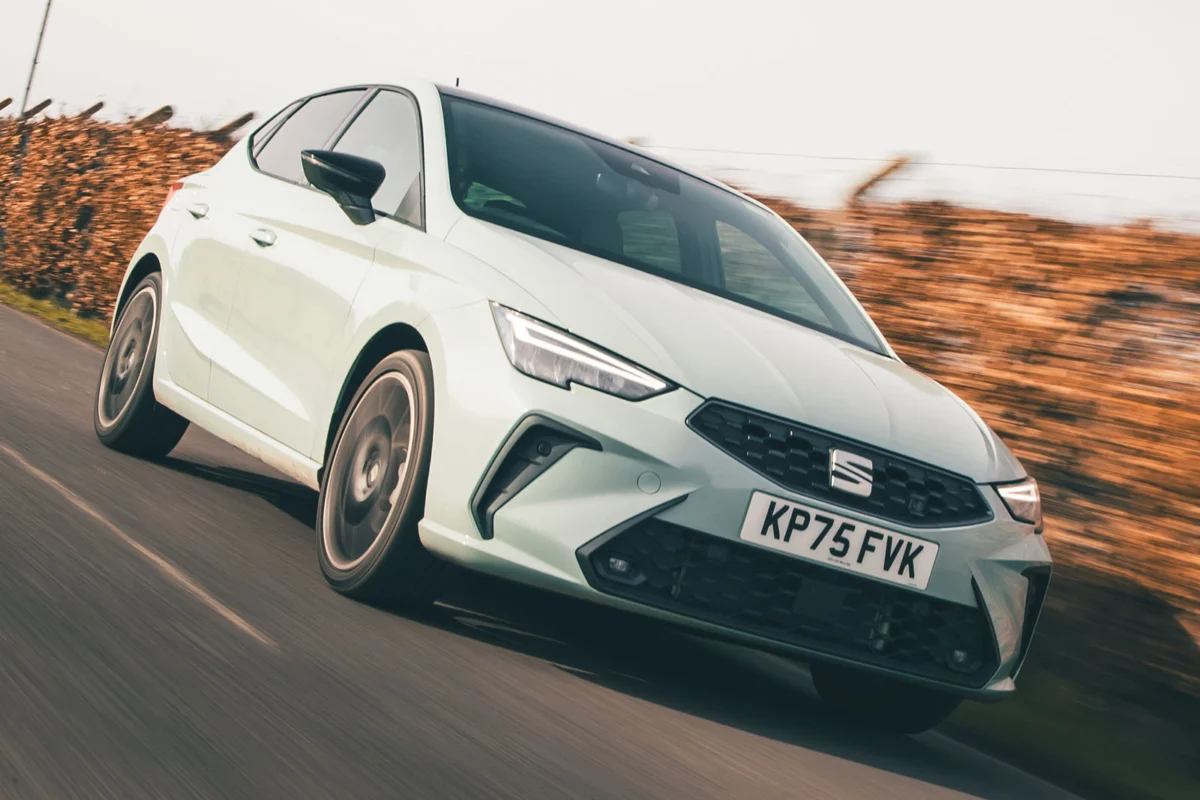
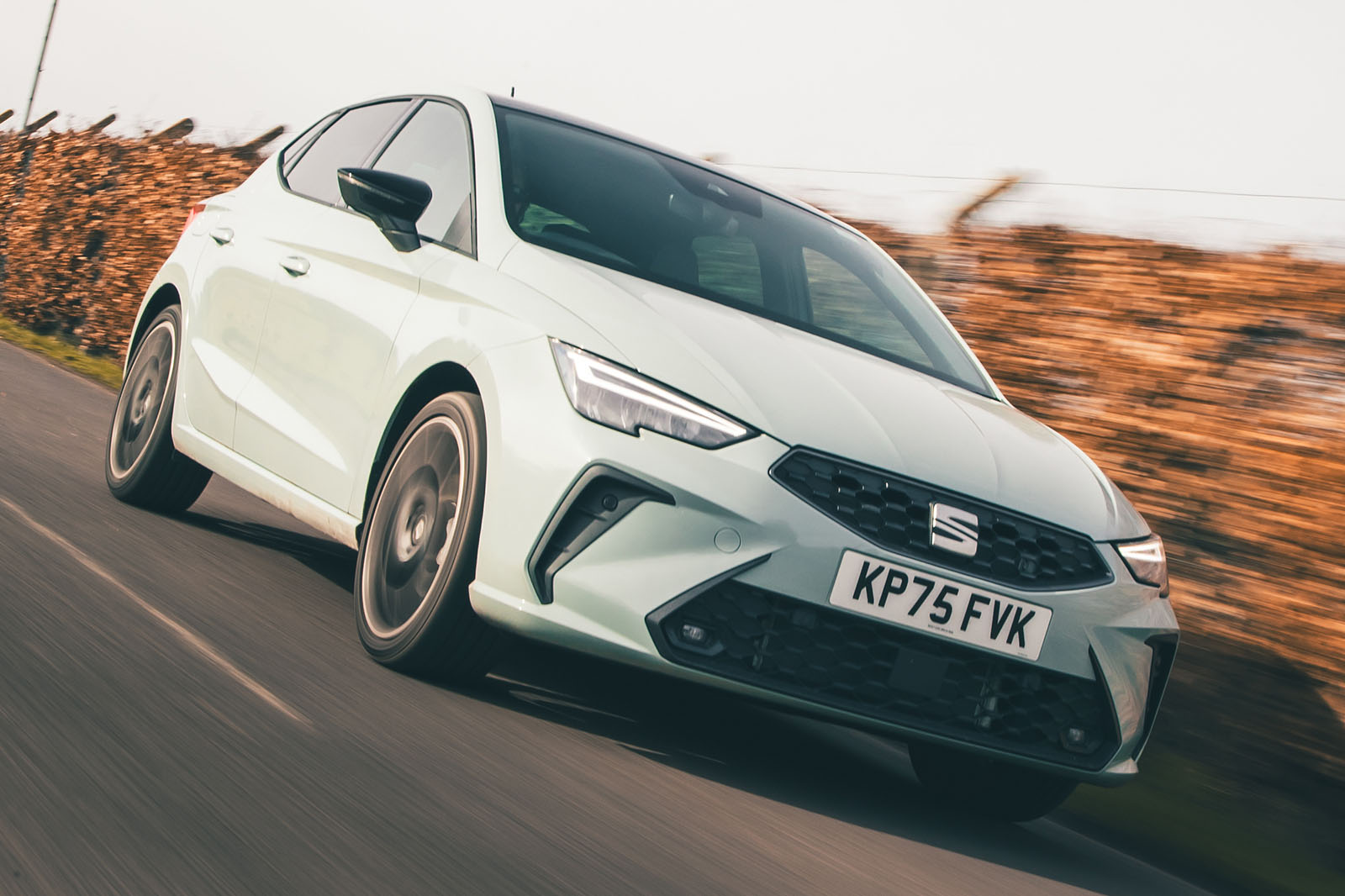
The trajectory of the SEAT Ibiza over the last ten years reflects the broader pressures facing the internal combustion engine (ICE) supermini. When the fifth-generation Ibiza debuted in 2017, it was the first Volkswagen Group vehicle to utilize the MQB A0 platform, a modular architecture that allowed for significantly improved interior packaging and structural rigidity. While the exterior design has remained remarkably consistent since that launch, SEAT has focused its development efforts on the cabin environment to remain competitive against increasingly "boutique" rivals.
In 2021, the Ibiza underwent a comprehensive interior overhaul aimed at addressing criticisms of perceived material quality. The dashboard was redesigned to feature a more shapely, soft-touch surface, replacing the hard plastics that had previously dominated the driver’s field of vision. This update also introduced "playful" elements intended to appeal to a younger demographic, such as circular air vents with integrated LED mood lighting—a feature that varies in color depending on the trim level. The most recent updates for the 2024 and 2025 model years have introduced new sustainable fabrics. In the FR Sport trim, for instance, the introduction of light grey upholstery on the seats and door cards has been credited with lifting the cabin’s overall ambience, moving it away from the monochromatic grey and black palettes common in older Spanish and German subcompacts.
Ergonomics and the Value of Physical Controls
While many modern rivals have migrated almost all vehicle functions to central touchscreens—a move often criticized by safety experts and consumers for increasing driver distraction—the SEAT Ibiza retains a layout that feels increasingly traditional. In many ways, the Ibiza remains a "2017 car" in its ergonomic execution, which has become a competitive advantage. The vehicle continues to offer tactile, physical controls for essential functions, including the lighting system, climate control, and drive mode selection.
Furthermore, the retention of a physical lever for the automatic gearbox and a traditional mechanical handbrake distinguishes the Ibiza from newer competitors that have adopted electronic toggles and button-operated parking brakes. For many drivers, these tactile interfaces offer a level of intuitive operation that modern capacitive-touch sliders—seen in newer Volkswagen Group products—fail to replicate. This adherence to physical switchgear suggests a design philosophy that prioritizes ease of use and driver focus over the minimalist, screen-heavy aesthetics championed by newer market entrants like the Renault 5.
Technological Integration and Connectivity
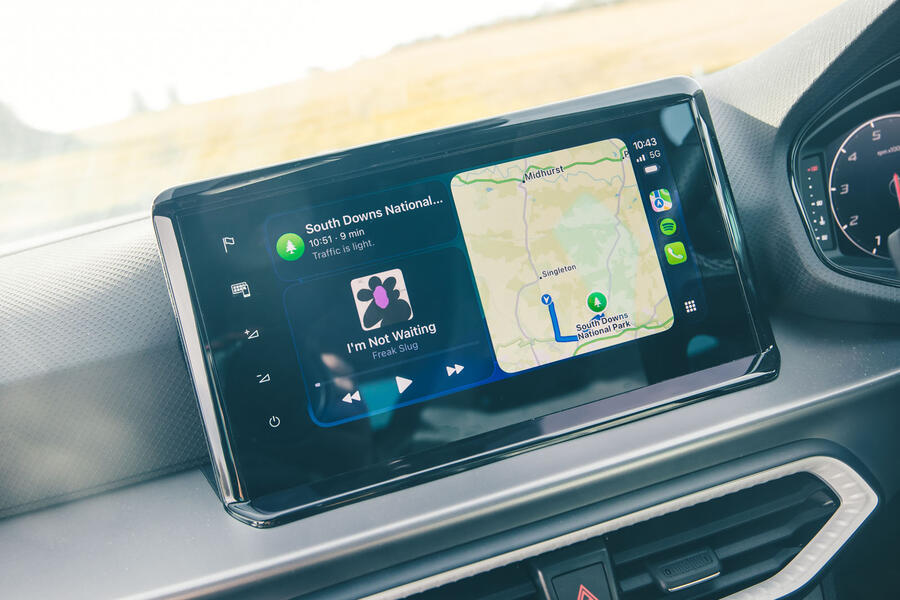
Despite its traditional ergonomic layout, the Ibiza has not ignored the necessity of digital integration. The vehicle features a tiered technology offering based on trim levels. The entry-level SE trims are equipped with an 8.2-inch central touchscreen, while higher specifications, such as the FR and Xcellence, receive a larger 9.2-inch display.
Industry analysis suggests that while the built-in navigation and voice control systems are functional, they are increasingly viewed as rudimentary compared to the latest software suites from brands like Google or Apple. Consequently, SEAT has optimized the system for smartphone mirroring. The Ibiza’s infotainment setup supports wireless Apple CarPlay and Android Auto, a feature that has become a primary requirement for modern car buyers. To support this, the FR Sport trim includes a wireless charging pad equipped with active cooling technology. This specific engineering detail addresses a common flaw in automotive wireless chargers, where the heat generated by the induction process combined with the processor load of wireless mirroring often leads to smartphone thermal throttling or shutdown.
Behind the steering wheel, the Ibiza utilizes a Digital Cockpit. Standard trims feature an 8-inch display, while the FR Sport is upgraded to a 10-inch version. This digital driver display is noted for its clarity and high contrast, offering several customizable layouts that allow the driver to prioritize navigation maps, traditional dials, or driver-assist data.
Comparative Build Quality and Material Choices
The SEAT Ibiza’s interior quality presents a nuanced picture of modern manufacturing trade-offs. While the dashboard features soft-touch materials, a significant portion of the lower cabin and door panels remains constructed from hard plastic mouldings. Journalists and industry testers have noted a curious allocation of the production budget: while the top of the dashboard is soft, the door cappings—where a driver or passenger is more likely to rest an elbow—remain hard.
However, when compared to its stablemate, the Skoda Fabia, the Ibiza’s build quality is frequently rated as superior. The assembly is described as "beyond reproach," with tight tolerances and an absence of the "gloss black" plastics that are prone to scratching and fingerprints in other modern interiors. This focus on structural integrity and rattle-free construction remains a hallmark of the MQB A0 platform.
Space, Practicality, and Dimensional Data
The 2017 shift to the MQB A0 platform allowed the Ibiza to offer one of the widest tracks in its class, which translated directly into improved shoulder room and a more planted stance. However, as the segment has evolved, newer or more specialized rivals have begun to surpass the Ibiza in specific utility metrics.
Rear Cabin Dimensions
The Ibiza offers approximately 640mm of rear legroom. While this is considered adequate for the supermini class and can accommodate two adults for short to medium journeys, it falls behind the Skoda Fabia and the Hyundai i20. These competitors have prioritized rear-seat packaging, making them more suitable for buyers who frequently transport adult passengers.
Cargo Capacity
The boot capacity of the SEAT Ibiza is rated at 335 litres. To put this in a market context:
- SEAT Ibiza: 335 Litres
- Renault Clio: 391 Litres
- Skoda Fabia: 380 Litres
- Volkswagen Polo: 351 Litres
While the Ibiza’s raw volume is lower than the class leaders, the shape of the cargo area is square and free of significant intrusions. On higher-specification models like the FR Sport, a variable-height boot floor is included, allowing users to either maximize total volume or create a flat loading lip with hidden storage underneath for charging cables or valuables.
Market Positioning and Strategic Implications
The continued relevance of the SEAT Ibiza is a subject of significant discussion within the automotive industry, particularly given the rise of SEAT’s performance-oriented sibling brand, Cupra. For several years, rumors circulated regarding the potential discontinuation of the SEAT brand in favor of Cupra’s higher-margin electric vehicles. However, recent corporate communications from the Volkswagen Group have reaffirmed SEAT’s role as a provider of accessible, high-quality ICE and hybrid vehicles.
The Ibiza remains a volume driver for the brand, particularly in Southern Europe and the United Kingdom. Its ability to offer a "middle way"—avoiding the extreme minimalism of the Citroën C3 but providing more character than the Volkswagen Polo—has allowed it to maintain a stable market share even as the Ford Fiesta’s exit left a vacuum in the segment.
Conclusion: The Case for the "Sensible" Supermini
As the automotive industry moves toward 2030, the SEAT Ibiza stands as a testament to the longevity of well-engineered traditional design. While it may not offer the avant-garde aesthetic of the new Renault 5 or the class-leading cargo space of the Skoda Fabia, its strength lies in its balance. By evolving its interior materials and maintaining a commitment to physical ergonomics, SEAT has created a vehicle that feels modern without being alienating.
The inclusion of high-quality digital displays and reliable wireless connectivity ensures it meets the technological demands of today’s consumers, while its mechanical handbrake and tactile buttons appeal to those wary of the "everything-on-the-screen" trend. In an era where many small cars are becoming either overly complex or strictly utilitarian, the Ibiza’s blend of sensible engineering and "playful" design updates positions it as a resilient contender in the European market. For the consumer, it represents a known quantity: a well-built, easy-to-use hatchback that has successfully navigated the transition from the "sensible" era of the 2010s into the design-heavy landscape of the 2020s.